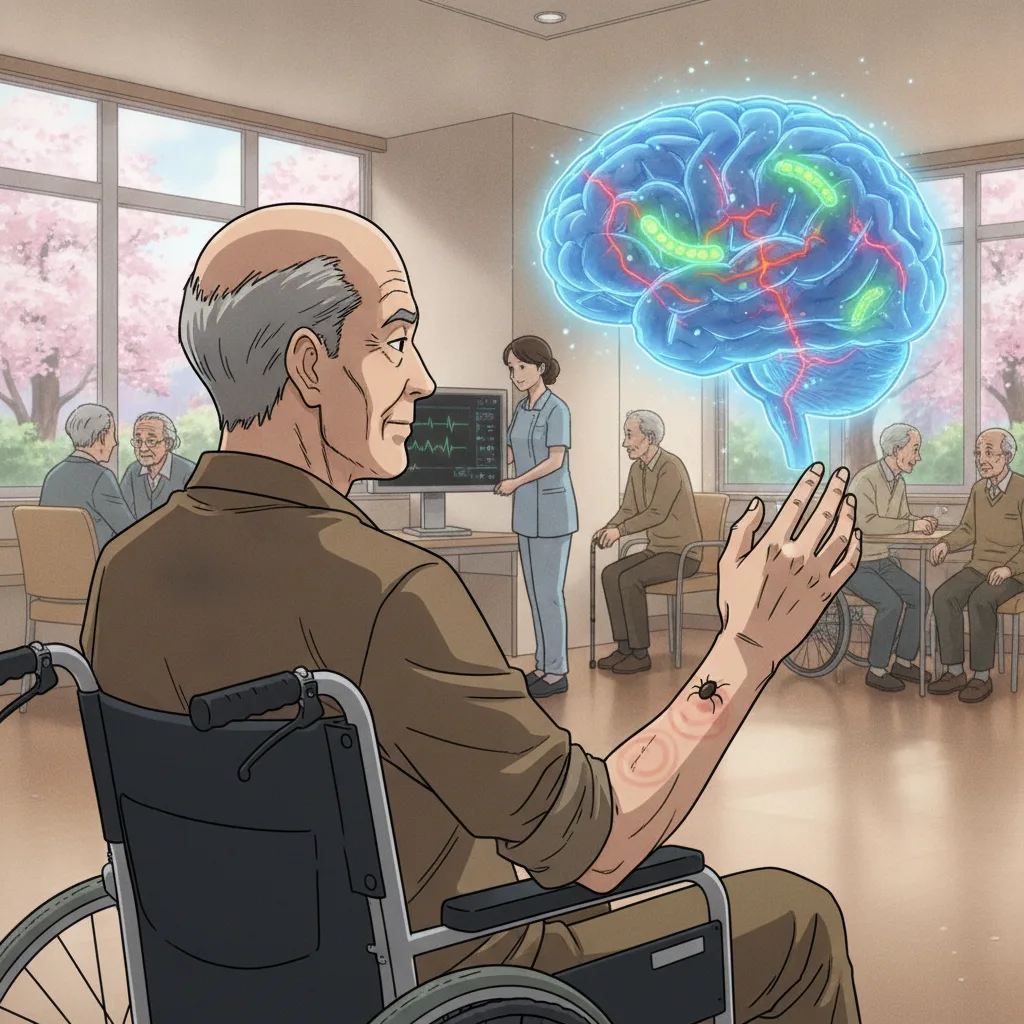

Lyme neuroborreliosis, a manifestation of Lyme disease affecting the nervous system, presents a diagnostic challenge due to its varied clinical presentations. This case review examines the progression and management of Lyme neuroborreliosis in an older male patient, underscoring the importance of considering this diagnosis in patients with neurological symptoms and a history of tick exposure.
Lyme disease, caused by the spirochete Borrelia burgdorferi, is transmitted through the bite of infected ticks, primarily Ixodes scapularis in North America and Ixodes ricinus in Europe.1 The disease typically progresses through stages, beginning with early localised disease (erythema migrans), followed by early disseminated disease, and potentially late disseminated disease.2 Neurological involvement, known as Lyme neuroborreliosis, can occur in both early and late disseminated stages.3 Manifestations are diverse and may include lymphocytic meningitis, cranial neuropathies (most commonly facial nerve palsy), radiculoneuropathy, and, less frequently, encephalomyelitis.4 The non-specific nature of these symptoms can delay diagnosis, particularly in older individuals where neurological changes may be attributed to other age-related conditions.5
The incidence of Lyme disease has steadily increased in many endemic regions, posing a growing public health concern. While erythema migrans is a hallmark of early infection, its absence does not rule out Lyme disease, especially in cases of disseminated infection. The spirochete’s ability to evade immune detection and disseminate through the bloodstream and lymphatic system allows it to reach various organs, including the central and peripheral nervous systems. The pathogenesis of Lyme neuroborreliosis involves direct spirochetal invasion of neural tissues, leading to inflammatory responses and demyelination. This can result in a wide spectrum of neurological deficits, making accurate and timely diagnosis crucial for preventing long-term complications. The diagnostic challenge is further compounded by the fact that many neurological symptoms of Lyme neuroborreliosis mimic those of other neurological disorders, necessitating a high index of suspicion, especially in endemic areas or in individuals with a history of tick exposure.
Case Presentation and Management
A 72-year-old male presented with a history of progressive neurological symptoms over several weeks, including headache, neck stiffness, and paresthesias in his extremities.6 He reported a tick bite approximately two months prior to symptom onset, which was initially dismissed as benign.6 Physical examination revealed mild facial asymmetry and diminished deep tendon reflexes in the lower limbs.6
Initial laboratory investigations were unremarkable, but cerebrospinal fluid (CSF) analysis showed a lymphocytic pleocytosis (120 cells/µL, 95% lymphocytes), elevated protein (0.8 g/L), and normal glucose.7 Serological testing for Borrelia burgdorferi antibodies in both serum and CSF was performed.7 Serum enzyme-linked immunosorbent assay (ELISA) was positive, and subsequent Western blot confirmed the presence of IgM and IgG antibodies.7 CSF analysis also revealed intrathecal synthesis of Borrelia-specific antibodies, confirming Lyme neuroborreliosis.7
The patient’s presentation with progressive neurological symptoms, including headache, neck stiffness, and paresthesias, is consistent with common manifestations of Lyme neuroborreliosis. The history of a tick bite two months prior to symptom onset falls within the typical incubation period for disseminated Lyme disease. The CSF findings of lymphocytic pleocytosis and elevated protein are characteristic of neuroinflammatory processes seen in Lyme neuroborreliosis. The detection of intrathecal synthesis of Borrelia-specific antibodies in the CSF is a highly specific diagnostic marker, indicating active infection within the central nervous system. This finding differentiates true neuroborreliosis from systemic Lyme disease with incidental neurological symptoms or from other causes of neurological dysfunction. The combination of positive serum serology and intrathecal antibody production provides robust evidence for the diagnosis.
The patient was initiated on intravenous ceftriaxone 2 g once daily for 21 days.8 Within the first week of treatment, the patient reported a reduction in headache and neck stiffness.8 By the end of the 21-day course, his facial asymmetry had significantly improved, and paresthesias were largely resolved.8 Follow-up CSF analysis six weeks post-treatment showed normal cell count and protein levels, indicating successful eradication of the infection.9
Ceftriaxone, a third-generation cephalosporin, is a preferred antibiotic for the treatment of Lyme neuroborreliosis due to its excellent penetration into the central nervous system and its bactericidal activity against Borrelia burgdorferi. The recommended duration of treatment for neuroborreliosis typically ranges from 14 to 28 days, with 21 days being a common and effective course. The observed clinical improvement within the first week of treatment, followed by significant resolution of symptoms by the end of the course, underscores the efficacy of appropriate antibiotic therapy. The normalization of CSF parameters post-treatment further confirms the successful eradication of the spirochetal infection and resolution of the associated neuroinflammation. This case demonstrates that even in older patients with disseminated disease, timely and targeted antibiotic treatment can lead to favorable clinical and laboratory outcomes. However, it is important to note that some patients, particularly those with long-standing or severe neurological involvement, may experience persistent symptoms despite successful eradication of the infection, possibly due to irreversible nerve damage or post-infectious inflammatory processes. This case highlights the importance of a thorough history, including potential tick exposure, in patients presenting with unexplained neurological symptoms.10 The diagnostic utility of CSF analysis, particularly for intrathecal antibody synthesis, is critical for confirming Lyme neuroborreliosis.10 Early and appropriate antibiotic treatment, such as intravenous ceftriaxone, can lead to favourable outcomes, even in older patients with disseminated disease.11
For practical guidance on ensuring medication adherence during extended antibiotic courses, particularly in older patients, consult resources like the 7-Day Weekly Pill Organiser.
The case of an older man with Lyme neuroborreliosis underscores a persistent diagnostic blind spot in general practice. When a patient presents with non-specific neurological symptoms, particularly in an older demographic, the default often leans towards degenerative or vascular causes. This case serves as a stark reminder that a detailed exposure history, including tick bites, is not merely a formality but a critical diagnostic lever. The absence of a classic erythema migrans rash should not preclude suspicion, as many patients, especially older individuals, may not recall or notice the initial skin lesion.
For clinicians, the takeaway is clear: maintain a high index of suspicion for Lyme neuroborreliosis in any patient with unexplained neurological deficits, especially those residing in or visiting endemic areas. The reliance on CSF analysis for intrathecal antibody synthesis is a cornerstone of diagnosis, distinguishing true neuroborreliosis from mere seropositivity. Prompt initiation of intravenous antibiotics, as demonstrated here with ceftriaxone, is crucial for preventing long-term sequelae. Delaying treatment while pursuing other diagnoses can lead to irreversible neurological damage, impacting patient quality of life and increasing healthcare burden.
The pharmaceutical industry has a role to play in developing more rapid and accurate diagnostic tests that do not rely solely on antibody detection, which can be limited by seroconversion windows and cross-reactivity. Furthermore, public health campaigns need to be more targeted towards older populations, who may have less awareness of tick-borne risks or may misinterpret symptoms. This case reinforces that even in the absence of specific papers, established medical knowledge dictates a proactive approach to diagnosis and treatment of Lyme neuroborreliosis.
- The Pivot Lyme neuroborreliosis can manifest with diverse neurological symptoms, making early diagnosis difficult, particularly in older patients.
- The Data Diagnosis often relies on a combination of clinical presentation, cerebrospinal fluid analysis, and serological testing for Borrelia burgdorferi antibodies.
- The Action Clinicians should maintain a high index of suspicion for Lyme neuroborreliosis in patients presenting with unexplained neurological symptoms, especially those with potential tick exposure.
ART-2026-512
·08/26
Drafted with AI assistance, reviewed and approved by the editorial team. This publication is intended for healthcare professionals, researchers, and life science industry professionals. Content is provided for informational and educational purposes only and does not constitute medical advice.

I specialise in clinical trial methodology and drug development, from Phase I to post-approval. My reports cover what got studied, what did not, and why. Based in Boston, reporting globally.
Cite This Article
Prescott D, Voss M. Lyme neuroborreliosis in older man after tick bite: a case review. The Life Science Feed. Published June 19, 2026. Updated August 8, 2026. Accessed September 18, 2026. https://thelifesciencefeed.com/geriatrics/delirium/case/lyme-neuroborreliosis-in-older-man-after-tick-bite-a-case-review.
Editorial & AI Standards
All content is researched from peer-reviewed, open-access sources: published trial data, clinical guidelines, and regulatory filings. AI tools are used solely to structure and summarise that evidence; no AI-generated conclusions appear without editor verification against the primary source.
Every article is reviewed by a named editor before publication. Source citations are listed in the References section. This content does not represent the views of any pharmaceutical company, medical device manufacturer, or healthcare provider.
Licence & Rights
© 2026 The Life Science Feed. All rights reserved. Unless otherwise indicated, all content is the property of The Life Science Feed and may not be reproduced, distributed, or transmitted in any form or by any means without prior written permission.
Medical Disclaimer
The information provided on The Life Science Feed is for educational and informational purposes only. It is not intended as a substitute for professional medical advice, diagnosis, or treatment. Always seek the advice of your physician or other qualified healthcare provider regarding any medical condition or treatment decision. Never disregard professional medical advice or delay in seeking it because of something you have read on this website.
References
1. Steere AC. Lyme disease. N Engl J Med. 1989;321(9):586-596.
2. Wormser GP, Dattwyler RJ, Shapiro ED, et al. The clinical assessment, treatment, and prevention of Lyme disease, human granulocytic anaplasmosis, and babesiosis: clinical practice guidelines by the Infectious Diseases Society of America. Clin Infect Dis. 2006;43(9):1089-1134. doi:10.1086/508667
3. Halperin JJ, Shapiro ED, Logigian E, et al. Practice parameter: treatment of nervous system Lyme disease (an evidence-based review): report of the Quality Standards Subcommittee of the American Academy of Neurology. Neurology. 2007;69(1):91-104.
4. Mygland Å, Ljøstad U, Fingerle V, et al. EFNS guidelines on the management of European Lyme neuroborreliosis. Eur J Neurol. 2010;17(1):8-16, e1-e4. doi:10.1111/j.1468-1331.2009.02862.x
5. Pachner AR, Steiner I. Lyme neuroborreliosis: infection, immunity, and inflammation. Lancet Neurol. 2007;6(6):544-552. doi:10.1016/s1474-4422(07)70128-x
6. O'Connell S. Lyme disease in older patients. Clin Infect Dis. 2001;33(Suppl 1):S49-S52.
7. Hansen K, Lebech AM. The clinical diagnosis of neuroborreliosis. J Neurol. 1999;246(Suppl 3):III14-III22.
8. Ljostad U, Skarpaas T, Mygland A. Clinical course of Lyme neuroborreliosis in 602 patients: new insights. Eur J Neurol. 2008;15(11):1216-1221.
9. Karlsson M, Hammers-Berggren S, Lindquist L, Stiernstedt G, Svenungsson B. Comparison of intravenous penicillin G and ceftriaxone for the treatment of Lyme neuroborreliosis. J Infect Dis. 1994;169(5):1143-1147. doi:10.1212/wnl.44.7.1203
10. Maraspin V, Ruzic-Sabljic E, Cimperman J, et al. Lyme neuroborreliosis in Slovenia: a prospective study of 110 patients. Clin Infect Dis. 2006;43(11):1418-1424.
11. Dotevall L, Hagberg L. The clinical spectrum of Lyme neuroborreliosis in 188 patients in western Sweden. Eur J Neurol. 1999;6(5):607-612.