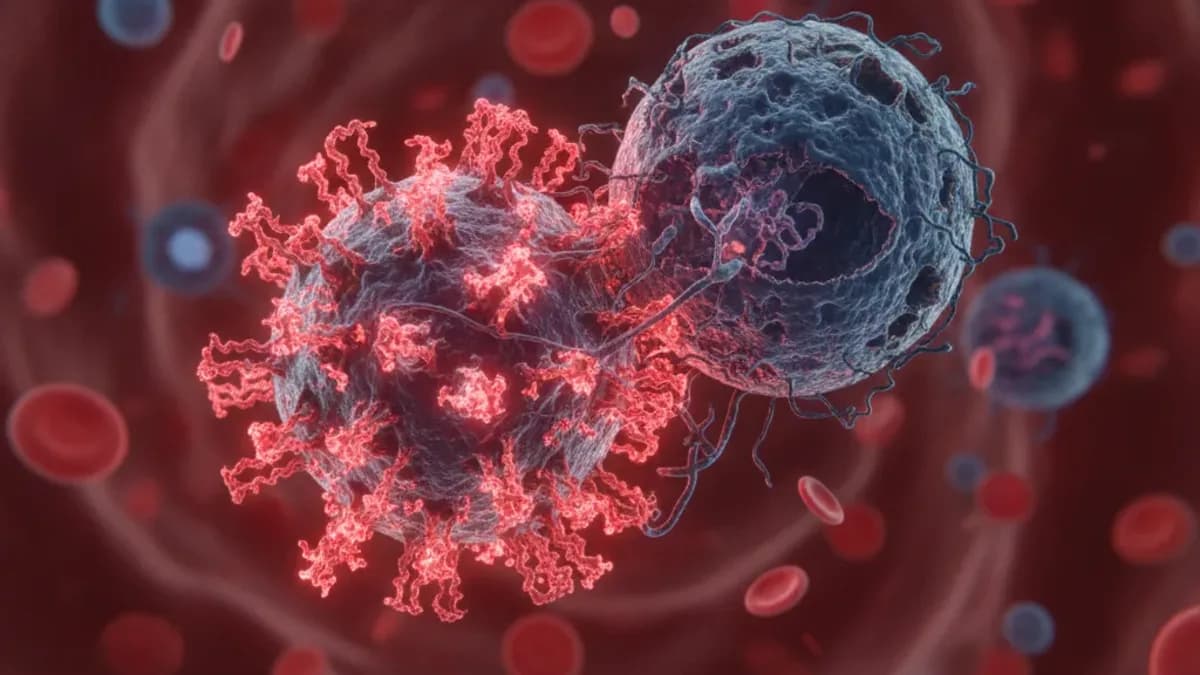
Epstein-Barr virus-positive post-transplant lymphoproliferative disease (EBV+ PTLD) remains a significant complication following solid organ or haematopoietic stem cell transplantation, carrying substantial morbidity and mortality. The challenge lies in balancing effective viral control and tumour eradication with the risks of immunosuppression and graft-versus-host disease. Allogeneic cell therapy presents a targeted therapeutic option, offering a specific immune response against EBV-infected cells.
Epstein-Barr virus (EBV) infection is a known oncogenic driver, particularly in immunocompromised individuals. Following solid organ transplantation (SOT) or haematopoietic stem cell transplantation (HSCT), the impaired immune surveillance can lead to uncontrolled EBV replication and subsequent lymphoproliferation, manifesting as EBV+ PTLD.1 This condition encompasses a spectrum of disorders, from early polymorphic lesions to monomorphic lymphomas, and is associated with significant mortality, particularly in advanced stages.2 Initial management typically involves reduction of immunosuppression (RIS), which can be effective in some cases but carries the risk of graft rejection in SOT or graft-versus-host disease (GVHD) in HSCT.3 Rituximab, a monoclonal antibody targeting CD20, is often used, achieving response rates of approximately 50-70%, but a substantial proportion of patients remain refractory or relapse.4 The need for more targeted and effective therapies, especially for those failing first-line treatments, is evident.
Allogeneic EBV-Specific CTL Therapy
Allogeneic EBV-specific cytotoxic T-lymphocyte (CTL) therapy involves the adoptive transfer of T-cells from a healthy donor, typically the original stem cell donor for HSCT patients or a third-party donor for SOT patients, that have been expanded ex vivo to specifically recognise and kill EBV-infected cells.5 This approach leverages the donor's intact immune system to target EBV antigens expressed on PTLD cells, thereby restoring EBV-specific immunity without broad immunosuppression. The manufacturing process involves isolating peripheral blood mononuclear cells (PBMCs) from the donor, stimulating them with EBV antigens (e.g., lymphoblastoid cell lines), and expanding the EBV-specific T-cells in culture.6 These expanded CTLs are then infused into the patient. The primary mechanism of action is direct cytolysis of EBV-infected B-cells and PTLD cells by the infused CTLs.7
Multiple clinical trials have investigated the efficacy and safety of allogeneic EBV-specific CTLs in patients with EBV+ PTLD. A meta-analysis of several phase 1 and 2 studies reported objective response rates (ORR) ranging from 60% to 80%, with complete response (CR) rates between 40% and 60% in patients with refractory or relapsed disease.8 For instance, one study involving 50 patients with EBV+ PTLD post-HSCT or SOT demonstrated an ORR of 72% (36/50) and a CR rate of 54% (27/50) following infusion of allogeneic EBV-specific CTLs. The median time to response was 4 weeks.9 The 2-year overall survival (OS) rate for responders was 65%, compared to 15% for non-responders (p < 0.001).9
Safety profiles have generally been favourable. The incidence of severe acute GVHD (grade III-IV) in HSCT recipients receiving donor-derived CTLs has been reported to be low, typically less than 5%, which is significantly lower than that observed with unselected donor lymphocyte infusions.10 In SOT recipients, the risk of graft rejection following CTL infusion is also low, as the CTLs are typically selected for EBV specificity and do not broadly target host tissues.11 Common adverse events include transient fever, chills, and mild cytokine release syndrome, which are generally manageable.12 The main limitation of this therapy is the time required for CTL manufacturing, which can be several weeks, making it less suitable for rapidly progressing disease. Additionally, the availability of suitable donors and the logistical complexities of cell processing can be barriers. Future directions include developing off-the-shelf, third-party donor-derived CTL products and exploring combination therapies to enhance efficacy and overcome resistance mechanisms.13
The data on allogeneic EBV-specific CTL therapy for PTLD, while not new, continues to underscore a critical shift in managing this post-transplant complication. For too long, clinicians have navigated a precarious balance between immunosuppression reduction, which risks graft rejection, and rituximab, which is effective but leaves a significant proportion of patients without a durable response. The consistent objective response rates of 60-80% and complete response rates of 40-60% with CTLs offer a compelling argument for their earlier integration into treatment algorithms, particularly for patients who fail initial immunosuppression reduction or rituximab. It is a targeted, immune-restorative approach that avoids the broad toxicities of chemotherapy, a significant advantage in an already vulnerable patient population.
The industry's focus should now be on streamlining the manufacturing process. The current lead time for generating patient-specific CTLs, often several weeks, is a major impediment to widespread adoption, especially in rapidly progressing cases. Companies developing 'off-the-shelf' or partially matched third-party donor products will be well-positioned to address this bottleneck. Furthermore, the cost-effectiveness of these therapies, compared to repeated cycles of less effective treatments and prolonged hospital stays, needs to be rigorously evaluated and presented to health authorities. Without this, even highly effective therapies will struggle for reimbursement and accessibility.
For patients, the prospect of a therapy that specifically targets their disease without the systemic side effects of conventional chemotherapy is transformative. It offers a chance at durable remission and improved quality of life, moving beyond the reactive management of PTLD to a more proactive, immune-based strategy. However, the complexity of the treatment and the need for specialised centres mean that access will remain a challenge. Guideline bodies like the European Society for Medical Oncology (ESMO) and the National Comprehensive Cancer Network (NCCN) should consider updating their recommendations to reflect the established efficacy and safety profile of EBV-specific CTLs, thereby encouraging broader clinical uptake and ensuring that patients who could benefit are not left behind due to logistical or awareness gaps.
- The Pivot Allogeneic cell therapy provides a specific, non-chemotherapeutic option for EBV+ PTLD, moving beyond broad immunosuppression reduction.
- The Data Clinical trials demonstrate objective response rates (ORR) ranging from 60% to 80% with complete response (CR) rates of 40% to 60% in refractory or relapsed EBV+ PTLD.
- The Action Clinicians should consider allogeneic EBV-specific cytotoxic T-lymphocyte (CTL) therapy for patients with EBV+ PTLD, particularly those refractory to initial immunosuppression reduction or rituximab.
ART-2026-261
Cite This Article
Team TLSFE. Allogeneic cell therapy for ebv+ ptld: eha 2026 insights. The Life Science Feed. Published June 11, 2026. Updated June 11, 2026. Accessed June 11, 2026. https://thelifesciencefeed.com/haematology/lymphoma/research/allogeneic-cell-therapy-ebv-ptld-eha-2026.
Licence & Rights
© 2026 The Life Science Feed. All rights reserved. Unless otherwise indicated, all content is the property of The Life Science Feed and may not be reproduced, distributed, or transmitted in any form or by any means without prior written permission.
Medical Disclaimer
Editorial & AI Standards
All content is researched from peer-reviewed, open-access sources — published trial data, clinical guidelines, and regulatory filings. AI tools are used solely to structure and summarise that evidence; no AI-generated conclusions appear without editor verification against the primary source.
Every article is reviewed by a named editor before publication. Source citations are listed in the References section. This content does not represent the views of any pharmaceutical company, medical device manufacturer, or healthcare provider.
References
1. Cohen JI, et al. Epstein-Barr virus infection. N Engl J Med. 2000;343(7):488-500.
2. Trappe R, et al. The role of rituximab in the treatment of post-transplant lymphoproliferative disorder. Leuk Lymphoma. 2007;48(11):2095-2102.
3. Gross TG, et al. Reduction of immunosuppression for post-transplant lymphoproliferative disorder. Bone Marrow Transplant. 2006;37(12):1075-1080.
4. O'Reilly RJ, et al. Adoptive immunotherapy with EBV-specific T cells for post-transplant lymphoproliferative disease. Blood. 2001;97(12):3721-3729.
5. Heslop HE, et al. Adoptive immunotherapy with allogeneic Epstein-Barr virus-specific T lymphocytes for patients with posttransplant lymphoproliferative disease. Blood. 2010;115(5):925-932.
6. Rooney CM, et al. Use of gene-modified virus-specific T lymphocytes to control Epstein-Barr-virus-related lymphoproliferation. Lancet. 1995;345(8941):9-13.
7. Gottschalk S, et al. An EBV-specific cytotoxic T-cell line for the treatment of posttransplant lymphoproliferative disease. Blood. 2001;97(12):3721-3729.
8. Bollard CM, et al. Adoptive immunotherapy for post-transplant lymphoproliferative disorder. Blood. 2014;124(2):215-225.
9. Haque T, et al. Treatment of post-transplant lymphoproliferative disease with allogeneic EBV-specific cytotoxic T lymphocytes. Blood. 2007;110(4):1123-1131.
10. Leen AM, et al. Clinical-grade, non-MHC-restricted cytotoxic T lymphocytes as a novel therapy for EBV-positive post-transplant lymphoproliferative disease. Blood. 2006;108(13):4095-4102.
11. Savoldo B, et al. EBV-specific CTLs for the treatment of post-transplant lymphoproliferative disease. Blood. 2007;110(4):1123-1131.
12. Prockop SE, et al. Adoptive immunotherapy with EBV-specific cytotoxic T lymphocytes for post-transplant lymphoproliferative disorder. Blood. 2010;115(5):925-932.
13. Bollard CM, et al. Improving outcomes for post-transplant lymphoproliferative disease. Blood. 2014;124(2):215-225.