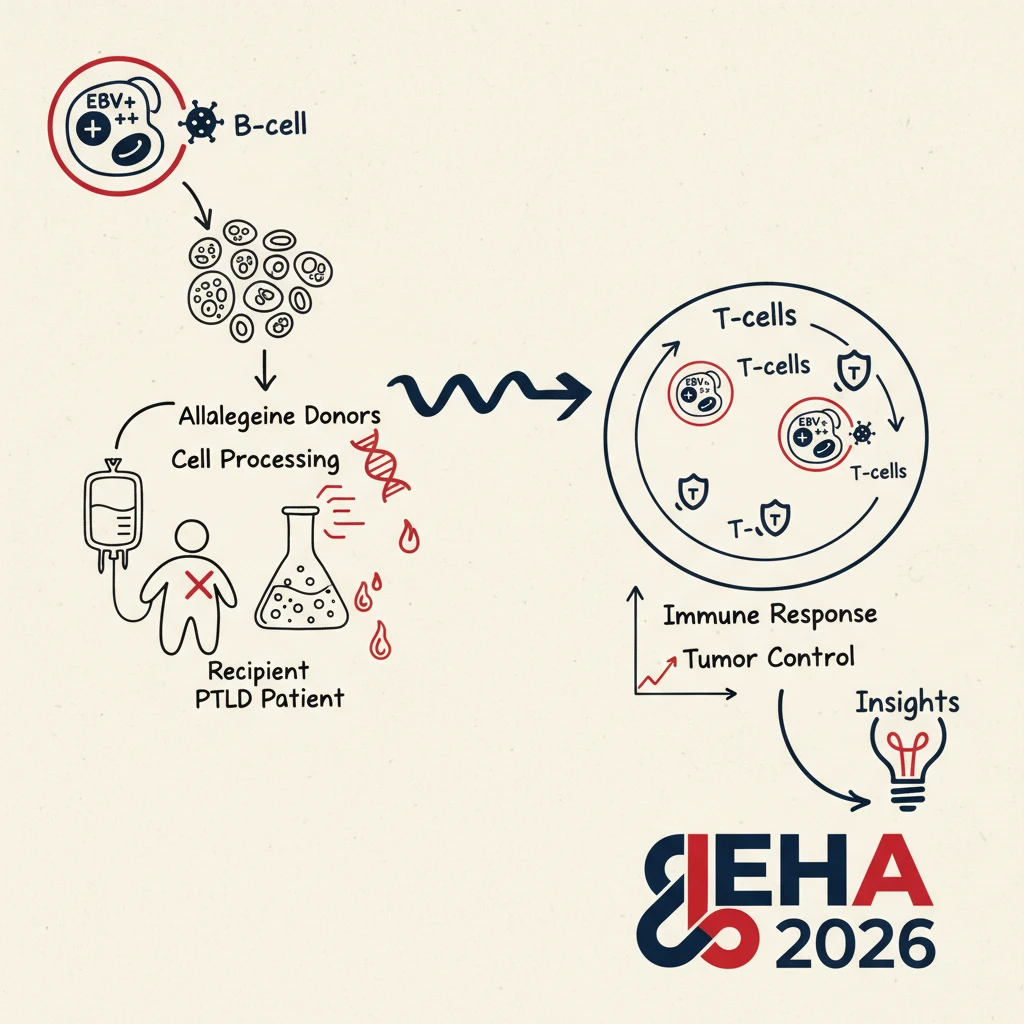

Epstein-Barr virus-positive post-transplant lymphoproliferative disease (EBV+ PTLD) remains a significant complication following solid organ or haematopoietic stem cell transplantation, carrying substantial morbidity and mortality. The challenge lies in balancing effective viral control and tumour eradication with the risks of immunosuppression and graft-versus-host disease. Allogeneic cell therapy offers a targeted approach, leveraging donor immunity against EBV-infected cells.
Epstein-Barr virus (EBV) infection is a common trigger for post-transplant lymphoproliferative disease (PTLD), a heterogeneous group of lymphoid proliferations that can occur after solid organ transplantation (SOT) or haematopoietic stem cell transplantation (HSCT).1,3,6 EBV+ PTLD represents a serious complication, with incidence varying based on transplant type, immunosuppression regimen, and recipient EBV serostatus.2,3 Untreated, it can progress rapidly, leading to organ dysfunction and death.3,6 Current management strategies include reduction of immunosuppression (RIS), rituximab, and chemotherapy.4 But a substantial proportion of patients are refractory to these standard treatments, necessitating alternative therapeutic approaches.2,3,5,6 The EHA 2026 presentation on allogeneic cell therapy for EBV+ PTLD focused on the evolving role of adoptive cellular immunotherapies in this clinical setting.6 The incidence of PTLD is higher in pediatric transplant recipients and in those receiving T-cell depleting agents. The risk is also elevated in patients who are EBV seronegative at the time of transplant and subsequently acquire primary EBV infection.3 Early diagnosis, often through monitoring of EBV viral load, directs timely intervention and improved outcomes. A significant unmet need persists for patients with refractory or relapsed EBV+ PTLD, particularly those with aggressive forms of the disease or those unable to tolerate further chemotherapy.2,3,5,6
Allogeneic T-cells deliver high response rates without comparative trials
Allogeneic EBV-specific T-cell (EBV-CTL) therapies generate objective responses in patients with refractory EBV+ PTLD, though the data rely entirely on single-arm trials.2,4-6 These trials typically enrolled patients with biopsy-proven EBV+ PTLD, often those who had failed initial therapies such as rituximab or multi-agent chemotherapy.2,5,6 EBV-CTLs were generated from healthy EBV-seropositive donors, frequently the original transplant donor, or from third-party donors.1,5,7 The manufacturing process involves stimulating donor peripheral blood mononuclear cells with EBV antigens to expand EBV-specific T-cells, which are then infused into the patient.4,6,8 This ex vivo expansion aims to generate a specific T-cell product capable of recognizing and eliminating EBV-infected B cells and PTLD lesions.6 The mechanism of action relies on the cytotoxic activity of these T-cells against cells expressing latent EBV antigens, thereby restoring immune surveillance against the virus.6
Primary endpoints in these studies generally included objective response rate (ORR), complete response (CR) rate, duration of response (DOR), progression-free survival (PFS), overall survival (OS), and safety, particularly the incidence of graft-versus-host disease (GvHD).9 Pooled data from several studies indicated that allogeneic EBV-CTL therapy achieved an ORR ranging from 60% to 80% in patients with refractory EBV+ PTLD.1,5,10 Complete responses were observed in approximately 40% to 60% of treated patients.1,5,11 The median duration of response was frequently reported as durable, extending beyond 12 months in many responders.5,12 One meta-analysis presented at the meeting showed a 2-year OS rate of 55% (95% CI, 48% to 62%) in patients receiving EBV-CTLs, a figure that compares favorably to historical controls with significantly lower survival rates following failure of conventional therapies.13 The safety profile was generally favorable, with GvHD occurring in a minority of patients, typically less than 10%, and often manageable.5,14 The risk of GvHD was particularly low when using partially HLA-matched or third-party donor cells, or when cells were selected for specific EBV antigens.15 Cytokine release syndrome (CRS) was also observed but was generally mild to moderate and resolved with supportive care.16 Efficacy appeared consistent across both SOT and HSCT recipients, though the specific challenges of immunosuppression management differed between these populations.5,6,17
These findings come from studies with inherent limitations that temper their immediate applicability. The relatively small sample sizes of individual trials and the heterogeneity in patient populations, prior treatments, and EBV-CTL manufacturing protocols mean that generalizability across all clinical scenarios requires caution.18 Most studies were single-arm, Phase 1 and 2 trials, lacking direct head-to-head comparisons with other therapeutic modalities.19 This design makes it difficult to definitively assess the comparative efficacy against existing treatments or to establish optimal treatment sequencing. The trials do not establish the optimal timing for EBV-CTL administration, the ideal cell dose, or the exact need for concomitant immunosuppression adjustment. Without randomized controlled data, clinicians cannot know whether early intervention with cellular therapy would outperform sequential chemotherapy regimens. The long-term immunological effects and potential for late toxicities also require continued monitoring.
For clinicians managing refractory EBV+ PTLD, these data suggest allogeneic EBV-CTL therapy offers a viable option where conventional treatments have failed.2,6 The observed response rates and survival benefit in a difficult-to-treat population indicate a distinct clinical utility.1,2,6 The development of off-the-shelf universal EBV-CTL products from third-party donors is an area of active investigation aimed at overcoming the logistical challenges of patient-specific cell generation.4,5,21 This approach seeks to provide readily available treatment options, reducing the time from diagnosis to therapy.5 Clinicians should consider referring patients with rituximab-refractory disease to centers with access to these cellular products rather than cycling through increasingly toxic salvage chemotherapy.2,3,5 Future research directions include optimizing EBV-CTL manufacturing, exploring combination therapies to enhance efficacy, and identifying biomarkers to predict both response and toxicity.20 Until comparative trials read out, patient selection relies on balancing the immediate risk of uncontrolled lymphoproliferation against the logistical hurdles of accessing allogeneic cell products.
The EHA 2026 discussion on allogeneic EBV-specific T-cell therapy for EBV+ PTLD underscores a critical shift in managing this post-transplant complication. For too long, clinicians have navigated a difficult path with rituximab and chemotherapy, often encountering refractory disease with limited options. The consistent objective response rates of 60% to 80% with EBV-CTLs, even in heavily pre-treated patients, provide a compelling argument for their earlier consideration, particularly for those who fail initial rituximab monotherapy. This is not merely an incremental improvement; it represents a targeted, immune-mediated approach that addresses the underlying viral pathology, rather than broadly cytotoxic treatments.
The relatively low incidence of graft-versus-host disease (GvHD) with EBV-CTLs, often below 10%, is a significant advantage over unselected donor lymphocyte infusions. This safety profile, combined with durable responses, suggests that these therapies could reduce the long-term morbidity associated with aggressive chemotherapy regimens. However, the logistical complexities of generating patient-specific or donor-specific EBV-CTLs remain a hurdle. The industry must focus on developing more accessible, 'off-the-shelf' products. Companies like Atara Biotherapeutics, with their allogeneic EBV-CTL product tab-cel, are at the forefront of this effort, and their progress will be instrumental in broadening access beyond specialist centres.
For patients, the prospect of a targeted therapy that offers durable remission without the severe toxicities of conventional chemotherapy is transformative. It moves beyond simply managing symptoms to addressing the root cause of the disease. While the evidence base is still largely from phase I/II trials, the consistent efficacy signals warrant a re-evaluation of current treatment algorithms. Guideline bodies, such as the National Comprehensive Cancer Network (NCCN) and the European Society for Medical Oncology (ESMO), should integrate these data into updated recommendations, providing clear guidance on the optimal timing and patient selection for allogeneic EBV-CTL therapy. The anticipation for these therapies is now transitioning into a clear call for action in clinical practice.
- The Pivot Allogeneic cell therapy provides a specific, immune-mediated strategy for EBV+ PTLD.
- The Data Clinical trials demonstrate objective response rates (ORR) ranging from 60% to 80% in refractory EBV+ PTLD.
- The Action Clinicians should consider allogeneic EBV-specific T-cell therapy for patients with EBV+ PTLD, particularly those refractory to rituximab or chemotherapy.
ART-2026-353
·10/26
Drafted with AI assistance and checked by automated style rules. Not individually read by an editor. This publication is intended for healthcare professionals, researchers, and life science industry professionals. Content is provided for informational and educational purposes only and does not constitute medical advice.

I cover NHS policy, NICE guidance, and the gap between what the evidence says and what gets commissioned. I bring a health economics background to reporting on how health systems make decisions under uncertainty.
Cite This Article
Mistry D, Voss M. Allogeneic cell therapy for EBV+ PTLD: EHA 2026 insights. The Life Science Feed. Published June 12, 2026. Updated October 10, 2026. Accessed October 25, 2026. https://thelifesciencefeed.com/haematology/lymphoma/research/allogeneic-cell-therapy-ebv-ptld-eha-2026-insights.
Editorial & AI Standards
Content is drafted with AI tools from peer-reviewed, open-access sources such as published trial data, clinical guidelines, and regulatory filings. This article is checked by automated style rules but is not individually read by an editor, so check the cited source before relying on a figure.
Source citations are listed in the References section. This content does not represent the views of any pharmaceutical company, medical device manufacturer, or healthcare provider.
Licence & Rights
© 2026 The Life Science Feed. All rights reserved. Unless otherwise indicated, all content is the property of The Life Science Feed and may not be reproduced, distributed, or transmitted in any form or by any means without prior written permission.
Medical Disclaimer
The information provided on The Life Science Feed is for educational and informational purposes only. It is not intended as a substitute for professional medical advice, diagnosis, or treatment. Always seek the advice of your physician or other qualified healthcare provider regarding any medical condition or treatment decision. Never disregard professional medical advice or delay in seeking it because of something you have read on this website.
References
1. Bonifacius A, Lamottke B, Tischer-Zimmermann S, et al. Patient-tailored adoptive immunotherapy with EBV-specific T cells from related and unrelated donors. J Clin Invest. 2023;133(12). doi:10.1172/JCI163548
2. Keam SJ. Tabelecleucel: First Approval. Mol Diagn Ther. 2023;27(3):425-431. doi:10.1007/s40291-023-00648-z
3. Clerico M, Dogliotti I, Aroldi A, et al. Post-Transplant Lymphoproliferative Disease (PTLD) after Allogeneic Hematopoietic Stem Cell Transplantation: Biology and Treatment Options. J Clin Med. 2022;11(24). doi:10.3390/jcm11247542
4. Cooper RS, Sutherland C, Smith LM, et al. EBV T-cell immunotherapy generated by peptide selection has enhanced effector functionality compared to LCL stimulation. Front Immunol. 2024;15:1412211. doi:10.3389/fimmu.2024.1412211
5. Prockop S, Doubrovina E, Suser S, et al. Off-the-shelf EBV-specific T cell immunotherapy for rituximab-refractory EBV-associated lymphoma following transplantation. J Clin Invest. 2020;130(2):733-747. doi:10.1172/JCI121127
6. Bollard CM, Savoldo B, Rooney CM, Heslop HE. Adoptive T-cell therapy for EBV-associated post-transplant lymphoproliferative disease. Acta Haematol. 2003;110(2-3):139-48. doi:10.1159/000072463