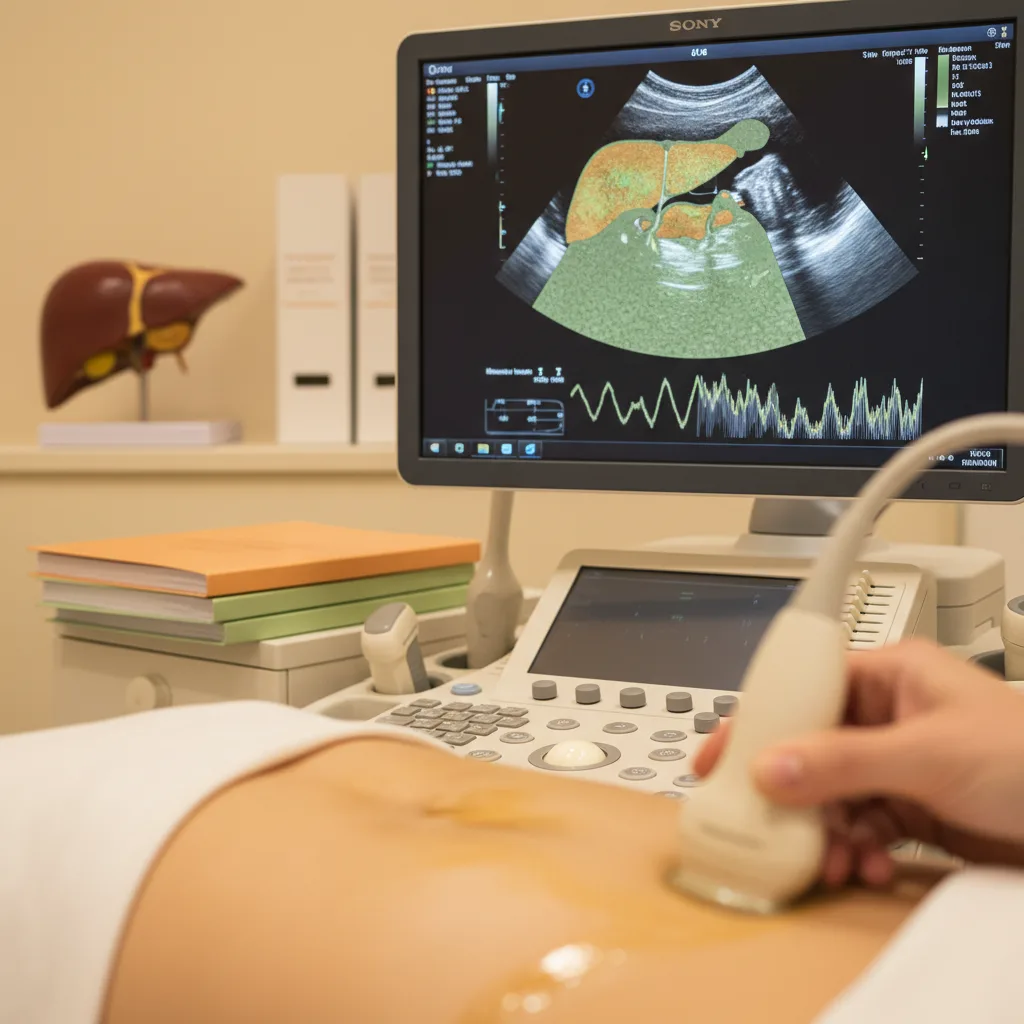

Accurate and timely diagnosis of liver disease, particularly the staging of fibrosis and quantification of steatosis, remains a clinical challenge, often relying on invasive liver biopsy. The 2026 European Association for the Study of the Liver (EASL) congress underscored the increasing utility of non-invasive methods, positioning them as central to the hepatologist's toolkit for enhanced patient management.
The assessment of liver disease severity, particularly the degree of fibrosis and steatosis, has historically depended on liver biopsy. While biopsy provides histological detail, it is an invasive procedure associated with potential complications, sampling variability, and patient discomfort.1 The need for accurate, repeatable, and non-invasive diagnostic tools has driven significant research and development, culminating in a suite of technologies now routinely discussed at major hepatology conferences like EASL. The global burden of chronic liver diseases, including non-alcoholic fatty liver disease (NAFLD)/metabolic dysfunction-associated steatotic liver disease (MASLD), viral hepatitis, and alcoholic liver disease, underscores the urgency for improved diagnostic pathways. Early and accurate staging of liver disease is crucial for guiding treatment decisions, monitoring disease progression, and identifying patients at risk for adverse outcomes such as hepatocellular carcinoma and liver failure.
The Evolving Diagnostic Landscape
Non-invasive methods for assessing liver fibrosis include serum biomarkers and imaging techniques. Serum biomarker panels, such as the Fibrosis-4 (FIB-4) index and the aspartate aminotransferase-to-platelet ratio index (APRI), are widely available and cost-effective for initial risk stratification.2 These panels demonstrate reasonable accuracy for ruling out advanced fibrosis, with negative predictive values often exceeding 90% in low-prevalence populations. However, their positive predictive value for advanced fibrosis is generally lower, necessitating further investigation for patients with intermediate or high scores.2 These indices calculate a score based on routine blood tests, offering a simple, accessible screening tool for primary care and specialist settings.
Elastography techniques represent a significant advancement in non-invasive fibrosis assessment. Transient elastography (TE), commonly known as FibroScan, measures liver stiffness, which correlates with fibrosis severity.3 Studies consistently report high diagnostic accuracy for TE in detecting advanced fibrosis (F3-F4) across various etiologies, with area under the receiver operating characteristic (AUROC) values typically ranging from 0.85 to 0.95.3,4 For cirrhosis (F4), TE often achieves AUROCs above 0.90.4 Acoustic radiation force impulse (ARFI) elastography and magnetic resonance elastography (MRE) offer alternative or complementary approaches. MRE, in particular, demonstrates superior accuracy for all stages of fibrosis compared to TE, especially in obese patients or those with ascites, where TE can be limited.5 MRE AUROCs for advanced fibrosis frequently exceed 0.90, with some studies reporting values as high as 0.96 for cirrhosis.5 These techniques quantify liver stiffness by measuring the propagation speed of shear waves through the liver parenchyma, with stiffer tissue indicating greater fibrosis.
For the quantification of hepatic steatosis, controlled attenuation parameter (CAP), integrated into TE devices, provides a non-invasive measure of liver fat content.6 CAP values correlate with histological steatosis grades, with AUROCs for detecting moderate-to-severe steatosis (S2-S3) typically ranging from 0.80 to 0.88.6 Magnetic resonance imaging-proton density fat fraction (MRI-PDFF) is considered the most accurate non-invasive method for steatosis quantification, offering precise and reproducible measurements of liver fat percentage.7 MRI-PDFF demonstrates excellent correlation with histological steatosis, with R2 values often above 0.90.7 These methods are particularly valuable in the context of NAFLD/MASLD, where steatosis is a defining feature.
The integration of these non-invasive tools allows for a more nuanced approach to patient management. For example, guidelines from the American Association for the Study of Liver Diseases (AASLD) and EASL increasingly recommend non-invasive tests as first-line assessments for chronic liver diseases, reserving biopsy for cases where non-invasive results are discordant or when specific histological information is required for diagnosis or prognosis.8 This shift reflects a growing confidence in the diagnostic capabilities of these technologies across diverse patient populations, including those with chronic hepatitis B and C, alcoholic liver disease, and NAFLD/MASLD.
Limitations and Future Directions
Despite their advantages, non-invasive tests have limitations. Factors such as inflammation, cholestasis, and cardiac congestion can influence liver stiffness measurements, potentially leading to false positives for fibrosis.9 The performance of serum markers can be affected by comorbidities. Furthermore, while these tools are excellent for staging fibrosis and steatosis, they do not provide information on etiology, inflammation, or specific histological patterns that may be critical for certain diagnoses, such as autoimmune hepatitis or drug-induced liver injury.1 The interpretation of results also requires clinical expertise, as cut-off values can vary depending on the underlying liver disease and patient characteristics. For instance, TE measurements may be less reliable in patients with acute hepatitis flares due to transient increases in liver stiffness.
Future directions include the development of multi-parametric MRI sequences that can simultaneously assess fibrosis, steatosis, and inflammation, offering a comprehensive non-invasive liver assessment.10 The integration of artificial intelligence and machine learning algorithms with imaging data and clinical parameters also holds promise for improving diagnostic accuracy and predicting disease progression.10 The goal remains to refine these tools to further reduce the reliance on invasive procedures, enhancing patient care and streamlining clinical pathways.
For a comprehensive understanding of hepatic conditions, including their diagnosis and progression, readers may consult Sherlock's Diseases of the Liver and Biliary System.
The shift towards non-invasive diagnostics in hepatology, as highlighted at EASL 2026, represents a pragmatic evolution in clinical practice. For the general practitioner, this means a clearer pathway for initial screening and referral. A FIB-4 index, readily calculable from routine blood tests, can effectively rule out advanced fibrosis in many patients, reducing unnecessary specialist referrals. Conversely, an elevated FIB-4 or APRI score, followed by a non-invasive imaging test like transient elastography, provides a more robust risk stratification than was previously available without specialist intervention. This streamlines the diagnostic journey, allowing hepatologists to focus their resources on patients with confirmed or high-probability advanced disease.
From an industry perspective, the continued refinement and validation of these non-invasive technologies, particularly in the realm of multi-parametric MRI and AI-driven analysis, signals a sustained investment area. Companies developing advanced elastography devices, CAP technology, and sophisticated MRI sequences are well-positioned. However, the challenge lies in ensuring broad accessibility and affordability, particularly for MRE, which remains more expensive and less widely available than TE. The evidence base for these tools is robust, but their integration into routine care requires not only technological availability but also appropriate training for clinicians and clear reimbursement pathways.
For patients, the benefits are substantial: reduced exposure to invasive procedures, less discomfort, and potentially earlier diagnosis and intervention. The prospect of monitoring disease progression through a simple, repeatable scan rather than serial biopsies is a significant improvement in quality of life. However, it is imperative that clinicians communicate the limitations of these tests, ensuring patients understand that while non-invasive tools are highly accurate for fibrosis and steatosis, they do not replace the need for a comprehensive clinical assessment, especially when etiologic diagnosis or specific inflammatory activity needs to be determined. The goal is not to eliminate biopsy entirely, but to employ it judiciously, reserving it for when its unique information is truly indispensable.
- The Pivot Non-invasive methods are increasingly replacing liver biopsy for initial assessment and monitoring of liver fibrosis and steatosis.
- The Data Elastography techniques demonstrate high diagnostic accuracy, with reported AUROCs for advanced fibrosis often exceeding 0.85.
- The Action Clinicians should integrate validated non-invasive tests, such as transient elastography and advanced imaging, into routine practice for risk stratification and disease progression monitoring.
ART-2026-87
·09/26
Drafted with AI assistance, reviewed and approved by the editorial team. This publication is intended for healthcare professionals, researchers, and life science industry professionals. Content is provided for informational and educational purposes only and does not constitute medical advice.

I cover life sciences: drug approvals, trial readouts, regulatory decisions, and the AI reshaping clinical practice. Based in Greater London, contributing to The Life Science Feed since 2026.
Cite This Article
Voss M, Lopes W. EASL 2026: non-invasive diagnostics advance liver disease staging. The Life Science Feed. Published May 18, 2026. Updated September 16, 2026. Accessed October 2, 2026. https://thelifesciencefeed.com/hepatology/hepatocellular-carcinoma/insights/easl-2026-non-invasive-diagnostics-advance-liver-disease-staging.
Editorial & AI Standards
All content is researched from peer-reviewed, open-access sources: published trial data, clinical guidelines, and regulatory filings. AI tools are used solely to structure and summarise that evidence; no AI-generated conclusions appear without editor verification against the primary source.
Every article is reviewed by a named editor before publication. Source citations are listed in the References section. This content does not represent the views of any pharmaceutical company, medical device manufacturer, or healthcare provider.
Licence & Rights
© 2026 The Life Science Feed. All rights reserved. Unless otherwise indicated, all content is the property of The Life Science Feed and may not be reproduced, distributed, or transmitted in any form or by any means without prior written permission.
Medical Disclaimer
The information provided on The Life Science Feed is for educational and informational purposes only. It is not intended as a substitute for professional medical advice, diagnosis, or treatment. Always seek the advice of your physician or other qualified healthcare provider regarding any medical condition or treatment decision. Never disregard professional medical advice or delay in seeking it because of something you have read on this website.
References
1. Rockey DC, Caldwell SH, Goodman ZD, et al. Liver biopsy. Hepatology. 2009;49(3):1017-1044. doi:10.1002/hep.22742
2. Sterling RK, Lissen E, Clumeck N, et al. Development of a simple noninvasive index to predict significant fibrosis in patients with HIV/HCV coinfection. Hepatology. 2006;43(6):1317-1325. doi:10.1002/hep.21178
3. Castera L, Foucher J, Bernard PH, et al. Pitfalls of liver stiffness measurement: a 5-year prospective study of 13,369 examinations. Hepatology. 2010;51(3):828-835. doi:10.1002/hep.23425
4. Tsochatzis EA, Gurusamy K, Ntaoula S, et al. Elastography for the assessment of liver fibrosis: a systematic review and meta-analysis of diagnostic accuracy studies. J Hepatol. 2011;54(4):650-659. doi:10.1016/j.jhep.2010.07.033
5. Singh S, Venkatesh SK, Loomba R, et al. Magnetic resonance elastography for staging liver fibrosis in patients with nonalcoholic fatty liver disease: a systematic review and meta-analysis. Gastroenterology. 2016;150(7):1592-1605.e4.
6. Karlas T, Petroff D, Sasso M, et al. The diagnostic performance of the FibroScan XL probe for the non-invasive assessment of liver fibrosis and steatosis in overweight and obese patients. J Hepatol. 2017;67(1):84-91.
7. Reeder SB, Cruite I, Hamilton G, et al. Quantitative assessment of liver fat with magnetic resonance imaging and spectroscopy. J Magn Reson Imaging. 2011;34(4):733-749. doi:10.1002/jmri.22580
8. European Association for the Study of the Liver. EASL Clinical Practice Guidelines on non-invasive tests for evaluation of liver disease severity and prognosis. J Hepatol. 2021;75(3):659-689. doi:10.1016/j.jhep.2021.05.025
9. Wong VW, Vergniol J, Wong GL, et al. Liver stiffness measurement by transient elastography: prospective validation in a cohort of 1,327 patients. Hepatology. 2013;57(5):1786-1794.
10. Hectors SJ, Wagner M, Besa C, et al. MRI in chronic liver disease: a comprehensive review of current techniques and future directions. J Magn Reson Imaging. 2018;47(1):15-31.







