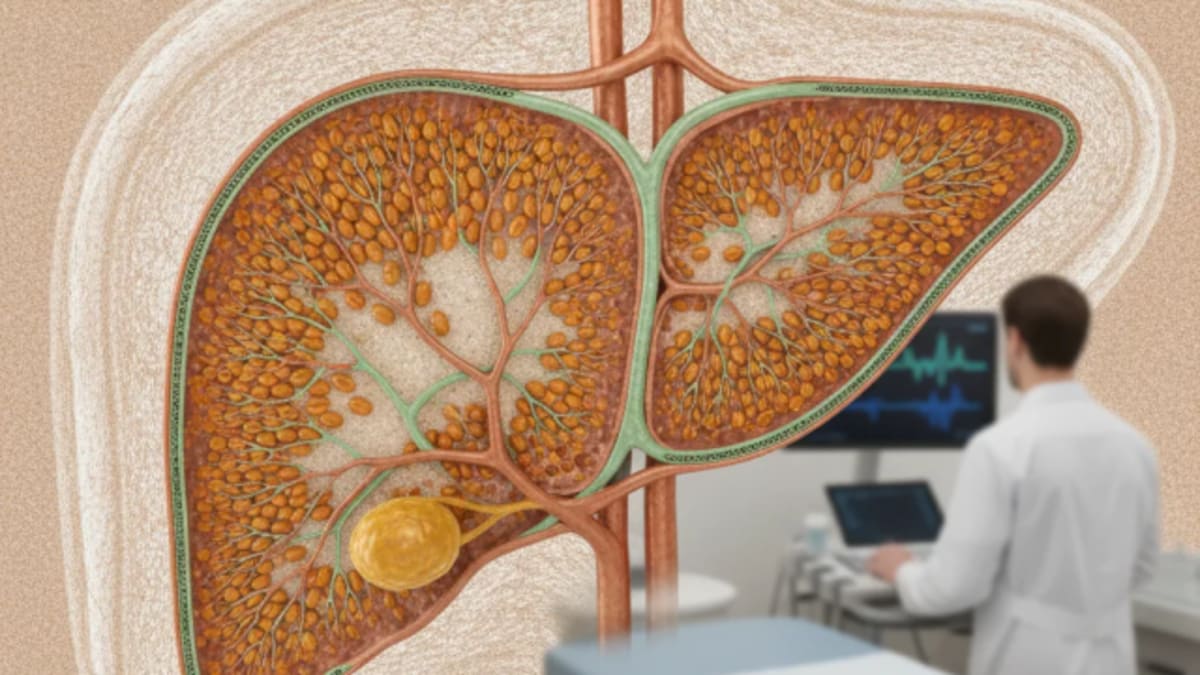

Accurate, non-invasive assessment of liver fibrosis remains a clinical challenge, particularly in the context of chronic liver diseases. The upcoming European Association for the Study of the Liver (EASL) 2026 Skills Learning Centre will focus on liver and spleen elastography, underscoring its utility in quantifying tissue stiffness as a surrogate marker for fibrosis severity and portal hypertension.1
Chronic liver diseases, including non-alcoholic fatty liver disease (NAFLD), viral hepatitis, and alcoholic liver disease, frequently progress to fibrosis and cirrhosis. Liver biopsy has historically been the gold standard for fibrosis staging, but its invasive nature, risk of complications, and sampling variability limit its widespread application. Non-invasive methods are increasingly preferred for initial assessment, monitoring, and risk stratification. Elastography techniques, which measure tissue stiffness, have emerged as key tools in this paradigm shift.1
Liver stiffness measurement (LSM) by transient elastography (TE), shear wave elastography (SWE), and magnetic resonance elastography (MRE) directly correlates with the degree of liver fibrosis. These methods quantify the velocity of mechanical waves propagating through the liver, with stiffer tissue indicating higher fibrosis.2
The global burden of chronic liver disease is substantial, with millions affected worldwide. NAFLD, in particular, is rapidly increasing in prevalence, mirroring the rise in obesity and type 2 diabetes. Early and accurate identification of fibrosis is crucial for guiding treatment decisions, preventing disease progression, and identifying patients at risk for liver-related complications such as hepatocellular carcinoma and liver failure. Non-invasive tools like elastography offer a practical and repeatable solution for managing these large patient populations, reducing the need for repeated invasive procedures.
The Role of Elastography in Fibrosis Assessment
Transient elastography (FibroScan) is a widely validated technique that uses a 50-MHz ultrasonic transducer to generate a shear wave. The velocity of this wave, measured in kilopascals (kPa), reflects liver stiffness. Studies have established specific LSM cut-off values for different fibrosis stages (e.g., F2, F3, F4) across various etiologies. For instance, in chronic hepatitis C, an LSM of >7.1 kPa typically indicates significant fibrosis (F2), while >12.5 kPa suggests cirrhosis (F4).3 The diagnostic accuracy for detecting significant fibrosis (F≥2) and cirrhosis (F4) is generally high, with areas under the receiver operating characteristic curve (AUROCs) often exceeding 0.85 and 0.90, respectively.4
Two-dimensional shear wave elastography (2D-SWE) and point shear wave elastography (pSWE) are integrated into conventional ultrasound systems, allowing for real-time visualization of the liver parenchyma during stiffness measurement. This enables targeted measurements and avoids large vessels or areas with artifacts. 2D-SWE provides a color-coded map of tissue stiffness, offering a more comprehensive assessment of heterogeneity. These methods also demonstrate strong correlations with liver biopsy findings and are increasingly used in clinical guidelines.5
While highly effective, elastography techniques have limitations. Factors such as obesity, ascites, acute liver inflammation, and cholestasis can influence stiffness measurements, potentially leading to falsely elevated values. Operators must consider these confounding factors during interpretation. For example, in patients with acute hepatitis, liver stiffness can transiently increase, mimicking advanced fibrosis. Therefore, clinical context and other diagnostic markers remain essential for accurate diagnosis and staging.
Spleen stiffness measurement (SSM) by elastography is gaining recognition for its utility in assessing portal hypertension. Increased spleen stiffness is a direct consequence of elevated portal venous pressure. SSM has shown promise in predicting the presence of esophageal varices and the risk of decompensation in patients with compensated advanced chronic liver disease (cACLD). For example, an SSM value of >40 kPa has been associated with a higher risk of varices requiring treatment.6 Combining LSM and SSM can enhance the accuracy of non-invasive assessment for both fibrosis and portal hypertension, offering a more complete picture of disease severity and prognosis.7
The EASL 2026 Skills Learning Centre will provide practical training on the acquisition and interpretation of liver and spleen elastography measurements. This will include optimizing scanning techniques, recognizing common pitfalls (e.g., ascites, obesity, acute inflammation), and understanding the impact of confounding factors on stiffness values. The session aims to standardize practice and improve the diagnostic yield of these non-invasive tools in routine clinical settings.8
For extensive insights into liver disease, including fibrosis assessment and mitigating diagnostic pitfalls, we recommend consulting Sherlock's Diseases of the Liver and Biliary System.
The emphasis on liver and spleen elastography at EASL 2026 signals a continued shift towards non-invasive diagnostics in hepatology. For clinicians, this means a growing expectation to integrate these techniques into their practice, moving beyond reliance on liver biopsy for fibrosis staging and portal hypertension assessment. The practical training offered at such centres is critical, as accurate measurements and interpretation are highly operator-dependent. Without proper training, the utility of these advanced tools diminishes, potentially leading to misdiagnosis or inappropriate management decisions. It is not enough to have the machine; one must know how to use it.
From a patient perspective, the broader adoption of elastography offers a less burdensome and safer alternative to invasive procedures. Reduced need for biopsies translates to fewer complications, less discomfort, and potentially earlier diagnosis and intervention. This is particularly relevant for chronic conditions like NAFLD, where long-term monitoring is essential. However, the availability and reimbursement of these technologies vary significantly across healthcare systems, creating disparities in access to optimal care. Payers and healthcare providers must recognize the long-term cost-effectiveness of non-invasive screening and monitoring in preventing advanced liver disease complications.
The industry, particularly manufacturers of ultrasound and MRI equipment, will continue to innovate in this space, developing more user-friendly interfaces and advanced algorithms for elastography. Companies like Canon Medical, Siemens Healthineers, and Philips are already prominent, and this focus at EASL will likely spur further competition and development. The challenge remains to ensure that these technological advancements are accompanied by robust validation studies and widespread educational initiatives, rather than simply being marketed as incremental improvements. The goal should be to provide tools that genuinely improve patient outcomes, not just add features.
- The Pivot Elastography, particularly shear wave elastography (SWE), offers a non-invasive alternative to liver biopsy for fibrosis staging.
- The Data Liver stiffness measurements (LSM) correlate with METAVIR fibrosis stages, with specific cut-offs demonstrating diagnostic accuracy for significant fibrosis and cirrhosis.
- The Action Clinicians should consider incorporating liver and spleen elastography into routine practice for monitoring chronic liver disease progression and assessing portal hypertension risk.
ART-2026-92
·10/26
Drafted with AI assistance, reviewed and approved by the editorial team. This publication is intended for healthcare professionals, researchers, and life science industry professionals. Content is provided for informational and educational purposes only and does not constitute medical advice.

I cover NHS policy, NICE guidance, and the gap between what the evidence says and what gets commissioned. I bring a health economics background to reporting on how health systems make decisions under uncertainty.
Cite This Article
Mistry D, Voss M. EASL 2026: liver and spleen elastography for fibrosis assessment. The Life Science Feed. Published May 18, 2026. Updated October 1, 2026. Accessed October 2, 2026. https://thelifesciencefeed.com/hepatology/liver-cirrhosis/practice/easl-2026-liver-spleen-elastography-fibrosis-assessment.
Editorial & AI Standards
All content is researched from peer-reviewed, open-access sources: published trial data, clinical guidelines, and regulatory filings. AI tools are used solely to structure and summarise that evidence; no AI-generated conclusions appear without editor verification against the primary source.
Every article is reviewed by a named editor before publication. Source citations are listed in the References section. This content does not represent the views of any pharmaceutical company, medical device manufacturer, or healthcare provider.
Licence & Rights
© 2026 The Life Science Feed. All rights reserved. Unless otherwise indicated, all content is the property of The Life Science Feed and may not be reproduced, distributed, or transmitted in any form or by any means without prior written permission.
Medical Disclaimer
The information provided on The Life Science Feed is for educational and informational purposes only. It is not intended as a substitute for professional medical advice, diagnosis, or treatment. Always seek the advice of your physician or other qualified healthcare provider regarding any medical condition or treatment decision. Never disregard professional medical advice or delay in seeking it because of something you have read on this website.
References
1. European Association for the Study of the Liver. EASL Clinical Practice Guidelines: Non-invasive tests for evaluation of liver disease severity and prognosis. J Hepatol. 2021;75(3):659-689. doi:10.1016/j.jhep.2021.05.025
2. Barr RG, Ferraioli G, Palmeri FML, et al. Elastography Assessment of Liver Fibrosis: Society of Radiologists in Ultrasound Consensus Conference Statement. Radiology. 2015;276(3):845-861. doi:10.1148/radiol.2015150619
3. Castera L, Vergniol J, Foucher J, et al. Prospective comparison of transient elastography, FibroTest, APRI, and liver biopsy for the assessment of fibrosis in chronic hepatitis C. Gastroenterology. 2010;138(3):920-928.e1-4. doi:10.1053/j.gastro.2004.11.018
4. Tsochatzis EA, Gurusamy TP, Ntaios D, et al. Elastography for the diagnosis of severity of fibrosis in chronic liver disease: a meta-analysis of diagnostic accuracy studies. J Hepatol. 2011;54(4):650-659. doi:10.1016/j.jhep.2010.07.033
5. Ferraioli G, Wong VW, Castera L, et al. Liver ultrasound elastography: An update to the World Federation for Ultrasound in Medicine and Biology Guidelines and Recommendations. Ultrasound Med Biol. 2018;44(11):2419-2440. doi:10.1016/j.ultrasmedbio.2018.07.008
6. Colecchia A, Montrone L, Scaioli E, et al. Measurement of spleen stiffness by transient elastography to assess portal hypertension and predict the presence of esophageal varices in patients with HCV-related cirrhosis. Gastroenterology. 2012;143(3):646-654. doi:10.1053/j.gastro.2012.05.035
7. Kim G, Lee Y, Kim MJ, et al. Combined use of liver and spleen stiffness by shear wave elastography for predicting clinically significant portal hypertension in patients with compensated advanced chronic liver disease. J Gastroenterol Hepatol. 2022;37(1):198-205.
8. EASL 2026 Congress Program. Skills Learning Centre: Liver and Spleen Elastography. (Anticipated program content based on typical EASL offerings).