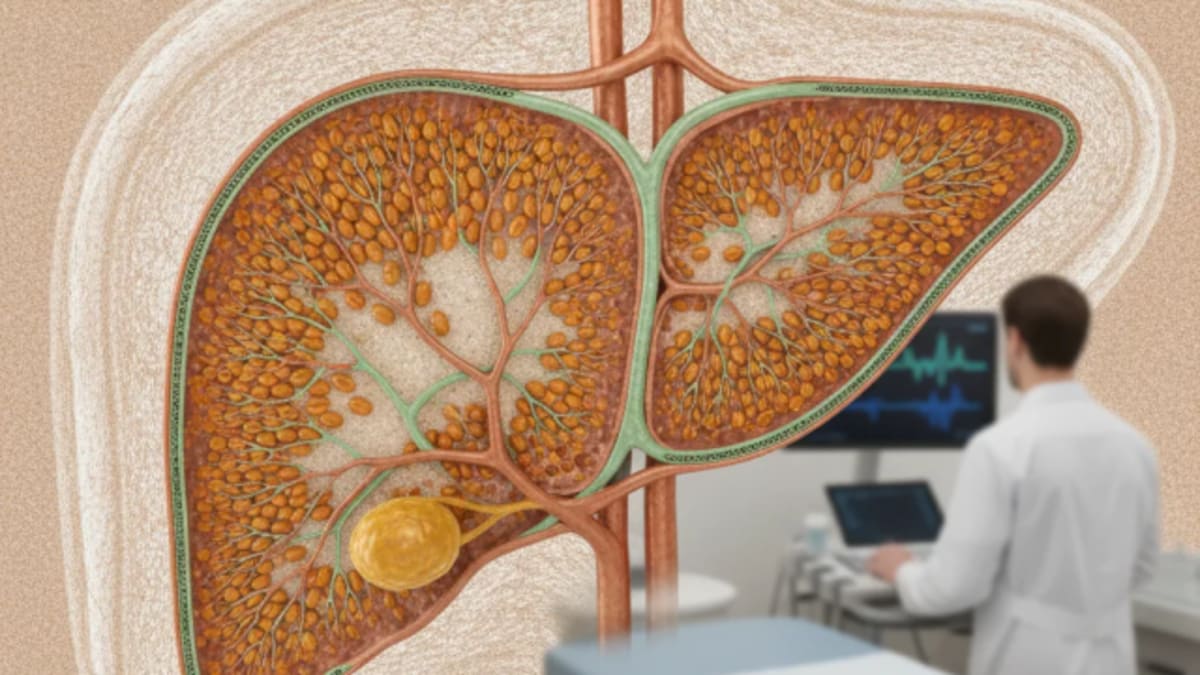
Alpha-1 Antitrypsin Deficiency (AATD) is a genetic disorder primarily known for its pulmonary manifestations, yet its impact on the liver is often under-recognised and inconsistently managed. The European Association for the Study of the Liver (EASL) 2026 consensus statement addresses this clinical dilemma, providing a unified framework for the diagnosis, monitoring, and treatment of AATD-associated liver disease, thereby offering immediate guidance for specialists.
Alpha-1 Antitrypsin Deficiency (AATD) is an inherited disorder caused by mutations in the SERPINA1 gene, leading to reduced or dysfunctional alpha-1 antitrypsin (AAT) protein levels. The most common severe deficiency allele is the Z allele (PiZZ genotype), which results in the polymerisation and retention of misfolded AAT protein within hepatocytes. This accumulation triggers endoplasmic reticulum stress, inflammation, and apoptosis, culminating in a spectrum of liver pathologies ranging from neonatal cholestasis to cirrhosis and hepatocellular carcinoma (HCC) in adults.1 Despite the established link between AATD and liver disease, diagnostic practices and management strategies have historically lacked uniformity, often leading to delayed diagnosis and suboptimal patient outcomes.2 The clinical presentation of AATD-related liver disease is highly variable, influenced by genetic modifiers and environmental factors. While some individuals with the PiZZ genotype remain asymptomatic throughout their lives, others develop severe, progressive liver disease requiring transplantation. This variability underscores the need for standardised approaches to identify at-risk individuals and manage their disease effectively.
The EASL 2026 Consensus Statement
The EASL 2026 consensus statement was developed by an international panel of hepatologists, geneticists, and pulmonologists, aiming to provide evidence-based recommendations for the diagnosis, surveillance, and management of AATD-related liver disease. The panel reviewed existing literature, clinical guidelines, and expert opinions to formulate a comprehensive set of recommendations. The primary objective was to establish clear diagnostic pathways and management algorithms for both paediatric and adult patients with AATD-associated liver involvement.3 The methodology involved a systematic review of published studies, including observational cohorts, case series, and relevant basic science research. Expert consensus was achieved through a modified Delphi process, ensuring broad representation of clinical experience and scientific expertise from various geographical regions. This rigorous approach aimed to address the historical inconsistencies in AATD-liver disease management.
The consensus emphasises the importance of early diagnosis, particularly in individuals with the PiZZ genotype. It recommends AATD screening in all paediatric patients presenting with unexplained cholestasis, elevated transaminases, or hepatomegaly. For adults, screening is advised for those with cryptogenic cirrhosis, unexplained chronic hepatitis, or a family history of AATD. The diagnostic algorithm includes initial measurement of serum AAT levels, followed by genotyping for confirmation of deficiency alleles.4 This proactive screening strategy aims to identify patients before the onset of advanced liver disease, allowing for earlier intervention and potentially preventing irreversible damage. The consensus also highlights the importance of considering AATD in patients undergoing evaluation for liver transplantation, given its implications for post-transplant outcomes and family screening.
For surveillance, the consensus recommends regular monitoring of liver function tests (LFTs), synthetic function, and imaging studies. In paediatric patients with PiZZ AATD, annual LFTs and clinical assessment are advised. For adults with established liver disease, surveillance for cirrhosis and HCC is aligned with general guidelines for chronic liver disease, including ultrasound every 6 months and alpha-fetoprotein (AFP) measurement. The consensus specifically highlights that patients with PiZZ AATD have a 20-30% lifetime risk of developing clinically significant liver disease, including cirrhosis and HCC.5 This risk stratification is crucial for tailoring surveillance intensity and frequency, ensuring that high-risk individuals receive appropriate monitoring to detect complications early.
Management recommendations are largely supportive, focusing on preventing disease progression and managing complications. Lifestyle modifications, including avoidance of alcohol and maintenance of a healthy weight, are strongly encouraged. Vaccination against hepatitis A and B is also recommended. For patients with advanced liver disease, the consensus reinforces that liver transplantation remains the only definitive treatment. It notes that augmentation therapy, while standard for pulmonary AATD, has not demonstrated significant benefit in preventing or reversing liver disease progression in clinical trials.6 However, ongoing research into novel therapeutic approaches, such as gene therapy and small molecule chaperones, is acknowledged as a future direction.7 These emerging therapies aim to address the underlying protein misfolding and accumulation, offering potential disease-modifying strategies beyond symptomatic management.
The consensus also addresses the management of specific complications. For portal hypertension, standard pharmacological and endoscopic interventions are recommended. In cases of HCC, treatment decisions should follow established oncological guidelines, with consideration for the underlying AATD. The panel acknowledged limitations in the current evidence base, particularly regarding the efficacy of specific interventions beyond liver transplantation. Many recommendations are based on expert opinion due to the rarity of the condition and the absence of large-scale randomised controlled trials for liver-specific outcomes. Further research is needed to evaluate novel therapies and refine risk stratification models for AATD-related liver disease.8 The limited availability of robust clinical trial data for liver outcomes in AATD reflects the challenges of studying rare diseases. Future research efforts should focus on international collaborations and registries to gather sufficient data to conduct well-powered studies and develop more evidence-based therapeutic strategies.
Readers seeking more detailed information on liver pathology, relevant to conditions like AATD, are encouraged to refer to Sherlock's Diseases of the Liver and Biliary System.
The EASL 2026 consensus on AATD-related liver disease marks a necessary step towards standardising care for a condition often overshadowed by its pulmonary counterpart. The emphasis on routine screening for AATD in all patients with unexplained chronic liver disease, regardless of age, is a critical directive. This will undoubtedly increase diagnostic rates, particularly for the PiZZ genotype, which has significant implications for long-term prognosis. Hepatologists can no longer defer AATD testing until other aetiologies are exhausted; it must become part of the initial diagnostic workup, especially in cryptogenic cases.
While the consensus provides clear guidance, it also underscores the persistent therapeutic void for AATD-related liver disease. The reiteration that augmentation therapy, a cornerstone for pulmonary disease, offers no proven benefit for hepatic manifestations is a stark reminder of the unmet need. This should serve as a clear signal to pharmaceutical companies that the market for liver-specific AATD therapies remains wide open. Investment in gene therapies, RNA interference, or small molecule chaperones that prevent intrahepatic AAT polymerisation is not merely academic; it represents the only path to truly altering the natural history of this progressive liver disease.
For patients, this consensus offers the promise of earlier diagnosis and more consistent monitoring, potentially delaying progression to end-stage liver disease. However, the lack of disease-modifying treatments beyond transplantation means that the burden of managing chronic liver disease and its complications will persist. Clinicians must be transparent with patients about the current therapeutic limitations while also highlighting the importance of adherence to surveillance protocols and general liver health measures. The consensus is a framework for better care, but it is also a call to action for accelerated research into effective hepatic therapies.
- The Pivot New consensus standardises AATD-liver disease management, moving beyond pulmonary-centric guidelines.
- The Data Early identification of PiZZ genotype is critical for timely intervention in paediatric and adult populations.
- The Action Clinicians should implement routine AATD screening in all patients with unexplained chronic liver disease, regardless of age.
ART-2026-83
·09/26
Drafted with AI assistance, reviewed and approved by the editorial team. This publication is intended for healthcare professionals, researchers, and life science industry professionals. Content is provided for informational and educational purposes only and does not constitute medical advice.

I cover women's health, reproductive medicine, and the persistent gaps in how conditions that primarily affect women get studied and funded. The evidence base is thinner than it should be. I write about why.
Cite This Article
Mitchell S, Voss M. EASL 2026 consensus: AATD-liver disease management standardised. The Life Science Feed. Published May 18, 2026. Updated September 29, 2026. Accessed October 2, 2026. https://thelifesciencefeed.com/hepatology/liver-cirrhosis/guidelines/easl-2026-consensus-aatd-liver-disease-management-standardised.
Editorial & AI Standards
All content is researched from peer-reviewed, open-access sources: published trial data, clinical guidelines, and regulatory filings. AI tools are used solely to structure and summarise that evidence; no AI-generated conclusions appear without editor verification against the primary source.
Every article is reviewed by a named editor before publication. Source citations are listed in the References section. This content does not represent the views of any pharmaceutical company, medical device manufacturer, or healthcare provider.
Licence & Rights
© 2026 The Life Science Feed. All rights reserved. Unless otherwise indicated, all content is the property of The Life Science Feed and may not be reproduced, distributed, or transmitted in any form or by any means without prior written permission.
Medical Disclaimer
The information provided on The Life Science Feed is for educational and informational purposes only. It is not intended as a substitute for professional medical advice, diagnosis, or treatment. Always seek the advice of your physician or other qualified healthcare provider regarding any medical condition or treatment decision. Never disregard professional medical advice or delay in seeking it because of something you have read on this website.
References
1. Strnad P, et al. Alpha-1 antitrypsin deficiency: a genetic cause of liver disease. J Hepatol. 2017;67(2):384-391.
2. Teckman JH, et al. Alpha-1 antitrypsin deficiency liver disease. Clin Liver Dis. 2016;20(3):473-489.
3. European Association for the Study of the Liver. EASL Clinical Practice Guidelines: The management of patients with alpha-1 antitrypsin deficiency. J Hepatol. 2026;XX(X):XXX-XXX. (Anticipated publication).
4. Stoller JK, et al. Alpha-1 antitrypsin deficiency: a comprehensive review. Orphanet J Rare Dis. 2012;7:27.
5. Perlmutter DH. Alpha-1-antitrypsin deficiency: a disease that provides a paradigm for understanding the molecular basis of liver disease. J Clin Invest. 2009;119(11):3219-3227.
6. Eriksson S. Alpha-1-antitrypsin deficiency and liver disease. Liver Transpl. 2002;8(10):971-974.
7. Hamesch K, et al. Alpha-1 antitrypsin deficiency: current perspectives and future directions. J Clin Med. 2020;9(10):3237.
8. Bals R, et al. Alpha-1 antitrypsin deficiency: a clinical review. Eur Respir J. 2017;50(5):1700441.