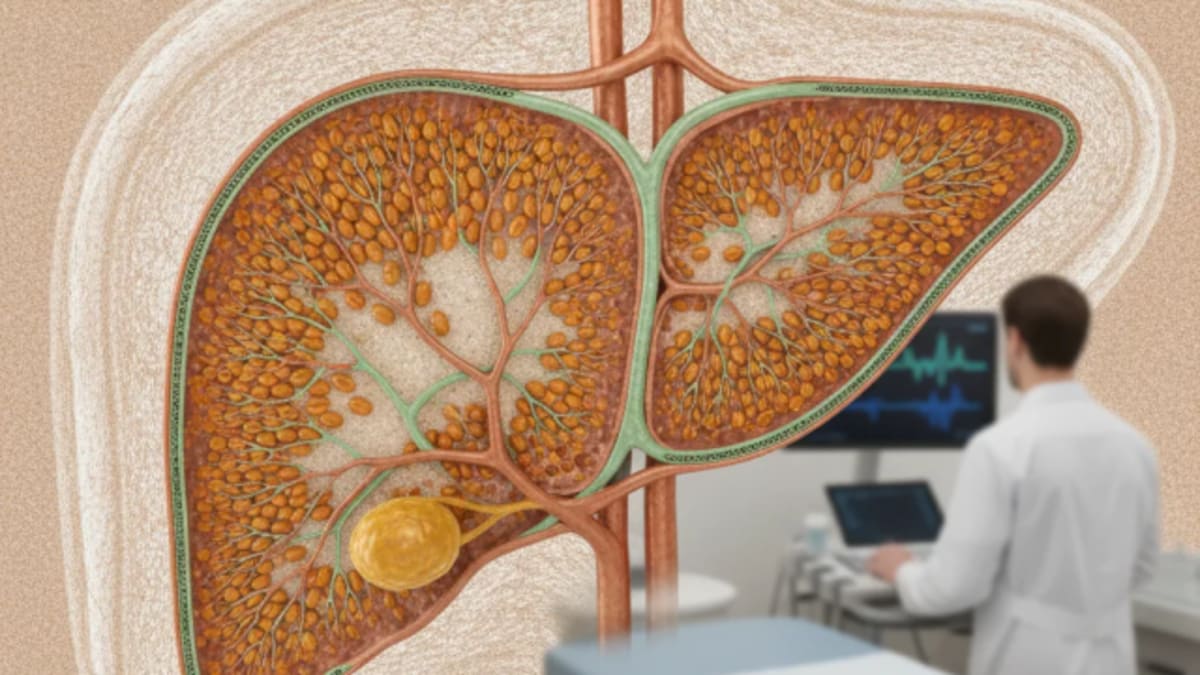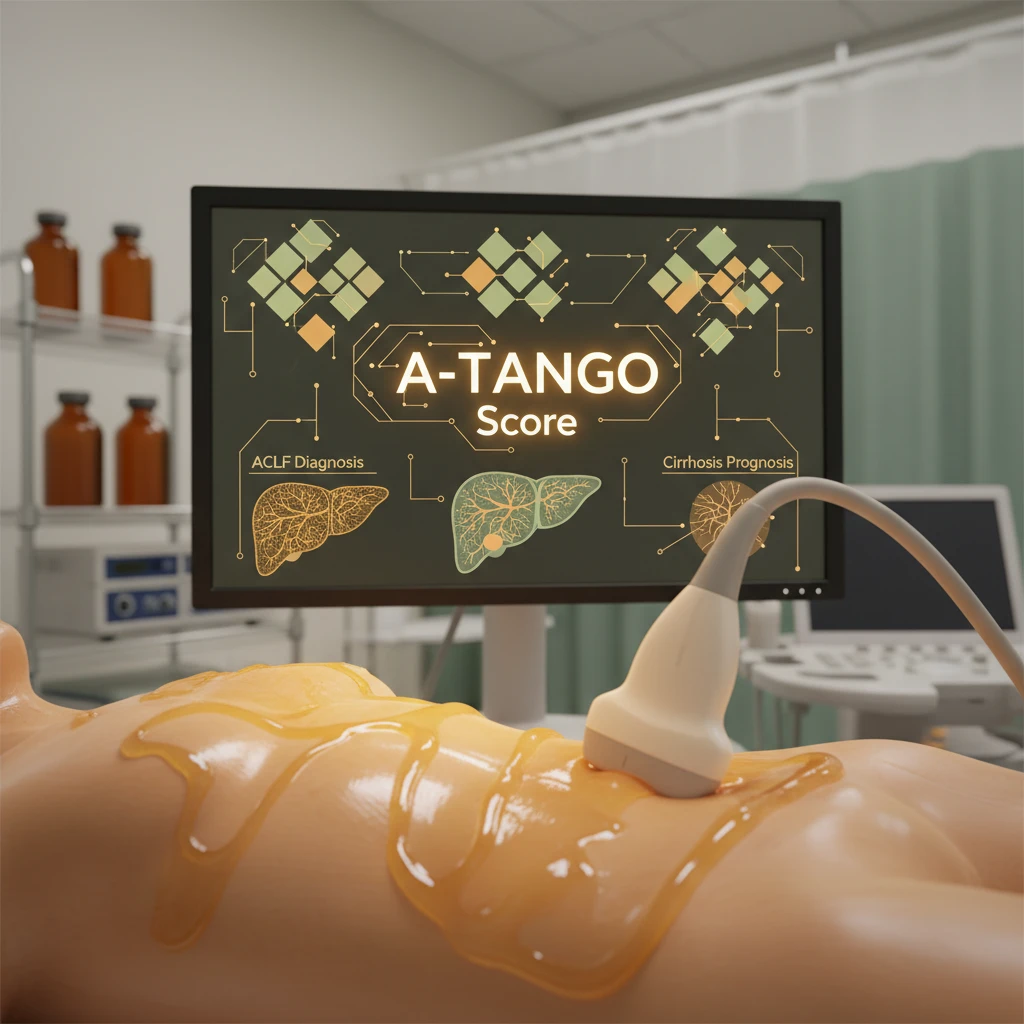

Acute-on-chronic liver failure (ACLF) in hospitalised patients with decompensated cirrhosis carries high short-term mortality, necessitating precise diagnostic and prognostic tools. The newly developed A-TANGO organ failure (OF) score aims to refine ACLF diagnosis and enhance its utility for treatment response evaluation and risk stratification, addressing limitations of existing criteria.1,2
Acute-on-chronic liver failure (ACLF) is a severe condition characterised by multiorgan failure and high short-term mortality in hospitalised patients experiencing acute decompensation of cirrhosis.1,2 While the European Association for the Study of the Liver-Chronic Liver Failure (EASL-CLIF) criteria have been widely adopted for both diagnosis and prognostication, ongoing advancements in understanding organ dysfunction and the emergence of new therapeutic approaches necessitate updated, more precise criteria.1,2 The objective of this research was to develop and validate the A-TANGO organ failure (OF) score, with the aim of refining ACLF diagnosis and improving its applicability for evaluating treatment response and stratifying patient risk.1,2
Development and Validation of the A-TANGO Score
The A-TANGO organ failure (OF) score was developed and validated through a comprehensive process involving global cohorts.1,2 The primary goal was to create a diagnostic and prognostic tool that offers enhanced accuracy for ACLF, particularly in light of evolving definitions of organ dysfunction and the availability of new therapies.1,2 The development process focused on tailoring criteria to improve diagnostic precision, facilitate the assessment of treatment efficacy, and enhance risk stratification capabilities within clinical trials and practice.1,2
The validation of the A-TANGO score involved assessing its performance against existing diagnostic criteria, specifically the EASL-CLIF criteria.1,2 The research aimed to demonstrate that the A-TANGO score could provide a more refined diagnosis of ACLF, leading to improved prognostication for hospitalised patients with acute decompensation of cirrhosis.1,2 The utility of the score extends to its potential for more accurate evaluation of patient response to interventions and for better categorising patients based on their risk of short-term mortality.1,2
ACLF represents a distinct clinical entity from acute decompensation of cirrhosis, marked by a rapid deterioration of liver function and the development of extrahepatic organ failures. The pathophysiology involves systemic inflammation, immune dysfunction, and circulatory alterations, which contribute to the progression of organ damage. Early and accurate diagnosis of ACLF is critical for timely intervention, as delayed recognition is associated with significantly worse outcomes. Current management strategies often involve supportive care, treatment of precipitating factors, and in select cases, liver transplantation. The development of new diagnostic tools like A-TANGO is crucial for identifying patients who may benefit most from specific therapies and for guiding resource allocation in critical care settings. The global incidence of ACLF is substantial, with varying prevalence depending on geographical region and underlying etiologies of cirrhosis, such as alcohol-related liver disease, viral hepatitis, and non-alcoholic fatty liver disease. Improved diagnostic precision can therefore have a significant impact on public health worldwide.
In a related but distinct area, the European Association for the Study of the Liver (EASL) algorithm for the noninvasive diagnosis of advanced fibrosis in metabolic dysfunction-associated steatotic liver disease (MASLD) has been adopted and validated in low-resource South Asian settings.3 This initiative highlights the broader effort within hepatology to improve diagnostic accuracy and accessibility for various liver conditions, including those that can progress to cirrhosis and potentially ACLF.3 While not directly part of the A-TANGO score development, the validation of noninvasive fibrosis algorithms underscores the importance of accurate and accessible diagnostic tools in managing advanced chronic liver disease globally.3
Limitations and Future Directions
The abstracts provided indicate that the A-TANGO score was developed and validated in global cohorts, suggesting a broad applicability.1,2 However, specific details regarding the size, diversity, and characteristics of these cohorts, as well as the precise methodology of the validation, are not detailed in the abstracts.1,2 Further investigation into the full papers would be necessary to understand the exact components of the A-TANGO score, its specific performance metrics (e.g., sensitivity, specificity, predictive values), and how it directly compares to the EASL-CLIF criteria in terms of clinical outcomes.1,2 The abstracts state the aim to improve diagnostic accuracy, treatment assessment, and applicability in clinical trials, but the extent to which these aims were met with quantifiable results remains to be fully elucidated.1,2 Future research will likely focus on prospective validation in diverse clinical settings and integration into clinical decision-making algorithms to assess its real-world impact on patient management and outcomes.
A key limitation of any new scoring system is its generalizability across different patient populations and healthcare systems. While the mention of "global cohorts" is promising, the specific demographic, etiological, and clinical characteristics of these cohorts are critical for assessing the score's external validity. For instance, the prevalence of specific organ failures or the response to standard therapies may differ significantly between regions with high rates of alcohol-related cirrhosis versus those with predominant viral hepatitis. Furthermore, the practical implementation of the A-TANGO score in resource-limited settings, where access to advanced diagnostics may be restricted, warrants careful consideration. The operational definitions of organ failure within the A-TANGO score, and how they align with or diverge from existing criteria, will also influence its clinical utility and comparability. Future studies should also explore the cost-effectiveness of implementing the A-TANGO score in routine clinical practice and its potential to reduce healthcare burdens associated with ACLF.
For a comprehensive overview of hepatic pathologies, including Acute-on-Chronic Liver Failure, readers may consult Sherlock's Diseases of the Liver and Biliary System.
The introduction of the A-TANGO organ failure score represents a necessary evolution in the diagnosis and prognostication of acute-on-chronic liver failure. While the EASL-CLIF criteria have served their purpose, the landscape of liver disease management, particularly with emerging therapies, demands more granular and adaptable tools. Clinicians managing patients with decompensated cirrhosis should anticipate a shift in diagnostic paradigms, requiring familiarity with the A-TANGO score to accurately stratify risk and assess treatment response. This is not merely an academic exercise; precise diagnosis directly impacts resource allocation and the intensity of care, potentially influencing patient survival.
For the pharmaceutical industry, refined diagnostic criteria like A-TANGO are critical. Clinical trials for new ACLF therapies will undoubtedly adopt these updated scores, allowing for more homogeneous patient populations and, theoretically, clearer signals of efficacy. Companies developing drugs for liver failure will need to demonstrate their agents' impact within the framework of these new definitions. This could accelerate drug development by reducing noise in trial outcomes, but it also places a burden on developers to ensure their trial designs align with the most current diagnostic standards.
Patients stand to benefit from more accurate prognostication, which can inform discussions about treatment intensity, palliative care, and realistic expectations. While the immediate impact of a new scoring system might seem abstract, its downstream effects on personalised medicine for ACLF are substantial. The validation of noninvasive fibrosis algorithms in low-resource settings, though separate, further underscores a global push for accessible, accurate diagnostics. This broader trend suggests a future where liver disease diagnosis is less reliant on invasive procedures and more on sophisticated, validated scoring systems, ultimately improving patient care across diverse healthcare environments.
- The Pivot The A-TANGO organ failure score provides updated, tailored criteria for ACLF diagnosis and prognostication, improving upon the widely used EASL-CLIF criteria.
- The Data The A-TANGO score was developed and validated in global cohorts to refine ACLF diagnosis and enhance utility for treatment response and risk stratification.1,2
- The Action Clinicians should consider the A-TANGO score for more precise ACLF diagnosis and prognostication, particularly in the context of evolving definitions of organ dysfunction and emerging therapies.
ART-2026-89
·09/26
Drafted with AI assistance, reviewed and approved by the editorial team. This publication is intended for healthcare professionals, researchers, and life science industry professionals. Content is provided for informational and educational purposes only and does not constitute medical advice.

I cover NHS policy, NICE guidance, and the gap between what the evidence says and what gets commissioned. I bring a health economics background to reporting on how health systems make decisions under uncertainty.
Cite This Article
Mistry D, Voss M. A-TANGO score refines ACLF diagnosis, prognosis in cirrhosis. The Life Science Feed. Published May 18, 2026. Updated September 16, 2026. Accessed October 2, 2026. https://thelifesciencefeed.com/hepatology/liver-cirrhosis/research/a-tango-score-refines-aclf-diagnosis-prognosis-cirrhosis.
Editorial & AI Standards
All content is researched from peer-reviewed, open-access sources: published trial data, clinical guidelines, and regulatory filings. AI tools are used solely to structure and summarise that evidence; no AI-generated conclusions appear without editor verification against the primary source.
Every article is reviewed by a named editor before publication. Source citations are listed in the References section. This content does not represent the views of any pharmaceutical company, medical device manufacturer, or healthcare provider.
Licence & Rights
© 2026 The Life Science Feed. All rights reserved. Unless otherwise indicated, all content is the property of The Life Science Feed and may not be reproduced, distributed, or transmitted in any form or by any means without prior written permission.
Medical Disclaimer
The information provided on The Life Science Feed is for educational and informational purposes only. It is not intended as a substitute for professional medical advice, diagnosis, or treatment. Always seek the advice of your physician or other qualified healthcare provider regarding any medical condition or treatment decision. Never disregard professional medical advice or delay in seeking it because of something you have read on this website.
References
1. Engelmann C, Verma N, Qi T. Development and validation of the A-TANGO organ failure score for acute-on-chronic liver failure in global cohorts. J Hepatol 2026.
2. Budau KL, Thimme R, Sturm L. [Acute-on-chronic liver failure]. Dtsch Med Wochenschr 2026.
3. Mettananda C, Ranawaka C, Egodage T. Adoption and validation of the European Association for the Study of the Liver algorithm for the noninvasive diagnosis of advanced fibrosis in metabolic dysfunction-associated steatotic liver disease in low-resource South Asian settings. PLoS One 2026.