Hosted by Sophie Ward & David Mistry
Transcription
So, imagine finally finding a drug that actively clears Alzheimer's from your brain.
Right, the holy grail of neurology.
Exactly. But then you discover that the very act of cleaning the brain actually, um, fundamentally compromises its structural integrity.
Yeah, it's a terrifying reality.
You go in for this revolutionary infusion and the plaque is genuinely stripped away, but in the process your brain begins to swell with fluid.
Or even worse, the blood vessels just start spontaneously bleeding.
Right. And this isn't just some rare one in a million thing. In the trailblazer ALZ2 trial for Donanemab, nearly a third of all patients experienced this exact paradox.
Almost a third. It's really staggering when you think about it.
We're standing at the threshold of this monumental breakthrough in neurodegenerative medicine, but, you know, it carries this formidable defining safety challenge.
It changes everything about how we can actually deploy these drugs in the real world.
Welcome to today's deep dive. We are exploring the phenomenon known as ARIA or amyloid related imaging abnormalities.
And this whole discussion today is sourced directly from a really insightful clinical breakdown.
Yeah, from the Dementia Frontier series.
Exactly. Their expert discussion titled Managing ARIA Risk in Anti-Amyloid Therapy.
Which is just a fantastic piece of source material.
It really is. Our mission for this deep dive is to equip you with a practical, thorough understanding of what ARIA actually is.
Because it's not just some footnote on a pharmaceutical leaflet.
No, not at all. We want to get into the underlying biology of why it happens, the severe clinical dilemmas it creates for doctors and patients, and um the massive logistical infrastructure you need to just keep people safe.
Because it's really about the real-world reality of administering these therapies to you or your loved ones.
Exactly. It forces a total re-evaluation of what a cure actually looks like in practice.
I really want to emphasize the stakes here for you listening. In the Clarity Add trial for Lecanemab, 21.4% of participants developed ARIA.
Over one in five.
Yeah. And as I mentioned with Donanemab, it reached 31.4% for a specific type of ARIA.
These are numbers that dictate the entire operational reality of these drugs. You just can't separate the clinical benefit from the radiologically visible risk.
So, let's start with the most fundamental question to kick off this exploration. What exactly is happening inside the brain to cause these staggering numbers?
Well, to understand that, we need to break down the acronym itself. ARIA is an umbrella term, but it encompasses two radiologically distinct phenomena.
Right, they look and behave very differently.
Exactly. We categorize them as ARIA-E and ARIA-H. Let's start with ARIA-E. The E stands for edema or effusion.
Which basically means fluid swelling, right?
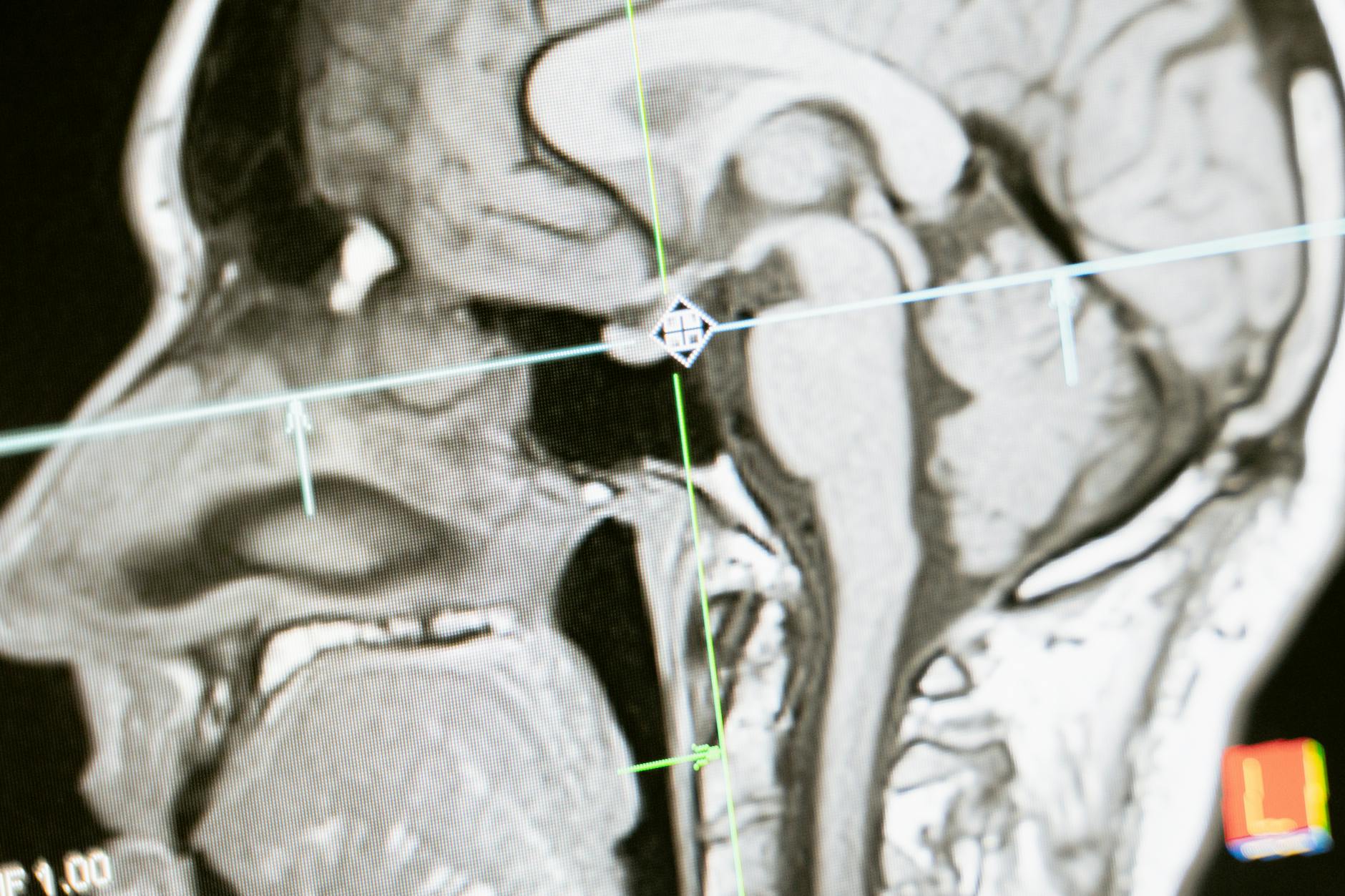
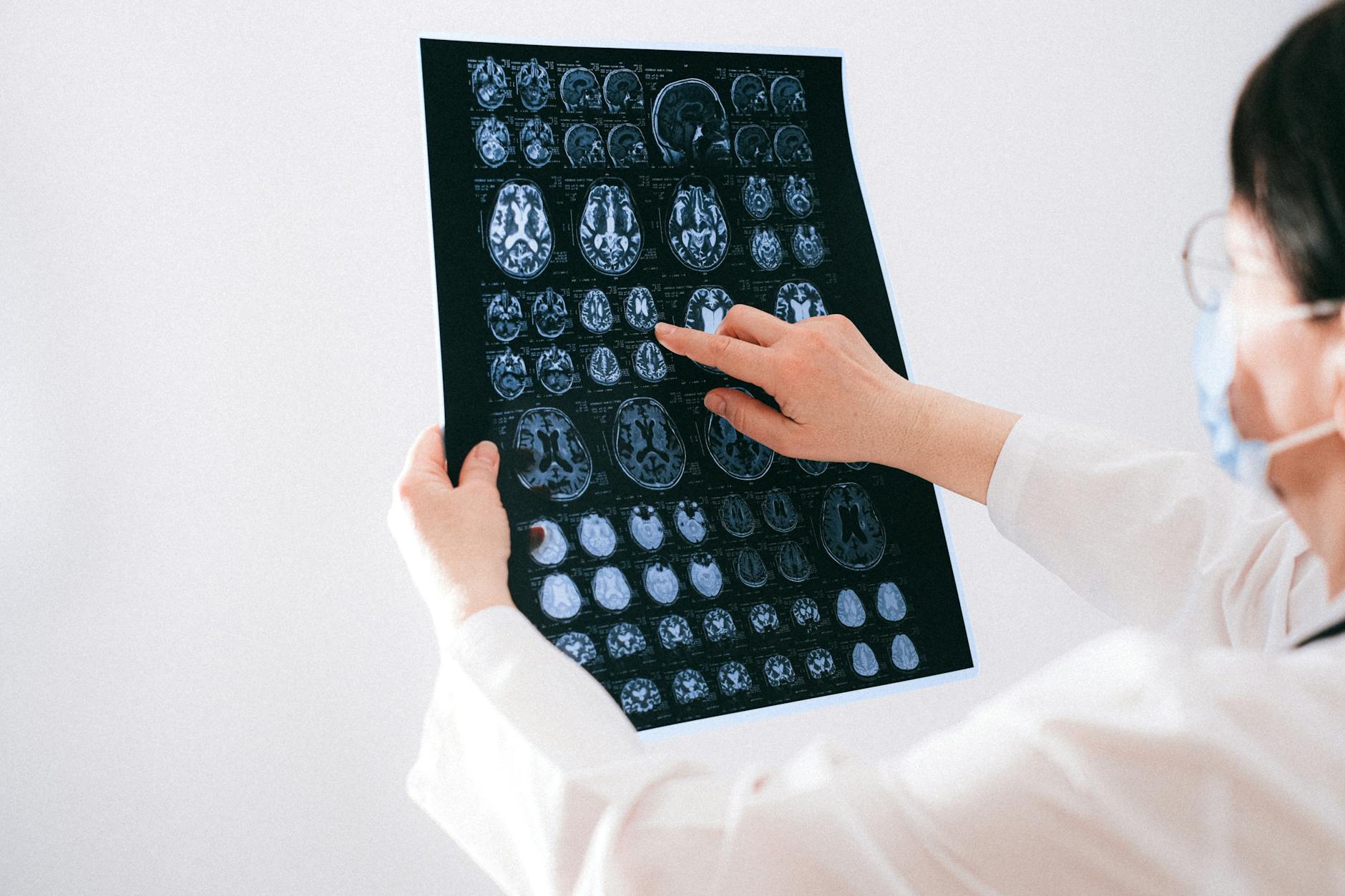
Spot on. When a neuro radiologist is looking at the MRI, specifically the FLAIR sequences, ARIA-E shows up as these areas of increased signal or hyperintensity.
Like bright white spots.
Yeah, exactly. Usually in the white matter or the sulci of the brain. And the critical thing for you to know about ARIA-E is that this is usually the symptomatic version.
Okay, so this is the one that actually makes the patient feel sick.
Right. If a patient gets an infusion and starts having headaches, confusion, maybe sudden visual disturbances or even focal neurological signs like weakness on one side.
You're almost always looking at ARIA-E.
Exactly. The fluid is leaking out, creating physical pressure and disrupting how the cortex functions.
Wow. Okay, so that's the E. What about ARIA-H?
So the H stands for hemosiderin deposits.
That sounds intense. What does that actually mean in plain English?
It basically means microhemorrhages and superficial siderosis. Tiny bleeds in the brain.
And you can't see these on the same MRI scan as the fluid?
No, actually. You can't reliably see them on a standard FLAIR sequence. The protocols require a completely different type of imaging.
The source mentioned gradient echo or something?
Yeah, gradient echo or GRE and susceptibility weighted imaging, which we call SWI. These sequences are highly sensitive to the magnetic properties of iron left behind when blood breaks down.
Got it. So the scanner is literally looking for the rust left behind by the blood.
That's a great way to put it, yeah. But the really deceptive part about ARIA-H is that it's predominantly silent.
Meaning asymptomatic.
Exactly. A patient can have multiple microhemorrhages popping up across their cortex and feel absolutely nothing at all.
Wait, really? Your brain is literally bleeding and you don't even have a headache?
Often, yes. But even though it's silent, it's highly dangerous if those bleeds accumulate. It represents a cumulative structural deterioration.
So that brings up the obvious question of the why, the mechanism of action.
Right. Why does a drug meant to cure Alzheimer's cause the brain to swell and bleed?
Because these drugs, these anti-amyloid antibodies, they're designed to mobilize and clear the amyloid deposits, right?
They are. They bind to the beta amyloid, signal the brain's immune system, and start clearing the junk out.
So why does that specific targeted process cause vascular damage?
Because of where the amyloid is actually located. We always think of Alzheimer's as these plaque sitting right in the brain tissue, suffocating the neurons.
The parenchyma, I think the term is.
Exactly, the parenchyma. But amyloid doesn't just sit there. It also deposits heavily into the walls of the cerebral blood vessels themselves.
Ah, okay. So it's not just in the tissue, it's in the actual plumbing of the brain.
Yes. We call this condition cerebral amyloid angiopathy or CAA.
So when you introduce these aggressive antibodies, they don't know the difference between the plaque on a neuron and the plaque in the blood vessel.
They don't. They just attack amyloid wherever it is. They clear it from the tissue, but they also pull it out of the vessel walls.
I was actually thinking about an analogy for this earlier. It's kind of like your home's plumbing.
Okay, let's hear it.
Imagine your old pipes are full of this hard calcification, the amyloid. It's terrible for the water pressure, obviously.
Clogging the system.
But over the decades, that hard calcification has actually become part of the structural integrity of those old pipes.
Oh, yeah. That makes perfect sense.
It's essentially holding the brittle metal together. So if you hire someone to aggressively power wash the inside of those pipes, they get perfectly clean, right?
But suddenly the walls are incredibly thin, porous, and prone to leaking.
Exactly. You've removed the very thing that was in a highly dysfunctional way keeping them sealed.
That is a perfect conceptual analogy for the listener. When the drug rapidly strips the amyloid from the smooth muscle layers of those cerebral vessels, the vessel wall becomes transiently permeable.
It just gets weak.
It gets very weak. And if blood plasma and fluid leak through that weakened wall into the brain tissue, you get the swelling. ARIA-E.
And if the structural damage is even worse.
If actual red blood cells breach the wall, you get the microhemorrhages. ARIA-H.
Which completely reframes how we have to think about this, right? It's not a toxic reaction or an allergy.
No, not at all. ARIA is actually an active marker that the drug is doing exactly what it was engineered to do.
It's successfully cleaning the pipes. The problem is just that the pipes were too fragile to survive the cleanup without leaking.
Precisely. It's working at the vascular interface and that interface is just inherently vulnerable.
Which explains why figuring out someone's baseline risk before they even start treatment is so incredibly important.
It's the most critical step. Because of this mechanical reality, patients who walk into the clinic with more pre-existing amyloid in their blood vessels.
Basically, people who start out with fundamentally weaker pipes.
Right. Those patients face a drastically elevated risk right out of the gate.
The source material noted the FDA label guidance on this, which is pretty strict.
Very strict. It explicitly states that patients starting the treatment with more than four microhemorrhages on their baseline scan face a meaningfully elevated risk.
Or any area of superficial siderosis, right?
Yes. If you see that on the baseline MRI, you are looking at a vascular system that is already compromised. It demands very careful consideration before you even think about starting an infusion.
So, if the risk of getting ARIA is tied directly to how much amyloid is structurally embedded in your blood vessels.
We have to look at what dictates that build up in the first place.
Exactly. Which leads us straight into the genetic factors. Specifically, the APOE4 paradox.
This is where the biology gets really heavy. The APOE4 gene is the strongest common genetic risk factor for late-onset Alzheimer's disease.
Let's break that down for the listener. Everyone inherits two copies of the APOE gene, right? One from each parent.
Right. And most people have the APOE3 variant. But if you inherit one copy of the APOE4 variant, you're called a heterozygote.
And what does that do to your risk of getting Alzheimer's?
It increases your lifetime risk roughly threefold.
Wow, just from one copy. But what if you get two copies?
If you're a homozygote, meaning you inherited APOE4 from both parents, your risk of developing Alzheimer's increases tenfold or more.
Tenfold? That's a massive target on your back for this disease.
It is, but the crucial distinction here and the vital takeaway for anyone listening.
Is that in the context of these new anti-amyloid therapies, the relevant risk of having APOE4 isn't just about getting Alzheimer's.
Exactly. It's about getting ARIA once you're actually treated for it.
Because the biology bridges the two. The source explains that APOE4 is linked to a much higher severity of that cerebral amyloid angiopathy we just talked about.
Right, the pipe calcification. People with APOE4 don't just have more plaque in their brain tissue. They have vastly more plaque embedded in their blood vessels.
Their pipes are inherently more diseased and fragile.
Exactly. So when you hit that fragile system with an aggressive clearance drug, the ARIA numbers just explode.
Let's actually look at the numbers from the Clarity Add trial for Lecanemab, because they show how drastically this single gene impacts the rates of ARIA-E.
The fluid swelling.
Right. So, for the non-carriers, people with zero copies of APOE4, the rate of ARIA-E was about 9%.
Which is still a real risk, but clinically manageable.
But then you look at the heterozygotes, the people with one copy. Their rate was roughly 17%.
So it basically doubles just from having one copy.
Yeah. But the homozygotes, the people with two copies, their ARIA-E rate approached 35% or even higher in some cohorts.
It roughly quadruples compared to the non-carriers.
I mean, I have to push back on this a little or at least point out the absolute brutality of this paradox.
It is brutal.
We finally, after decades of failure, we finally have a class of drugs to treat early Alzheimer's.
Yes.
But the very people genetically most likely to develop the disease, the ones who need it the absolute most, are the ones facing the most extreme danger from the cure.
You've hit the nail on the head. It's an agonizing clinical reality. The source material highlights this clearly. Homozygotes in the trailblazer ALZ2 trial had the highest rates of serious ARIA.
Including hospitalizations, right?
Yes. Severe events requiring hospitalization. And we have to mention the fatalities. The trial saw three deaths, two on aducanumab, one on lecanemab, that were directly linked to ARIA.
And those were primarily in patients with highly vulnerable cerebrovascular profiles, like the homozygotes.
Precisely. Because their blood vessels just could not withstand the rapid clearance of the amyloid.
So how does the medical community even handle that? Do they just give it to them and hope for the best?
No, absolutely not. The medical consensus right now, including guidance from the Alzheimer's Association, is very clear.
It is.
APOE4 homozygotes should generally not be treated with current anti-amyloid agents outside of clinical trials.
They're just locked out of the therapy entirely.
For their own safety, yes.
Yeah.
The risk of a fatal hemorrhage is just considered too high.
I just keep thinking about the psychological weight of this for the doctors and the patients, because genotyping is now a mandatory prerequisite, right?
And you absolutely cannot start these drugs without a genetic test.
So a clinician has to sit down with a terrified patient who's starting to lose their memory and they have to have this incredibly heavy conversation before they even run the test.
Right. Pre-test counseling is essential. Because you're not just swabbing a cheek to see if they qualify for a drug.
You're potentially about to hand them a genetic death sentence.
Well, you're revealing an unalterable genetic vulnerability. If the test comes back homozygous, you have to look them in the eye and say, not only are you denied this new therapy,
But the reason you're denied is that your baseline risk for aggressive Alzheimer's is tenfold higher.
It's a devastating double blow. You're giving them the worst possible news about their future and simultaneously taking away the one tool that might have slowed it down.
It's just heartbreaking. But it really underscores why genetics is this inherent risk we have to test for.
It's unchangeable.
Right. But what happens when this new intense therapy collides with an acquired medical condition?
Oh, right. The comorbidities.
Specifically, the most common acquired medical condition in this exact older demographic. This brings us to section three. The anticoagulation dilemma.
The ultimate clinical Catch 22.
Exactly. Let's paint a picture of the target patient for these drugs. We're generally talking about older adults, typically in their late 60s to mid 70s, who have early Alzheimer's.
Right. Mild cognitive impairment or mild dementia.
When you look at that exact population, there is a massive prevalence of atrial fibrillation or Afib.
It's incredibly common. Approximately 10% to 15% of all adults over the age of 75 have Afib.
And if you look at adults over 80,
It rises to 20% to 25%. So up to a quarter of your potential Alzheimer's patient pool has an irregular, rapid heart rhythm that severely compromises blood flow.
And that irregular rhythm massively increases the risk of a blood clot forming in the heart and shooting out to the brain.
Right, which causes a massive ischemic stroke.
So the conflict here, the Catch 22, is how we treat that Afib. Patients in this age bracket almost universally require anticoagulation, right? Blood thinners.
Yes. We use a scoring system called CHA2DS2-VASc to calculate their stroke risk. It adds points for things like age, hypertension, diabetes, heart failure.
And an 80-year-old with Alzheimer's is basically guaranteed to have a high score.
Absolutely. So they are put on DOACs, direct oral anticoagulants to keep their blood thin and prevent a catastrophic stroke.
Okay, so here's where the wall is hit. The pivotal phase three trials that prove Lecanemab and Donanemab actually work.
They entirely excluded patients on anticoagulants.
That was a yes.
Yes. It's a standard safety precaution in early trials for drugs with a bleeding risk. But it means we have a massive gap in safety data for a huge chunk of the real world population.
I was trying to frame this dilemma earlier. It's kind of like finding a leak in the roof of your house, but you also have a gas leak in the basement.
Well, that's a good one.
Fixing the roof requires shutting off the ventilation, which basically guarantees the gas in the basement is going to explode. You can only fix one problem and you have to choose which one is deadlier.
That is a very accurate, albeit stressful analogy. Treating the brain requires a drug that causes microbleeds. Treating the heart requires a drug that stops blood from clotting.
So if you combine them,
You're sending artificially thin blood through structurally compromised, highly permeable cerebral blood vessels.
Which just amplifies the danger to a terrifying degree.
Radically amplifies it. The limited registry data we have shows that giving anti-amyloid therapies to someone on blood thinners turns a silent, harmless ARIA-H microbleed into a severe symptomatic brain hemorrhage.
Because the brain's natural clotting cascade, which usually stops those tiny leaks, is completely suppressed by the DOAC.
Exactly. You can turn a tiny spot of rust on an MRI into a massive, potentially fatal bleed.
So what's the verdict? When a doctor has a patient with both early Alzheimer's and Afib, what do they do?
The prevailing clinical consensus is very firm on this. The stroke risk from untreated atrial fibrillation almost always exceeds the stroke risk from ARIA-H.
Meaning the blood thinner wins.
Blood thinner takes absolute priority. You have to prevent the stroke. Which means, unfortunately, the patient is precluded from receiving the anti-amyloid therapy.
Another massive group of patients locked out.
Yes. There are very rare exceptions, of course.
Like what?
Well, for example, if a patient is on time-limited anticoagulation for a venous thromboembolism, like a leg clot after a surgery.
Oh, so they only need the blood thinner for a few months.
Right. Once they safely come off the DOAC, a window for Alzheimer's treatment might open up. Or in some complex cases, a patient might get a successful, durable rhythm ablation for their Afib from a cardiologist.
Which fixes the heart rhythm so they don't need the blood thinner anymore.
Exactly. But these are complex shared decisions. It really highlights that memory clinic physicians can no longer operate in a silo.
Right. A neurologist can't just prescribe a pill and say, see you in six months.
Managing this requires deep, ongoing collaboration with cardiologists, hematologists, and internal medicine.
It's a completely multidisciplinary necessity now.
Totally.
Okay. So let's transition to the final hurdle. Let's say a patient somehow runs this gauntlet and survives.
They pass the genetic test, no double APOE4.
Right, and they passed the demographic test, no severe Afib requiring blood thinners.
And their baseline MRI looks clean.
Yes. They are officially eligible. They now have to face the actual physical and logistical reality of receiving the drug, which brings us to the operational backbone of this whole endeavor.
The MRI surveillance and real world readiness.
Because you don't just get an IV and go home, the monitoring protocols are intense.
They are rigorous and absolutely non-negotiable. Let's break down the Lecanemab protocol first.
Okay, what does a year on Lecanemab look like?
You start with a baseline MRI. Then once the bi-weekly infusions begin, you are mandated to get another MRI before infusion three, infusion five, and infusion seven.
Wait, infusions are every two weeks. So that's an MRI at roughly week four, week eight, and week 12.
Exactly. Four MRI scans in the first three months alone.
That is a massive amount of imaging. What about Donanemab?
Donanemab is slightly different. It requires the baseline scan and then scans at weeks 12, 24, and 52.
So fewer scans.
Yes. The longer intervals reflect its less frequent dosing schedule. Donanemab is given every four weeks compared to Lecanemab's bi-weekly schedule.
But still, you're practically living in the MRI machine, and we have to stress the technological bottleneck here.
Right, because you can't just go to a local clinic with an old scanner.
A standard MRI isn't enough. The source material emphasizes that it requires a 3 Tesla MRI machine.
A 3T scanner, yes. It has a much stronger magnetic field, providing the extreme resolution needed.
And it has to utilize both the FLAIR sequences to catch the fluid, the ARIA-E, and the GRE sequences to catch the silent bleeding, the ARIA-H.
If a hospital doesn't have that specific tech, they cannot safely administer these drugs, period.
And it's not just the machine, it's the person reading the scan. The radiologist has to use a very specific grading algorithm, right?
Yes. They grade any detected ARIA as either mild, moderate, or severe. And that grade dictates exactly what the neurologist does next.
So let's walk through those. What happens if the radiologist grades it as mild?
Mild usually means it's completely asymptomatic, just a tiny bit of fluid or a few new microhemorrhages on the scan.
The patient feels perfectly normal.
Right. In that case, the protocol is generally to continue the treatment, but with enhanced monitoring. You push through it carefully.
And the source notes that only 2.8% of people on Lecanemab and 6.1% on Donanemab experienced symptomatic ARIA anyway. Most of it is mild.
Exactly. But if the scan comes back as moderate ARIA, everything changes.
Moderate means what? Extensive edema?
Extensive fluid, maybe a cluster of new bleeds, or the patient is showing mild symptoms like a persistent headache or slight confusion.
So what's the clinical response to moderate?
You immediately hold the treatment. No more infusions. You wait four to six weeks, repeat the 3T MRI, and you only resume if the ARIA has visually resolved on the scan.
And if it's severe?
Severe means extensive symptoms, maybe seizures, or confluent bleeds on the scan. If it's severe, you discontinue treatment permanently.
I have to ask the critical question here. Is our current medical infrastructure actually equipped for this?
For an oncology level infusion service for Alzheimer's patients.
Yeah. I mean, think about the capacity burden. Lecanemab requires 26 one-hour IV infusions per year.
Plus the mandatory post-infusion observation time to make sure they don't have an allergic reaction.
Right. It's practically a part-time job just to be a patient. Donanemab offers a slight operational advantage, right?
It does. It's quarterly for the first three doses, then monthly. And it clears amyloid so aggressively that patients in the trials often reach a negative PET scan in a median of 12 months.
Meaning they could actually stop taking it?
Yes, they could stop the infusions once the plaque was cleared. But even with that advantage, both drugs require specialized infusion nurses, highly trained neuroradiologists, and massive MRI capacity.
Which brings up a massive issue of geographical inequity.
Oh, absolutely. Access is going to be a huge problem.
Because scheduling six or more MRI scans a year, plus up to 26 hospital infusions. That's a monumental burden.
Think about patients in rural areas, or older patients who have already lost their driving privileges.
Exactly. Can an elderly spouse handle driving two hours to a major academic medical center every other Tuesday?
Can an adult child afford to take a day off work that often? For a huge part of the population, the logistics alone will make this treatment impossible.
It's just biologically available, but operationally inaccessible.
Exactly.
Well, we've covered incredible ground today. Let's rapidly synthesize the key takeaways from this deep dive for you listening.
Sure. Number one. ARIA is a common, vascular-driven reality of these drugs. It's heavily linked to your APOE4 status, and homozygotes are at extreme risk.
Number two. Concurrent anticoagulation for conditions like atrial fibrillation massively amplifies bleeding risks. Clinicians are almost always going to prioritize stroke prevention over Alzheimer's treatment.
And number three. The protocols demand a highly sophisticated, resource-heavy infrastructure. We're talking frequent 3 Tesla MRIs and high-capacity infusion centers.
Why does all this matter to you? Because we are entering an era where Alzheimer's is no longer an untreatable isolated diagnosis.
Right. It's now a complex, multidisciplinary condition that requires extreme vigilance and nuanced risk management.
It changes everything about how we age and how we approach your cognitive decline. But to leave you with a final provocative thought to mull over.
And this extrapolates directly from the infrastructure and geographic constraints we just talked about.
Right. We've developed a class of revolutionary treatments that require bi-weekly hospital visits, specialized 3 Tesla MRIs, and a team of multidisciplinary experts.
Which is incredible science, but
But as these drugs roll out, you really have to wonder, are we inadvertently creating a two-tiered system of aging?
Where the ability to fight off cognitive decline isn't just dictated by your biology or your genetics,
But strictly by your zip code, your transportation access, and your proximity to a major well-funded academic medical center.
It's a sobering thought, but it's the reality of the medical landscape we're walking into.
It really is. Thank you for joining us on this deep dive.
Downloads
More from: Dementia Frontiers Deep Dive Series
The Amyloid Hypothesis, Finally Validated?
After two decades of high-profile failures, lecanemab and donanemab have produced the first positive phase 3 trials in Alzheimer's disease. We examine the CLARITY-AD and TRAILBLAZER-ALZ 2 data, the clinical meaningfulness debate, and what the approvals actually mean at the bedside.
Targeting Tau Inflammation And Alzheimer's Metabolism
Amyloid clearance is only one part of the Alzheimer's story. Why tau remains the closer correlate of cognitive decline, what the TREM2 biology tells us about microglia, what the GLP-1 signal means, and how platform trials are moving toward multi-target combination therapy.

Preventing 45 Percent Of Dementia Cases
The Lancet Commission 2024 estimates 45% of dementia is preventable. SPRINT-MIND showed 19% MCI reduction from intensive blood pressure control. FINGER showed 25% better cognitive scores with multi-domain lifestyle intervention. ACHIEVE showed 48% slowing in high-risk patients with hearing aids. The evidence is here — we walk through it.
Cite This Article
Team TLSFE. Why new alzheimer's drugs make brains bleed?. The Life Science Feed. Updated June 12, 2026. Accessed June 12, 2026. https://thelifesciencefeed.com/neurology/alzheimer-disease/research/why-new-alzheimers-drugs-make-brains-bleed.
Editorial & AI Standards
All content is researched from peer-reviewed, open-access sources — published trial data, clinical guidelines, and regulatory filings. AI tools are used solely to structure and summarise that evidence; no AI-generated conclusions appear without editor verification against the primary source.
Every article is reviewed by a named editor before publication. Source citations are listed in the References section. This content does not represent the views of any pharmaceutical company, medical device manufacturer, or healthcare provider.
Licence & Rights
© 2026 The Life Science Feed. All rights reserved. Unless otherwise indicated, all content is the property of The Life Science Feed and may not be reproduced, distributed, or transmitted in any form or by any means without prior written permission.
Podcast Disclaimer
This podcast is produced for educational and informational purposes only. The conversation between hosts represents a discussion of published clinical evidence and is not intended as clinical advice, a substitute for professional medical judgment, or a recommendation for any specific treatment. Healthcare professionals should rely on their own clinical training, current guidelines, and individual patient assessment when making treatment decisions. The views expressed are those of the hosts and do not constitute endorsement of any specific therapy, product, or manufacturer.
References
1. van Dyck CH et al. Lecanemab in Early Alzheimer's Disease. N Engl J Med. 2023;388:9–21.
2. Sims JR et al. Donanemab in Early Symptomatic Alzheimer's Disease: The TRAILBLAZER-ALZ 2 Randomized Clinical Trial. JAMA. 2023;330(6):512–527.
3. Sperling RA et al. Amyloid-related imaging abnormalities in amyloid-modifying therapeutic trials: recommendations from the Alzheimer's Association Research Roundtable Workgroup. Alzheimers Dement. 2011;7(4):367–385.
4. Cummings J et al. Alzheimer's disease drug development pipeline: 2023. Alzheimers Dement (N Y). 2023;9(2):e12385.
5. Ostrowitzki S et al. Mechanism of amyloid removal in patients with Alzheimer disease treated with gantenerumab. Arch Neurol. 2012;69(2):198–207.
6. Reish NJ et al. Multiple Cerebral Hemorrhages in a Patient Receiving Lecanemab and Treated with t-PA for Stroke. N Engl J Med. 2023;388(5):478–479.
7. Alzheimer's Association ARIA Guidelines Workgroup. Revised recommendations for the management of ARIA in patients treated with anti-amyloid therapies. Alzheimers Dement. 2024.
8. January CT et al. 2019 AHA/ACC/HRS focused update of the 2014 AHA/ACC/HRS Guideline for the Management of Patients With Atrial Fibrillation. Circulation. 2019;140(2):e125–e151.