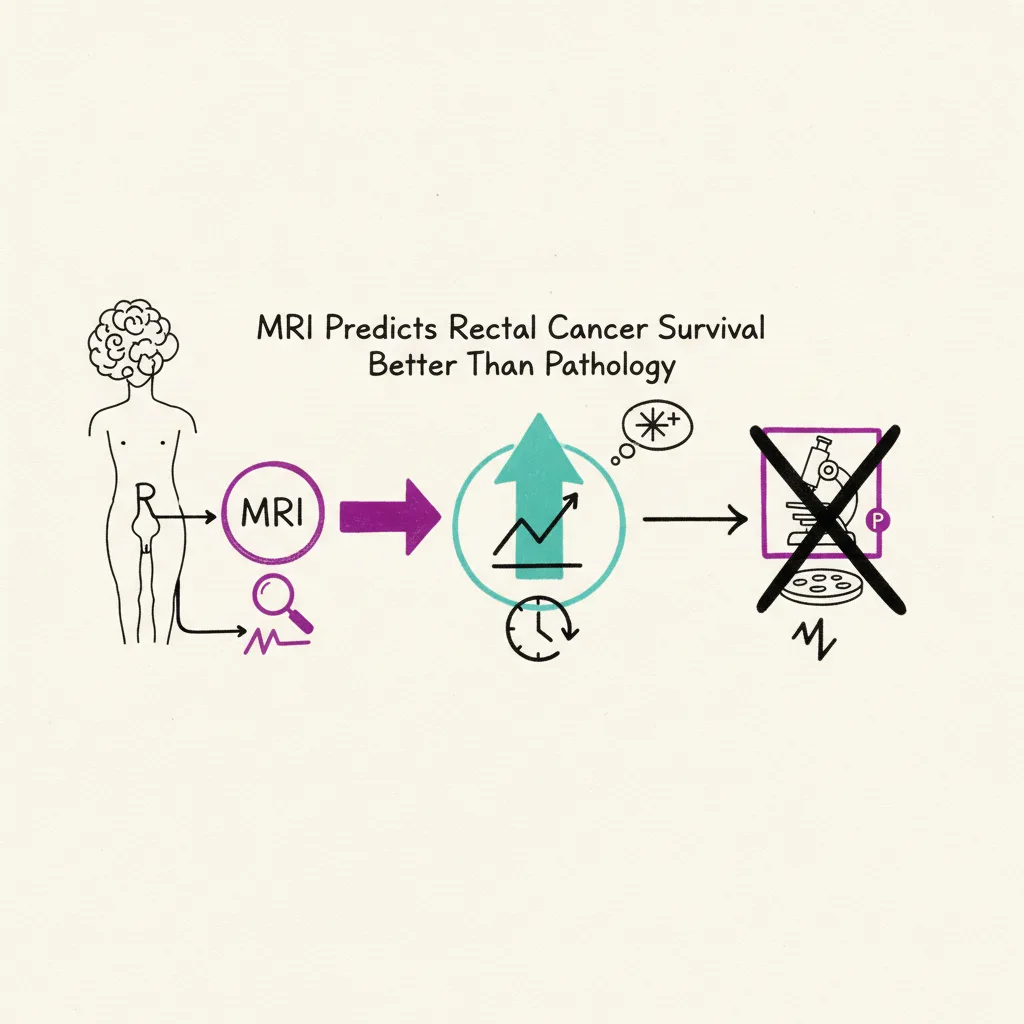

Accurate prediction of treatment response and survival outcomes in locally advanced rectal cancer remains a clinical challenge, with current prognostic methods often relying on post-treatment pathological assessment. Emerging evidence suggests that pretreatment imaging, particularly MRI, combined with artificial intelligence (AI) models, may provide more precise and non-invasive prognostic indicators for these patients.
The prognostic assessment of locally advanced rectal cancer traditionally relies on pathological evaluation following neoadjuvant therapy and surgery. However, this approach provides post-treatment information, limiting its utility for pretreatment decision-making. Recent investigations have explored the potential of advanced imaging techniques, particularly magnetic resonance imaging (MRI), and artificial intelligence (AI) to offer non-invasive, pretreatment prognostic insights. These studies aim to identify imaging biomarkers that can predict treatment response and long-term survival, thereby enabling more tailored therapeutic strategies.
Advanced Imaging and AI in Rectal Cancer Prognosis
One area of focus involves the analysis of body composition parameters, specifically skeletal muscle and adipose tissue, which have been linked to treatment outcomes in rectal cancer. Advances in AI now facilitate 3D body composition analysis of intermuscular/intramuscular adipose tissue (IMAT) from CT scans. A study aimed to develop and evaluate a skeletal muscle score (SMS), utilizing skeletal muscle (SM) and IMAT measurements, to predict treatment response and survival outcomes for rectal cancer patients.1
Rectal cancer, a significant global health concern, accounts for approximately one-third of all colorectal cancer diagnoses. The incidence varies geographically, with higher rates observed in developed countries. Locally advanced rectal cancer (LARC) is characterized by tumor invasion through the muscularis propria or involvement of regional lymph nodes, necessitating a multidisciplinary approach typically involving neoadjuvant chemoradiation therapy (nCRT) followed by surgical resection. The heterogeneity in patient response to nCRT underscores the need for effective pretreatment stratification tools. Pathological complete response (pCR) to nCRT is a strong predictor of improved long-term survival and is associated with lower rates of local recurrence and distant metastasis. Conversely, patients who do not achieve a pCR may benefit from intensified or alternative treatment strategies.
Further research has explored the utility of multi-dimensional MRI features in predicting critical biological markers and treatment responses. An AI model, based on these multi-dimensional MRI features, has been developed to predict tertiary lymphoid structures, immunotherapy response, and overall prognosis in rectal cancer.2 This noninvasive approach offers the potential to identify patients who may benefit most from specific therapies, such as immunotherapy, prior to treatment initiation. The model’s ability to predict tertiary lymphoid structures is particularly relevant, as these structures are known to play a role in anti-tumor immunity and response to immunotherapeutic agents.
Another investigation focused on MRI-based multiregional radiomics for the pretreatment prediction of pathologic complete response (pCR) to neoadjuvant chemoradiation therapy (nCRT) in locally advanced rectal cancer. This bicenter study utilized radiomic features extracted from multiple regions of interest within the tumor and surrounding tissues to build predictive models.3 The objective was to identify patients likely to achieve a pCR, a strong prognostic indicator, before they undergo nCRT, allowing for potential de-escalation of therapy or more aggressive approaches for non-responders. The methodology involved segmenting the primary tumor and perirectal fat on pretreatment T2-weighted MRI scans. Hundreds of quantitative features describing tumor shape, intensity, and texture were then extracted. These features, often imperceptible to the human eye, capture the complex heterogeneity within the tumor microenvironment. Predictive models were subsequently developed using machine learning algorithms, trained on data from one center and validated on an independent cohort from the second center, enhancing the generalizability of the findings.
These studies collectively highlight a shift towards utilizing more sophisticated, non-invasive pretreatment assessments. The integration of AI with advanced imaging techniques, such as MRI and CT, allows for the extraction and analysis of complex features that may not be discernible through conventional radiological interpretation. This analytical capability extends beyond simple tumor size or nodal status, incorporating detailed body composition metrics and intricate radiomic patterns. The goal is to move beyond post-treatment pathological findings as the primary prognostic tool, instead leveraging pretreatment imaging to inform clinical decisions earlier in the patient journey. While promising, these approaches often face limitations, including the need for large, diverse datasets for AI model training and validation, standardization of imaging protocols across institutions, and the potential for inter-observer variability in image segmentation. Further prospective studies are necessary to validate these imaging biomarkers in routine clinical practice and to assess their impact on patient outcomes and cost-effectiveness.
The emerging data on MRI and AI in rectal cancer prognosis presents a compelling argument for reassessing current staging and treatment stratification protocols. If pretreatment MRI-based AI models can reliably predict outcomes such as pathologic complete response or immunotherapy benefit, the implications for clinical practice are substantial. Oncologists could potentially tailor neoadjuvant strategies with greater precision, sparing some patients from unnecessary toxicity or identifying others who require more intensive treatment from the outset. This moves beyond the current reliance on post-surgical pathology, which, while definitive, arrives too late for initial treatment planning.
For patients, this shift could mean more personalized care, potentially reducing treatment burden for those likely to respond well, and optimizing aggressive approaches for those who might otherwise face recurrence. The ability to non-invasively predict tertiary lymphoid structures, for instance, could guide the selection of patients for novel immunotherapeutic agents, avoiding the trial-and-error approach that often characterizes advanced cancer treatment. This could translate to improved quality of life and more effective use of expensive, targeted therapies.
From an industry perspective, these developments underscore the increasing value of AI-driven diagnostic tools and advanced imaging platforms. Companies developing AI algorithms for medical image analysis, such as those focusing on radiomics or body composition, stand to gain significant market traction. Regulatory bodies, such as the FDA and EMA, will need to establish clear pathways for the validation and integration of these AI models into clinical workflows, ensuring their reliability and reproducibility across diverse patient populations and imaging centers. The evidence, while promising, is still in its early stages, and further large-scale validation studies are essential before these tools become standard practice.
- The Pivot Pretreatment MRI features and AI models are demonstrating superior prognostic capabilities for rectal cancer outcomes compared to traditional pathological evaluation.
- The Data AI models leveraging multi-dimensional MRI features can predict tertiary lymphoid structures, immunotherapy response, and prognosis in rectal cancer.2
- The Action Clinicians should consider the evolving role of advanced MRI analysis and AI in pretreatment risk stratification for rectal cancer patients, potentially guiding more personalized therapeutic strategies.
ART-2026-492
·09/26
Drafted with AI assistance, reviewed and approved by the editorial team. This publication is intended for healthcare professionals, researchers, and life science industry professionals. Content is provided for informational and educational purposes only and does not constitute medical advice.

Infectious disease, epidemiology, and global health equity. I have covered outbreaks from Ebola to COVID-19 to mpox. The stories I am most drawn to are where the science is clear and the response is slow.
Cite This Article
Reeves T, Voss M. MRI predicts rectal cancer survival better than pathology. The Life Science Feed. Published June 19, 2026. Updated September 17, 2026. Accessed September 17, 2026. https://thelifesciencefeed.com/oncology/colorectal-neoplasms/research/mri-predicts-rectal-cancer-survival-better-than-pathology.
Editorial & AI Standards
All content is researched from peer-reviewed, open-access sources: published trial data, clinical guidelines, and regulatory filings. AI tools are used solely to structure and summarise that evidence; no AI-generated conclusions appear without editor verification against the primary source.
Every article is reviewed by a named editor before publication. Source citations are listed in the References section. This content does not represent the views of any pharmaceutical company, medical device manufacturer, or healthcare provider.
Licence & Rights
© 2026 The Life Science Feed. All rights reserved. Unless otherwise indicated, all content is the property of The Life Science Feed and may not be reproduced, distributed, or transmitted in any form or by any means without prior written permission.
Medical Disclaimer
The information provided on The Life Science Feed is for educational and informational purposes only. It is not intended as a substitute for professional medical advice, diagnosis, or treatment. Always seek the advice of your physician or other qualified healthcare provider regarding any medical condition or treatment decision. Never disregard professional medical advice or delay in seeking it because of something you have read on this website.
References
1. Besson A, Cao K, Rouse M. Utilisation of intramuscular and intermuscular fat to develop a new skeletal muscle grading score which can predict treatment outcomes for locally advanced rectal cancer. Int J Colorectal Dis 2026. doi:10.1007/s00384-026-05106-w
2. Yang H, Wong C, Liang W. A noninvasive AI model based on multi-dimensional MRI features for predicting tertiary lymphoid structures, immunotherapy response, and prognosis in rectal cancer. Int J Surg 2026. doi:10.1097/js9.0000000000003845
3. Lu F, Li X, Chen X. MRI-based multiregional radiomics for pretreatment prediction of pathologic complete response to neoadjuvant chemoradiation therapy in locally advanced rectal cancer: a bicenter study. Abdom Radiol (NY) 2026. doi:10.1007/s00261-025-05277-0




