

Hosted by James Carter & Sarah Mitchell

Show Notes
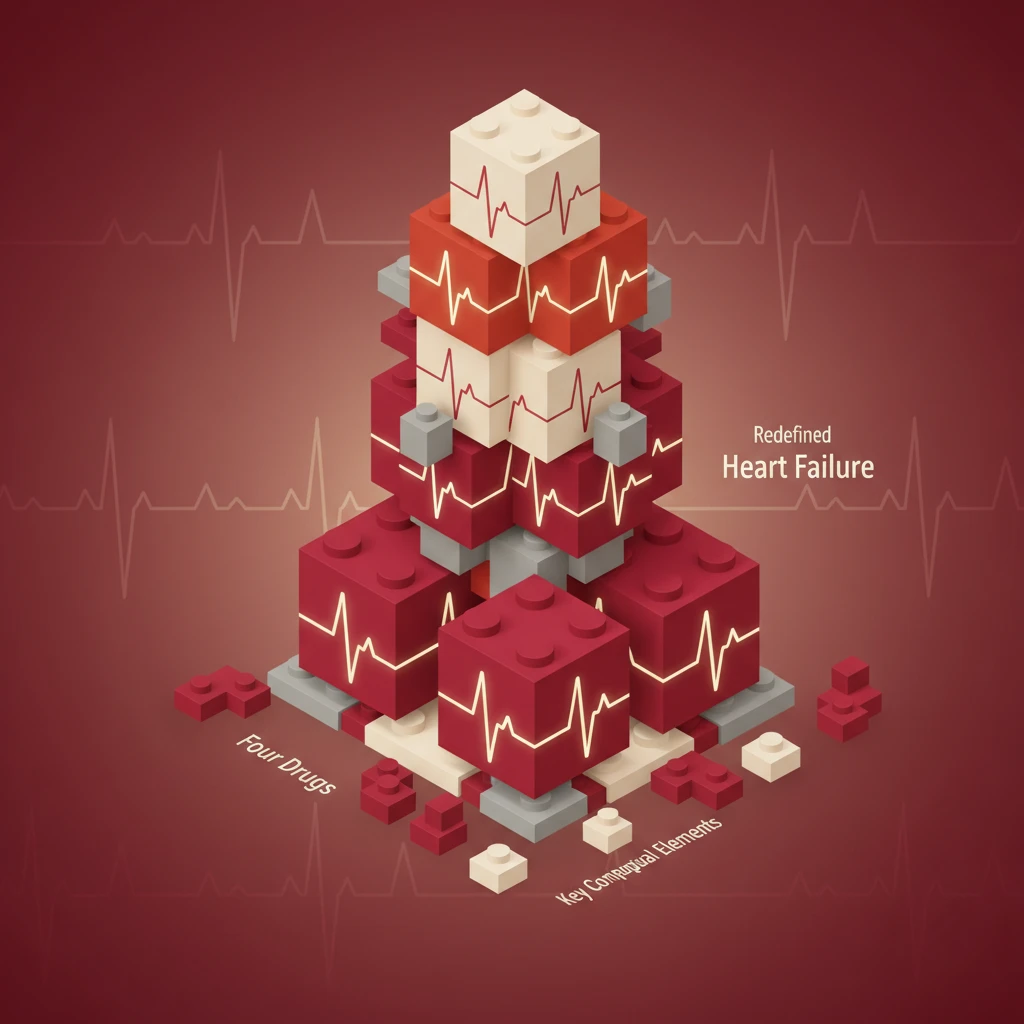
Four drug classes (ARNi, beta-blocker, MRA, SGLT2 inhibitor) have together produced a 73% reduction in cardiovascular death and hospitalisation versus placebo in HFrEF. Sarah Mitchell and James Carter unpack why each drug works, what the landmark trials showed, and why clinical inertia is still the biggest barrier to optimal care.
Transcription
15 years ago, if you were sitting in a cardiologist's office, right? And you received a diagnosis of heart failure with reduced ejection fraction.
CO-HOST: Well, that was, yeah, that was a really tough day.
Yeah, it was essentially a grim prognosis. I mean, we're talking about a five-year mortality rate hovering around like 50%.
CO-HOST: Right. 50%.
To put that in perspective for you, the listener, that is a survival rate worse than a lot of aggressive cancers. It was a literal coin flip whether you'd be alive five years later.
CO-HOST: Yeah, exactly.
But today, uh four specific drugs can be stacked together to create this staggering 73% relative risk reduction in cardiovascular death or hospitalization.
CO-HOST: I mean, it is hard to overstate how massive that shift is. We're literally watching a previously insurmountable, you know, devastating disease just being systematically dismantled by pharmacology.
Okay, let's unpack this. Because whether you are a clinician trying to keep up with these dizzying changes in global guidelines, or, you know, a patient advocating for a loved one, or just someone who loves the sheer detective work of medical science, this story is incredible.
CO-HOST: It really is. It's got everything.
So today's mission is to deep dive into the clinical excerpts outlining what is now known as the quadruple threat in cardiology. We're going to show you how this revolution happened, how it actually works inside the body, and uh why getting these drugs into patients is still such a massive hurdle.
CO-HOST: Right. But before we get to the breakthrough, we really need to ground ourselves in the sheer weight of this problem. Globally, heart failure affects over 60 million people.
Wow. 60 million?
CO-HOST: Yeah. In the UK alone, there are roughly 900,000 people living with it right now. And it is the leading cause of hospital admissions. Literally more than any single form of cancer.
I think when people who aren't in the medical field hear heart failure, they often imagine um a manageable chronic condition, like maybe an older relative with a bit of fatigue or some swelling in the ankles.
CO-HOST: Right. They think it just means getting tired easily.
Exactly. But the sources highlight that biologically, this is a catastrophic systemic failure. And before we go further, if you're listening to this and wondering what reduced ejection fraction actually means.
CO-HOST: That's a great question.
Think of your heart as a pump. Every time it squeezes, it pushes out a certain percentage of the blood inside it. That percentage is your ejection fraction.
CO-HOST: Right. And a healthy heart pumps out maybe uh 55 to 70% of its volume with each beat.
Right.
CO-HOST: So, when we talk about a reduced ejection fraction, that pump has become weak. It's maybe stretched out. It's floppy. It's struggling to push out even 40%.
Wow.
CO-HOST: Yeah. So, the blood backs up, the lungs get congested, the whole body is basically starved of oxygen-rich blood.
And for decades, doctors were fighting this with their hands tied behind their backs basically.
CO-HOST: Uh.
If we look at the historical treatment arc, it starts with a drug called digoxin.
CO-HOST: Ah, digoxin.
Yeah. Which basically just whipped the tired heart.
CO-HOST: Right.
Making it squeeze a little harder to relieve symptoms.
CO-HOST: Yeah.
But it did absolutely nothing to stop the patient from dying. It just masked the failing pump.
CO-HOST: Exactly. The first real dent in that mortality rate didn't come until the 1980s and 90s with ACE inhibitors.
Right.
CO-HOST: Finally, we had a drug that actually extended life. Then science gave us beta blockers, which, you know, slow the heart rate and reduce its workload.
Give it a rest basically.
CO-HOST: Yeah. And eventually, a third class of drugs called mineralocorticoid receptor antagonists or MRAs, like spironolactone.
Right. And the sources use this brilliant analogy here. It was like doctors were attacking the same fortress from different angles.
CO-HOST: Yeah.
You had these three distinct drug classes, ACE inhibitors, beta blockers and MRAs.
CO-HOST: Yeah.
But, wait, hang on, I'm looking at this history. And if we already had three distinct proven drug classes that worked, why were half these patients still dying? We weren't just maxing out what drugs can physically do to a human heart.
CO-HOST: Well, it definitely looked like a pharmacological ceiling, like we couldn't push any further. But the biological reality was much more deceptive.
Okay.
CO-HOST: The reason mortality was stubbornly stuck at 50% was because all of those older drugs, despite being entirely different chemical classes, were attacking the exact same biological alarm system.
Ah. The neurohormonal axis.
CO-HOST: Yes, exactly. When the heart starts failing and the pump gets weak, the kidneys sense a drop in blood pressure.
Right.
CO-HOST: The body panics. It literally thinks you are bleeding to death out on the savannah. So, it activates what we call the renin-angiotensin-aldosterone system and it ramps up the sympathetic nervous system.
So it dumps this huge flood of stress hormones to constrict the blood vessels and hoard salt and water, trying to keep the blood pressure up.
CO-HOST: Exactly.
Which is, wait, I mean, that is a brilliant evolutionary survival mechanism if you have just been attacked by a tiger and are actively losing blood.
CO-HOST: Right.
But if your heart is already a weak, struggling pump, tightening all the blood vessels and flooding the system with excess fluid is like the worst possible thing you can do. It forces the failing heart to work 10 times harder.
CO-HOST: Precisely. All those early drugs, the ACE inhibitors, the beta blockers, the MRAs, they were just different ways of trying to muffle that one specific maladaptive stress response.
Oh, I see.
CO-HOST: To break through that 50% mortality ceiling, medicine didn't just need another way to block the stress. It needed an entirely new mechanism.
And that mechanism finally arrived in 2014 and it just shattered the ceiling completely. Researchers shifted their entire strategy.
CO-HOST: They really did.
Instead of just blocking the heart's harmful panic signals, they asked, what if they actively boosted the body's protective signals?
CO-HOST: Yes.
So they designed a trial called PARADIGM-HF to test a brand-new drug called sacubitril/valsartan. It's an ARNI, an angiotensin receptor neprilysin inhibitor.
CO-HOST: And they didn't just test it against a placebo either, which is huge. They pitted it directly in a head-to-head battle against the gold standard ACE inhibitor of the time, enalapril.
Right, yeah.
CO-HOST: They enrolled over 8,000 patients, and the results were so overwhelmingly positive that the independent safety monitors actually stepped in and halted the trial early.
Which is crazy.
CO-HOST: Yeah, it was deemed unethical to keep the control group on the older drug. They had to give everyone the new one.
Wow. The new ARNI showed a 20% relative risk reduction in cardiovascular death or hospitalization.
CO-HOST: Uh.
Let's talk about the number needed to treat or the NNT because this is where the math gets real for the listener.
CO-HOST: Oh, absolutely. The NNT is a crucial concept. It tells you how many patients you need to treat with a new therapy to prevent one single bad outcome over a specific period.
Okay.
CO-HOST: In the PARADIGM-HF trial, the NNT to prevent one death over three years was just 32.
Meaning if a doctor gives this drug to 32 patients, they are mathematically guaranteed to save one life that would have otherwise been lost to heart failure. In chronic disease trials, finding a number that low is incredibly rare.
CO-HOST: Hmm.
So, what is this dual action drug actually doing inside the body?
CO-HOST: It is a chemical masterstroke, really. Sacubitril is a neprilysin inhibitor.
Okay.
CO-HOST: Neprilysin is a naturally occurring enzyme whose entire job is to chew up and destroy the heart's protective hormones.
Oh.
CO-HOST: These hormones are called natriuretic peptides like BNP and ANP. They naturally widen blood vessels and flush out salt, relieving stress on the heart. By inhibiting neprilysin, sacubitril stops the destruction of these peptides, allowing them to accumulate and do their healing work.
And then the second half of the pill is valsartan, which is a traditional angiotensin receptor blocker. It does the old job of blocking the harmful stress hormones. It is literally putting your foot on the gas of the body's natural healing mechanisms, while simultaneously slamming the brakes on the damage.
CO-HOST: What's fascinating here is how that exact accumulation of protective peptides creates a massive, real-world clinical hurdle.
How so?
CO-HOST: Well, you see, you cannot simply layer this new ARNI on top of an old ACE inhibitor. If you combine them, those protective peptides accumulate way too fast alongside another substance called bradykinin.
Right.
CO-HOST: And that triggers a severe risk of angioedema.
Angioedema. That is a rapid, life-threatening swelling of the deep layers of the skin, often around the face, the lips, and the airway.
CO-HOST: Yeah, it's terrifying.
If your airway swells shut, you suffocate.
CO-HOST: Exactly. So, if a patient is already taking an ACE inhibitor, which millions of heart failure patients were at the time, they cannot just switch over to the ARNI the next morning.
Oh, wow. So what do they do?
CO-HOST: It necessitates a strict 36-hour washout period. The patient has to physically stop taking their old medication, wait a full day and a half for their kidneys to clear the drug completely from their system.
Just wait it out.
CO-HOST: Right. And only then take the first dose of the new ARNI. It is incredibly annoying for a patient and a logistical nightmare for a clinic to track. But chemically, it is absolutely vital to keep the patient safe.
So cardiology finally had this powerhouse drug, but here's where it gets really interesting, because the biggest shock in modern heart failure treatment didn't come from a cardiology lab. It came from endocrinologist, and it was a total beautiful accident.
CO-HOST: The diabetes drug plot twist, I love this part.
Yeah.
CO-HOST: We are talking about a class of medications called SGLT2 inhibitors. Drugs with names like dapagliflozin and empagliflozin.
These drugs were designed purely to lower blood glucose in people with type 2 diabetes. They work by blocking a specific transporter in the kidneys, forcing the body to excrete excess sugar and some sodium straight into the urine.
CO-HOST: Right.
For years, cardiologists weren't paying any attention to them at all.
CO-HOST: Not until 2015. The FDA had mandated that all new diabetes drugs undergo massive trials just to prove they didn't accidentally harm the heart.
This is a safety check.
CO-HOST: Exactly. So, researchers ran the EMPA-REG OUTCOME trial. They gave empagliflozin to diabetic patients just to ensure it was safe. But when the data came back, they found a shocking 35% reduction in heart failure hospitalizations.
35% from a drug that was just supposed to manage blood sugar.
CO-HOST: I know. The cardiology world did a collective double take. They immediately launched dedicated heart failure trials, DAPA-HF in 2019 and EMPEROR-Reduced in 2020.
Yeah, they moved fast.
CO-HOST: They gave these SGLT2 inhibitors to heart failure patients, including thousands of patients who did not have diabetes. And the drugs still massively reduced hospitalizations and cardiovascular death.
That was the earth-shattering moment. The benefit clearly had nothing to do with lowering blood sugar. This was a profound, direct intervention on the heart muscle, the myocardium itself. I have to pause here because looking at the source material, it admits that scientists literally do not know the exact mechanism yet. And they have a bunch of converging hypotheses, but no single definitive answer.
CO-HOST: That's true.
Wait, if scientists literally don't know the exact mechanism yet, just a bunch of converging hypotheses, how are doctors so confident prescribing a diabetes drug to non-diabetic heart failure patients when we aren't 100% sure how it fixes the heart. To a patient, isn't that a massive leap of faith?
CO-HOST: Yeah. Well, it might sound like a leap of faith, but in clinical pharmacology, the undeniable outcome often leads the way while the molecular biology plays catch up.
Ah, okay.
CO-HOST: The sheer effect size is massive. Adding an SGLT2 inhibitor is comparable in survival benefit to adding an ACE inhibitor. The volume of data proves it is doing something structural to the heart, far beyond acting as a simple diuretic.
So what are the leading theories if you had to explain to a patient what this drug is doing to their heart? What do we think is happening?
CO-HOST: The hypotheses are brilliant, honestly. First, there's osmotic diuresis.
Okay.
CO-HOST: Because the drug pulls glucose and sodium into the urine, it drags excess water with it, powerfully reducing the fluid volume the heart has to pump against.
Making the pump's job easier.
CO-HOST: Exactly. Second, there's a fascinating metabolic shift. The failing heart is like a struggling engine running on cheap gas. The drug seems to force the heart to start burning its usual metabolic fuel and switch to utilizing ketones.
Ah, ketones. Which are much more oxygen efficient. It's like switching a sputtering car engine to a premium, high-octane racing fuel, instantly giving the struggling motor more efficiency per drop of oxygen.
CO-HOST: Exactly that. Furthermore, studies suggest it has direct antifibrotic effects, meaning it actively stops the heart tissue from scarring over and stiffening.
Wow.
CO-HOST: And it seems to reduce intracellular sodium and calcium overload, which helps the actual muscle fibers contract more normally. We might not have the single definitive pathway pinned down perfectly, but the safety profile is incredibly benign and the survival benefit is undeniable.
Which brings us to the ultimate hand we have to play against this disease. We now have all the puzzle pieces on the board, the quadruple threat.
CO-HOST: Yes.
Four fundamental pillars: an ARNI, a beta blocker, an MRA, and the SGLT2 inhibitor.
CO-HOST: And there was a major analysis in 2021 by Vaduganathan and colleagues. They modeled what happens when you combine all four of these specific therapies in a typical patient with reduced ejection fraction compared to just giving them a placebo.
And the projected numbers are jaw-dropping. A 73% relative risk reduction over two years.
CO-HOST: Incredible.
But let's translate that for the listener because relative risk can sound abstract. The sources point out that the absolute risk reduction means one in three patients completely avoids a major cardiovascular event or death.
CO-HOST: Right. So, if you have a room of 100 patients destined to suffer a severe heart failure event and you treat all of them with this quadruple therapy, 33 of those people walk away completely unharmed.
That is a staggering return on investment for simply taking four pills.
CO-HOST: It really is.
So, what does this all mean? We have the tools. It feels like we've invented a state-of-the-art four-engine jet. It is perfectly engineered with redundant systems to keep the patient soaring safely in the air.
CO-HOST: I like that analogy.
But reading about the actual implementation in hospitals, it sounds like doctors are still flying it like a single-engine prop plane. The engines are sitting there, but the pilots are afraid to turn the switches.
CO-HOST: If we connect this to the bigger picture, it highlights one of the most tragic realities in modern medicine. We have largely conquered the biology, but we are failing at the human psychology.
Yeah.
CO-HOST: The biggest barrier to survival right now isn't the disease. It is clinical inertia.
Clinical inertia. Meaning a doctor looks at a patient who is only taking the older drugs, maybe just an ACE inhibitor and a beta blocker and thinks, well, their breathing seems okay today. They seem stable. Why rock the boat?
CO-HOST: Exactly. They see the illusion of stable. But in heart failure, stable is a myth.
Right.
CO-HOST: The disease is silently, microscopically progressing every single day. But physicians hesitate. They worry about the complex titration schedules, the cost of the newer branded drugs, and the potential for side effects like dizziness or low blood pressure. And frankly, there is still a persistent, stubborn mental block where many doctors view SGLT2 inhibitors exclusively as diabetes drugs and feel out of their depth prescribing them.
Even though the global cardiology rule books, the European Society of Cardiology and the American Heart Association guidelines, universally demand this as the absolute gold standard.
CO-HOST: They do.
They give SGLT2 inhibitors a Class 1 Level A recommendation for heart failure regardless of diabetes status. In plain English, that means use this drug, period. The evidence is bulletproof. But human habit gets in the way.
CO-HOST: Human habit is currently a deadlier barrier than the disease itself. And to break that habit, the very strategy of how doctors are taught to prescribe these drugs has been completely flipped on its head.
Yeah, because for decades, the standard approach was incredibly slow and cautious. You start drug A, wait four weeks, check the blood work, up the dose, start drug B, wait another month, check the blood work.
CO-HOST: Exactly.
It can take six months to get a patient fully medicated.
CO-HOST: But a recent landmark trial, called STRONG-HF, completely torched that old model.
Thank goodness.
CO-HOST: The data proved that cautious sequential titration leaves patients unprotected and vulnerable for far too long. The new standard of care is aggressive.
How aggressive?
CO-HOST: It demands rapid up titration to high doses of all four pillars simultaneously, aiming to get the patient fully optimized within just two weeks of a hospital discharge.
Wow. You fire up all four engines immediately. But that means the clinical team has to monitor the patient intensely during those two weeks.
CO-HOST: Intensely. You have to watch blood pressure like a hawk, aiming for a target systolic pressure between 100 and 120.
Okay.
CO-HOST: You have to monitor renal function by checking blood creatinine levels, and you must keep a close eye on potassium, particularly because the MRA drugs naturally cause potassium levels to spike, which can cause dangerous heart rhythms.
I am struggling with this part though. I look at this aggressive approach, and the source material mentions a highly specific, very common clinical scenario.
CO-HOST: Okay, let's hear it.
Imagine a frail patient coming into the hospital. Their systolic blood pressure is sitting at 90. Their creatinine is 160. And for anyone listening who hasn't stared at a metabolic panel recently, creatinine measures kidney function. A normal level is under 100. So at 160, the kidneys are already screaming for help. The body's filtration system is clogging up. Giving a frail patient with failing kidneys and borderline low blood pressure four powerful cardiovascular drugs all at once.
CO-HOST: Uh.
That seems totally counterintuitive. It almost sounds reckless.
CO-HOST: Well, it would be reckless if applied blindly. And that is exactly where the art of clinical medicine meets the rigid science of the guidelines.
Okay.
CO-HOST: You don't just throw four pills at a frail patient and hope for the best. You navigate the physiology. For example, in the patient you just described, giving them the ARNI right away might tank their blood pressure dangerously low. So, you use clinical judgment. You hold the ARNI for now.
But the key is, you don't use that frailness as an excuse to give up on the quadruple therapy altogether.
CO-HOST: Precisely the opposite because the SGLT2 inhibitors we talked about have a much more forgiving profile. They don't drop blood pressure the way an ARNI might.
Oh, that makes sense.
CO-HOST: So, you start a low-dose SGLT2 inhibitor. You gently manage their fluid overload. You recheck their labs in a few days. The goal isn't necessarily to force all four drugs down their throat on day one.
Right.
CO-HOST: The goal is to completely banish the let's wait and see mindset and replace it with a relentless drive to get them on all four drugs eventually, as soon as their body can physically tolerate it.
It's an active build toward the four pillars, not passive observation.
CO-HOST: Right, exactly.
Which brings us to the ultimate takeaways we need to distill from this deep dive. First and foremost, if you are looking at the landscape of cardiovascular medicine, these four pillars, the ARNI, the beta blocker, the MRA, and the SGLT2 inhibitor represent the greatest historical leap forward in managing heart failure with reduced ejection fraction.
CO-HOST: Absolutely.
Second, the branding of the past is dead. SGLT2 inhibitors are no longer just diabetes drugs. They are foundational heart failure therapies and must be used regardless of a patient's blood sugar status.
CO-HOST: And third, the era of slow, cautious titration is over. Rapid simultaneous initiation of all four drugs is the new gold standard.
Right. Ultimately, this deep dive isn't just an exercise in understanding complex biology. It is about empowerment. If you, or a parent, or a loved one are ever sitting in that cardiologist's office facing this terrifying diagnosis, you now have the ultimate tool: knowledge.
CO-HOST: Yeah, that's the most important part.
You know that clinical inertia costs lives. You now know to look your doctor in the eye and ask, why aren't we discussing an SGLT2 inhibitor? Or what is our timeline for getting on the quadruple therapy?
CO-HOST: Yeah.
You can actively ensure the best science in the world is actually being utilized.
CO-HOST: This raises an important question to leave you with, though. We have spent this time marveling at how stacking these four distinct mechanisms reduces the relative risk by 73%.
Yeah.
CO-HOST: It is a monumental historic achievement. But if pharmacology can eliminate 73% of the risk, where exactly does the remaining 27% of the danger come from?
That's the 27% of the risk that still slips through the cracks even if the patient takes their medication perfectly every single day.
CO-HOST: Exactly. As we reach the absolute physical limits of what traditional pills can do to alter the plumbing and wiring of the human heart, how do we conquer that final 27%?
Good question.
CO-HOST: Will the next great leap in survival come from another brilliant accidental drug discovery? Or will it require stepping entirely outside the realm of traditional medicine into gene editing, artificial intelligence, or synthetic organ regeneration?
It's an incredible thought to mull over. We finally learned how to build and fly the four-engine jet perfectly. But maybe the only way to beat that final 27% is to realize we need a spaceship.
CO-HOST: A spaceship? I love it.
Keep questioning the science, keep advocating fiercely for the best possible care, and keep exploring the limits of what's possible. Until next time.
CO-HOST: See you next time.
Free Clinical Resources
Episode Infographic
Key data, mechanisms, and clinical takeaways distilled into a single shareable page. Save it for reference or use it in your next team discussion.
Clinical Flashcards
Core concepts from this episode in flashcard format, structured for spaced repetition, pre-consultation review, or CPD reflection with your team.
ART-2026-239
·09/26
This podcast episode is produced with AI assistance, reviewed and approved by the editorial team. This publication is intended for healthcare professionals, researchers, and life science industry professionals. Content is provided for informational and educational purposes only and does not constitute medical advice.
Thirty years in health journalism, the last fifteen in life sciences. I have reported from every major medical congress and watched blockbuster drugs get revised after approval. I cover what the data says.
Cite This Podcast
Carter J, Mitchell S. How four drugs beat heart failure. The Life Science Feed. Published June 1, 2026. Updated September 12, 2026. Accessed October 15, 2026. https://thelifesciencefeed.com/podcast/2026-06-01/how-four-drugs-beat-heart-failure.
Editorial & AI Standards
All content is researched from peer-reviewed, open-access sources: published trial data, clinical guidelines, and regulatory filings. AI tools are used solely to structure and summarise that evidence; no AI-generated conclusions appear without editor verification against the primary source.
Every article is reviewed by a named editor before publication. Source citations are listed in the References section. This content does not represent the views of any pharmaceutical company, medical device manufacturer, or healthcare provider.
Licence & Rights
© 2026 The Life Science Feed. All rights reserved. Unless otherwise indicated, all content is the property of The Life Science Feed and may not be reproduced, distributed, or transmitted in any form or by any means without prior written permission.
Podcast Disclaimer
This podcast is produced for educational and informational purposes only. The conversation between hosts represents a discussion of published clinical evidence and is not intended as clinical advice, a substitute for professional medical judgment, or a recommendation for any specific treatment. Healthcare professionals should rely on their own clinical training, current guidelines, and individual patient assessment when making treatment decisions. The views expressed are those of the hosts and do not constitute endorsement of any specific therapy, product, or manufacturer.
References
McMurray JJV et al. DAPA-HF. N Engl J Med. 2019;381:1995-2008
McMurray JJV et al. PARADIGM-HF. N Engl J Med. 2014;371:993-1004
Mebazaa A et al. STRONG-HF. Lancet. 2022;400:1938-1952
Packer M et al. EMPEROR-Reduced. N Engl J Med. 2020;383:1413-1424
Vaduganathan M et al. Lancet. 2020;396:121-128

Safe caffeine intake does not harm heart health
Established guidelines for safe caffeine intake do not pose a risk to cardiovascular health, despite the expanding market of caffeine-containing products.

Heart Failure Treatment in 2026: A Clinical Overview
Heart failure management has changed substantially over the past decade. This clinical overview covers the four pillars of guideline-directed medical therapy, the role of device therapy, and emerging treatments entering practice in 2026.
More from: Heart Failure Deep Dive Series

Heart failure with preserved ejection fraction accounts for more than half of all HF diagnoses. For two decades every major drug trial failed. Then SGLT2 inhibitors changed everything - twice. Sarah Mitchell and James Carter explain why HFpEF was so hard, and what finally worked.
Sarah Mitchell & James Carter
More than 80% of HFpEF patients are overweight or obese. STEP-HFpEF showed semaglutide 2.4mg improved symptoms by 16 points on the KCCQ and reduced weight by 13.3% - now a Class IIa ESC recommendation. Sarah Mitchell and James Carter explore why treating the metabolic environment is the new paradigm for HFpEF.
Sarah Mitchell & James Carter
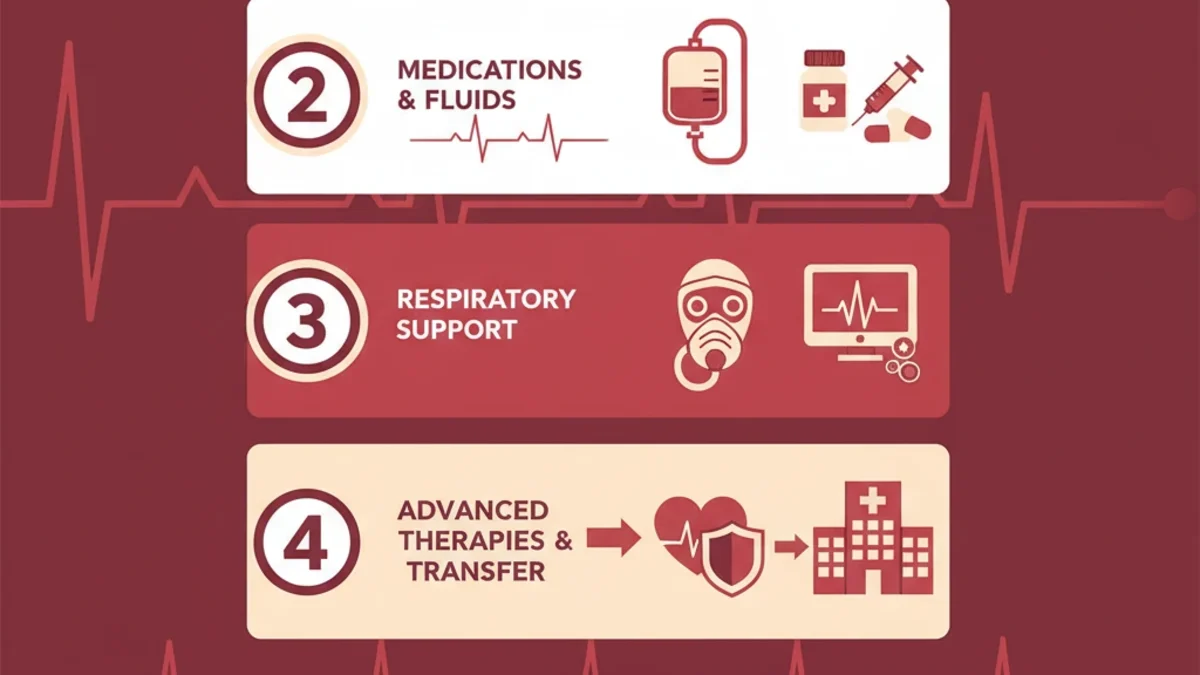
Acute decompensated heart failure drives over one million hospital admissions annually. 30-day readmission rates are 25%. When the heart cannot compensate, the tools change entirely - IV diuretics, inotropes, mechanical circulatory support. Sarah Mitchell and James Carter cover ADHF management, cardiogenic shock, and how to prevent the revolving door.
Sarah Mitchell & James Carter






