

Hosted by Sarah Mitchell & James Carter

Show Notes
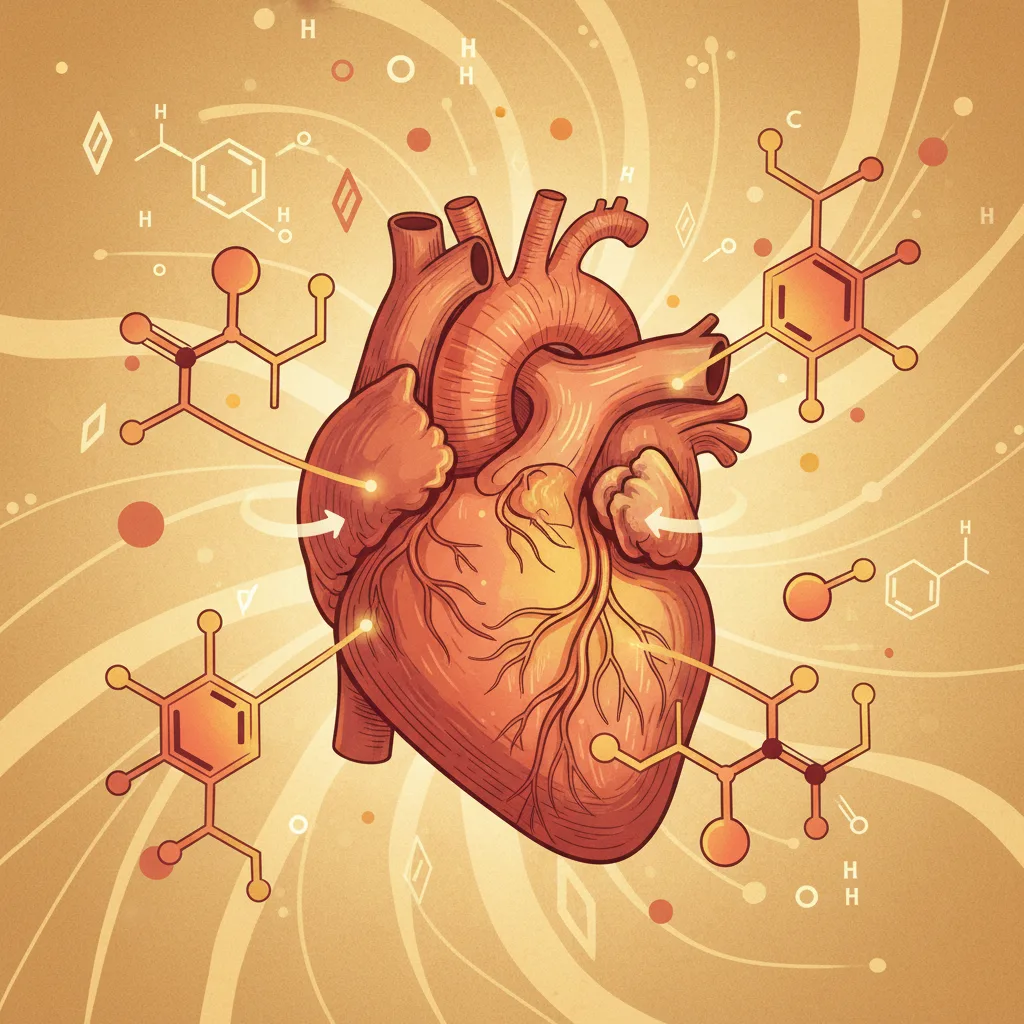
Heart failure with preserved ejection fraction accounts for more than half of all HF diagnoses. For two decades every major drug trial failed. Then SGLT2 inhibitors changed everything - twice. Sarah Mitchell and James Carter explain why HFpEF was so hard, and what finally worked.
Transcription
Welcome to the Deep Dive. So, imagine a disease that is just so stubborn, uh so notoriously difficult to treat that for 30 years every single miracle drug they threw at it just completely failed.
CO-HOST: Yeah, completely.
Right. And frustrated cardiologists literally started calling this condition the uh the graveyard of clinical trials. Because everything just went there to die.
CO-HOST: And you know, they really weren't exaggerating with that name. I mean, you'd see these massive pharmaceutical successes, these blockbuster drugs that had revolutionized almost every other heart condition, and they would just hit an absolute brick wall here.
Wow.
CO-HOST: It was incredibly demoralizing for the whole medical community. They were essentially uh flying blind for decades.
Which is wild to think about. So, today we are going to look at exactly how an entire medical field got a major disease wrong for all those years.
CO-HOST: Yeah.
We're pulling our insights today from an incredibly detailed medical audio series. It's titled HFpEF Breakthroughs: Solving Cardiology's Greatest Mystery. And as you listen today, you might actually realize why a loved one's breathlessness isn't just them, you know, getting out of shape.
CO-HOST: Right, it could be something much more specific.
Exactly. It could be the very medical mystery we're unpacking right now.
CO-HOST: And it is a fascinating source to go through. It serves as a real testament to what happens when science stops um taking entrenched assumptions for granted. Like when they stop trying to force old solutions onto new problems and actually start doing some on the ground detective work.
So, to understand this massive breakthrough, we have to start with the biological target that, well, defied science for so long. We're talking about heart failure, but specifically, a type called HFpEF.
CO-HOST: Right.
And that stands for Heart Failure with Preserved Ejection Fraction.
CO-HOST: Yeah, and to set the stage properly here, we really need to contrast that with a type of heart failure most people and honestly, for a long time, most doctors typically think of.
And that would be HFrEF, which is heart failure with reduced ejection fraction.
CO-HOST: Right, reduced.
Now, HFpEF, the preserved kind we're diving into today, it's not some like rare, obscure edge case.
CO-HOST: Oh, not at all.
According to our sources, it accounts for more than half of all heart failure diagnoses. More than half. So we're talking about millions of patients globally.
CO-HOST: Yeah, and its prevalence is actually rising rapidly. As global populations age and as, you know, obesity rates and metabolic syndrome climb, this specific type of heart failure is becoming increasingly common.
Yeah.
CO-HOST: Yet for 20 years, if you were one of those millions of patients sitting in an exam room, you're essentially told there was no proven treatment for your underlying condition.
Which is just terrifying.
CO-HOST: It really is.
So, to really visualize why it was so hard to treat, let's look at the mechanics. Let's think of the heart like a like a plumbing system for a house.
CO-HOST: Okay, I like that.
The other kind of heart failure, the reduced kind, is like a weak, burned-out water pump. It just lacks the electrical and physical power to push the water out into the pipes.
CO-HOST: The motor is dying. And that is what doctors call systolic dysfunction. The ejection fraction, which is the percentage of blood squeezed out is visibly low.
Yeah, and that's why they call it systolic failure. The squeeze itself is what's broken.
But HFpEF, the one we're tracking today, is completely different. The pump mechanism itself, the motor pushing the water out works perfectly fine.
CO-HOST: Exactly.
The ejection fraction is preserved, meaning it's at like 50% or above. So instead, HFpEF is like a stiff, rigid, rusted pipe that just can't expand to let the water inside in the first place.
CO-HOST: That is a brilliant way to picture it, honestly. And the medical term for that rusted pipe scenario is diastolic dysfunction.
Diastolic.
CO-HOST: Right. The left ventricle of the heart becomes stiff. It becomes hypertrophied, which means thickened, and highly fibrotic, so it's filled with scar tissue.
Oh.
CO-HOST: Because it's so rigid, it simply cannot relax normally to fill with blood between beats.
Okay, let's unpack this. The pump's motor works, but there's no water getting into the chamber to be pumped out.
CO-HOST: Precisely.
So the filling pressures inside the heart rise, everything backs up into the lungs, and the patient experiences, well, severe breathlessness, fluid retention, terrible exercise tolerance.
CO-HOST: Yeah, it's miserable.
But if the pump works, why were doctors using the exact same drugs for the rusted pipe that they used for the broken pump?
CO-HOST: Well, what's fascinating here is how that mechanical difference completely changes the biological profile of the patient. And ultimately, it explains why all those old treatments failed so spectacularly.
Because they were treating the wrong thing.
CO-HOST: Exactly. For decades, doctors approached that stiff, rigid heart the exact same way they approached the weak, burned out heart. They used what we call neurohormonal drugs, so ACE inhibitors, ARBs, beta blockers.
I recognize those names. Those are the like classic heavy hitters of cardiology.
CO-HOST: They are. But what do they actually do?
They essentially block the body's adrenaline and stress response. If you have a weak, failing motor, blocking the stress hormones that force the heart to work harder is a great strategy, you know, it gives the weak heart a rest.
But we aren't dealing with a weak motor, we are dealing with a rusted pipe. Taking the stress off a rusted pipe doesn't make it any less rusted.
CO-HOST: Precisely the problem.
Mm-hmm.
CO-HOST: And the HFpEF patients are fundamentally different biologically.
Yeah.
CO-HOST: The source points out they tend to be older, they're more likely to be female, and they are much more likely to be obese.
And they have a whole cluster of other complex issues, right? Hypertension, atrial fibrillation, diabetes.
CO-HOST: Yeah, they are managing severe systemic comorbidities. The incredible realization the field eventually came to is that the true driver of this disease wasn't an overactive neurohormonal stress response at all.
Okay.
CO-HOST: It was microvascular inflammation. It was a systemic body-wide issue. The heart wasn't failing because its motor was broken, it was becoming stiff and fibrotic because the entire environment of the body was inflamed.
So doctors were basically treating the completely wrong pathway for 20 years.
CO-HOST: They were.
And I'm looking at the trial data in our sources and it is just an absolute bloodbath. In 2003, you have the CHARM Preserved trial testing a drug called candesartan, neutral result, total miss. Then in 2008, I-Preserve tests irbesartan. Again, neutral. But wait, I'm looking at the notes on this one trial from 2014 called TOPCAT and it sounds like a true medical detective story.
CO-HOST: Ah, yes. TOPCAT is legendary in cardiology circles.
It tested a drug called Spironolactone. And on paper, it was declared another equivocal, neutral failure. But our sources say it was highly controversial.
CO-HOST: Oh, very.
I'm looking at this weird footnote about geography. The data showed that patients enrolled in the Americas actually had a positive signal, like they got better. But patients enrolled in Russia and Georgia showed absolutely zero benefit.
CO-HOST: Yeah, it's wild.
How does a chemical compound care what continent you're standing on?
CO-HOST: It doesn't, obviously. That geographic split is one of the most stunning post-hoc realizations in modern clinical research.
Post-hoc, meaning after the fact.
CO-HOST: Exactly. A post-hoc analysis is when researchers go back and look at the data after the trial is already over, just to see if they missed something.
So when they dug into why the Eastern European cohort showed zero benefit, they decided to analyze the stored frozen blood samples from those patients. Specifically, they looked for a compound called canrenone.
Wait, what is canrenone?
CO-HOST: It's the active metabolite of the drug spironolactone. So essentially, it's what should be floating around in your bloodstream if you are actually swallowing the pill every day.
Oh, I see where this is going.
CO-HOST: Yeah. In a massive portion of those patients in Russia and Georgia, their canrenone levels were near zero.
Are you kidding? How does a multi-million dollar international clinical trial just not realize half their patients aren't even taking the medication?
CO-HOST: It pointed to a massive failure in trial oversight and extreme non-adherence. But the forensic work revealed something even worse actually.
Worse than not taking the med?
CO-HOST: Yeah. Based on the clinical data and event rates, many of those Eastern European patients likely didn't even have HFpEF in the first place.
So they were misdiagnosed, potentially just to hit enrollment quotas.
CO-HOST: That is strongly the implication. Yeah. The trial failed overall because a huge chunk of the participants either didn't have the disease or just weren't taking the drug.
Wow.
CO-HOST: But if you statistically isolated just the patients in the Americas, the ones who were properly diagnosed and actually took the medication, there was a real tangible signal of benefit.
But because of the overall trial's strict statistical design, it went down in the history books as just another failure in the graveyard.
CO-HOST: Exactly. And that era of failure left cardiologists incredibly cynical. Our source material notes that doctors essentially gave up on treating the underlying disease process of the stiff heart.
They just threw their hands up.
CO-HOST: Pretty much. They just started managing the surface level symptoms, they control the blood pressure, give diuretics, you know, water pills to clear out some of the fluid from the lungs and just send the patient home.
They just accepted defeat, at least until they finally stopped looking at the heart as an isolated mechanical pump and started looking at the whole metabolic system.
CO-HOST: Which brings us to the breakthrough. Because the root cause of that stiff rusted pipe was actually systemic inflammation and metabolic dysfunction, the cure didn't come from a traditional heart stimulant.
Right.
CO-HOST: It came from metabolic therapies. Specifically, a class of drugs called SGLT2 inhibitors. This is the turning point that changed the entire landscape.
Let's talk about the sheer magnitude of this turning point. What exactly is an SGLT2 inhibitor? Because if I remember correctly, these were originally invented for diabetes, right?
CO-HOST: Yes, they were.
Yeah.
CO-HOST: SGLT2 stands for sodium glucose co-transporter 2. In simple terms, these drugs work in the kidneys. They prevent your body from reabsorbing sugar, forcing you to excrete excess glucose and the calories and sodium that go with it straight out through your urine.
Okay, let's unpack this. We have a stiff fibrotic heart. How does peeing out sugar fix a rusted pipe?
CO-HOST: That was the mystery. But in 2021, the EMPEROR-Preserved trial was published. They tested an SGLT2 inhibitor called Empagliflozin on nearly 6,000 heart failure patients.
Okay.
CO-HOST: And for the first time in 30 years, the result was overwhelmingly positive. We are talking about a massive 21% relative risk reduction in cardiovascular death or hospitalization for heart failure.
21%? That's huge.
CO-HOST: It really is.
And the sources emphasize that this benefit was largely driven by a massive reduction in hospitalizations, like people were actually staying out of the emergency room.
CO-HOST: Exactly.
Plus, this wasn't some statistical trick where it only worked on borderline cases. This effect held strong even in the true HFpEF patients, the ones with an ejection fraction well above 60%.
CO-HOST: Right, the ones with the preserved function.
Yeah, their pumps were firing perfectly, but their pipes were completely stiff, and this diabetes drug helped them.
CO-HOST: And, you know, in science, one trial is great, but replication is everything. So the very next year, in 2022, the DELIVER trial confirmed it. They tested a very similar drug, Dapagliflozin, and saw an 18% relative risk reduction.
Wow.
CO-HOST: When researchers pooled the data from both trials, the effect was undeniable across the board. Overnight, the standard of care for more than half of all heart failure patients went from a literal zero evidence base to undeniable, life-changing efficacy.
Here's where it gets really interesting, though, the mechanism. Why did a diabetes drug work when every single traditional heart medication failed?
CO-HOST: Yeah, that's the big question.
Because they don't just act as standard water pills to remove fluid. The source text explains they actively fight fibrosis. They actually physically reduce visceral fat and specifically epicardial fat.
CO-HOST: And the epicardial fat angle is absolutely crucial to understanding this disease.
Hold on. You're telling me a drug originally designed for blood sugar and metabolism is physically shrinking the fat around the heart and that's what cures the stiffness? That completely upends how I thought cardiology worked.
CO-HOST: Yeah, if we connect this to the bigger picture, it perfectly illustrates the shift in how we understand this condition. Epicardial fat is the adipose tissue directly enveloping the heart muscle. In an obese patient with metabolic syndrome, that fat tissue isn't just inert extra weight sitting there.
It's doing something.
CO-HOST: Exactly. It is highly biologically active. It behaves like a toxic organ, releasing inflammatory signals and cytokines directly into the myocardium, the heart muscle itself.
So going back to our analogy, the epicardial fat is basically pouring corrosive acid onto the outside of the pipe, causing it to rust and stiffen. It's literally bathing the heart in inflammation.
CO-HOST: That is a perfect extension of the metaphor, yeah. That localized inflammation drives the collagen deposits and fibrosis that make the heart rigid.
Makes sense.
CO-HOST: So when SGLT2 inhibitors reduce that epicardial fat mass, they're effectively cutting off the inflammatory acid supply at the source. The heart can finally begin to function without being constantly assaulted by its own surrounding tissue.
It proves that you can't just treat the heart like a mechanical pump floating in a vacuum. Treating a localized organ failure sometimes requires you to treat the entire systemic metabolic environment of the human body.
CO-HOST: It is a profound philosophical shift in modern medicine. And once that dam broke, and researchers realized this specific disease was actually treatable, it gave them the courage to look backward.
To look back at the graveyard.
CO-HOST: Exactly. They looked back at the messy history of the TOPCAT trial we discussed earlier, the one with the massive non-adherence in Eastern Europe, and they asked, what if there really was a signal there in the Americas? Can we test that pathway again and get it right this time?
Which brings us to a massive redemption story, the MRA comeback. The success of targeting inflammation paved the way for a brand new, highly controlled trial in 2024 called FINEARTS-HF.
CO-HOST: Right.
And this trial completely vindicated a class of drugs called non-steroidal MRAs. Specifically, a drug called Finerenone.
CO-HOST: It did. But let's clarify what an MRA is. It stands for mineralocorticoid receptor antagonist.
That's a mouthful.
CO-HOST: It is, yeah. These drugs block certain hormones like aldosterone that promote salt retention, fluid buildup and critically, fibrosis and scarring in the heart tissue.
And Finerenone nailed it. It successfully reduced worsening heart failure events and cardiovascular death. It became the very first non-SGLT2 therapy to show a clear, undeniable benefit.
CO-HOST: The arsenal is finally expanding. The sources note that the 2024 European Society of Cardiology guidelines now confidently recommend both classes of drugs, SGLT2 inhibitors and MRAs for these patients.
That's incredible.
CO-HOST: We went from zero options to two major proven therapies in just a few short years.
So, what does this all mean for the actual patient sitting in the doctor's office? Because to your point earlier, having the right drugs on the shelf is entirely useless if the physician in the room doesn't know who to prescribe them to.
CO-HOST: That's very true.
How do doctors actually diagnose this stiff heart condition when the pump looks like it's working fine on a standard ultrasound?
CO-HOST: This raises an important question, and it is arguably the biggest remaining hurdle in the field. The clinical reality of diagnosing this disease is incredibly tricky. Think about the symptoms: severe breathlessness, poor exercise tolerance, persistent fatigue.
Were the classic signs that you're just getting older?
CO-HOST: Exactly. Now remember the patient profile we established. These are often older, obese patients managing other conditions like diabetes or joint pain. If an older overweight patient comes into a clinic complaining that they get out of breath walking up a single flight of stairs, what does the doctor usually see?
They just see someone who is out of shape. Simple deconditioning.
CO-HOST: Exactly. It mimics simple deconditioning or obesity hypoventilation or pulmonary hypertension. It basically looks like a dozen other mundane conditions.
Which means they get told to lose a few pounds, take it easy, and they get sent home without the life-saving SGLT2 inhibitor.
CO-HOST: Which is a modern medical tragedy. Now, doctors do have formal algorithms to help catch this. The source mentions two specific diagnostic scoring systems, the H2FPEF score and the HFPEF algorithm.
Okay.
CO-HOST: These are checklists that look at echocardiogram data, age, obesity, atrial fibrillation, and a crucial biomarker called NT-proBNP.
I want to spend some real time on this biomarker NT-proBNP because the source material points out a massive dangerous trap here. First, what is a biomarker in this context?
CO-HOST: It's a measurable substance in the blood. In this case, NT-proBNP is basically a chemical distress signal sent out by the heart muscle when it's stretching and straining.
Like an SOS.
CO-HOST: Exactly. It is the gold standard indicator for heart failure. If a patient comes in breathless and that blood test comes back elevated, the doctor immediately investigates the heart.
The trap is that in obese patients, NT-proBNP is systematically lower. The fat tissue literally suppresses the distress signal.
CO-HOST: This is a vital piece of biology. Fat cells actually express clearance receptors that vacuum the NT-proBNP peptide out of the bloodstream.
Wow.
CO-HOST: So the more adipose fat tissue a patient has, the faster their body clears away the distress signal.
Let me make sure I understand this. The patient has severe, life-threatening heart failure. Their stiff heart is screaming for help, pumping out this biomarker, but their excess fat tissue is vacuuming up the evidence before the blood test can detect it.
CO-HOST: Yes. So the lab results come back looking perfectly normal.
That's terrifying.
CO-HOST: It is. If a doctor doesn't explicitly adjust their diagnostic threshold downward for an obese patient, like, if they just look at the standard reference range on the lab printout, they will miss the diagnosis entirely.
And for you listening, this is where the rubber meets the road. As the population ages, as metabolic conditions rise, the statistical reality is that you, or a parent, or someone you love, is highly likely to encounter these exact diagnostic challenges.
CO-HOST: Statistically, yes.
Being aware of how these symptoms mimic simple deconditioning, and knowing that standard biomarker tests can be artificially skewed by weight, could literally be life-saving advocacy. You might have to be the one to ask the doctor, could this be HFpEF? Did we adjust the NT-proBNP threshold for weight?
CO-HOST: It is the ultimate example of why being an informed patient or an informed advocate for your family is so vital. We have the miracle drugs now. But correct diagnosis is the only gateway to care.
Let's distill all of this down. Looking at our deep dive today, there are three core truths that emerge from these sources. First, the 30-year medical mystery is definitively solved. HFpEF is no longer an untreatable graveyard of clinical trials. It is highly treatable.
CO-HOST: Second, the mechanisms of this disease are fundamentally rooted in systemic inflammation and metabolic comorbidities. It's the epicardial fat rusting the pipe, not the neurohormonal issues that define a weak heart pump.
Right.
CO-HOST: And third, rigorous, fat-adjusted diagnosis is the new critical gateway to getting these breakthrough treatments.
The science has finally caught up to the disease. We've stopped treating the symptoms and started treating the environment.
But there's one tiny tease in the source text that we have to leave you with, something to mull over after this finishes. The text mentions that GLP-1 receptor agonists, the famous metabolic weight loss drugs everyone in the world is talking about right now, are up next.
CO-HOST: Oh, definitely.
They are currently being studied for showing direct cardiac benefits in these exact patients beyond just the weight loss itself.
CO-HOST: It is absolutely the next frontier of clinical trials.
Which makes you wonder. If metabolic drugs like SGLT2s and GLP-1s are now proving to be the absolute most effective treatments for heart failure, does the future of medicine require us to permanently stop viewing the heart as an isolated mechanical pump?
CO-HOST: It really makes you think.
Yeah. Is the future of cardiology actually just endocrinology?
CO-HOST: It is a question that challenges the very foundation of how we divide up medical specialties. The heart is not an island.
It really isn't. The graveyard of clinical trials has officially been paved over, and something entirely new and incredibly hopeful is being built on top of it. Thank you for joining us on this deep dive. Keep questioning the world around you, keep looking for those blind spots, and we'll see you next time.
Free Clinical Resources
Episode Infographic
Key data, mechanisms, and clinical takeaways distilled into a single shareable page. Save it for reference or use it in your next team discussion.
Clinical Flashcards
Core concepts from this episode in flashcard format, structured for spaced repetition, pre-consultation review, or CPD reflection with your team.
ART-2026-240
·08/26
This podcast episode is produced with AI assistance, reviewed and approved by the editorial team. This publication is intended for healthcare professionals, researchers, and life science industry professionals. Content is provided for informational and educational purposes only and does not constitute medical advice.
I cover women's health, reproductive medicine, and the persistent gaps in how conditions that primarily affect women get studied and funded. The evidence base is thinner than it should be. I write about why.
Cite This Podcast
Mitchell S, Carter J. Diabetes drugs for stiff heart failure. The Life Science Feed. Published June 1, 2026. Updated August 3, 2026. Accessed October 15, 2026. https://thelifesciencefeed.com/podcast/2026-06-01/diabetes-drugs-for-stiff-heart-failure.
Editorial & AI Standards
All content is researched from peer-reviewed, open-access sources: published trial data, clinical guidelines, and regulatory filings. AI tools are used solely to structure and summarise that evidence; no AI-generated conclusions appear without editor verification against the primary source.
Every article is reviewed by a named editor before publication. Source citations are listed in the References section. This content does not represent the views of any pharmaceutical company, medical device manufacturer, or healthcare provider.
Licence & Rights
© 2026 The Life Science Feed. All rights reserved. Unless otherwise indicated, all content is the property of The Life Science Feed and may not be reproduced, distributed, or transmitted in any form or by any means without prior written permission.
Podcast Disclaimer
This podcast is produced for educational and informational purposes only. The conversation between hosts represents a discussion of published clinical evidence and is not intended as clinical advice, a substitute for professional medical judgment, or a recommendation for any specific treatment. Healthcare professionals should rely on their own clinical training, current guidelines, and individual patient assessment when making treatment decisions. The views expressed are those of the hosts and do not constitute endorsement of any specific therapy, product, or manufacturer.
References
Anker SD et al. EMPEROR-Preserved. N Engl J Med. 2021;385:1451-1461
Lam CSP et al. EMPEROR-DELIVER pooled. Nat Med. 2022;28:2726-2734
McDonagh TA et al. 2023 Focused Update ESC HF Guidelines. Eur Heart J. 2023
Solomon SD et al. DELIVER. N Engl J Med. 2022;387:1089-1098
Solomon SD et al. FINEARTS-HF. N Engl J Med. 2024

Safe caffeine intake does not harm heart health
Established guidelines for safe caffeine intake do not pose a risk to cardiovascular health, despite the expanding market of caffeine-containing products.

Heart Failure Treatment in 2026: A Clinical Overview
Heart failure management has changed substantially over the past decade. This clinical overview covers the four pillars of guideline-directed medical therapy, the role of device therapy, and emerging treatments entering practice in 2026.
More from: Heart Failure Deep Dive Series

Four drug classes (ARNi, beta-blocker, MRA, SGLT2 inhibitor) have together produced a 73% reduction in cardiovascular death and hospitalisation versus placebo in HFrEF. Sarah Mitchell and James Carter unpack why each drug works, what the landmark trials showed, and why clinical inertia is still the biggest barrier to optimal care.
James Carter & Sarah Mitchell
More than 80% of HFpEF patients are overweight or obese. STEP-HFpEF showed semaglutide 2.4mg improved symptoms by 16 points on the KCCQ and reduced weight by 13.3% - now a Class IIa ESC recommendation. Sarah Mitchell and James Carter explore why treating the metabolic environment is the new paradigm for HFpEF.
Sarah Mitchell & James Carter
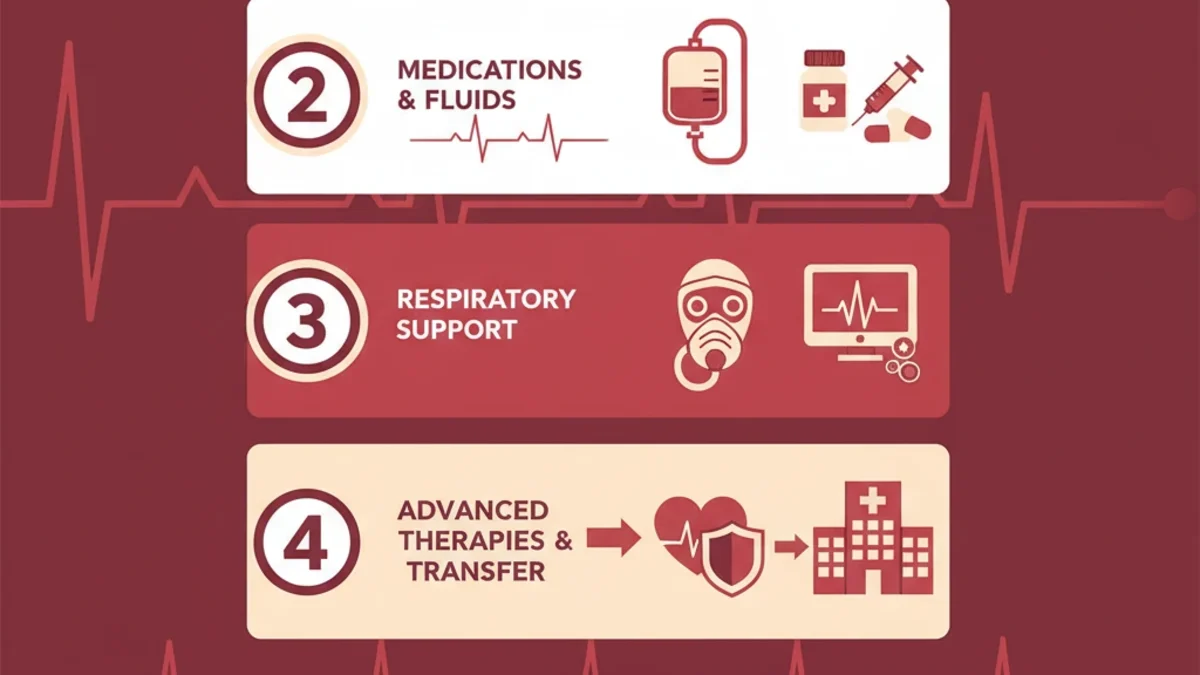
Acute decompensated heart failure drives over one million hospital admissions annually. 30-day readmission rates are 25%. When the heart cannot compensate, the tools change entirely - IV diuretics, inotropes, mechanical circulatory support. Sarah Mitchell and James Carter cover ADHF management, cardiogenic shock, and how to prevent the revolving door.
Sarah Mitchell & James Carter






