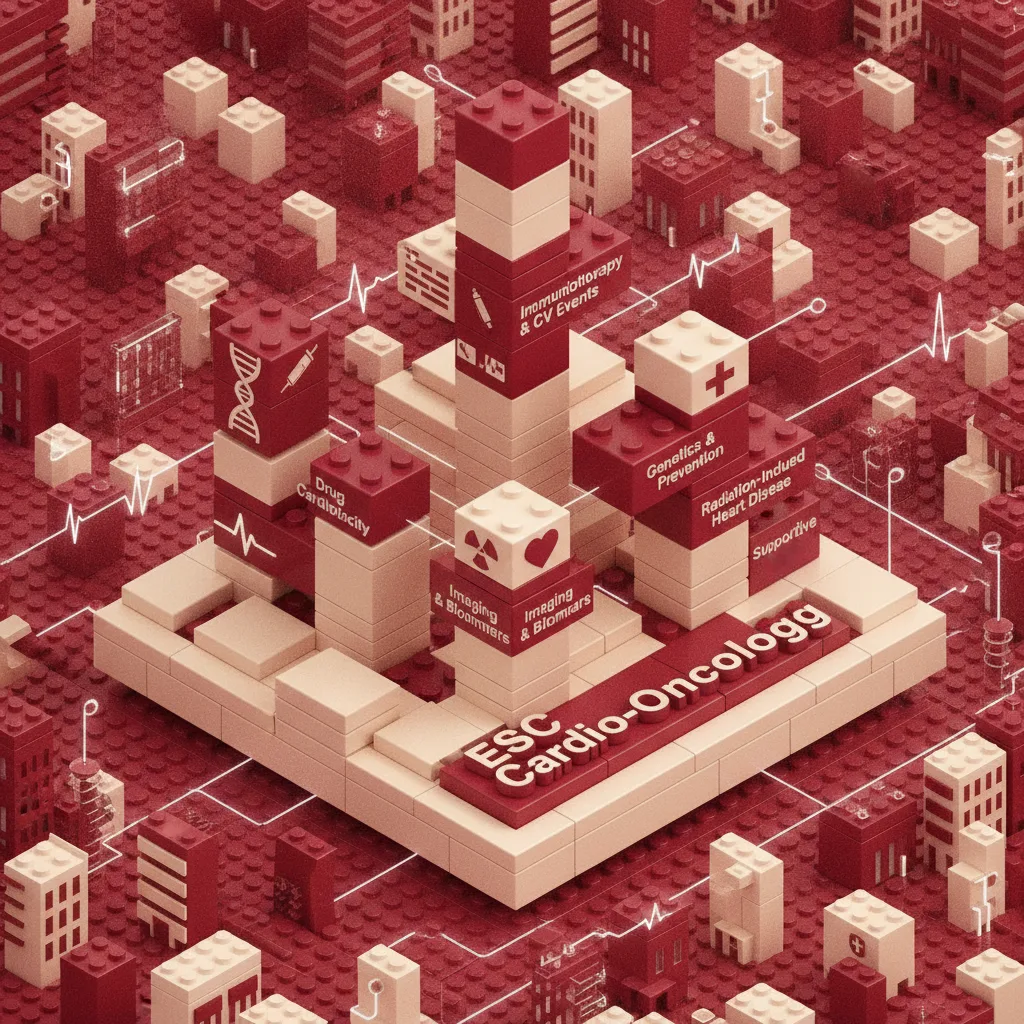

Cardiotoxicity remains a significant complication of modern cancer therapies, impacting patient morbidity and mortality.1 General practitioners and specialists require updated evidence on risk stratification, monitoring protocols, and therapeutic interventions to mitigate cardiovascular adverse events in oncology patients. The upcoming ESC Cardio-Oncology 2026 congress is expected to provide essential updates on these critical areas, offering practical insights for clinical practice.
The intersection of cardiology and oncology presents complex challenges, primarily due to the cardiotoxic effects of various cancer treatments. Anthracyclines, HER2-targeted therapies, and immune checkpoint inhibitors, while effective in cancer management, are associated with a spectrum of cardiovascular complications, including left ventricular dysfunction, arrhythmias, hypertension, and myocardial ischemia.1 Managing these toxicities requires a multidisciplinary approach, integrating expertise from both cardiology and oncology to optimize patient outcomes. The ESC Cardio-Oncology 2026 congress is anticipated to focus on several key areas addressing these challenges.
Anticipated Session Highlights
One primary focus will be the refinement of cardiotoxicity surveillance strategies. Current guidelines recommend baseline cardiovascular assessment and periodic monitoring during and after cancer treatment.2 The congress is expected to present new data on the utility of advanced imaging modalities, such as speckle-tracking echocardiography and cardiac magnetic resonance imaging (CMR), for the early detection of subclinical myocardial dysfunction. These techniques offer greater sensitivity than conventional ejection fraction measurements, potentially allowing for earlier intervention before irreversible damage occurs.3 Discussions will likely include the practical implementation of these tools in diverse clinical settings, considering cost-effectiveness and accessibility. Furthermore, sessions may explore the specific patient populations benefiting most from these advanced surveillance methods, such as those receiving high-dose anthracyclines or combination therapies with known cardiotoxic potential, and how these strategies can be tailored to individual risk profiles.
Another significant area will be the role of biomarkers in predicting and detecting cardiotoxicity. High-sensitivity cardiac troponins and natriuretic peptides (BNP/NT-proBNP) have shown promise in identifying patients at higher risk of developing cardiac dysfunction.4 Sessions are expected to review the latest evidence on integrating these biomarkers into routine clinical practice, including optimal timing for measurement and interpretation of results in the context of different cancer therapies. The predictive value of novel biomarkers, such as microRNAs and circulating tumor DNA, in cardio-oncology will also likely be explored, although their clinical utility remains under investigation.5 The congress will also address the limitations of current biomarker use, such as their lack of specificity for certain types of cardiotoxicity and the influence of confounding factors like renal dysfunction or sepsis on their levels. Efforts to develop multi-biomarker panels for improved predictive accuracy will also be a topic of discussion.
Therapeutic interventions for established cardiotoxicity will also feature prominently. The congress will likely review evidence on cardioprotective strategies, including the use of angiotensin-converting enzyme (ACE) inhibitors, beta-blockers, and mineralocorticoid receptor antagonists, in preventing or mitigating chemotherapy-induced cardiac dysfunction.6 Specific sessions may address the management of immune checkpoint inhibitor-related myocarditis, a rare but severe complication requiring prompt recognition and immunosuppressive therapy.7 Furthermore, the long-term cardiovascular health of cancer survivors will be a recurring theme, emphasizing the need for ongoing surveillance and management of traditional cardiovascular risk factors, which may be exacerbated by cancer treatments.8 This includes addressing hypertension, dyslipidemia, and diabetes, which can be worsened by certain cancer therapies and contribute to accelerated atherosclerosis and heart failure development in survivors. The epidemiology of these long-term cardiovascular complications in various cancer survivor cohorts will be presented, highlighting disparities and unmet needs.
The congress is also expected to address the challenges of managing cardiovascular disease in patients undergoing novel cancer therapies, such as CAR T-cell therapy and targeted therapies for specific oncogenic drivers. These treatments can present unique cardiovascular side effect profiles, necessitating tailored monitoring and management approaches.9 For instance, CAR T-cell therapy can induce cytokine release syndrome, leading to myocardial dysfunction and arrhythmias, while certain targeted therapies may cause hypertension or QT prolongation. The integration of cardio-oncology services into routine clinical practice, including the development of dedicated cardio-oncology clinics and multidisciplinary teams, will likely be discussed as a means to improve patient care and outcomes.10 This integration aims to streamline patient pathways, facilitate timely consultations, and ensure consistent application of evidence-based guidelines across different healthcare settings, ultimately enhancing the quality of life and survival for cancer patients and survivors.
For a comprehensive overview of cardiac management principles relevant to these evolving guidelines, consult the authoritative Oxford Handbook of Cardiology.
The persistent challenge of cardiotoxicity in oncology underscores the need for continuous education and updated guidelines for clinicians. The anticipated focus at ESC Cardio-Oncology 2026 on early detection via advanced imaging and biomarkers is a welcome development. General practitioners, often the first point of contact for cancer survivors, must be equipped to recognize subtle signs of cardiovascular compromise and understand appropriate referral pathways. The emphasis on specific therapeutic strategies for managing cardiotoxicity reinforces the importance of a proactive approach rather than reactive treatment of established heart failure.
For the pharmaceutical industry, the increasing recognition of cardiotoxicity presents both a challenge and an opportunity. Companies developing novel cancer therapies must prioritize comprehensive cardiovascular safety assessments in their clinical trial designs. Furthermore, there is a growing market for cardioprotective agents and advanced diagnostic tools that can accurately identify patients at risk. The discussions around integrating cardio-oncology services highlight a systemic need for better collaboration between specialties, potentially driving demand for integrated care models and specialized training programs.
Patients undergoing cancer treatment, and particularly cancer survivors, face a dual burden of managing their oncological disease and its cardiovascular sequelae. Improved screening and management protocols, as anticipated from the congress, offer the prospect of a better quality of life and reduced long-term morbidity. However, the complexity of these issues necessitates clear communication from clinicians about potential risks and the importance of adherence to monitoring schedules and prescribed cardioprotective therapies. The goal remains to enable patients to complete their cancer treatment effectively while preserving their cardiovascular health.
- The Pivot The congress will highlight advancements in non-invasive imaging and biomarker use for early cardiotoxicity detection.
- The Data Expect discussions on specific therapeutic strategies, including beta-blockers and ACE inhibitors, for managing chemotherapy-induced cardiac dysfunction.
- The Action Clinicians should anticipate updated recommendations for pre-treatment cardiovascular risk assessment and ongoing surveillance during and after cancer therapy.
ART-2026-421
·09/26
Drafted with AI assistance, reviewed and approved by the editorial team. This publication is intended for healthcare professionals, researchers, and life science industry professionals. Content is provided for informational and educational purposes only and does not constitute medical advice.

I cover life sciences: drug approvals, trial readouts, regulatory decisions, and the AI reshaping clinical practice. Based in Greater London, contributing to The Life Science Feed since 2026.
Cite This Article
Voss M, Lopes W. ESC cardio-oncology 2026: key sessions and anticipated focus areas. The Life Science Feed. Published June 14, 2026. Updated September 12, 2026. Accessed September 12, 2026. https://thelifesciencefeed.com/cardiology/cardiomyopathies/news/esc-cardio-oncology-2026-key-sessions-and-anticipated-focus-areas.
Editorial & AI Standards
All content is researched from peer-reviewed, open-access sources: published trial data, clinical guidelines, and regulatory filings. AI tools are used solely to structure and summarise that evidence; no AI-generated conclusions appear without editor verification against the primary source.
Every article is reviewed by a named editor before publication. Source citations are listed in the References section. This content does not represent the views of any pharmaceutical company, medical device manufacturer, or healthcare provider.
Licence & Rights
© 2026 The Life Science Feed. All rights reserved. Unless otherwise indicated, all content is the property of The Life Science Feed and may not be reproduced, distributed, or transmitted in any form or by any means without prior written permission.
Medical Disclaimer
The information provided on The Life Science Feed is for educational and informational purposes only. It is not intended as a substitute for professional medical advice, diagnosis, or treatment. Always seek the advice of your physician or other qualified healthcare provider regarding any medical condition or treatment decision. Never disregard professional medical advice or delay in seeking it because of something you have read on this website.
References
1. Zamorano JL, Lancellotti P, Rodriguez Muñoz D, et al. 2016 ESC Position Paper on cancer treatments and cardiovascular toxicity developed under the auspices of the ESC Committee for Practice Guidelines: The Task Force for cancer treatments and cardiovascular toxicity of the European Society of Cardiology (ESC). Eur Heart J. 2016;37(36):2768-2801. doi:10.15829/1560-4071-2017-3-105-139
2. Lyon AR, López-Fernández T, Couch LS, et al. 2022 ESC Guidelines on cardio-oncology developed in collaboration with the European Hematology Association (EHA), the European Society for Medical Oncology (ESMO) and the International Cardio-Oncology Society (ICOS). Eur Heart J. 2022;43(42):4229-4361. doi:10.1093/eurheartj/ehad196
3. Thavendiranathan P, Poulin F, Lim KD, et al. Use of myocardial strain imaging by echocardiography for the early detection of cardiotoxicity in cancer patients: a systematic review and meta-analysis. J Am Coll Cardiol. 2014;63(25 Pt A):2751-2768.
4. Cardinale D, Sandri MT, Colombo A, et al. Prognostic value of troponin I in cardiac risk stratification of cancer patients undergoing high-dose chemotherapy. Circulation. 2004;109(22):2749-2754. doi:10.1161/01.cir.0000130926.51766.cc
5. Herrmann J, Lerman A, Sandhu NP, et al. Evaluation and Management of Patients With Heart Disease and Cancer: Cardio-Oncology. Mayo Clin Proc. 2014;89(9):1287-1306. doi:10.1016/j.mayocp.2014.05.013
6. Pituskin E, Mackey JR, Koshman S, et al. Multidisciplinary Approach to Novel Therapies in Cardio-Oncology Research (MANTICORE 101-Breast): A Randomized Trial for the Prevention of Trastuzumab-Associated Cardiotoxicity With Enalapril and carvedilol in Breast Cancer. J Clin Oncol. 2017;35(8):870-877. doi:10.1200/jco.2016.68.7830
7. Mahmood SS, Fradley MG, Cohen JV, et al. Myocarditis in Patients Treated With Immune Checkpoint Inhibitors. J Am Coll Cardiol. 2018;71(16):1755-1764.
8. Armenian SH, Lacchetti C, Carver J, et al. Cardiotoxicity of Cancer Therapy: An American Society of Clinical Oncology Clinical Practice Guideline. J Clin Oncol. 2017;35(29):3352-3381.
9. Moslehi JJ, Salem JE, Sosman JA, et al. Increased Understanding of the Cardiovascular Toxicities of Cancer Therapies: JACC: CardioOncology State-of-the-Art Review. JACC CardioOnc. 2019;1(2):147-162.
10. Lenihan DJ, Cardinale D, Cornelissen J, et al. The European Society of Cardiology (ESC) and the International Cardio-Oncology Society (ICOS) Joint Position Paper on the Organization of Cardio-Oncology Services. Eur Heart J. 2020;41(48):4529-4541.









