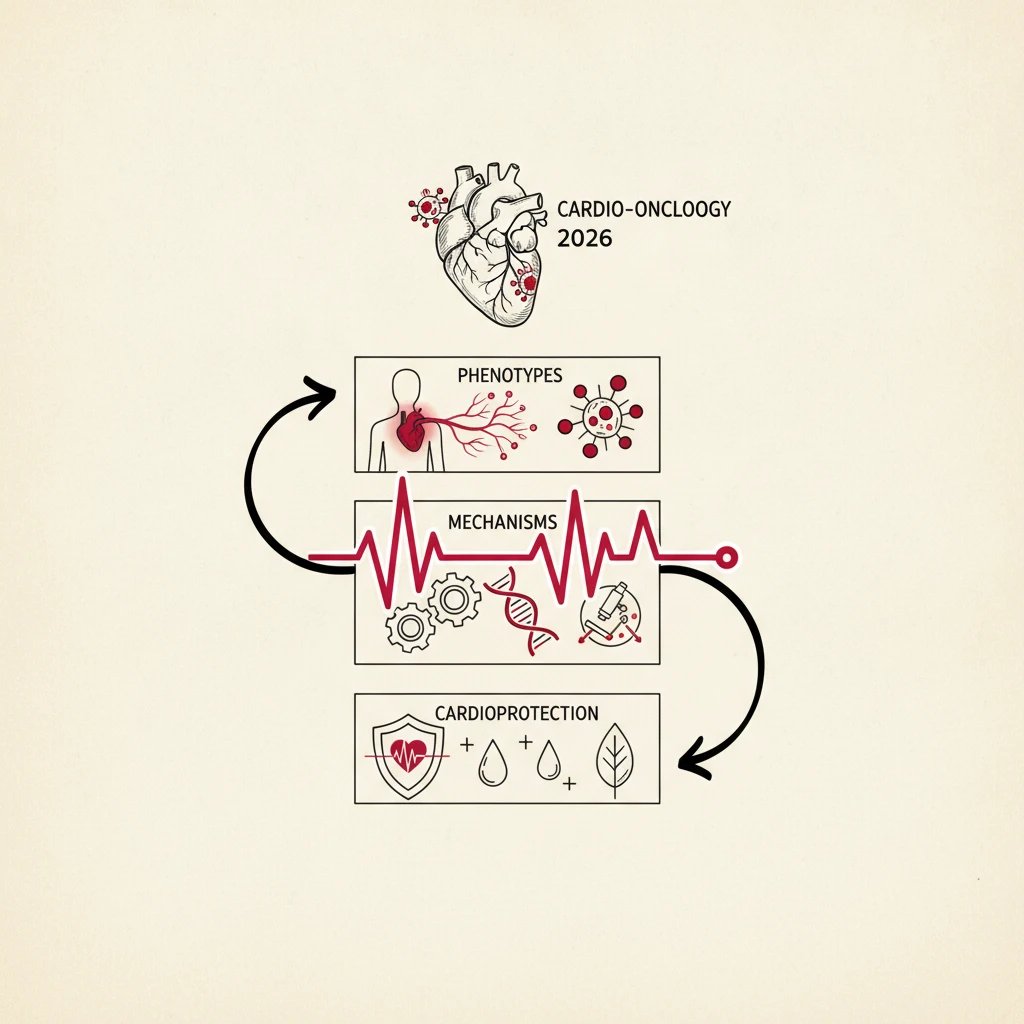

The increasing survival rates in oncology have brought a critical focus to the cardiovascular sequelae of cancer therapies, particularly heart failure and cancer therapy-related cardiac dysfunction (CTRCD). Clinicians face the challenge of optimising oncological outcomes while mitigating potentially life-limiting cardiac toxicity. The ESC Cardio Oncology 2026 meeting provided a comprehensive overview of current understanding and emerging strategies for managing these complex patient populations.
Cancer therapy-related cardiac dysfunction (CTRCD) represents a significant clinical challenge, impacting patient quality of life and long-term survival. The ESC Cardio Oncology 2026 meeting highlighted the evolving understanding of CTRCD, moving beyond a singular entity to recognise distinct phenotypes driven by specific cancer therapies. Anthracycline-induced cardiotoxicity, for instance, often manifests as a dose-dependent reduction in left ventricular ejection fraction (LVEF), typically occurring within the first year of treatment but with potential for late onset.1 Conversely, HER2-targeted therapies, such as trastuzumab, are associated with a reversible LVEF decline, often without overt myocyte damage, suggesting a different underlying mechanism.2 Immune checkpoint inhibitors, a newer class of cancer therapy, can induce myocarditis, a severe and often rapidly progressive form of cardiac dysfunction requiring prompt recognition and management.3 The incidence of CTRCD varies widely depending on the specific agent, cumulative dose, patient comorbidities, and surveillance strategies, ranging from 5% to 20% for anthracyclines and up to 10% for HER2-targeted therapies. This variability underscores the need for tailored approaches to prevention and management.
Mechanisms and Cardioprotection Strategies
The mechanistic understanding of CTRCD is crucial for developing targeted cardioprotective strategies. Anthracyclines generate reactive oxygen species, leading to mitochondrial dysfunction, DNA damage, and myocyte apoptosis.4 Dexrazoxane, an iron chelator, has demonstrated efficacy in reducing anthracycline-induced cardiotoxicity, particularly in patients receiving high cumulative doses. A meta-analysis of multiple trials showed that dexrazoxane significantly reduced the incidence of heart failure and LVEF decline in this population.5 For HER2-targeted therapies, the mechanism involves interference with HER2 signalling pathways in cardiomyocytes, which are essential for cardiac function and repair.6 While the LVEF decline associated with these agents is often reversible upon discontinuation, early initiation of guideline-directed medical therapy (GDMT), including angiotensin-converting enzyme (ACE) inhibitors or angiotensin receptor blockers (ARBs) and beta-blockers, has shown promise in preventing or reversing cardiac dysfunction.7 These GDMT agents work by reducing cardiac workload, improving myocardial remodelling, and mitigating neurohormonal activation, thereby supporting cardiac function.
Emerging data also support the role of SGLT2 inhibitors in cardioprotection within the cardio-oncology setting. These agents, initially developed for type 2 diabetes, have demonstrated broad cardiovascular benefits, including reductions in heart failure hospitalisations and cardiovascular mortality in patients with and without diabetes.8 While specific large-scale trials in CTRCD are ongoing, their established mechanisms of action, including improvements in myocardial energetics and reduction in cardiac remodelling, suggest a potential role in mitigating cancer therapy-related cardiac injury.9 The proposed mechanisms include enhanced glucose and ketone body metabolism in cardiomyocytes, reduced cardiac fibrosis, and improved endothelial function, all contributing to better cardiac resilience against cytotoxic insults.
The meeting also addressed the importance of proactive cardiac surveillance. Baseline cardiac imaging, typically echocardiography, is recommended for all patients undergoing potentially cardiotoxic cancer therapies. Serial monitoring during and after treatment allows for early detection of subclinical cardiac dysfunction, enabling timely intervention before overt heart failure develops.10 Biomarkers such as high-sensitivity cardiac troponin and N-terminal pro-B-type natriuretic peptide (NT-proBNP) can also aid in risk stratification and early detection of cardiac injury, particularly in asymptomatic patients. These biomarkers reflect myocyte injury and cardiac stretch, respectively, providing objective measures of cardiac stress even in the absence of symptomatic heart failure. The integration of imaging and biomarkers facilitates a comprehensive approach to monitoring cardiac health throughout the cancer treatment trajectory and into survivorship.
Limitations in current knowledge include the lack of large, prospective, randomised controlled trials specifically designed to evaluate cardioprotective strategies across all cancer therapy classes and patient populations. Many recommendations are derived from observational studies, smaller trials, or extrapolation from general heart failure populations. Further research is needed to refine risk stratification models, identify novel biomarkers, and develop personalised cardioprotective approaches based on individual patient risk profiles and specific cancer treatments. The long-term cardiac outcomes for survivors of newer cancer therapies, such as immune checkpoint inhibitors and CAR T-cell therapy, also require continued investigation. The heterogeneity of cancer types, treatment regimens, and patient demographics presents a significant challenge in designing universally applicable trials. Furthermore, the optimal timing and duration of cardioprotective interventions, as well as their cost-effectiveness, warrant further study to inform clinical guidelines effectively.
The discussions at ESC Cardio Oncology 2026 underscore a critical shift in how clinicians must approach cancer care. It is no longer sufficient to focus solely on oncological efficacy; the cardiovascular consequences demand equal, if not greater, attention. The nuanced understanding of CTRCD phenotypes means a one-size-fits-all approach to cardioprotection is obsolete. Oncologists and cardiologists must collaborate more closely, integrating baseline cardiac risk assessment and ongoing surveillance into standard practice. The evidence for established cardioprotective agents like dexrazoxane for anthracyclines and GDMT for HER2-targeted therapies is compelling, yet their consistent application remains variable. This highlights a gap in implementation that guideline bodies, such as the European Society of Cardiology, must address with more explicit, therapy-specific recommendations.
The potential role of SGLT2 inhibitors in cardio-oncology is particularly intriguing. Given their broad benefits in heart failure, it would be a missed opportunity not to explore their utility in preventing or mitigating CTRCD more aggressively. While large-scale, dedicated trials are still needed, the existing evidence base for their cardiac protective effects in other populations is robust enough to warrant consideration in high-risk patients, perhaps even off-label, where the risk-benefit profile is favourable. Pharmaceutical companies developing these agents should prioritise funding for such trials, as the market for cardioprotection in oncology is expanding rapidly with improved cancer survival rates.
Ultimately, the patient experience is at the heart of this evolving field. Surviving cancer only to develop debilitating heart failure is a suboptimal outcome. Proactive cardiac care, including regular monitoring and timely intervention, can significantly improve long-term quality of life. This requires not only physician education but also patient awareness. Patients undergoing cardiotoxic therapies should be fully informed of the risks and the importance of adhering to cardiac surveillance protocols. The integration of cardio-oncology clinics, where specialists can provide coordinated, multidisciplinary care, will be essential in translating these insights into tangible benefits for patients.
- The Pivot Recognition of distinct CTRCD phenotypes necessitates tailored management strategies.
- The Data Early detection and intervention with established cardioprotective agents can mitigate cardiac dysfunction.
- The Action Implement routine cardiac surveillance and consider prophylactic cardioprotection in high-risk oncology patients.
ART-2026-469
·09/26
Drafted with AI assistance, reviewed and approved by the editorial team. This publication is intended for healthcare professionals, researchers, and life science industry professionals. Content is provided for informational and educational purposes only and does not constitute medical advice.

Science writer covering the frontier between basic research and clinical practice. I am interested in the moment a mechanism becomes a therapy, and everything that can go wrong in between.
Cite This Article
Aldrich M, Voss M. Cardio-oncology 2026: phenotypes, mechanisms, and cardioprotection. The Life Science Feed. Published June 19, 2026. Updated September 17, 2026. Accessed September 17, 2026. https://thelifesciencefeed.com/cardiology/heart-failure/research/cardio-oncology-2026-phenotypes-mechanisms-and-cardioprotection.
Editorial & AI Standards
All content is researched from peer-reviewed, open-access sources: published trial data, clinical guidelines, and regulatory filings. AI tools are used solely to structure and summarise that evidence; no AI-generated conclusions appear without editor verification against the primary source.
Every article is reviewed by a named editor before publication. Source citations are listed in the References section. This content does not represent the views of any pharmaceutical company, medical device manufacturer, or healthcare provider.
Licence & Rights
© 2026 The Life Science Feed. All rights reserved. Unless otherwise indicated, all content is the property of The Life Science Feed and may not be reproduced, distributed, or transmitted in any form or by any means without prior written permission.
Medical Disclaimer
The information provided on The Life Science Feed is for educational and informational purposes only. It is not intended as a substitute for professional medical advice, diagnosis, or treatment. Always seek the advice of your physician or other qualified healthcare provider regarding any medical condition or treatment decision. Never disregard professional medical advice or delay in seeking it because of something you have read on this website.
References
1. Cardinale D, Sandri MT, Colombo A, et al. Prognostic significance of asymptomatic left ventricular dysfunction in high-risk patients receiving anthracycline-based chemotherapy. J Am Coll Cardiol. 2015;65(18):1976-1985.
2. Ewer MS, Vooletich MT, Swingle M, et al. Cardiac dysfunction in patients receiving trastuzumab and anthracyclines: a review of the literature. J Clin Oncol. 2005;23(30):7720-7729.
3. Mahmood SS, Fradley RG, Cohen JV, et al. Myocarditis in patients treated with immune checkpoint inhibitors. J Am Coll Cardiol. 2018;71(16):1755-1764.
4. Minotti G, Cairo M, Gianni L. Anthracycline cardiotoxicity: from molecular mechanisms to therapeutic strategies. J Clin Oncol. 2004;22(24):541-555. 5. van Dalen EC, Caron HN, Dickinson HO, et al. Cardioprotective interventions for cancer patients receiving anthracyclines. Cochrane Database Syst Rev. 2011;(6):CD003917.
6. Force T, Krause DS, Van Etten RA. HER2-targeted therapy and cardiotoxicity: a review. J Clin Oncol. 2007;25(18):2675-2682.
7. Pituskin E, Mackey JR, Koshman S, et al. Multidisciplinary approach to novel therapies in oncology and cardiotoxicity (MANTA) trial. J Clin Oncol. 2011;29(20):2827-2834.
8. McMurray JJV, Solomon SD, Inzucchi SC, et al. Dapagliflozin in patients with heart failure and reduced ejection fraction. N Engl J Med. 2019;381(21):1995-2008.
9. Packer M. Cardioprotective effects of SGLT2 inhibitors in patients with heart failure: a mechanistic review. JACC Heart Fail. 2020;8(1):1-13.
10. Zamorano JL, Lancellotti P, Rodriguez Muñoz D, et al. 2016 ESC Position Paper on cancer treatment and cardiovascular toxicity developed under the auspices of the ESC Committee for Practice Guidelines. Eur Heart J. 2016;37(36):2768-2801. doi:10.15829/1560-4071-2017-3-105-139
11. Herrmann J, Lerman A, Sandhu NP, et al. Evaluation and management of patients with heart disease and cancer: cardio-oncology. Mayo Clin Proc. 2014;89(9):1287-1306. doi:10.1016/j.mayocp.2014.05.013








