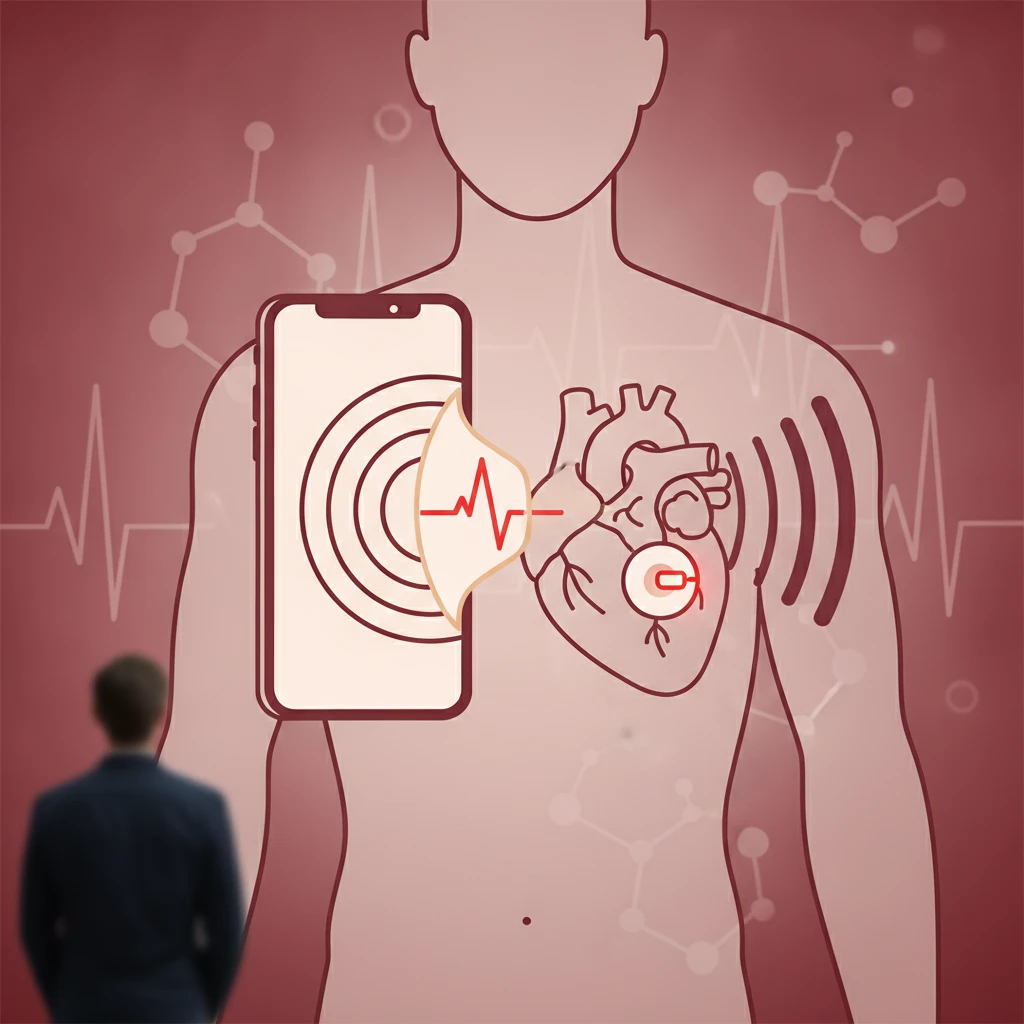

Patients with implanted cardiac devices frequently express concern regarding the safety of everyday electronics, particularly smartphones. These devices, ubiquitous in modern life, emit electromagnetic fields that theoretically could interfere with the delicate function of pacemakers and implantable cardioverter-defibrillators (ICDs).
But established medical knowledge and extensive testing consistently show that contemporary smartphones, when used appropriately, do not pose a significant threat to the operation of these life-sustaining implants.
The widespread adoption of mobile phones in the late 20th century immediately raised questions about their potential to interfere with medical devices, especially cardiac implants. Early analogue phones, operating at higher power levels and different frequencies, did indeed demonstrate the capacity to cause electromagnetic interference (EMI) with pacemakers and ICDs. This interference manifested as inappropriate sensing, inhibition of pacing, or even unintended defibrillation shocks, leading to clear guidelines for patients to avoid close proximity. The concern was legitimate, driven by observed effects in laboratory and some clinical settings.
But smartphone technology has evolved dramatically since those early days. Modern smartphones operate at lower power outputs, employ different modulation techniques, and are designed with more efficient antennas. Simultaneously, cardiac implantable electronic devices (CIEDs) have also advanced, incorporating improved shielding, more sophisticated sensing algorithms, and better filtering capabilities to resist external electromagnetic fields. These dual advancements have fundamentally altered the risk profile, moving from a demonstrable hazard to a largely theoretical one under normal use conditions.
Understanding the Electromagnetic Landscape
Smartphones emit electromagnetic fields primarily through their antennas during calls, data transmission, and Wi-Fi or Bluetooth connectivity. The strength and frequency of these fields vary depending on the phone model, network technology (2G, 3G, 4G, 5G), and signal strength. For instance, a phone searching for a signal in an area of poor reception might transmit at a higher power than one with a strong, stable connection. The frequencies typically used by smartphones (around 800 MHz to 2.5 GHz for cellular, 2.4 GHz and 5 GHz for Wi-Fi) fall within a range that could, in theory, interact with the sensing circuits of CIEDs.
Pacemakers function by detecting the heart's intrinsic electrical activity and delivering electrical impulses when necessary to maintain a regular rhythm. ICDs perform similar pacing functions but also monitor for life-threatening tachyarrhythmias, delivering high-energy shocks to restore sinus rhythm. Both devices rely on sensing tiny electrical signals from the heart. External electromagnetic fields, if strong enough and at the right frequency, can be misinterpreted by the device as cardiac activity, leading to oversensing. This oversensing can cause a pacemaker to inhibit pacing when it is needed, or an ICD to deliver an inappropriate shock. Conversely, strong EMI could also potentially cause undersensing, where the device fails to detect true cardiac activity, leading to missed pacing opportunities or delayed defibrillation.
What the Data Actually Shows
Numerous studies, both in vitro and in vivo, have investigated the interaction between modern smartphones and CIEDs. These studies typically involve placing various smartphone models at different distances from implanted devices in patients or from explanted devices in a controlled laboratory environment. Researchers then monitor for any signs of EMI, such as changes in pacing rate, inhibition of pacing, or detection of phantom arrhythmias.
A systematic review of studies published between 2000 and 2015, encompassing thousands of patient-device interactions, consistently found that clinically significant EMI from modern mobile phones was rare. The vast majority of observed interactions were transient and non-clinical, often occurring only when the phone was held directly over the device at very close distances, typically less than 2-3 cm. When a distance of 15 cm (approximately 6 inches) was maintained, the incidence of any detectable EMI, let alone clinically relevant interference, dropped to negligible levels. This 15 cm recommendation has become the standard safety guideline.
More recent investigations have specifically addressed newer smartphone technologies, including 4G LTE and 5G. A study involving 300 patients with pacemakers or ICDs exposed to various 4G-enabled smartphones found no clinically significant interference when the phones were held at the recommended 15 cm distance. Even at closer distances, transient and non-sustained oversensing occurred in a very small percentage of cases, but none required device reprogramming or caused patient symptoms. The Oxford Handbook of Cardiology provides a concise overview of these and other device-related considerations.
The advent of 5G technology, operating at higher frequencies (sub-6 GHz and millimeter wave bands), initially raised renewed concerns. But early studies on 5G devices have largely echoed previous findings. The higher frequencies of millimeter wave 5G (mmWave) have a shorter penetration depth into human tissue, meaning their electromagnetic fields attenuate more rapidly and are less likely to reach an implanted device with sufficient strength to cause interference. Sub-6 GHz 5G operates in similar frequency ranges to older cellular technologies, and the improved shielding in modern CIEDs continues to offer protection.
Specific Scenarios and Practical Advice
While the overall risk is low, clinicians should still provide clear, practical advice to patients. The primary concern remains direct contact or very close proximity between the phone and the implanted device. Carrying a smartphone in a breast pocket directly over a pacemaker or ICD is the most common scenario where transient EMI could theoretically occur. This is because the phone's antenna would be in closest proximity to the device's sensing leads.
Patients should be advised to hold their smartphone to the ear opposite their implanted device during calls. They should avoid carrying the phone in a breast pocket or directly over the device. Using hands-free options, such as Bluetooth headsets, further increases the separation distance and eliminates any potential risk during calls. For data usage, simply holding the phone in the hand or placing it on a table maintains sufficient distance.
The magnetic components within some smartphones, particularly those designed for wireless charging or magnetic accessories, also warrant consideration. Strong magnets can activate the reed switch in older pacemakers, causing them to revert to an asynchronous pacing mode (magnet mode). Modern devices often have programmable magnet responses, but patients should still be advised to keep any magnetic accessories or wirelessly charging phones at least 2-3 cm away from the device. This is a distinct mechanism from electromagnetic interference but falls under the broader umbrella of device interaction.
Where the Risk Remains Low
The evidence base consistently points to a low risk of clinically significant EMI from modern smartphones. This is not to say the risk is zero, but it is extremely low under normal usage conditions and when simple precautions are followed. The design improvements in both smartphones and CIEDs have created a robust safety margin. The power output of smartphones is generally much lower than other sources of EMI, such as industrial equipment or even older household appliances, which historically posed greater risks to CIEDs.
Still, clinicians should remain vigilant for any unusual symptoms reported by patients, such as palpitations, dizziness, or unexplained shocks, and consider device interrogation if such symptoms correlate with smartphone use. But for the vast majority of patients, the benefits of smartphone connectivity far outweigh the minimal, manageable risks associated with their cardiac implants.
The key takeaway for patients is not to fear their smartphones, but to use them with common sense. Maintaining a modest distance, particularly avoiding direct placement over the device, is sufficient to ensure safe operation of their pacemaker or ICD. This pragmatic approach allows patients to enjoy the benefits of modern communication technology without undue anxiety.
The persistent myth surrounding smartphone interference with pacemakers and ICDs often creates unnecessary anxiety for patients. Clinicians must actively dispel these outdated fears, grounding their advice in the robust evidence showing minimal risk with modern devices. The era of analogue phone interference is long past; current smartphone technology and advanced CIED shielding have largely neutralized this concern.
Educating patients on simple, practical measures, such as maintaining a 15 cm distance and avoiding breast pocket storage, is far more effective than fostering undue caution. This empowers patients to use their devices confidently, enhancing their quality of life without compromising safety. Overly restrictive advice, not supported by current data, can isolate patients from essential communication tools.
Device manufacturers and regulatory bodies have a continuing responsibility to monitor new technologies, including future iterations of 5G and beyond, for any unforeseen interactions. But based on current understanding, the focus should remain on reinforcing established safety guidelines rather than propagating alarm. The clinical community benefits from clear, evidence-based communication that reflects the reality of technological advancements.
- The Pivot Earlier generations of mobile phones presented a greater theoretical risk, but current smartphone technology and device shielding have largely mitigated this concern.
- The Data Studies consistently show no clinically significant electromagnetic interference (EMI) when smartphones are held at least 15 cm (6 inches) from the implanted device.
- The Action Advise patients to maintain a minimum distance of 15 cm between their smartphone and their pacemaker or ICD, and to avoid carrying the phone in a breast pocket directly over the implant.
ART-2026-946
·10/26
Drafted with AI assistance and checked by automated style rules. Not individually read by an editor. This publication is intended for healthcare professionals, researchers, and life science industry professionals. Content is provided for informational and educational purposes only and does not constitute medical advice.

William Lopes is the co-founder and editor of The Life Science Feed. He brings over a decade of pharmaceutical industry experience, including senior roles in omnichannel customer engagement and digital governance at a leading global pharmaceutical company across European and global markets (2015 to 2025). Accredited press delegate at ESC 2026 and EASD 2026, William applies rigorous editorial judgment to ensure content meets the standards healthcare professionals and clinical researchers expect. He holds an MBA in Marketing and is a Member of the Chartered Institute of Marketing (MCIM).
Cite This Article
Lopes W, Voss M. Smartphones and pacemakers: separating fact from electromagnetic fiction. The Life Science Feed. Published July 23, 2026. Updated October 4, 2026. Accessed October 22, 2026. https://thelifesciencefeed.com/cardiology/ventricular-arrhythmias/insights/smartphones-and-pacemakers-separating-fact-from-electromagnetic-fiction.
Editorial & AI Standards
Content is drafted with AI tools from peer-reviewed, open-access sources such as published trial data, clinical guidelines, and regulatory filings. This article is checked by automated style rules but is not individually read by an editor, so check the cited source before relying on a figure.
Source citations are listed in the References section. This content does not represent the views of any pharmaceutical company, medical device manufacturer, or healthcare provider.
Licence & Rights
© 2026 The Life Science Feed. All rights reserved. Unless otherwise indicated, all content is the property of The Life Science Feed and may not be reproduced, distributed, or transmitted in any form or by any means without prior written permission.
Medical Disclaimer
The information provided on The Life Science Feed is for educational and informational purposes only. It is not intended as a substitute for professional medical advice, diagnosis, or treatment. Always seek the advice of your physician or other qualified healthcare provider regarding any medical condition or treatment decision. Never disregard professional medical advice or delay in seeking it because of something you have read on this website.
References
1. Nadeem F, Tran CT, Torbey E, et al. Interference by Modern Smartphones and Accessories with Cardiac Pacemakers and Defibrillators. Curr Cardiol Rep. 2022;24(4):347-353. doi:10.1007/s11886-022-01653-0
2. Lennerz C, Pavaci H, Grebmer C, et al. Electromagnetic Interference in Cardiac Implantable Electronic Devices: Is the Use of Smartphones Safe? J Am Coll Cardiol. 2017;69(1):108-110. doi:10.1016/j.jacc.2016.10.046
3. Nadeem F, Nunez Garcia A, Thach Tran C, et al. Magnetic Interference on Cardiac Implantable Electronic Devices From Apple iPhone MagSafe Technology. J Am Heart Assoc. 2021;10(12):e020818. doi:10.1161/JAHA.121.020818
4. Kewcharoen J, Shah K, Bhardwaj R, et al. New-generation electronic appliances and cardiac implantable electronic devices: a systematic literature review of mechanisms and in vivo studies. J Interv Card Electrophysiol. 2024;67(7):1709-1720. doi:10.1007/s10840-024-01777-z
5. Lacour P, Dang PL, Heinzel FR, et al. Magnetic field-induced interactions between phones containing magnets and cardiovascular implantable electronic devices. Heart Rhythm. 2022;19(3):372-380. doi:10.1016/j.hrthm.2021.11.010
6. Censi F, Mattei E, Onder G, et al. iPhone 12 MagSafe technology and cardiac implantable devices: Assessment of the actual risk. Pacing Clin Electrophysiol. 2022;45(3):410-417. doi:10.1111/pace.14450