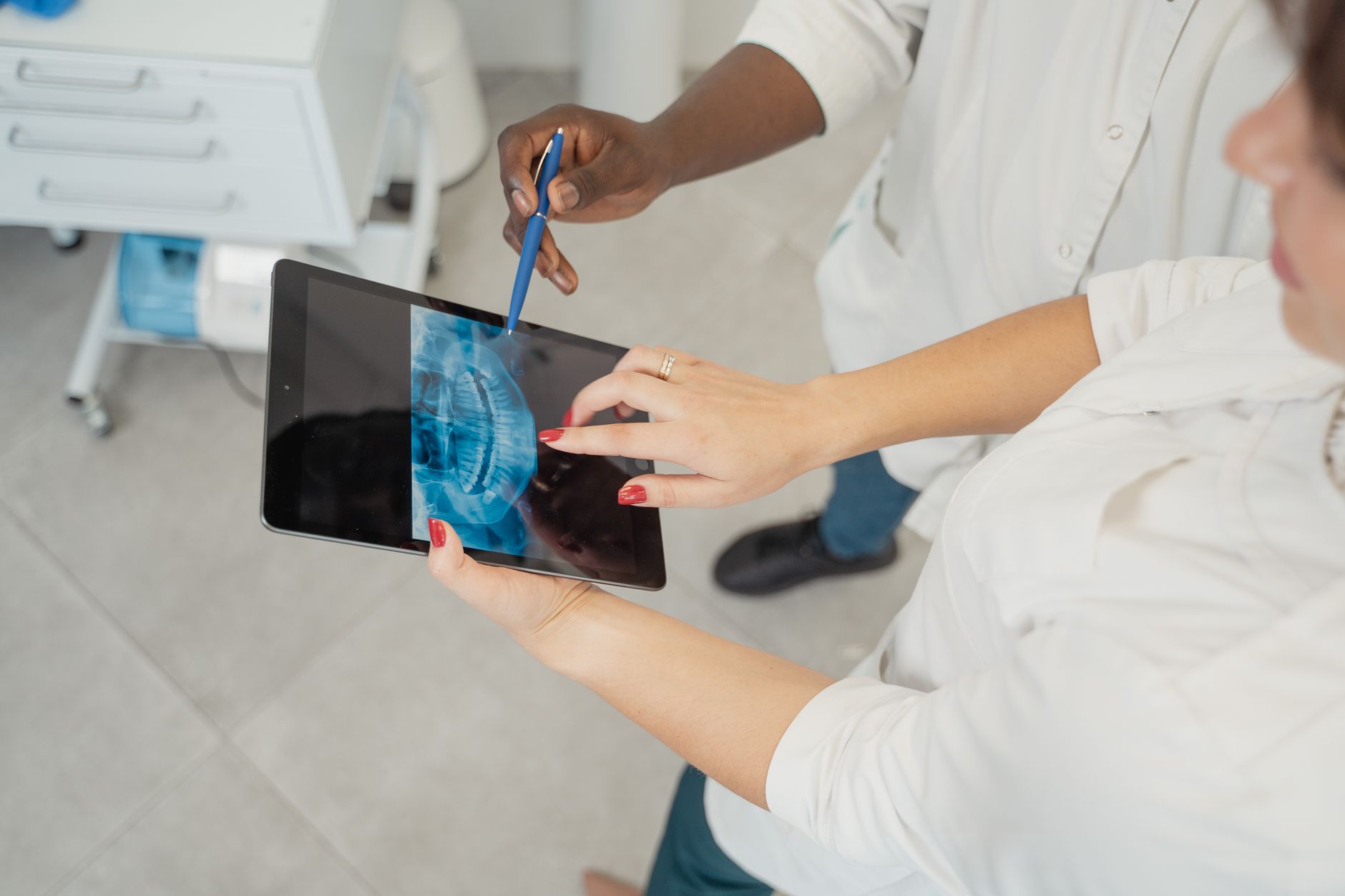

Dental anxiety is a prevalent concern that often goes unaddressed until a patient exhibits significant distress. Proactive screening for dental phobia is crucial for improving patient experience and outcomes.
Screening Questions
Don't wait for the patient to grip the armrests like their life depends on it. Proactive screening is crucial. The Modified Dental Anxiety Scale (MDAS) is a quick, five-question tool that can identify patients at risk.1 Incorporate it into your standard intake forms. A score above 19 suggests significant dental phobia warranting further intervention. This approach aligns with the broader trend in healthcare toward preventative mental health screening, although dental-specific guidelines lag behind general anxiety disorder recommendations.
In-Chair Calming Techniques
Simple relaxation techniques can make a huge difference. Deep breathing exercises are a go-to. Instruct patients to inhale slowly through the nose, hold for a few seconds, and exhale slowly through the mouth. This activates the parasympathetic nervous system, counteracting the fight-or-flight response. Progressive muscle relaxation is another option. Guide patients to tense and release different muscle groups, starting with their feet and working their way up. These are not cures, but effective band-aids for acute anxiety. Evidence for their effectiveness is mixed, but the low-risk nature makes them worthwhile.
Communication is Key
How you communicate can either escalate or de-escalate anxiety. Use clear, simple language. Avoid jargon. Explain each step of the procedure before you begin. The “Tell-Show-Do” technique works wonders- tell the patient what you're going to do, show them the instruments, and then do it. Give patients a sense of control by establishing a signal (raising a hand) they can use if they need a break. Active listening is critical. Acknowledge their fears and validate their feelings. Remember, empathy goes a long way. This contradicts the old-school 'just get it done' mentality, but improves patient outcomes.
When to Refer
Recognize your limitations. If a patient's anxiety is severe and unresponsive to basic techniques, referral to a mental health professional specializing in phobia treatment is necessary. This isn't a failure on your part. It's responsible patient care. Look for signs of panic attacks, uncontrolled crying, or refusal to cooperate despite your best efforts. Document these instances clearly in the patient's chart. Also be sure to have resources available for patients if they would like to seek professional help. Consider building relationships with local mental health providers to facilitate seamless referrals.
Study Limitations
Narrative reviews, while useful for summarizing existing literature, are inherently limited by their subjective nature. They don't involve a systematic quantitative analysis of data. The quality of the included studies varies, and there's a risk of bias in the selection and interpretation of the evidence. The review also doesn't address the cost-effectiveness of implementing these CBT techniques in a real-world dental setting. While the techniques themselves are low-cost, staff training and implementation require an investment of time and resources. Furthermore, cultural factors influencing dental anxiety weren't adequately explored. It's crucial to consider these limitations when applying the review's findings in clinical practice. Reproducibility of any specific intervention is uncertain.
Future research should focus on randomized controlled trials comparing the efficacy of different anxiety-reduction techniques, ideally with long-term follow-up to assess sustained impact on dental attendance and oral health outcomes. The development of standardized training programs for dental professionals in these techniques, coupled with an evaluation of their cost-effectiveness in diverse clinical settings, would also be invaluable. Furthermore, exploring the role of digital health interventions, such as virtual reality or mobile applications, in managing dental anxiety presents a promising avenue for innovation. These technologies could offer scalable and personalized support, potentially reaching a wider patient population and integrating seamlessly into modern dental practices. Understanding the neurobiological underpinnings of dental anxiety through imaging studies could also lead to more targeted pharmacological or non-pharmacological interventions in the future.
Integrating a Multimodal Approach for Comprehensive Care
Effectively addressing dental anxiety necessitates a multimodal approach that combines proactive screening, in-chair techniques, clear communication, and judicious referral, moving beyond isolated interventions to a holistic patient management strategy. This integrated model acknowledges the complex interplay of psychological, physiological, and environmental factors contributing to dental phobia, aiming to build patient trust and reduce avoidance behaviors over time. For instance, a patient identified with moderate anxiety via MDAS might benefit from a combination of pre-appointment guided meditation, a "Tell-Show-Do" approach during the procedure, and a post-appointment debrief to reinforce positive coping mechanisms.
While individual techniques show promise, their synergistic effects in a structured program are likely to yield superior and more durable outcomes. A systematic review by Armfield (2010) in the Journal of Dental Research highlighted that comprehensive cognitive behavioral therapy (CBT) interventions, which often incorporate several of these elements, demonstrate significant reductions in dental anxiety and improved treatment compliance compared to control groups. However, the practical implementation of full CBT protocols within a typical dental practice setting can be resource-intensive, often requiring specialized training that extends beyond the scope of general dental education.
The challenge lies in tailoring these evidence-based strategies to fit the realities of a busy clinical environment without compromising their efficacy. This often means prioritizing specific components based on the patient's anxiety level and presenting complaint. For example, for a patient with mild anxiety, enhanced communication and control signals might suffice, whereas severe phobia necessitates a more intensive, potentially multidisciplinary approach involving collaboration with mental health specialists. The absence of large-scale, pragmatic trials comparing different multimodal packages in real-world dental settings means that current recommendations often rely on extrapolations from single-technique studies or expert consensus.
Ultimately, the goal is to transform the dental experience from one of dread to one of manageable care, fostering long-term oral health. This requires a paradigm shift in dental practice, where psychological well-being is considered as integral to patient care as clinical proficiency. By systematically integrating these strategies, dental professionals can not only alleviate immediate anxiety but also empower patients with coping skills, thereby improving their overall health outcomes and fostering a positive relationship with dental care for years to come.
The most striking implication for European GPs and specialists is the urgent need to integrate proactive dental anxiety screening into routine practice. Waiting for a patient to display overt signs of distress, like white-knuckle grips, is a missed opportunity for early intervention. The Modified Dental Anxiety Scale (MDAS) offers a quick, validated tool that can easily be incorporated into standard intake forms, aligning with broader preventative mental health strategies. While dental-specific guidelines for anxiety lag behind general anxiety disorder recommendations from bodies like NICE, the low-cost, high-impact potential of early identification cannot be overstated.
For clinicians, this means a shift in mindset from reactive to proactive care. Simple in-chair techniques, such as deep breathing and progressive muscle relaxation, though with mixed evidence for efficacy, are low-risk and can significantly de-escalate acute anxiety. Crucially, effective communication using the "Tell-Show-Do" technique and establishing patient control signals are not merely 'soft skills'; they are evidence-based strategies that improve patient outcomes. This directly challenges the outdated 'just get it done' mentality, fostering a more empathetic and ultimately more efficient clinical environment.
Industry must recognize the opportunity to support this paradigm shift. While the techniques themselves are low-cost, investment in standardized training programs for dental professionals is essential. Furthermore, exploring digital health interventions, such as virtual reality or mobile applications, presents a promising avenue for scalable and personalized support. These technologies could offer innovative solutions to manage dental anxiety, reaching a wider patient demographic and potentially improving long-term oral health outcomes.
Finally, recognizing limitations and facilitating seamless referrals to mental health professionals is paramount. GPs and specialists are not expected to manage severe phobias alone. Building relationships with local mental health providers to streamline referrals, especially for patients exhibiting panic attacks or refusal to cooperate, is responsible patient care. This collaborative approach ensures patients receive the comprehensive support they need, ultimately enhancing the overall quality of care.
- The Pivot Proactive screening for dental anxiety using validated tools like the Modified Dental Anxiety Scale (MDAS) is increasingly crucial, shifting from reactive management of acute distress to preventative mental health screening in dental settings.
- The Data A score above 19 on the MDAS suggests significant dental phobia warranting further intervention.
- The Action Incorporate the MDAS into your standard intake forms to identify at-risk patients early, and be prepared to implement in-chair calming techniques or refer to mental health professionals for severe cases.
LSF-3839820167
·10/26
Drafted with AI assistance, reviewed and approved by the editorial team. This publication is intended for healthcare professionals, researchers, and life science industry professionals. Content is provided for informational and educational purposes only and does not constitute medical advice.

I write about AI in healthcare: the validation studies, the deployment failures, and the regulatory questions without answers yet. Based in San Francisco, close to where the technology is built.
Cite This Article
Chen L, Lopes W. Dental anxiety: why screening questions beat white-knuckle grips. The Life Science Feed. Published October 20, 2026. Updated October 20, 2026. Accessed October 20, 2026. https://thelifesciencefeed.com/dentistry/dental-caries/practice/dental-anxiety-why-screening-questions-beat-white-knuckle-grips.
Editorial & AI Standards
All content is researched from peer-reviewed, open-access sources: published trial data, clinical guidelines, and regulatory filings. AI tools are used solely to structure and summarise that evidence; no AI-generated conclusions appear without editor verification against the primary source.
Every article is reviewed by a named editor before publication. Source citations are listed in the References section. This content does not represent the views of any pharmaceutical company, medical device manufacturer, or healthcare provider.
Licence & Rights
© 2026 The Life Science Feed. All rights reserved. Unless otherwise indicated, all content is the property of The Life Science Feed and may not be reproduced, distributed, or transmitted in any form or by any means without prior written permission.
Medical Disclaimer
The information provided on The Life Science Feed is for educational and informational purposes only. It is not intended as a substitute for professional medical advice, diagnosis, or treatment. Always seek the advice of your physician or other qualified healthcare provider regarding any medical condition or treatment decision. Never disregard professional medical advice or delay in seeking it because of something you have read on this website.
References
1. Yeung AWK. Exploring the Variations in the Use of Modified Dental Anxiety Scale (MDAS) in Literature: A Survey of Studies Published from 2014 to
2023. Clin Exp Dent Res. 2024;10(6):e70040. doi:10.1002/cre2.70040