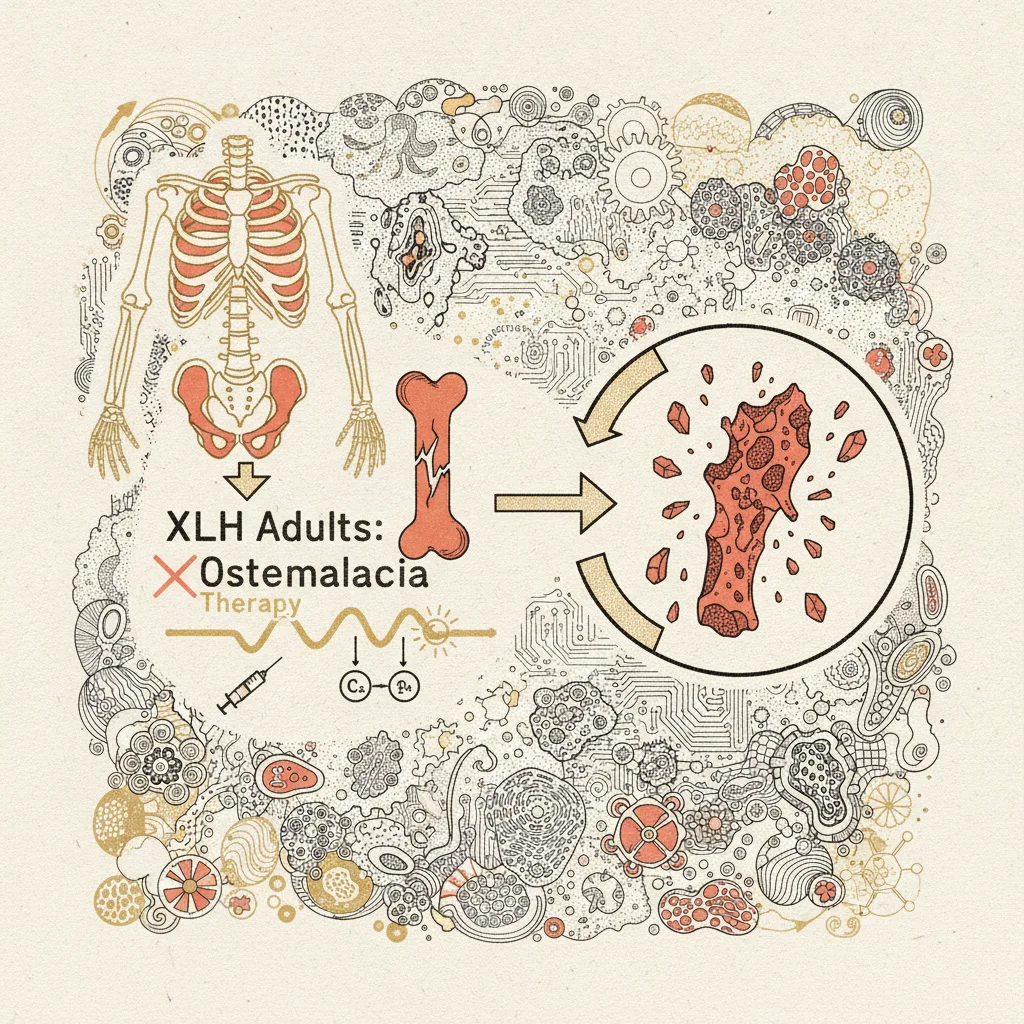

X-linked hypophosphatemia (XLH) is a rare, inherited disorder characterised by renal phosphate wasting, leading to hypophosphatemia and impaired bone mineralisation. While conventional therapy with oral phosphate and active vitamin D aims to mitigate these effects, many adult patients continue to exhibit signs of osteomalacia. This persistence underscores a critical unmet need in managing the long-term skeletal complications of XLH.1
X-linked hypophosphatemia (XLH) is an inherited disorder caused by mutations in the PHEX gene, which leads to elevated fibroblast growth factor 23 (FGF23) levels. This excess FGF23 results in renal phosphate wasting and impaired 1,25-dihydroxyvitamin D production, culminating in chronic hypophosphatemia and defective bone mineralisation, known as osteomalacia in adults and rickets in children. The clinical manifestations of XLH in adults include bone pain, fractures, pseudofractures, osteoarthritis, and enthesopathy. Conventional treatment strategies involve oral phosphate supplementation and active vitamin D analogues (e.g., calcitriol or alfacalcidol) to correct hypophosphatemia and improve calcium and phosphate homeostasis. However, the efficacy of this conventional approach in fully resolving osteomalacia in adult patients remains a significant clinical challenge.
Understanding Persistent Osteomalacia in XLH Adults
Despite adherence to conventional therapy, a substantial number of adult patients with XLH continue to experience symptoms and radiographic evidence consistent with osteomalacia. Histological studies of bone biopsies from adult XLH patients on conventional treatment frequently reveal persistent defects in mineralisation, characterised by increased osteoid volume and thickness, and reduced mineralisation front. This indicates that while conventional therapy may improve some biochemical parameters, it often does not fully normalise bone histology or resolve the underlying osteomalacia. The persistence of osteomalacia contributes to ongoing bone pain, increased fracture risk, and reduced quality of life in these patients. The chronic nature of the disease and the limitations of conventional therapy highlight the need for more effective treatment modalities that can directly address the FGF23-mediated pathophysiology of XLH and achieve more complete resolution of bone mineralisation defects.
Epidemiology and Patient Populations in XLH
XLH is the most common form of inherited rickets, with an estimated prevalence ranging from 1 in 20,000 to 1 in 60,000 live births. While symptoms typically manifest in childhood, the disease persists throughout adulthood, often leading to a progressive accumulation of skeletal and non-skeletal complications. The adult XLH population is heterogeneous, encompassing individuals diagnosed in childhood who transition into adult care, as well as those diagnosed later in life due to subtle or misattributed symptoms. Many adult patients have a long history of conventional therapy, initiated in childhood, which may have mitigated some of the severe skeletal deformities but often fails to prevent the long-term progression of osteomalacia. The cumulative burden of disease, including recurrent fractures, joint pain, and functional limitations, significantly impacts the daily lives and productivity of these individuals. Understanding the specific challenges faced by this diverse adult population is crucial for developing targeted and effective treatment strategies.
Limitations of Conventional Therapy in Addressing Osteomalacia
Conventional therapy for XLH, consisting of oral phosphate and active vitamin D analogues, aims to counteract the renal phosphate wasting and impaired vitamin D activation. Oral phosphate supplementation attempts to replete serum phosphate levels, providing substrate for bone mineralisation. Active vitamin D analogues enhance intestinal calcium and phosphate absorption and suppress parathyroid hormone. However, this approach faces several inherent limitations. Firstly, oral phosphate often causes gastrointestinal side effects, such as nausea, diarrhea, and abdominal pain, leading to poor adherence. Secondly, the short half-life of phosphate requires frequent dosing, typically 4-5 times daily, which further complicates adherence. Thirdly, high doses of oral phosphate can lead to secondary hyperparathyroidism and nephrocalcinosis. Furthermore, conventional therapy does not directly address the underlying excess FGF23, which continues to drive renal phosphate wasting and suppress 1,25-dihydroxyvitamin D production. This indirect approach often results in fluctuating phosphate levels, making it difficult to maintain optimal mineralisation conditions consistently. The inability of conventional therapy to fully normalize FGF23 levels or completely resolve the histological features of osteomalacia underscores the need for therapies that target the primary pathogenic mechanism.
The Pathophysiological Basis of Persistent Osteomalacia
The persistence of osteomalacia in adult XLH patients on conventional therapy stems from the ongoing effects of elevated FGF23. Even with phosphate and active vitamin D supplementation, FGF23 continues to exert its phosphaturic effects on the renal tubules, preventing sustained normalisation of serum phosphate. FGF23 also directly inhibits 1-alpha-hydroxylase, the enzyme responsible for converting 25-hydroxyvitamin D to its active form, 1,25-dihydroxyvitamin D, thereby perpetuating a state of functional vitamin D deficiency at the cellular level. This sustained biochemical imbalance hinders the proper mineralisation of newly formed bone matrix. Bone biopsy analyses consistently demonstrate an increased volume of unmineralised osteoid, reflecting a fundamental defect in the mineralisation process rather than merely a deficiency in bone formation. The chronic nature of this mineralisation defect leads to structurally weak bones, predisposing patients to pain, microfractures, and overt fractures, even in the presence of seemingly adequate conventional treatment. Addressing the root cause of FGF23 excess is therefore paramount for achieving complete resolution of osteomalacia.
Readers seeking further information on endocrine bone disorders, including the wider implications of FGF23 dysregulation, may find the Oxford Handbook of Endocrinology and Diabetes an invaluable resource.
The continued presence of osteomalacia in adult XLH patients, even those receiving conventional phosphate and active vitamin D therapy, presents a clear challenge to current clinical practice. It suggests that simply replacing lost phosphate and vitamin D is insufficient to counteract the profound effects of elevated FGF23 on bone metabolism. Clinicians must recognise that a patient's biochemical markers may appear within an acceptable range, yet their bone health could still be compromised, leading to ongoing pain and fracture risk. This calls for a more nuanced approach to monitoring, potentially incorporating bone biopsies or advanced imaging techniques to assess the true extent of osteomalacia.
For the pharmaceutical industry, the persistent unmet need in adult XLH patients underscores the value of therapies that directly target the FGF23 pathway. Burosumab, an anti-FGF23 antibody, represents a significant advancement in this regard, offering a mechanism of action that addresses the root cause of the disease rather than merely managing its symptoms. The continued prevalence of osteomalacia in conventionally treated patients provides a strong rationale for the earlier and broader adoption of such targeted therapies, particularly in adults who have already accumulated significant skeletal damage.
Ultimately, patients with XLH deserve treatments that offer more than symptomatic relief. The goal should be to normalise bone histology and prevent the long-term complications associated with chronic osteomalacia. This requires a shift in perspective, moving beyond the traditional reliance on phosphate and active vitamin D alone, and embracing therapies that offer a more complete correction of the underlying pathophysiology. The data on persistent osteomalacia should serve as a call to action for both clinicians and industry to re-evaluate treatment paradigms and ensure that adult XLH patients receive the most effective care available.
- The Pivot Conventional therapy for XLH often fails to fully resolve osteomalacia in adults.
- The Data A significant proportion of adult XLH patients continue to show radiographic and histological evidence of osteomalacia.
- The Action Clinicians should be aware that osteomalacia may persist in adult XLH patients despite standard treatment, necessitating careful monitoring and consideration of alternative or adjunctive therapies.
ART-2026-407
·10/26
Drafted with AI assistance and checked by automated style rules. Not individually read by an editor. This publication is intended for healthcare professionals, researchers, and life science industry professionals. Content is provided for informational and educational purposes only and does not constitute medical advice.

Thirty years in health journalism, the last fifteen in life sciences. I have reported from every major medical congress and watched blockbuster drugs get revised after approval. I cover what the data says.
Cite This Article
Carter J, Voss M. XLH adults: osteomalacia persists despite conventional therapy. The Life Science Feed. Published June 14, 2026. Updated October 6, 2026. Accessed October 27, 2026. https://thelifesciencefeed.com/endocrinology/adrenal-gland-diseases/news/xlh-adults-osteomalacia-persists-despite-conventional-therapy.
Editorial & AI Standards
Content is drafted with AI tools from peer-reviewed, open-access sources such as published trial data, clinical guidelines, and regulatory filings. This article is checked by automated style rules but is not individually read by an editor, so check the cited source before relying on a figure.
Source citations are listed in the References section. This content does not represent the views of any pharmaceutical company, medical device manufacturer, or healthcare provider.
Licence & Rights
© 2026 The Life Science Feed. All rights reserved. Unless otherwise indicated, all content is the property of The Life Science Feed and may not be reproduced, distributed, or transmitted in any form or by any means without prior written permission.
Medical Disclaimer
The information provided on The Life Science Feed is for educational and informational purposes only. It is not intended as a substitute for professional medical advice, diagnosis, or treatment. Always seek the advice of your physician or other qualified healthcare provider regarding any medical condition or treatment decision. Never disregard professional medical advice or delay in seeking it because of something you have read on this website.
References
1. Baroncelli GI, et al. Experts' consensus on the management and treatment of individuals with X-linked hypophosphatemia across lifespan. J Endocrinol Invest. 2025;48(10):2199-2228. doi:10.1007/s40618-025-02611-7
2. Kamenický P, et al. X-linked hypophosphataemia. Lancet. 2024;404(10455):887-901. doi:10.1016/S0140-6736(24)01305-9
3. Lecoq AL, et al. Management of X-linked hypophosphatemia in adults. Metabolism. 2020;103S:154049. doi:10.1016/j.metabol.2019.154049
4. Insogna KL, et al. A Randomized, Double-Blind, Placebo-Controlled, Phase 3 Trial Evaluating the Efficacy of Burosumab, an Anti-FGF23 Antibody, in Adults With X-Linked Hypophosphatemia: Week 24 Primary Analysis. J Bone Miner Res. 2018;33(8):1383-1393. doi:10.1002/jbmr.3475
5. Florenzano P, et al. Real-world effectiveness of burosumab vs oral phosphate and active vitamin D in adults with X-linked hypophosphatemia. J Bone Miner Res. 2025;40(8):973-986. doi:10.1093/jbmr/zjaf063
6. Lafage-Proust MH. What are the benefits of the anti-FGF23 antibody burosumab on the manifestations of X-linked hypophosphatemia in adults in comparison with conventional therapy? A review. Ther Adv Rare Dis. 2022;3:26330040221074702. doi:10.1177/26330040221074702
7. Brandi ML, et al. X-linked hypophosphatemia and tumor-induced osteomalacia: a narrative review and expert opinion on the diagnostic and therapeutic challenges in the era of burosumab. Orphanet J Rare Dis. 2025;20(1):505. doi:10.1186/s13023-025-03952-5
8. Böckmann I, et al. The Diagnosis and Therapy of XLH. Calcif Tissue Int. 2025;116(1):66. doi:10.1007/s00223-025-01374-w







