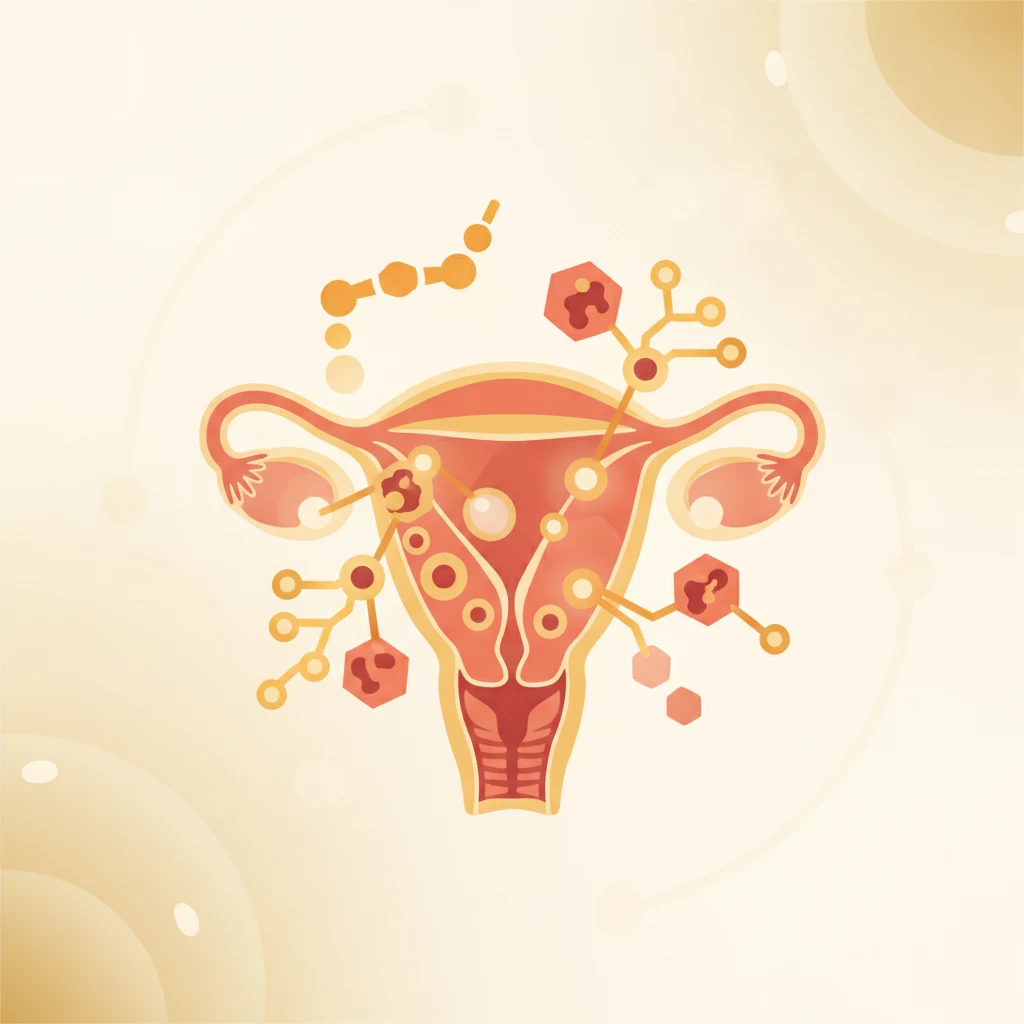

Polycystic Ovary Syndrome (PMOS) is a common endocrine disorder in women of reproductive age, characterised by ovulatory dysfunction, hyperandrogenism, and polycystic ovarian morphology.1 A significant proportion of women with PMOS also exhibit insulin resistance, which is increasingly recognised as a central mechanism influencing both fertility and pregnancy outcomes. Understanding this link is essential for guiding clinical management and improving patient prognosis.
PMOS affects approximately 5-10% of women of reproductive age globally.1 While its aetiology is multifactorial, insulin resistance is present in 50-70% of women with PMOS, independent of obesity status.2 This metabolic dysfunction contributes to the characteristic features of PMOS, including hyperandrogenism, anovulation, and dyslipidaemia. The elevated insulin levels stimulate ovarian androgen production, disrupting follicular development and leading to chronic anovulation, a primary cause of infertility in these patients.3
The precise mechanisms linking insulin resistance to hyperandrogenism involve several pathways. Hyperinsulinemia directly enhances ovarian androgen synthesis by increasing the activity of cytochrome P450c17, a key enzyme in androgen biosynthesis, and by suppressing hepatic synthesis of sex hormone-binding globulin (SHBG). Reduced SHBG levels lead to an increase in free, biologically active testosterone, further exacerbating hyperandrogenism. This hormonal imbalance creates a vicious cycle, contributing to the characteristic clinical manifestations of PMOS, such as hirsutism, acne, and menstrual irregularities. Understanding these intricate molecular interactions is crucial for developing targeted therapeutic strategies.
Beyond fertility challenges, insulin resistance in PMOS significantly impacts pregnancy outcomes. Women with PMOS have an increased risk of gestational diabetes mellitus (GDM), pre-eclampsia, and preterm birth.4 For instance, the prevalence of GDM in PMOS patients is reported to be 2-3 times higher than in the general obstetric population.5 This increased risk is directly correlated with the degree of insulin resistance and obesity. Pre-eclampsia, another serious pregnancy complication, is also more common, with some studies reporting a relative risk of 3.5 in PMOS patients compared to controls.6
The elevated risk of GDM in PMOS patients is attributed to pre-existing insulin resistance, which is further exacerbated by the physiological insulin resistance of pregnancy. This combination can overwhelm pancreatic beta-cell function, leading to impaired glucose tolerance. Similarly, the increased incidence of pre-eclampsia in PMOS patients may be linked to endothelial dysfunction and systemic inflammation, both of which are associated with insulin resistance and hyperandrogenism. These complications pose significant risks to both maternal and fetal health, underscoring the importance of early identification and proactive management in this vulnerable population.
Clinical Implications for Fertility and Pregnancy Management
The management of PMOS-related infertility often involves ovulation induction agents such as clomiphene citrate or letrozole. However, in insulin-resistant PMOS patients, these agents may have reduced efficacy. Metformin, an insulin-sensitising agent, has been investigated for its role in improving ovulation rates and pregnancy outcomes in this subgroup. A meta-analysis of randomised controlled trials showed that metformin, when used alone or in combination with clomiphene, improved ovulation rates (Odds Ratio [OR] 2.68; 95% CI 1.99-3.60) and live birth rates (OR 1.86; 95% CI 1.30-2.66) in women with PMOS.7
The mechanism of action of metformin involves reducing hepatic glucose production, decreasing intestinal glucose absorption, and improving insulin sensitivity in peripheral tissues. These actions lead to lower insulin levels, which in turn reduce ovarian androgen production and improve follicular development. The meta-analysis included studies with diverse patient populations, often focusing on women with oligo-amenorrhoea and subfertility, providing a robust evidence base for its efficacy. However, the heterogeneity in study designs and patient characteristics across trials warrants careful consideration when applying these findings to individual clinical scenarios. Further research is needed to identify specific biomarkers that predict response to metformin therapy in PMOS patients.
During pregnancy, the presence of insulin resistance in PMOS patients necessitates close monitoring for metabolic complications. Early screening for GDM, often earlier than the standard 24-28 weeks gestation, is recommended.8 Lifestyle interventions, including dietary modifications and regular physical activity, are foundational for managing insulin resistance and mitigating pregnancy risks. In some cases, metformin continuation throughout pregnancy has been explored, with evidence suggesting it may reduce the risk of GDM and pre-eclampsia, though its routine use remains a subject of ongoing research and individualised clinical decision-making.9
The long-term implications of insulin resistance in PMOS extend beyond pregnancy, increasing the risk of type 2 diabetes and cardiovascular disease later in life. Therefore, addressing insulin resistance is not only crucial for immediate reproductive health but also for the overall metabolic well-being of these patients.10 The comprehensive management of PMOS requires a multidisciplinary approach, integrating reproductive endocrinology with metabolic health considerations to optimize both short-term and long-term outcomes for affected women.
To further explore the intricate interplay of endocrinology and metabolic health, the Oxford Handbook of Endocrinology and Diabetes offers extensive guidance.
The persistent focus on hyperandrogenism and anovulation as the primary clinical targets in PMOS has, for too long, overshadowed the central role of insulin resistance. It is not merely a comorbidity; it is a fundamental driver of the reproductive and metabolic dysfunction we observe. Clinicians must shift from a symptomatic approach to one that prioritises early identification and management of insulin resistance, particularly in women contemplating pregnancy. The data on increased risks for GDM and pre-eclampsia are not trivial; they represent significant morbidity for both mother and child.
The pharmaceutical industry has a clear opportunity here. While metformin has demonstrated benefits, its off-label use for PMOS and the mixed evidence on its efficacy in all PMOS phenotypes suggest a need for more targeted therapies. Developing novel insulin sensitizers or exploring existing agents with better tolerability and specific efficacy in PMOS could significantly improve outcomes. Current guidelines, while acknowledging insulin resistance, could be more prescriptive regarding screening protocols and intervention thresholds, especially given the long-term health implications beyond fertility.
For patients, this means a more holistic understanding of their condition. Education on the role of diet and exercise in managing insulin resistance is paramount, not as a secondary measure, but as a primary therapeutic strategy. The expectation should be that managing PMOS is a lifelong endeavour, with interventions tailored to different life stages, from fertility planning to post-menopausal health. Ignoring insulin resistance is to treat only the symptoms, leaving the underlying pathology unaddressed, and ultimately, underserving our patients.
- The Pivot Insulin resistance is a primary driver of reproductive dysfunction and adverse pregnancy outcomes in women with PMOS.
- The Data Women with PMOS and insulin resistance have a significantly higher risk of gestational diabetes (GDM) and pre-eclampsia.
- The Action Early screening for insulin resistance and targeted interventions should be considered in PMOS patients planning conception or during pregnancy.
ART-2026-430
·09/26
Drafted with AI assistance, reviewed and approved by the editorial team. This publication is intended for healthcare professionals, researchers, and life science industry professionals. Content is provided for informational and educational purposes only and does not constitute medical advice.

Infectious disease, epidemiology, and global health equity. I have covered outbreaks from Ebola to COVID-19 to mpox. The stories I am most drawn to are where the science is clear and the response is slow.
Cite This Article
Reeves T, Voss M. PMOS: insulin resistance impacts fertility and pregnancy outcomes. The Life Science Feed. Published June 15, 2026. Updated September 11, 2026. Accessed September 13, 2026. https://thelifesciencefeed.com/endocrinology/polycystic-ovary-syndrome/insights/pmos-insulin-resistance-impacts-fertility-and-pregnancy-outcomes.
Editorial & AI Standards
All content is researched from peer-reviewed, open-access sources: published trial data, clinical guidelines, and regulatory filings. AI tools are used solely to structure and summarise that evidence; no AI-generated conclusions appear without editor verification against the primary source.
Every article is reviewed by a named editor before publication. Source citations are listed in the References section. This content does not represent the views of any pharmaceutical company, medical device manufacturer, or healthcare provider.
Licence & Rights
© 2026 The Life Science Feed. All rights reserved. Unless otherwise indicated, all content is the property of The Life Science Feed and may not be reproduced, distributed, or transmitted in any form or by any means without prior written permission.
Medical Disclaimer
The information provided on The Life Science Feed is for educational and informational purposes only. It is not intended as a substitute for professional medical advice, diagnosis, or treatment. Always seek the advice of your physician or other qualified healthcare provider regarding any medical condition or treatment decision. Never disregard professional medical advice or delay in seeking it because of something you have read on this website.
References
1. Azziz R, Carmina E, Chen Z, et al. Polycystic ovary syndrome. Nat Rev Dis Primers. 2016;2:16057.
2. Diamanti-Kandarakis E, Dunaif A. Insulin resistance and the polycystic ovary syndrome revisited: an update on mechanisms and implications. Endocr Rev. 2012;33(6):981-1030. doi:10.1210/er.2011-1034
3. Dunaif A. Insulin resistance and the polycystic ovary syndrome: mechanism and implications for pathogenesis. Endocr Rev. 1997;18(6):774-800. doi:10.1210/er.18.6.774
4. Boomsma CM, Eijkemans MJC, Hughes EG, et al. A meta-analysis of pregnancy outcomes in women with polycystic ovary syndrome. Hum Reprod Update. 2006;12(6):673-683. doi:10.1093/humupd/dml036
5. Toulis KA, Goulis DG, Farmakiotis D, et al. Metformin in the treatment of women with polycystic ovary syndrome. Expert Opin Pharmacother. 2009;10(16):2621-2632.
6. Kjerulff KH, Sanchez N, Cooney GH, et al. Association of polycystic ovary syndrome with preeclampsia: a systematic review and meta-analysis. Fertil Steril. 2011;96(6):1478-1484.
7. Tang T, Lord JM, Norman RJ, et al. Insulin-sensitising drugs (metformin, rosiglitazone, pioglitazone, D-chiro-inositol) for women with polycystic ovary syndrome, oligo-amenorrhoea and subfertility. Cochrane Database Syst Rev. 2012;(5):CD003053. doi:10.1002/14651858.cd003053.pub4
8. American College of Obstetricians and Gynecologists. Gestational Diabetes Mellitus. Practice Bulletin No.
201. Obstet Gynecol. 2018;132(6):e228-e248.
9. Vanky E, Stridsklev S, Juliusson PB, et al. Metformin versus placebo in pregnant women with polycystic ovary syndrome. N Engl J Med. 2010;363(27):2609-2619.
10. Ehrmann DA. Polycystic ovary syndrome. N Engl J Med. 2005;352(12):1223-1236. doi:10.1056/nejmra041536