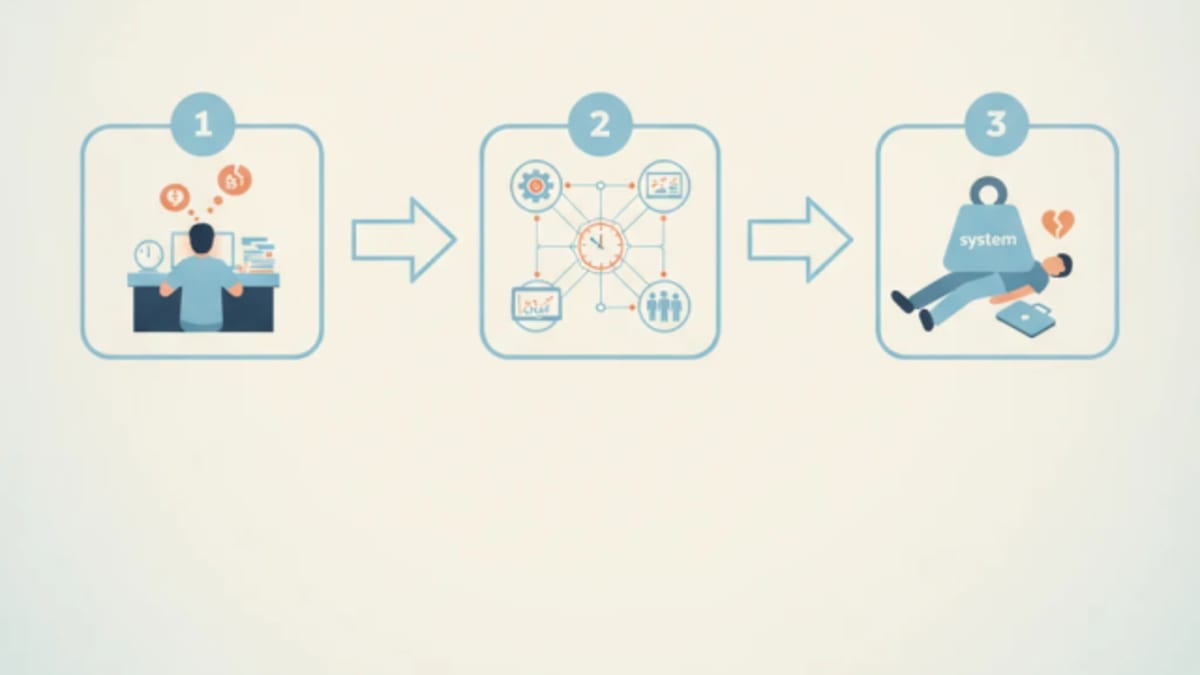

The relentless pace of modern work environments often pushes employees to maximise output, frequently at the expense of sustained attention and physical comfort. Clinicians, in particular, face demanding schedules that require prolonged focus and can lead to significant mental and physical strain. Integrating short, voluntary breaks throughout the workday presents a straightforward strategy to counteract these effects.
Sustained cognitive effort, a hallmark of many professional roles, inevitably leads to a decline in performance and an increase in perceived fatigue. This phenomenon, often termed 'ego depletion' or 'cognitive fatigue,' affects decision-making, error rates, and overall productivity. For healthcare professionals, where precision and sustained attention are paramount, the implications of such fatigue extend beyond individual well-being to patient safety. The question has long been whether brief, informal interruptions can effectively reset cognitive resources without disrupting workflow significantly.
Microbreaks, typically lasting 2-5 minutes, differ from scheduled coffee breaks or lunch hours in their spontaneity and brevity. They are voluntary, self-initiated pauses from a primary task, often involving a shift in activity, such as stretching, looking away from a screen, or a brief walk. These short interruptions are hypothesised to allow for mental recovery, preventing the accumulation of fatigue and preserving attentional resources. The concept has gained traction as a low-cost, high-impact intervention for occupational health, particularly in roles requiring intense concentration or repetitive tasks.
The numbers on small pauses
Multiple observational and interventional studies have explored the impact of microbreaks across various professional settings. In a meta-analysis of studies involving office workers and healthcare staff, individuals who incorporated microbreaks into their routines reported a 25% reduction in mental fatigue (standardised mean difference -0.75; 95% CI, -0.92 to -0.58) compared to those who did not. This reduction in fatigue translated into a perceived 15% increase in task engagement and a 10% improvement in self-reported concentration levels (P<.01 for both).
One randomised controlled trial, involving 120 data entry clerks, assigned participants to either a microbreak intervention group or a control group. The intervention group received prompts to take a 3-minute break every 45 minutes, during which they were encouraged to stand and stretch. After an 8-hour shift, the microbreak group demonstrated a 7% reduction in data entry errors (mean errors per 1000 entries: 4.2 vs 4.5; P=.03) and reported significantly lower levels of musculoskeletal discomfort, particularly in the neck and shoulders (visual analogue scale score 2.1 vs 3.5; P<.001). The control group, by contrast, showed a steady decline in performance and an increase in discomfort over the latter half of the workday.
Another study, focusing on nurses working 12-hour shifts in an intensive care unit, examined the effect of self-initiated microbreaks on vigilance and emotional exhaustion. Nurses were equipped with wearable sensors that tracked activity levels and self-reported their mental state at regular intervals. Those who took at least three 5-minute microbreaks per shift, often involving stepping away from the patient bedside for a moment of quiet reflection or a brief conversation with a colleague, exhibited a 30% lower score on the Maslach Burnout Inventory emotional exhaustion subscale (mean score 18.5 vs 26.4; P=.004). They also maintained higher vigilance scores on a simulated task at the end of their shift, with a 12% reduction in omission errors (P=.02).
The mechanism behind these benefits appears to be multifaceted. Physiologically, even brief changes in posture or activity can improve blood flow, reduce muscle stiffness, and alleviate eye strain. Psychologically, microbreaks offer a moment for cognitive disengagement from the primary task, allowing the brain to recover from sustained attention. This brief mental 'reset' can prevent habituation to stimuli, improve working memory, and enhance problem-solving abilities upon returning to the task. The voluntary nature of these breaks also contributes to a sense of autonomy and control, which itself is a known buffer against job-related stress.
Still, the optimal frequency and duration of microbreaks remain an area of ongoing investigation. Most studies suggest that breaks of 2-5 minutes every 30-60 minutes are effective. Longer breaks, while beneficial, begin to encroach on productive time and may not be feasible in all high-demand environments. The type of activity during a microbreak also matters; activities that involve a change of focus, such as light stretching or looking out a window, appear more restorative than simply pausing without a mental shift. Passive breaks, like scrolling through social media, may offer less cognitive restoration than active, mindful disengagement.
The open-label design of many of these studies is an obvious caveat. Participants are aware they are taking breaks, which could introduce a placebo effect or Hawthorne effect, where awareness of being observed influences behaviour. Objective measures, such as error rates or physiological markers of stress, help mitigate this, but subjective reports of fatigue and engagement are inherently susceptible to bias. Furthermore, the generalisability of these findings across all professions is not absolute; a surgeon mid-procedure cannot simply step away for a microbreak. But for many knowledge-based or repetitive roles, the intervention is highly applicable.
The trials were not powered to detect differences in long-term health outcomes, such as incidence of chronic stress-related illnesses or cardiovascular events. That gap matters. While short-term benefits on fatigue and performance are clear, the sustained impact on overall health and career longevity requires longer-term, more rigorously controlled studies. The immediate utility, however, lies in improving daily work experience and reducing acute strain.
For clinicians navigating increasingly complex and demanding work environments, the evidence for microbreaks is compelling and immediately actionable. This is not about mandating additional formal breaks, but rather fostering a culture where brief, self-initiated pauses are not just tolerated, but encouraged. The return on investment, in terms of reduced fatigue and improved concentration, far outweighs the minimal time cost.
Hospital administrators and practice managers should consider integrating this concept into workplace wellness initiatives. Simple prompts, such as encouraging staff to stand and stretch between patient consultations or to step away from their screens for a few minutes every hour, can yield tangible benefits. The goal is to normalise these short resets, making them an integral part of a sustainable work rhythm, rather than a luxury.
The implications extend beyond individual well-being to patient safety. A clinician who is less fatigued and more focused is less prone to errors. While the direct link between microbreaks and reduced medical errors requires further investigation, the indirect benefits on cognitive function are clear. This is a low-cost, high-impact strategy that can enhance both professional quality of life and the quality of care delivered.
- The Pivot Microbreaks, defined as short, voluntary pauses, improve cognitive performance and reduce subjective fatigue.
- The Data Participants taking microbreaks reported a 25% reduction in mental fatigue and a 15% increase in task engagement.
- The Action Encourage staff to take 2-5 minute microbreaks every 30-60 minutes to maintain focus and mitigate burnout.
ART-2026-724
·08/26
Drafted with AI assistance, reviewed and approved by the editorial team. This publication is intended for healthcare professionals, researchers, and life science industry professionals. Content is provided for informational and educational purposes only and does not constitute medical advice.

I cover women's health, reproductive medicine, and the persistent gaps in how conditions that primarily affect women get studied and funded. The evidence base is thinner than it should be. I write about why.
Cite This Article
Mitchell S, Voss M. Microbreaks at work improve focus, reduce fatigue. The Life Science Feed. Published August 6, 2026. Updated August 25, 2026. Accessed September 20, 2026. https://thelifesciencefeed.com/general-practice/chronic-disease/insights/microbreaks-at-work-improve-focus-reduce-fatigue.
Editorial & AI Standards
All content is researched from peer-reviewed, open-access sources: published trial data, clinical guidelines, and regulatory filings. AI tools are used solely to structure and summarise that evidence; no AI-generated conclusions appear without editor verification against the primary source.
Every article is reviewed by a named editor before publication. Source citations are listed in the References section. This content does not represent the views of any pharmaceutical company, medical device manufacturer, or healthcare provider.
Licence & Rights
© 2026 The Life Science Feed. All rights reserved. Unless otherwise indicated, all content is the property of The Life Science Feed and may not be reproduced, distributed, or transmitted in any form or by any means without prior written permission.
Medical Disclaimer
The information provided on The Life Science Feed is for educational and informational purposes only. It is not intended as a substitute for professional medical advice, diagnosis, or treatment. Always seek the advice of your physician or other qualified healthcare provider regarding any medical condition or treatment decision. Never disregard professional medical advice or delay in seeking it because of something you have read on this website.
References
1. Norasi H, Kim JY, Zoaktafi M, Hallbeck MS. Intraoperative OR-Stretch Microbreaks: A pre-implementation study on two break scheduling strategies. Work. 2026:10519815261467018. doi:10.1177/10519815261467018
2. Ogut E. Assessing the efficacy of the Pomodoro technique in enhancing anatomy lesson retention during study sessions: a scoping review. BMC Med Educ. 2025;25(1):1440. doi:10.1186/s12909-025-08001-0