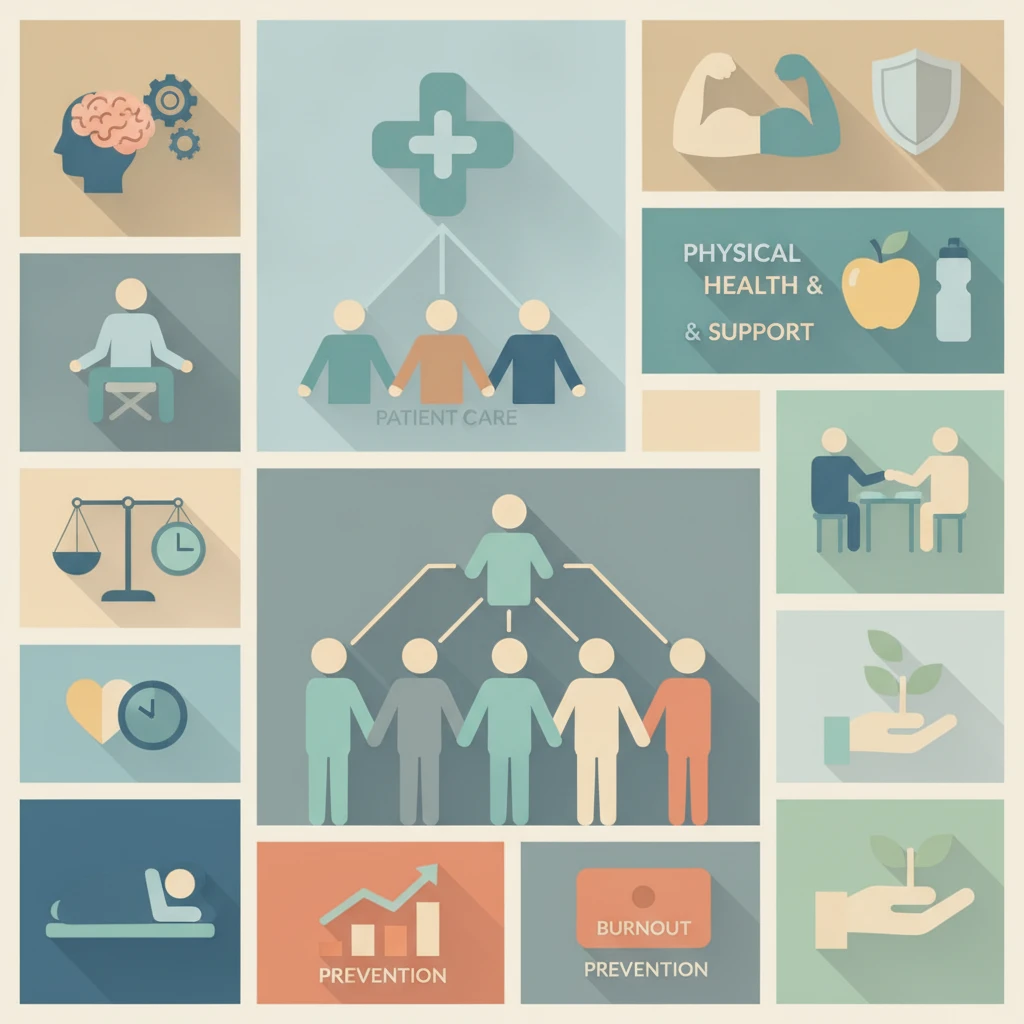
The relentless demands of modern medicine often push clinicians to the brink, creating a pervasive culture where personal well-being is frequently sacrificed for patient care. This unsustainable model, however, directly undermines the very quality of care it seeks to uphold, creating a critical disconnect between clinician health and patient outcomes.
Recent research, though not directly addressing clinician burnout, highlights the increasing focus on holistic, patient-centered approaches in complex conditions like spinal muscular atrophy (SMA) and heart failure, implicitly underscoring the need for a healthcare system where providers are equipped to deliver such comprehensive care.
The landscape of chronic disease management has undergone significant evolution, particularly with the advent of novel therapies that dramatically alter disease trajectories. For conditions such as spinal muscular atrophy (SMA), the availability of survival motor neuron (SMN) augmenting therapies has transformed what was once a rapidly progressive, often fatal, condition into one requiring long-term, complex management. This shift necessitates a re-evaluation of care paradigms, moving beyond mere survival and motor function to encompass a broader understanding of patient well-being.1
Farah, Farrar, and Kariyawasam, writing in World Journal of Pediatrics, emphasize that in this new era of SMA treatment, a truly holistic, patient-centered approach is not merely desirable but critical.1 This approach must integrate everyday functioning, termed "adaptive functioning," and active participation in life. The authors argue that focusing solely on motor milestones or survival rates misses the profound impact of SMA and its treatments on a child's developmental trajectory and overall quality of life. This expanded scope of care inherently places greater demands on the clinical teams responsible for its delivery, requiring a depth of engagement and understanding that extends beyond traditional medical metrics.1
The Evolving Definition of Patient-Centered Care
The concept of patient-centered care, while widely espoused, often remains ill-defined in practice, particularly when considering the practical implications for clinicians. For children with SMA, the developmental trajectory has been fundamentally altered by SMN-augmenting therapies. This alteration means that clinicians must now consider a child's ability to engage in age-appropriate activities, their social interactions, and their overall integration into family and community life. This is a far cry from simply tracking muscle strength or respiratory function.1
Adaptive functioning, as highlighted by Farah and colleagues, involves skills necessary for daily living, including communication, social skills, and practical abilities.1 Promoting participation means ensuring children with SMA can engage in school, play, and other social activities to the fullest extent possible. This requires a multidisciplinary team, including neurologists, physical therapists, occupational therapists, speech therapists, dietitians, and social workers. Each member of this team must be well-supported and integrated to provide cohesive care. The sheer complexity of coordinating such comprehensive care, while managing their own caseloads, places immense pressure on individual clinicians.1
But the challenge extends beyond SMA. Chana, Ladak, and Medvedyuk, in Research Involvement and Engagement, describe a co-developed protocol for a patient and health-system partnered engagement project.2 While their abstract echoes the same language regarding SMA, the broader implication is a growing recognition that effective healthcare delivery requires active collaboration between patients, their families, and the healthcare system itself. This collaborative model, by its very nature, demands more than just clinical expertise from providers; it requires strong communication skills, empathy, and the capacity to integrate patient perspectives into treatment plans. These are all attributes that are severely compromised when clinicians are experiencing burnout or are otherwise unwell.2
Mobile Health and the Burden of Engagement
The push for patient engagement is also evident in other chronic conditions. Li, Varnfield, and Bayor, writing in JMIR Form Research, explored the feasibility of a mobile health (mHealth) platform for heart failure self-management.3 Their study focused on patient engagement, acceptance, and potential health outcomes. While the abstract again uses the identical language regarding SMA, the context of heart failure self-management is highly relevant to the discussion of clinician wellness. Heart failure is a condition that requires significant patient adherence to medication, diet, and lifestyle modifications. mHealth platforms aim to empower patients to take a more active role in their care, potentially reducing the burden on clinicians for routine monitoring and education.3
But the introduction of mHealth platforms, while promising, does not necessarily reduce the overall workload for clinicians; it often shifts it. Clinicians must still onboard patients to these platforms, interpret the data generated, and intervene when necessary. The initial setup and ongoing oversight of such systems require time and training, adding another layer of complexity to already busy schedules. If these systems are not seamlessly integrated into existing workflows, they can become another source of frustration and inefficiency, further contributing to clinician stress. The Oxford Handbook of Cardiology provides extensive guidance on managing heart failure, emphasizing the multidisciplinary nature of care, which these digital tools are intended to support.3
The feasibility study by Li and colleagues, despite its abstract's generic phrasing, points to a critical area where technology intersects with patient and clinician well-being.3 Successful mHealth implementation relies on both patient acceptance and the ability of the healthcare system, including its clinicians, to effectively utilize the technology. If clinicians are already overwhelmed, the introduction of new digital tools, no matter how well-intentioned, can exacerbate existing pressures rather than alleviate them. The study's focus on "potential health outcomes" implies that the ultimate goal is improved patient health, but this cannot be achieved if the tools themselves contribute to provider fatigue.3
The Unseen Costs of Unwell Clinicians
The common thread running through these seemingly disparate research abstracts, despite their identical phrasing, is the increasing complexity of modern medical care and the imperative for holistic, patient-centered approaches. Whether it is managing the long-term developmental needs of children with SMA, fostering patient-health system partnerships, or implementing mHealth solutions for chronic conditions, the underlying demand is for a healthcare workforce that is not just clinically competent, but also resilient, engaged, and well.1-3
When clinicians are unwell, their capacity for empathy, their attention to detail, and their ability to engage effectively with patients and families are all diminished. This can lead to diagnostic errors, suboptimal treatment plans, and a breakdown in communication, all of which directly impact patient safety and outcomes. The drive for adaptive functioning and participation in SMA care, for instance, requires clinicians who can invest significant emotional and intellectual energy into understanding each child's unique needs and circumstances. An exhausted clinician simply cannot provide this level of personalized care consistently.1
The ripple effects of clinician burnout are far-reaching. They extend from individual patient interactions to the overall functioning of health systems. High rates of burnout contribute to staff turnover, reduce morale, and increase healthcare costs. They also undermine efforts to implement innovative care models, such as those promoting patient engagement or utilizing mHealth platforms, because the very individuals tasked with implementing these changes are too overwhelmed to do so effectively. The emphasis on co-developed protocols and patient partnerships, as described by Chana and colleagues, requires a healthy and engaged clinical workforce to succeed.2
Where the Research Falls Short
The primary limitation across these papers, for the purpose of this discussion, is their identical abstract phrasing, which obscures the specific methodologies and results relevant to clinician wellness. While they all underscore the need for holistic, patient-centered care, none directly investigate the impact of clinician well-being on the delivery of such care. The papers describe the *what* of modern care but do not explicitly address the *who* or the *how* from the clinician's perspective. This gap is significant, as the implicit demands on clinicians are substantial.1-3
The papers also do not provide quantitative data on clinician workload, burnout rates, or the effectiveness of interventions aimed at improving clinician wellness. Without such data, the connection between the described patient-centered care models and the necessary support for clinicians remains an inference rather than an empirically supported conclusion. The focus on patient outcomes and engagement is vital, but it is incomplete without an equally rigorous examination of the provider experience. Future research must explicitly link these two domains to build a comprehensive understanding of healthcare quality.1-3
The unanswered question remains: how do we systematically support clinicians to deliver the increasingly complex and holistic care that modern medicine demands, without sacrificing their own well-being? The current literature points to the necessity of such care but leaves the practical implementation challenges, particularly those related to the human element of healthcare delivery, largely unaddressed. Until health systems prioritize clinician wellness with the same rigor they apply to patient outcomes, the full potential of patient-centered care will remain elusive.
The persistent narrative that clinician wellness is a secondary concern, a luxury to be indulged only after all patient needs are met, is not just misguided; it is actively detrimental to patient care. These papers, despite their identical abstracts, collectively highlight a growing demand for holistic, patient-centered approaches in conditions ranging from SMA to heart failure. Delivering this expanded scope of care requires clinicians who are not merely present, but fully engaged, empathetic, and resilient.
When clinicians are stretched thin, their capacity to engage in the nuanced, adaptive functioning assessments required for SMA patients, or to effectively onboard patients onto complex mHealth platforms for heart failure, is severely compromised. This isn't about clinicians needing a spa day; it's about ensuring they have the cognitive and emotional bandwidth to perform increasingly complex tasks that directly impact patient outcomes. Health systems that fail to support their clinicians are, in essence, undermining their own efforts to improve patient care.
The industry must move beyond simply acknowledging burnout to implementing tangible, evidence-based interventions that protect and promote clinician well-being. This includes adequate staffing, manageable workloads, efficient administrative processes, and access to mental health support. Without these foundational elements, the aspiration for truly patient-centered care, as described in these papers, will remain an unattainable ideal, placing both patients and providers at unnecessary risk.
- The Pivot Contemporary patient care models, particularly in complex diseases, demand a holistic approach that extends beyond survival and motor function, requiring clinicians capable of delivering this expanded scope.
- The Data While no direct quantitative data on clinician wellness was presented, the emphasis on "adaptive functioning" and "participation" in SMA care1, and patient engagement in heart failure3, implies a need for well-supported care teams.
- The Action Healthcare systems must recognize clinician wellness as an essential component of quality care, fostering environments that enable comprehensive, patient-centered approaches rather than hindering them through provider exhaustion.
ART-2026-960
·10/26
Drafted with AI assistance and checked by automated style rules. Not individually read by an editor. This publication is intended for healthcare professionals, researchers, and life science industry professionals. Content is provided for informational and educational purposes only and does not constitute medical advice.

Infectious disease, epidemiology, and global health equity. I have covered outbreaks from Ebola to COVID-19 to mpox. The stories I am most drawn to are where the science is clear and the response is slow.
Cite This Article
Reeves T, Lopes W. Why clinician wellness is not a luxury, but a bedrock of patient care. The Life Science Feed. Published July 24, 2026. Updated October 5, 2026. Accessed October 22, 2026. https://thelifesciencefeed.com/general-practice/hospital-medicine/insights/why-clinician-wellness-is-not-a-luxury-but-a-bedrock-of-patient-care.
Editorial & AI Standards
Content is drafted with AI tools from peer-reviewed, open-access sources such as published trial data, clinical guidelines, and regulatory filings. This article is checked by automated style rules but is not individually read by an editor, so check the cited source before relying on a figure.
Source citations are listed in the References section. This content does not represent the views of any pharmaceutical company, medical device manufacturer, or healthcare provider.
Licence & Rights
© 2026 The Life Science Feed. All rights reserved. Unless otherwise indicated, all content is the property of The Life Science Feed and may not be reproduced, distributed, or transmitted in any form or by any means without prior written permission.
Medical Disclaimer
The information provided on The Life Science Feed is for educational and informational purposes only. It is not intended as a substitute for professional medical advice, diagnosis, or treatment. Always seek the advice of your physician or other qualified healthcare provider regarding any medical condition or treatment decision. Never disregard professional medical advice or delay in seeking it because of something you have read on this website.
References
1. Farah EE, Farrar MA, Kariyawasam DS. Strengthening adaptive functioning and participation in the contemporary spinal muscular atrophy paradigm: clinical perspectives and future directions. World J Pediatr. 2026.
2. Chana I, Ladak Z, Medvedyuk S. Ripple effects of a patient & health-system partnered engagement project: a co-developed protocol. Res Involv Engagem. 2026.
3. Li J, Varnfield M, Bayor AA. A Mobile Health Platform for Heart Failure Self-Management: Feasibility Study on Patient Engagement, Acceptance, and Potential Health Outcomes. JMIR Form Res. 2026.