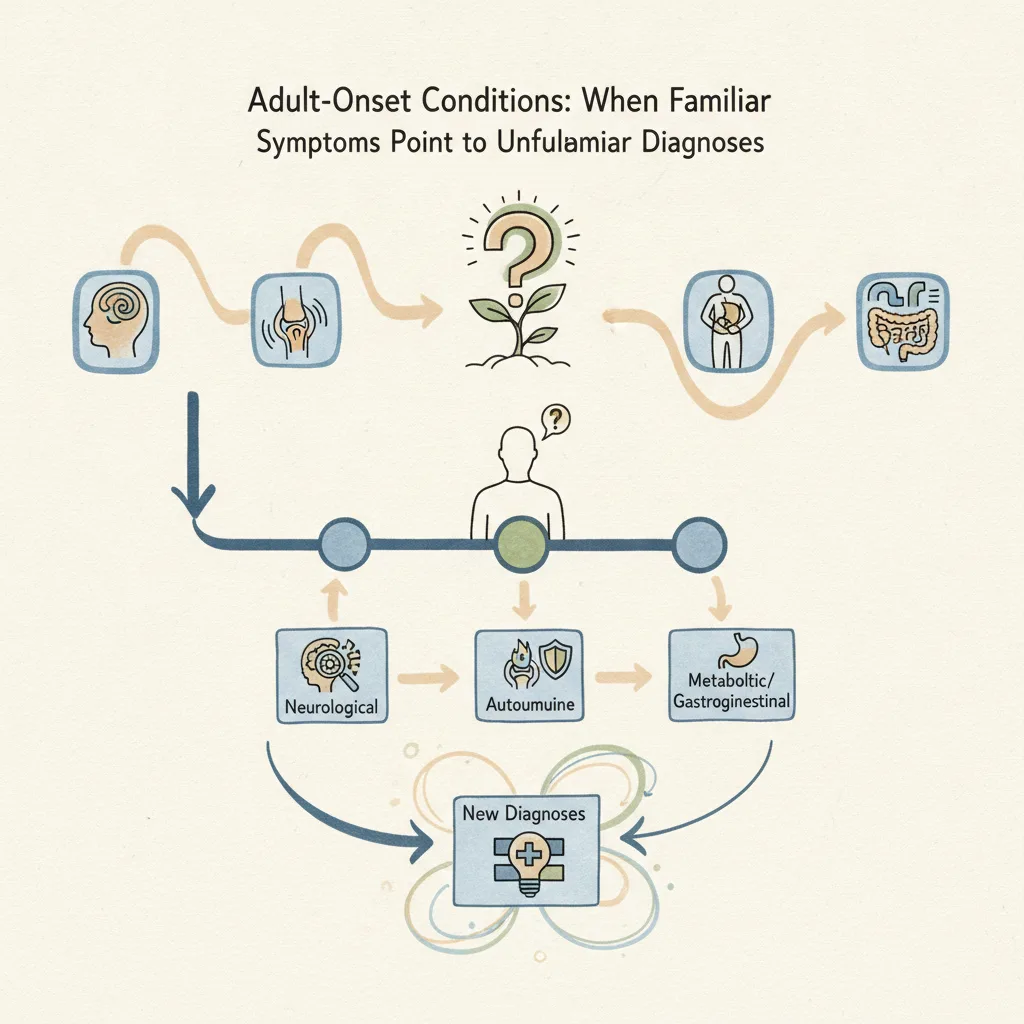

Adult clinics routinely encounter patients presenting with symptoms that, on the surface, appear to be new-onset conditions. But what happens when these presentations mimic disorders traditionally confined to pediatric populations, or when decades of subtle signs culminate in a dramatic, late-stage diagnosis? The diagnostic market shifts, demanding a re-evaluation of how we categorize and investigate conditions previously considered exclusive to early life or with clear, acute onsets.
Recent research highlights this challenge, showing the persistence of early-onset conditions into adulthood and the emergence of late-onset presentations that defy conventional understanding. These findings, published in journals such as PLoS One, Case Reports in Gastroenterology, and Cureus, compel clinicians to broaden their diagnostic horizons.
The conventional understanding of Cerebral Visual Impairment (CVI) has largely focused on its manifestation in children. This perspective often overlooks the lifelong nature of the condition and the potential for its symptoms to evolve or persist into adulthood. Clinicians, therefore, may miss opportunities for ongoing management or even initial diagnosis in adult patients whose visual challenges stem from early brain injury. This gap in understanding extends to conditions that present acutely in adulthood but have underlying etiologies that are genetic or metabolic, often mimicking more common ailments before a definitive diagnosis is made. The diagnostic journey for these patients is frequently protracted, marked by misdirection and delayed intervention.
A recent prospective controlled study by Chandna, Veitzman, and Kim investigated higher visual function deficits (HVFDs) in adults with early-onset CVI, comparing them to neurotypical adults and a cohort of children with CVI.1 The study enrolled 67 neurotypical adults (ANTs), 29 adults with early-onset CVI (A-Early Onset), and 22 adults with late-onset brain injury (A-Late Onset). For comparison, the researchers also drew upon data from a previously interviewed cohort of 92 children with CVI and 120 child neurotypicals. The primary tool for assessment was an adapted 59-question Higher Visual Function Question Inventory (HVFQI-59Q), designed to evaluate the spectrum and severity of HVFDs across the adult groups. This comprehensive approach aimed to establish the feasibility of the HVFQI-59Q in adults and to delineate the patterns of HVFDs in different adult populations, thereby challenging existing assumptions about CVI and its progression.
The Persistence of Visual Impairment and New Diagnostic Categories
The Chandna, Veitzman, and Kim study confirmed that HVFDs are indeed present in adults with early-onset CVI (A-Early Onset group), exhibiting both similarities and distinct differences when compared to children with CVI.1 This finding alone refutes the notion that CVI is solely a pediatric concern, emphasizing the need for continuous evaluation across the lifespan. More strikingly, the A-Late Onset group, comprising adults with brain injuries acquired later in life, displayed a broader range of deficits and lower median HVFQI-59Q values. This suggests greater variability and potentially more complex visual impairments in this cohort, challenging the long-held assumption that CVI is exclusively a consequence of early brain development. The authors advocate for a review of terminology for these A-Late Onset patients, proposing that late-onset brain injuries can result in HVFDs similar to those seen in CVI, thereby expanding the clinical definition of CVI-like conditions. The HVFQI-59Q proved to be an effective clinical tool for detecting these deficits in adults, offering a standardized method for assessment where few existed previously. This could significantly improve the recognition and management of these often-overlooked visual impairments in adult neurology and ophthalmology clinics.
The implications of these findings extend beyond visual impairment. They highlight a broader challenge in adult medicine: recognizing conditions with late-onset presentations that may mimic or overlap with disorders traditionally understood to have early-life origins. This is particularly relevant for rare diseases or genetic conditions that manifest atypically in adulthood. For instance, a case report by Martínez Evangelista and colleagues described a patient diagnosed with cryptococcal meningitis, which ultimately revealed a late-onset combined immunodeficiency after two decades of recurrent infections.3 This patient's journey shows the diagnostic odyssey many adults face when their symptoms do not fit neatly into established categories. The patient had experienced recurrent infections for 20 years, a history that, in retrospect, pointed to an underlying immunological defect. Cryptococcal meningitis, while a severe infection, was merely the presenting symptom that unmasked a much deeper, long-standing issue. This case illustrates the importance of a thorough patient history and a willingness to investigate beyond the immediate presenting complaint, especially when dealing with recurrent or unusually severe infections. The immunodeficiency, in this instance, was not congenital in its clinical presentation, but rather a slow burn that finally erupted into a life-threatening condition, demanding a comprehensive immunological workup.
Unmasking Metabolic and Genetic Etiologies in Adulthood
Another compelling example of late-onset presentation comes from the realm of metabolic disorders. Naseem, Alenchery, and Kim reported a case of adult-onset hyperammonemia, a condition often associated with pediatric metabolic crises.2 This patient presented with symptoms that could easily be attributed to more common adult neurological or hepatic issues, but the elevated ammonia levels pointed to a less common, but important, diagnosis. Adult-onset hyperammonemia can stem from various causes, including genetic defects in the urea cycle enzymes that remain compensated until triggered by stress, medication, or diet, or acquired liver dysfunction. The case report emphasizes the need for clinicians to consider metabolic etiologies even in adult patients presenting with encephalopathy or unexplained neurological symptoms, particularly when standard workups are inconclusive. The dry wit of the authors is evident in their implicit message: sometimes, the zebra is not just a horse with stripes, but a completely different animal hiding in plain sight. This requires a diagnostic approach that is both broad and deep, moving beyond the most statistically probable diagnoses to consider the biologically possible, however rare.
The challenge for general practitioners and specialists alike lies in maintaining a high index of suspicion for these atypical presentations. The late-onset presentations of adult conditions can be particularly insidious, as initial symptoms might be mild or non-specific, leading to delays in diagnosis. For example, a patient with a genetic predisposition to a neurological disorder might experience subtle cognitive changes for years before a definitive diagnosis of dementia. The Chandna study's findings on CVI in adults reinforce this, suggesting that visual processing difficulties, often dismissed as age-related or secondary to other conditions, might actually be persistent CVI or a CVI-like syndrome resulting from late-onset brain injury. This demands a more systematic approach to visual assessment in adult neurology clinics, moving beyond basic acuity tests to evaluate higher visual functions. The HVFQI-59Q, as validated in this study, offers a practical tool for this purpose, allowing for a more complete understanding of a patient's visual world.
The Broader Implications for Clinical Practice
These cases and studies collectively show a critical message: the diagnostic categories and terminologies developed for pediatric populations or acute presentations may not adequately capture the full spectrum of disease in adults. The concept of 'lifelong conditions' needs to be truly embraced, with recognition that manifestations can change over time, and that new symptoms in adulthood may be linked to long-standing, undiagnosed, or evolving pathologies. This requires a shift in clinical mindset, encouraging a more holistic and longitudinal view of patient health. Instead of compartmentalizing conditions by age of onset, clinicians must consider the possibility of a continuum, where genetic predispositions, early life events, and later-life stressors interact to produce diverse clinical pictures. The Oxford Handbook of Neurology, for instance, provides a quick reference for many neurological conditions, but even such comprehensive guides are constantly updated to reflect new understandings of disease progression and presentation across the lifespan.
The study on CVI also highlights the need for interdisciplinary collaboration. Ophthalmologists, neurologists, occupational therapists, and general practitioners must work together to identify and manage HVFDs in adults. The A-Late Onset group, with its broader range of deficits, suggests that the impact of brain injury on visual processing is highly variable and often complex, requiring individualized assessment and rehabilitation strategies. This complexity is mirrored in the immunodeficiency case, where a cryptococcal infection necessitated a deep dive into the patient's immune system, revealing a combined immunodeficiency that had been silently brewing for decades. Such cases demand a diagnostic tenacity that goes beyond the obvious, often requiring specialist input from immunology, infectious diseases, and genetics. The initial presentation of cryptococcal meningitis, while severe, was merely the tip of a much larger iceberg. The patient's history of recurrent infections, previously perhaps dismissed as unrelated or minor, became the key clue that led to the correct diagnosis. This kind of diagnostic puzzle is not uncommon in adult medicine, where chronic, seemingly disparate symptoms can converge to reveal a single, underlying condition. The ability to connect these dots is what separates a good clinician from an exceptional one.
The limitations of the CVI study, while not explicitly detailed in the abstract, likely include the relatively small sample sizes for the adult CVI cohorts (n=29 for A-Early Onset, n=22 for A-Late Onset). While sufficient for feasibility and initial comparisons, these numbers limit the generalizability of specific deficit patterns and the power to detect subtle differences or rare HVFDs. The reliance on a questionnaire (HVFQI-59Q) also introduces potential for recall bias or subjective interpretation, though its validation against neurotypical controls strengthens its utility. The study's cross-sectional design for the adult groups means it cannot definitively track the progression of HVFDs over time, only their presence at a single point. Longitudinal studies would be necessary to fully understand how CVI evolves from childhood into adulthood and how late-onset brain injuries impact visual function over years. Still, the study provides a strong foundation for future research, particularly in refining the diagnostic criteria and terminology for CVI-like conditions in adults. The call for a review of terminology for the A-Late Onset group is a significant one, as it acknowledges that current classifications may not adequately capture the reality of visual impairment resulting from adult brain injury. This is not merely an academic exercise; precise terminology drives research, informs clinical guidelines, and ultimately impacts patient care and access to services. The need for further research in the adult group is clear, especially to understand the long-term trajectory and optimal management strategies for these complex visual deficits.
The broader takeaway from these papers is a call for vigilance and a willingness to challenge established diagnostic paradigms. Adult clinics are not merely places for adult-onset diseases; they are also arenas where the long shadows of childhood conditions, or the slow burn of genetic predispositions, finally emerge into full view. The cases of late-onset immunodeficiency and hyperammonemia serve as stark reminders that even seemingly common adult symptoms can be the tip of a rare or complex underlying condition. For example, a patient presenting with recurrent infections might be initially treated symptomatically, but the Martínez Evangelista case demonstrates the necessity of investigating the underlying immune status, especially when infections are severe or unusual. Similarly, unexplained encephalopathy in an adult should prompt consideration of metabolic causes, as highlighted by the Naseem case, even if hyperammonemia is typically associated with pediatric presentations. This requires a diagnostic toolkit that includes a broad differential and a readiness to consult specialists. The avoiding three risk factors extends life without dementia article on our site also touches on the long-term impact of early health choices, further reinforcing the continuum of health across the lifespan. The integration of a comprehensive history, physical examination, and targeted investigations, guided by a high index of suspicion, remains paramount in adult medicine.
Clinicians must expand their diagnostic frameworks to include late-onset presentations of conditions traditionally considered pediatric or rare. The persistence of higher visual function deficits from early-onset CVI into adulthood, and the emergence of similar deficits from late-onset brain injury, demands that we evaluate visual function beyond basic acuity in adult patients with neurological complaints. This means integrating tools like the HVFQI-59Q into routine practice, rather than dismissing visual challenges as simply 'age-related' or 'unexplained'.
The cases of adult-onset hyperammonemia and late-onset combined immunodeficiency are stark reminders that common adult symptoms can mask rare, underlying metabolic or genetic conditions. GPs and specialists alike need to maintain a high index of suspicion, especially when patients present with recurrent infections, unexplained encephalopathy, or symptoms that defy typical diagnostic pathways. A thorough history, including childhood illnesses and family history, becomes invaluable.
This shift in perspective also impacts patient advocacy and support. Adults living with conditions like CVI, previously overlooked, now have a clearer path to diagnosis and potentially tailored interventions. For industry, this opens avenues for developing adult-specific diagnostic tools and therapies for conditions long pigeonholed as pediatric. The need for continuous CVI evaluation across the lifespan, as highlighted by Chandna and colleagues, is not just a clinical recommendation, but a call for a more inclusive approach to chronic disease management.
The message is clear: the human body is not a series of disconnected age-based compartments. What begins in childhood can persist, evolve, or manifest anew in adulthood, often requiring a diagnostic tenacity that goes beyond the obvious. The Oxford Handbook of General Practice remains a trusted resource, but even the most comprehensive guides require clinicians to apply critical thinking and an open mind to these complex presentations.
- The Pivot Higher visual function deficits (HVFDs) persist into adulthood for those with early-onset cerebral visual impairment (CVI), and late-onset brain injuries can cause similar HVFDs, challenging the traditional CVI definition.
- The Data The A-Late Onset group exhibited a broader range of HVFDs and lower median values on the HVFQI-59Q compared to the A-Early Onset group, indicating greater variability in visual impairments.
- The Action Clinicians should consider CVI evaluation across the lifespan, particularly in adults with unexplained visual deficits or a history of brain injury, and be prepared to investigate rare causes for common adult symptoms.
ART-2026-1577
·11/26
Drafted with AI assistance and checked by automated style rules. Not individually read by an editor. This publication is intended for healthcare professionals, researchers, and life science industry professionals. Content is provided for informational and educational purposes only and does not constitute medical advice.

Thirty years in health journalism, the last fifteen in life sciences. I have reported from every major medical congress and watched blockbuster drugs get revised after approval. I cover what the data says.
Cite This Article
Carter J, Voss M. Adult-onset conditions: when familiar symptoms point to unfamiliar diagnoses. The Life Science Feed. Published November 2, 2026. Updated November 2, 2026. Accessed November 2, 2026. https://thelifesciencefeed.com/geriatrics/dementia/practice/late-onset-visual-deficits-cvi-adults.
Editorial & AI Standards
Content is drafted with AI tools from peer-reviewed, open-access sources such as published trial data, clinical guidelines, and regulatory filings. This article is checked by automated style rules but is not individually read by an editor, so check the cited source before relying on a figure.
Source citations are listed in the References section. This content does not represent the views of any pharmaceutical company, medical device manufacturer, or healthcare provider.
Licence & Rights
© 2026 The Life Science Feed. All rights reserved. Unless otherwise indicated, all content is the property of The Life Science Feed and may not be reproduced, distributed, or transmitted in any form or by any means without prior written permission.
Medical Disclaimer
The information provided on The Life Science Feed is for educational and informational purposes only. It is not intended as a substitute for professional medical advice, diagnosis, or treatment. Always seek the advice of your physician or other qualified healthcare provider regarding any medical condition or treatment decision. Never disregard professional medical advice or delay in seeking it because of something you have read on this website.
References
1. Chandna A, Veitzman S, Kim C. Persistence of higher visual function deficits in adults with early-onset cerebral visual impairment: A comparative study. PLoS One. 2026;21(3):e42627858. doi:10.1371/journal.pone.042627858
2. Naseem Z, Alenchery A, Kim SY. Adult-Onset Hyperammonemia: Case Report and Review of Literature. Case Rep Gastroenterol. 2026;20(1):1-7. doi:10.1159/00042626463
3. Martínez Evangelista VJ, Munoz Plascencia S, Cárdenas-Favela JC. Cryptococcal Meningitis Revealing Late-Onset Combined Immunodeficiency After Two Decades of Recurrent Infections: A Case Report. Cureus. 2026;18(2):e42621176. doi:10.7759/cureus.42621176