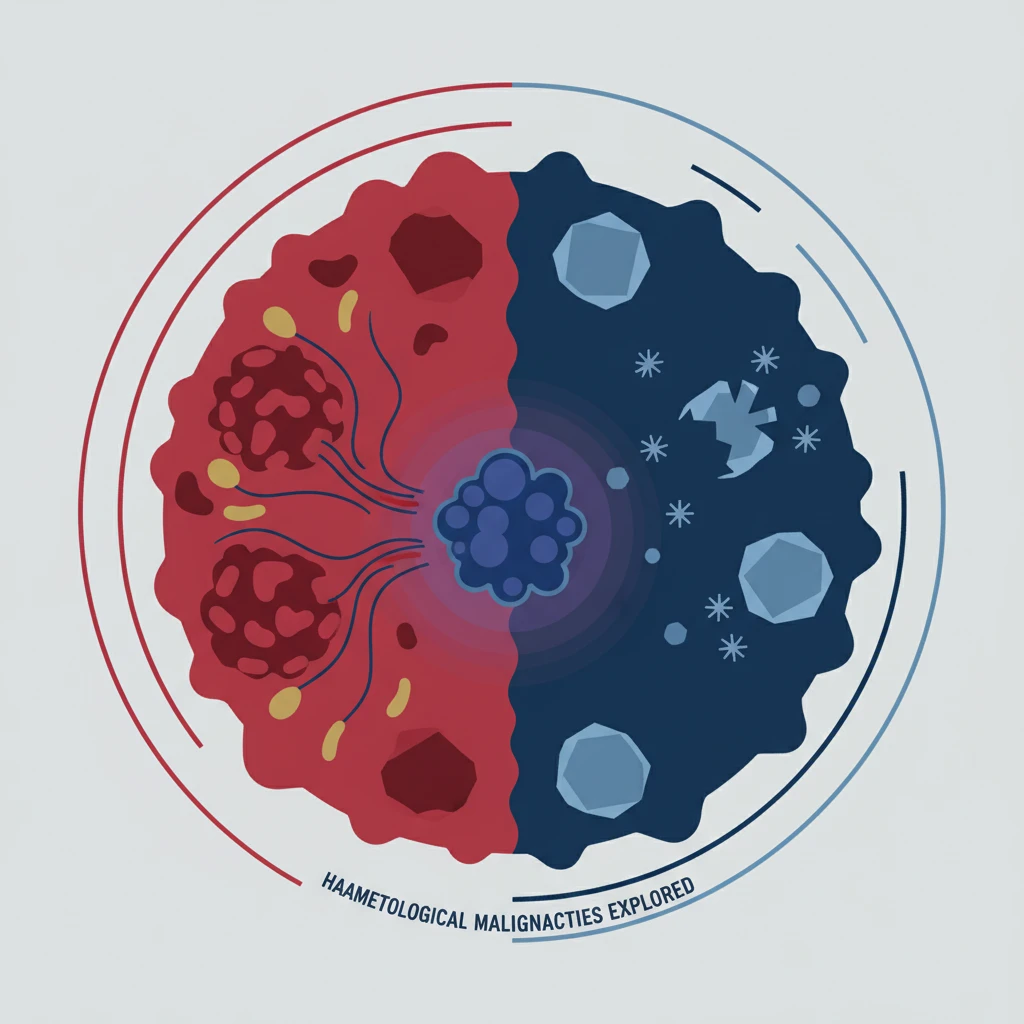

The intricate role of macrophages in haematological malignancies presents a significant clinical challenge, as these myeloid cells can either inhibit or promote tumour growth depending on their polarisation and microenvironmental cues.1 Understanding this dichotomy is essential for developing targeted therapies. The immediate takeaway for clinicians is that macrophage-targeted strategies may offer novel therapeutic avenues, but their efficacy will depend on precise modulation of macrophage phenotypes within the tumour microenvironment.
Macrophages, a diverse population of myeloid cells, are integral components of the immune system, involved in host defence, tissue repair, and immune regulation. In the context of haematological malignancies, their function is complex and often contradictory. Macrophages can exert anti-tumour effects by phagocytosing malignant cells, presenting tumour antigens, and secreting pro-inflammatory cytokines. Conversely, they can also promote tumour growth, angiogenesis, and metastasis by releasing immunosuppressive factors, growth factors, and proteases. This dual capacity makes macrophages both guardians and culprits in the progression of diseases such as leukaemia, lymphoma, and multiple myeloma.1
The tumour microenvironment (TME) plays a critical role in shaping macrophage phenotype and function. Tumour-associated macrophages (TAMs) are often polarised towards an M2-like phenotype, characterised by immunosuppressive and pro-tumour activities. These M2-like TAMs contribute to immune evasion, drug resistance, and disease relapse.2 Conversely, M1-like macrophages, typically induced by pro-inflammatory signals like interferon-gamma (IFN-γ) and lipopolysaccharide (LPS), exhibit potent anti-tumour properties, including direct cytotoxicity and stimulation of adaptive immune responses.3 The balance between M1 and M2 polarisation within the TME is a critical determinant of disease outcome.
The prevalence of haematological malignancies varies globally, with leukaemia, lymphoma, and multiple myeloma representing significant causes of morbidity and mortality. Understanding the cellular components of the TME, particularly macrophages, is crucial for developing more effective therapies. For instance, the incidence of non-Hodgkin lymphoma has steadily increased over recent decades, highlighting the need for novel therapeutic strategies that address the complex interplay between tumour cells and their microenvironment. Similarly, multiple myeloma, a plasma cell malignancy, remains largely incurable, with macrophage infiltration in the bone marrow contributing significantly to disease progression and resistance to conventional treatments.
Macrophage Plasticity and Therapeutic Implications
The plasticity of macrophages, their ability to switch between different functional states, offers a potential therapeutic window. Strategies aimed at reprogramming TAMs from an M2-like to an M1-like phenotype, or inhibiting the pro-tumour functions of M2-like TAMs, are under investigation. For example, targeting specific signalling pathways, such as the colony-stimulating factor 1 receptor (CSF1R) pathway, has shown promise in preclinical models by depleting TAMs or inhibiting their pro-tumour functions.4 Additionally, immunomodulatory agents, including certain chemotherapies and novel small molecules, may influence macrophage polarisation, thereby enhancing anti-tumour immunity.5
In specific haematological malignancies, the role of macrophages is further delineated. In chronic lymphocytic leukaemia (CLL), TAMs contribute to the survival of leukaemic cells and confer resistance to chemotherapy.6 In multiple myeloma, macrophages within the bone marrow microenvironment support plasma cell survival and proliferation, and contribute to osteolytic lesions.7 For lymphomas, particularly Hodgkin lymphoma, TAMs are a prominent component of the tumour microenvironment and are associated with disease progression and prognosis.8 The specific mechanisms by which TAMs exert their effects vary across different haematological malignancies, necessitating tailored therapeutic approaches.
Current research focuses on identifying specific surface markers and intracellular pathways that characterise distinct macrophage subsets within the TME, allowing for more precise targeting. For instance, CD163 and CD206 are often used as markers for M2-like macrophages, while CD68 and MHC class II molecules are associated with M1-like phenotypes.9 Understanding the molecular mechanisms driving macrophage polarisation and function in different disease contexts is paramount for translating these insights into effective clinical interventions. Future studies will likely explore combination therapies that integrate macrophage-targeting agents with conventional chemotherapy, immunotherapy, or novel targeted agents to improve patient outcomes.10
Despite promising preclinical data, translating these findings into clinical success presents several challenges. The heterogeneity of TAM populations within individual patients and across different tumour types complicates the development of universally effective therapies. Furthermore, the precise mechanisms by which certain drugs influence macrophage polarisation in vivo are not fully understood, requiring further investigation through detailed pharmacokinetic and pharmacodynamic studies. Limitations in current research methodologies include the reliance on in vitro models that may not fully recapitulate the complexity of the in vivo TME, and the need for more robust biomarkers to monitor macrophage phenotype and function in patients undergoing treatment. Future research must address these limitations to develop more effective, patient-specific macrophage-targeting strategies.
The EHA 2026 discussion on macrophages underscores a critical shift in our understanding of the tumour microenvironment. For too long, macrophages have been viewed simplistically, either as immune defenders or as mere bystanders. The emerging evidence, however, paints a far more nuanced picture, revealing their active and often contradictory roles. This complexity means that clinicians cannot simply assume a 'good' or 'bad' macrophage population; instead, a precise understanding of their polarisation state within a given malignancy is becoming indispensable for therapeutic decision-making.
This evolving perspective carries significant implications for drug development. Companies like Bristol Myers Squibb and Novartis, with their extensive portfolios in haematology, are already exploring agents that modulate the immune microenvironment. The challenge now is to develop therapies that can effectively reprogramme tumour-associated macrophages (TAMs) from an M2-like, pro-tumour phenotype to an M1-like, anti-tumour state, or to selectively deplete detrimental TAM subsets without compromising essential macrophage functions. This will require sophisticated biomarker strategies to identify patients most likely to benefit and to monitor treatment response, moving beyond broad-spectrum immunomodulation towards highly targeted interventions.
For patients, this research offers a glimmer of hope for more effective and less toxic treatments. Current therapies often face resistance mechanisms partly driven by the immunosuppressive TME, in which TAMs play a central role. By addressing the macrophage component, it may be possible to overcome existing resistance and improve the durability of responses, particularly in diseases like multiple myeloma and aggressive lymphomas where the TME is a known contributor to disease progression. The path to clinical translation is long, but the foundational understanding of macrophage biology in haematological malignancies is steadily advancing, paving the way for a new generation of immunotherapies.
- The Pivot Macrophages are not merely bystanders but active participants with context-dependent pro- or anti-tumour functions in haematological malignancies.
- The Data Macrophage plasticity, particularly the M1 (anti-tumour) and M2 (pro-tumour) phenotypes, dictates their impact on disease progression and therapeutic resistance.
- The Action Future therapeutic interventions may involve reprogramming tumour-associated macrophages (TAMs) to an M1-like state or inhibiting M2-like TAM functions to enhance existing treatments.
ART-2026-400
·10/26
Drafted with AI assistance and checked by automated style rules. Not individually read by an editor. This publication is intended for healthcare professionals, researchers, and life science industry professionals. Content is provided for informational and educational purposes only and does not constitute medical advice.

I write about AI in healthcare: the validation studies, the deployment failures, and the regulatory questions without answers yet. Based in San Francisco, close to where the technology is built.
Cite This Article
Chen L, Voss M. Macrophages: dual role in haematological malignancies explored. The Life Science Feed. Published June 14, 2026. Updated October 5, 2026. Accessed October 27, 2026. https://thelifesciencefeed.com/haematology/multiple-myeloma/research/macrophages-dual-role-in-haematological-malignancies-explored.
Editorial & AI Standards
Content is drafted with AI tools from peer-reviewed, open-access sources such as published trial data, clinical guidelines, and regulatory filings. This article is checked by automated style rules but is not individually read by an editor, so check the cited source before relying on a figure.
Source citations are listed in the References section. This content does not represent the views of any pharmaceutical company, medical device manufacturer, or healthcare provider.
Licence & Rights
© 2026 The Life Science Feed. All rights reserved. Unless otherwise indicated, all content is the property of The Life Science Feed and may not be reproduced, distributed, or transmitted in any form or by any means without prior written permission.
Medical Disclaimer
The information provided on The Life Science Feed is for educational and informational purposes only. It is not intended as a substitute for professional medical advice, diagnosis, or treatment. Always seek the advice of your physician or other qualified healthcare provider regarding any medical condition or treatment decision. Never disregard professional medical advice or delay in seeking it because of something you have read on this website.
References
1. Sica A, Mantovani A. Macrophage plasticity and polarization: in vivo experience with tumor-associated macrophages. Semin Immunol. 2012;24(5):305-312.
2. Ruffell B, Coussens LM. Macrophages and therapeutic resistance in cancer. Cancer Cell. 2015;27(4):462-472. doi:10.1016/j.ccell.2015.02.015
3. Mosser DM, Edwards JP. Exploring the full spectrum of macrophage activation. Nat Rev Immunol. 2008;8(12):958-969. doi:10.1038/nri2448
4. Pyonteck SM, et al. CSF-1R inhibition alters macrophage polarization and blocks glioma progression. Nat Med. 2013;19(10):1264-1272. doi:10.1038/nm.3337
5. Mantovani A, et al. Tumour-associated macrophages as a paradigm of macrophage plasticity, diversity and polarisation: lessons and challenges. Semin Immunol. 2013;25(3):178-185.
6. Ramsay AG, et al. Chronic lymphocytic leukemia cells induce changes in gene expression of stromal cells that support their growth. Blood. 2013;121(14):2704-2713.
7. Zheng Y, et al. Macrophages are essential for the survival of multiple myeloma cells in the bone marrow microenvironment. Blood. 2013;122(18):3191-3200.
8. Steidl C, et al. Tumour-associated macrophages and survival in classical Hodgkin's lymphoma. N Engl J Med. 2010;362(10):875-885.
9. Rőszer T. Understanding the enigmatic M2 macrophage through immunology and genetics. J Immunol. 2015;195(10):4561-4570.
10. Cassetta L, Kitamura T. Targeting tumor-associated macrophages as a therapeutic strategy in cancer. Br J Cancer. 2018;118(1):23-35.







