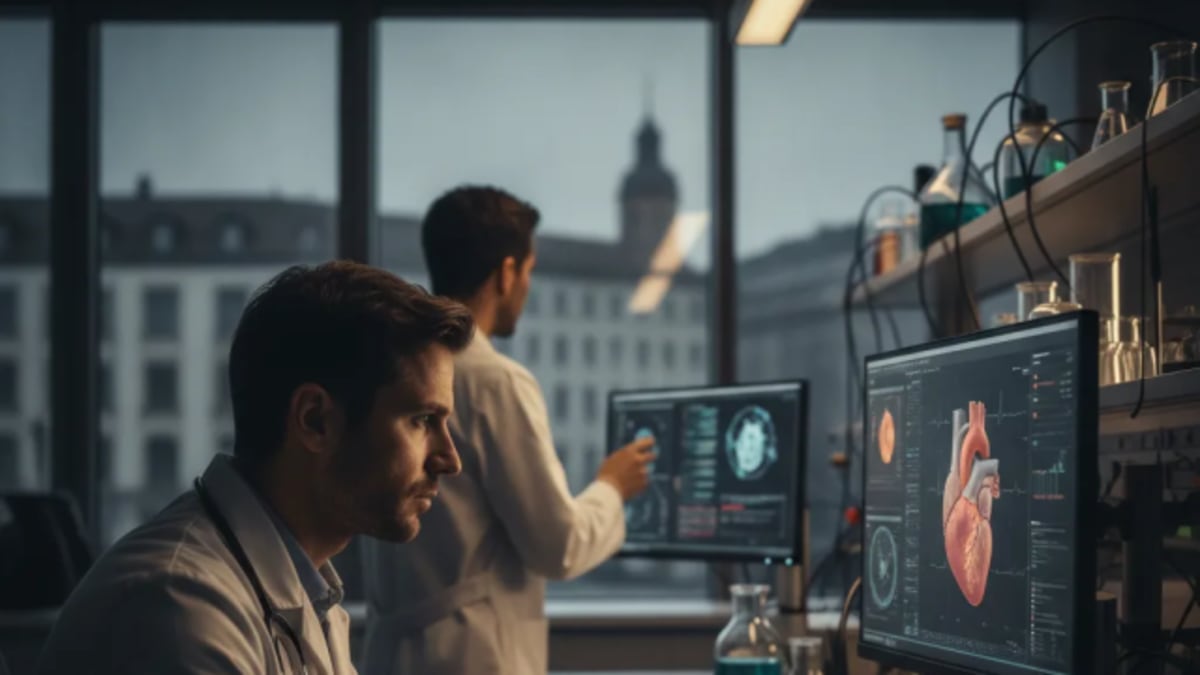
The integration of artificial intelligence into clinical practice promises efficiency and diagnostic accuracy, but it also presents a less discussed challenge: the potential for atrophy in core clinical skills. As algorithms assume more cognitive load, clinicians may find their diagnostic acumen and physical examination proficiency diminishing. This shift forces a re-evaluation of medical education and ongoing professional development.
The promise of artificial intelligence in medicine is undeniable. AI algorithms can sift through vast datasets, identify subtle patterns in imaging, and even assist in complex surgical planning. For European GPs and specialists, this translates to faster diagnoses, more personalised treatment plans, and potentially reduced workload. But this technological advance carries a hidden cost: the erosion of the very clinical skills that define a competent physician.
Consider the diagnostic process. Historically, a clinician would gather a detailed history, perform a thorough physical examination, and then formulate a differential diagnosis. This process, iterative and deeply human, relies on pattern recognition, intuition honed by experience, and the ability to synthesize disparate pieces of information. AI, particularly large language models and advanced image recognition systems, now offers to streamline this. A GP might input a patient's symptoms into a diagnostic AI, which then generates a list of probable conditions, often with probabilities attached. This efficiency is appealing, especially in time-pressured environments.
The Shifting Landscape of Clinical Training
Medical education has already begun to adapt to a world saturated with technology. Students learn to interpret advanced imaging and laboratory results with increasing sophistication. But the emphasis on fundamental skills, such as eliciting a nuanced patient history or performing a comprehensive physical examination, has arguably waned. When an AI can analyse an ECG with greater speed and accuracy than a junior doctor, the incentive to meticulously learn every variant of ST-segment elevation diminishes. The same applies to interpreting subtle heart murmurs or palpating an enlarged spleen; if an ultrasound or AI-powered auscultation device provides a definitive answer, the manual skill can seem redundant.
This is not to say that AI is inherently detrimental. It excels at tasks that are repetitive, data-intensive, and pattern-based. For example, AI can accurately detect diabetic retinopathy from fundus photographs, often outperforming human ophthalmologists in screening settings. It can also identify early signs of malignancy in radiological scans, reducing false negatives. The issue arises when clinicians become passive recipients of AI outputs rather than active participants in the diagnostic process. If a GP relies solely on an AI's interpretation of a chest X-ray, they may miss an incidental finding outside the AI's programmed focus, or fail to develop the visual literacy required to spot anomalies themselves when the AI is unavailable or malfunctions.
Maintaining Foundational Competencies
The core argument against uncritical AI adoption is that clinical skills are not merely about reaching a correct diagnosis; they are about the process, the patient interaction, and the development of clinical reasoning. A detailed history provides not just symptoms, but context: social determinants of health, psychological factors, and patient preferences. No AI, however sophisticated, can fully replicate the empathy and nuanced communication required to build rapport and understand a patient's lived experience of illness. These are skills that require constant practice and reinforcement.
Consider the physical examination. While AI-powered stethoscopes can detect subtle cardiac abnormalities, the act of auscultation involves more than just listening. It is a tactile experience, a moment of connection, and an opportunity to observe non-verbal cues. The 3M Littmann Classic III Stethoscope remains an indispensable tool for developing this fundamental skill. If clinicians delegate this entirely to technology, they risk losing the ability to perform a rapid, bedside assessment when technology is unavailable, or when the patient presentation is atypical and requires human interpretation beyond algorithmic parameters.
The risk of 'automation bias' is also significant. Clinicians, like all humans, are susceptible to over-relying on automated systems, even when those systems are imperfect. If an AI suggests a diagnosis, a clinician might be less likely to critically evaluate alternative possibilities or to seek disconfirming evidence. This can lead to diagnostic errors, particularly in cases where the AI's training data was biased or incomplete, or where the patient's presentation falls outside the typical patterns the AI was designed to recognise. The responsibility for the patient's care ultimately rests with the human clinician, not the algorithm.
The Educational Imperative
Medical curricula must evolve to address this challenge head-on. This means teaching not just how to use AI tools, but how to critically appraise their outputs, understand their limitations, and integrate them judiciously into clinical practice. It requires a renewed emphasis on foundational clinical skills, ensuring that future generations of doctors are proficient in history-taking, physical examination, and diagnostic reasoning, even as they embrace technological aids. Simulation training, for instance, can provide opportunities to practice these skills in complex scenarios, with or without AI assistance, allowing trainees to understand when and how to best leverage technology.
Furthermore, continuous professional development for practising clinicians becomes paramount. Regular refreshers on physical examination techniques, diagnostic reasoning workshops, and critical appraisal courses for AI tools are essential. The goal is not to resist AI, but to foster a generation of 'AI-augmented' clinicians who can leverage technology without becoming dependent on it. They must remain capable of independent thought and action, especially when faced with novel presentations or when technology fails.
The challenge extends beyond individual clinical skills. The broader impact on clinical reasoning and problem-solving is also a concern. If AI consistently provides the 'answer', clinicians may lose the opportunity to engage in the complex cognitive processes that build expertise. The struggle to arrive at a diagnosis, the weighing of probabilities, and the synthesis of conflicting information are all crucial for developing clinical wisdom. If these processes are outsourced to a machine, the depth of understanding and the ability to handle ambiguity may diminish. This is particularly relevant for general practitioners, who often manage undifferentiated symptoms and complex multimorbidity, requiring a broad and adaptable skill set. The Oxford Handbook of Clinical Medicine (11th ed) remains a vital resource for maintaining this breadth of knowledge.
The integration of AI into medicine is an ongoing experiment. The benefits are clear, but the potential for unintended consequences, particularly the erosion of core clinical skills, demands careful consideration. We must ensure that technology serves the clinician, not the other way around, preserving the human element at the heart of medical practice.
The uncritical embrace of AI risks creating a generation of clinicians who can operate sophisticated machines but lack the fundamental skills to examine a patient or formulate a diagnosis without algorithmic assistance. This is not progress; it is a trade-off that compromises patient safety when technology inevitably fails or encounters an edge case.
Medical schools and postgraduate training programmes must urgently re-prioritise foundational clinical competencies. Teaching how to use an AI is necessary, but it must be secondary to mastering history-taking, physical examination, and critical diagnostic reasoning. The human clinician remains the ultimate arbiter of care, and that requires independent capability.
For established GPs and specialists, proactive engagement with continuous medical education focused on maintaining these core skills is non-negotiable. Do not let the convenience of AI replace your own diagnostic process; use it as an adjunct, not a substitute. The responsibility for patient outcomes still rests squarely on your shoulders, regardless of what an algorithm suggests.
- The Pivot AI's growing role in diagnosis and treatment planning risks deskilling clinicians in fundamental areas like physical examination and critical reasoning.
- The Data No specific quantitative data from a single trial, but a growing body of expert opinion and observational trends points to reduced direct patient interaction and reliance on algorithmic outputs.
- The Action Clinicians must actively maintain and hone their core skills, even when AI tools are available, and medical curricula need to adapt to foster human-AI collaboration without sacrificing foundational competencies.
ART-2026-998
·07/26
Drafted with AI assistance, reviewed and approved by the editorial team. This publication is intended for healthcare professionals, researchers, and life science industry professionals. Content is provided for informational and educational purposes only and does not constitute medical advice.

I cover NHS policy, NICE guidance, and the gap between what the evidence says and what gets commissioned. I bring a health economics background to reporting on how health systems make decisions under uncertainty.
Cite This Article
Mistry D, Lopes W. AI won't replace doctors, but it might erode your core skills. The Life Science Feed. Published July 29, 2026. Updated July 29, 2026. Accessed July 29, 2026. https://thelifesciencefeed.com/healthcare-sys-and-biz/ai-in-healthcare/insights/ai-wont-replace-doctors-but-it-might-erode-your-core-skills.
Editorial & AI Standards
All content is researched from peer-reviewed, open-access sources: published trial data, clinical guidelines, and regulatory filings. AI tools are used solely to structure and summarise that evidence; no AI-generated conclusions appear without editor verification against the primary source.
Every article is reviewed by a named editor before publication. Source citations are listed in the References section. This content does not represent the views of any pharmaceutical company, medical device manufacturer, or healthcare provider.
Licence & Rights
© 2026 The Life Science Feed. All rights reserved. Unless otherwise indicated, all content is the property of The Life Science Feed and may not be reproduced, distributed, or transmitted in any form or by any means without prior written permission.
Medical Disclaimer
The information provided on The Life Science Feed is for educational and informational purposes only. It is not intended as a substitute for professional medical advice, diagnosis, or treatment. Always seek the advice of your physician or other qualified healthcare provider regarding any medical condition or treatment decision. Never disregard professional medical advice or delay in seeking it because of something you have read on this website.