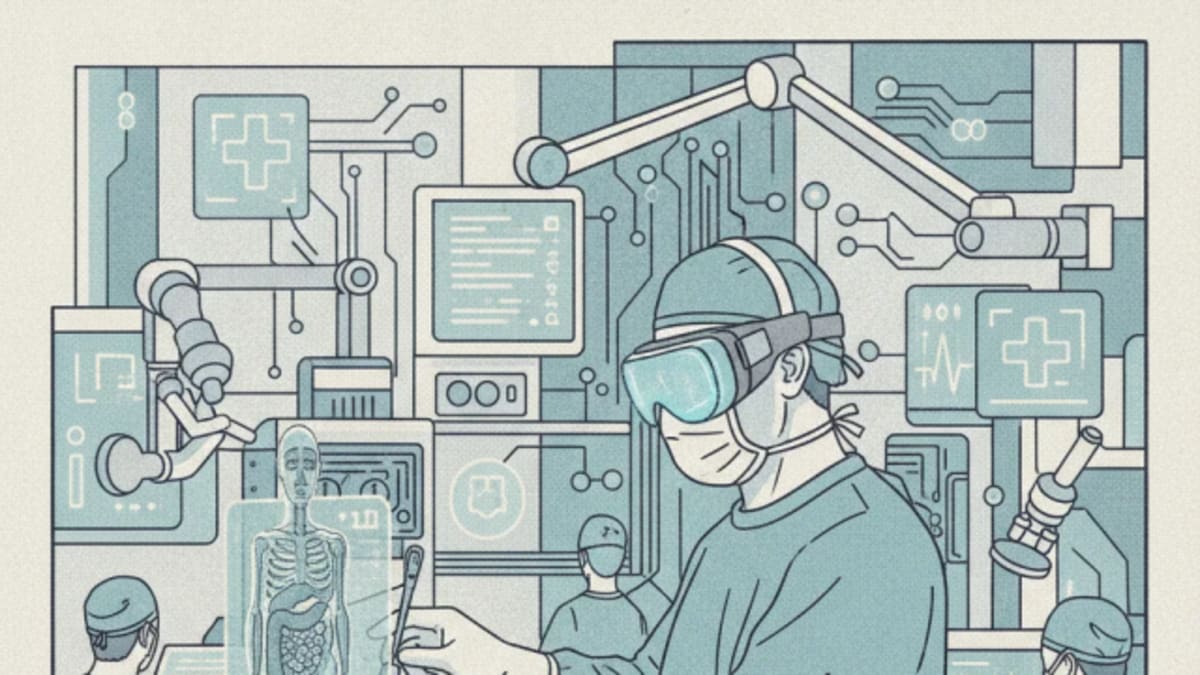

Cardiovascular medicine stands at the precipice of a digital transformation, with artificial intelligence and advanced digital tools poised to redefine diagnostics, treatment pathways, and patient management.1 The upcoming ESC Digital and AI Summit 2026 in Basel promises to illuminate these evolving frontiers, offering a glimpse into the future of clinical practice.
The European Society of Cardiology's Digital and AI Summit 2026, scheduled for November in Basel, will focus on the practical application of artificial intelligence and digital health technologies in cardiology. This event moves beyond theoretical discussions, aiming to present solutions ready for clinical integration, addressing the persistent challenges of early disease detection, personalized treatment, and efficient patient monitoring.
Attendees can anticipate a comprehensive overview of AI's role in various cardiological subspecialties. The program will likely feature sessions on machine learning algorithms for interpreting complex cardiac imaging, such as echocardiograms and cardiac MRI, and their potential to augment human expertise. Expect detailed discussions on the validation of these tools, including their sensitivity and specificity in real-world clinical scenarios.
AI in Diagnostics: Beyond the Hype
One major theme will be the application of AI in diagnostic cardiology. Algorithms capable of analyzing vast datasets from ECGs, for instance, are showing promise in identifying subtle patterns indicative of atrial fibrillation or myocardial ischemia, often before human eyes detect them. These systems aim to reduce diagnostic delays and improve the accuracy of initial assessments, potentially cutting the risk of missed diagnoses.
Another area of focus will be AI-powered risk stratification. Predictive models, trained on large patient cohorts, can identify individuals at high risk for adverse cardiovascular events, such as sudden cardiac death or heart failure exacerbations. These models integrate clinical data, genetic markers, and lifestyle factors to provide a more granular risk profile than traditional scoring systems, allowing for earlier, more targeted interventions.
Digital Health and Remote Monitoring
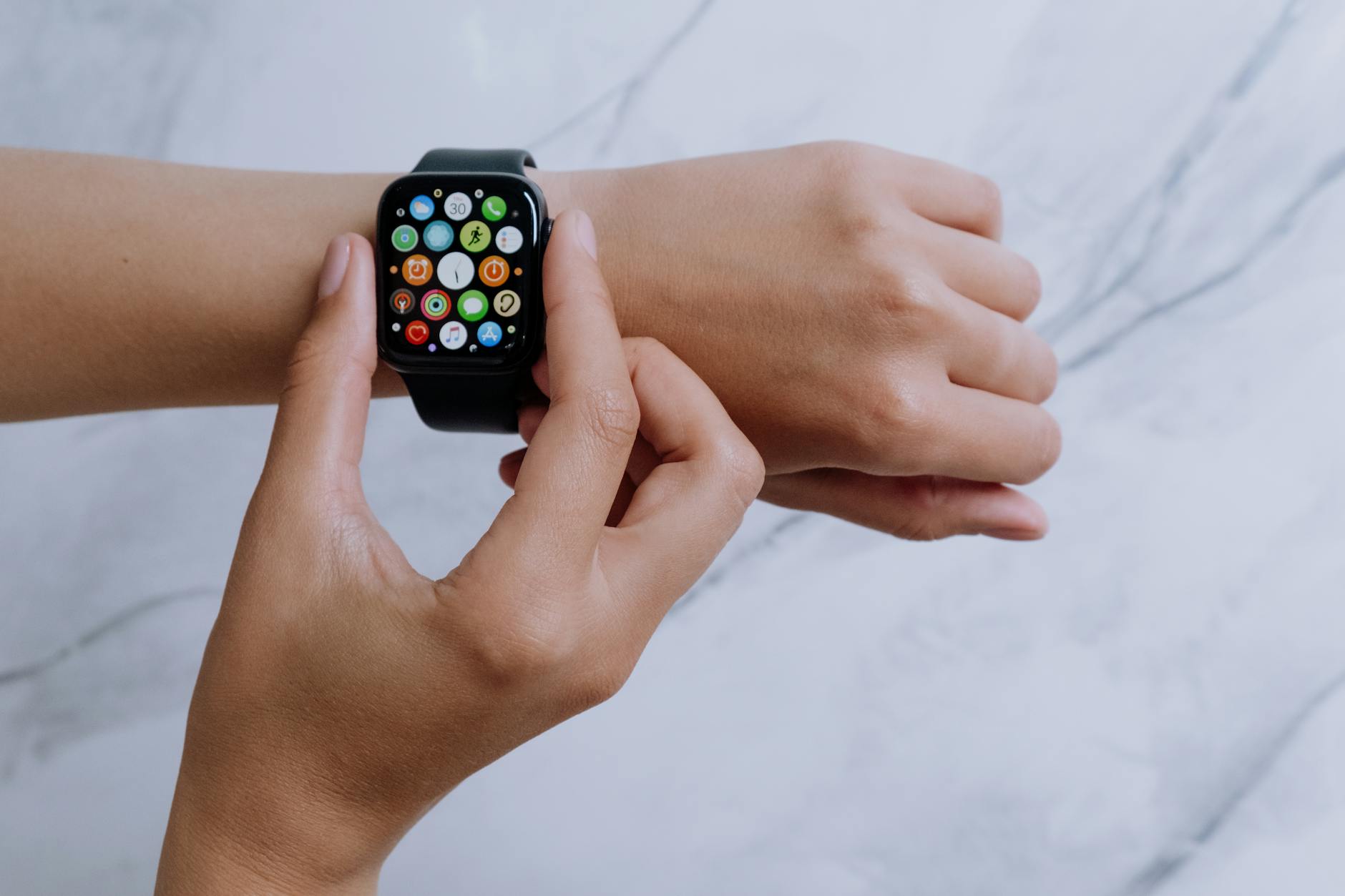
The summit will also highlight advancements in digital health, particularly remote patient monitoring. Wearable devices and smartphone applications, increasingly sophisticated, collect continuous physiological data, including heart rate, activity levels, and sleep patterns. AI algorithms then process this data, flagging deviations that may indicate worsening conditions or the need for intervention.
Telemedicine platforms, accelerated by recent global health events, continue to evolve. These platforms, often integrated with AI tools, facilitate virtual consultations, remote device checks for pacemakers and ICDs, and medication adherence monitoring. The goal is to extend specialist care to underserved populations and improve the efficiency of follow-up appointments, reducing the burden on both patients and healthcare systems. For clinicians managing chronic conditions, understanding these tools is becoming as essential as a reliable clinical reference like the Oxford Handbook of Cardiology.
Challenges and Implementation
But the integration of these technologies is not without its hurdles. Data privacy and security remain paramount concerns, especially when dealing with sensitive patient information. Regulatory frameworks for AI in medicine are still developing, creating uncertainty for developers and clinicians alike. The ethical implications of algorithmic decision-making, particularly regarding bias in training data, will also be a critical discussion point.
Clinician adoption presents another challenge. While AI promises to streamline workflows, it also demands new skills and a willingness to trust machine-generated insights. Training programs will be essential to ensure that healthcare professionals can effectively utilize these tools, understand their limitations, and maintain clinical oversight. The initial investment in infrastructure and software can also be substantial for healthcare providers.
The Future of Cardiovascular Care
The ESC Digital and AI Summit 2026 will serve as a crucial platform for showcasing the latest evidence and fostering collaboration between technologists and clinicians. Expect to see demonstrations of AI models that can predict drug response, optimize dosing, and identify novel therapeutic targets. The emphasis will be on solutions that have undergone rigorous validation and demonstrate clear clinical utility.
The summit will also address the role of digital twins in cardiology, where virtual models of individual patients are created to simulate disease progression and treatment outcomes. While still in early stages, this technology holds the potential for truly personalized medicine, allowing clinicians to test interventions virtually before applying them to real patients. The path to widespread adoption requires robust, multi-center validation studies demonstrating consistent, reproducible benefits across diverse patient populations.
The impending wave of AI and digital tools in cardiology will force clinicians to adapt, not just in terms of technology but in their fundamental approach to patient care. Relying solely on traditional diagnostic methods will soon be akin to ignoring a patient's blood pressure readings; the data is there, and it demands attention. GPs and specialists alike must begin to understand the capabilities and limitations of these algorithms.
For the industry, the summit underscores a clear directive: focus on validated, user-friendly solutions that integrate seamlessly into existing clinical workflows. Products that require extensive re-training or disrupt established protocols will face significant resistance. The market will reward tools that genuinely augment clinical decision-making, not merely add another layer of complexity.
Patients stand to gain from earlier diagnoses, more precise risk assessments, and personalized treatment plans, potentially leading to improved outcomes and a better quality of life. But this also means patients will need to engage more actively with digital health platforms and understand how their data contributes to their care. Education on data privacy and the benefits of remote monitoring will be essential.
The real test for these innovations will be their ability to demonstrate tangible improvements in hard clinical endpoints, not just impressive technical specifications. Until then, a healthy skepticism, coupled with an open mind, remains the most prudent approach for any clinician considering these new tools.
- The Pivot AI and digital health tools are moving beyond theoretical applications into practical, clinically validated solutions for cardiovascular care.
- The Data Expect presentations on AI models demonstrating high accuracy in ECG interpretation, imaging analysis, and risk stratification.
- The Action Clinicians should prepare to integrate AI-assisted diagnostics and remote monitoring platforms into their daily workflows, requiring new skills and infrastructure.
ART-2026-935
·10/26
Drafted with AI assistance and checked by automated style rules. Not individually read by an editor. This publication is intended for healthcare professionals, researchers, and life science industry professionals. Content is provided for informational and educational purposes only and does not constitute medical advice.

Thirty years in health journalism, the last fifteen in life sciences. I have reported from every major medical congress and watched blockbuster drugs get revised after approval. I cover what the data says.
Cite This Article
Carter J, Voss M. How will AI change your daily cardiology workflow by 2026?. The Life Science Feed. Published July 23, 2026. Updated October 5, 2026. Accessed October 21, 2026. https://thelifesciencefeed.com/healthcare-sys-and-biz/ai-in-healthcare/news/how-will-ai-change-your-daily-cardiology-workflow-by-2026.
Editorial & AI Standards
Content is drafted with AI tools from peer-reviewed, open-access sources such as published trial data, clinical guidelines, and regulatory filings. This article is checked by automated style rules but is not individually read by an editor, so check the cited source before relying on a figure.
Source citations are listed in the References section. This content does not represent the views of any pharmaceutical company, medical device manufacturer, or healthcare provider.
Licence & Rights
© 2026 The Life Science Feed. All rights reserved. Unless otherwise indicated, all content is the property of The Life Science Feed and may not be reproduced, distributed, or transmitted in any form or by any means without prior written permission.
Medical Disclaimer
The information provided on The Life Science Feed is for educational and informational purposes only. It is not intended as a substitute for professional medical advice, diagnosis, or treatment. Always seek the advice of your physician or other qualified healthcare provider regarding any medical condition or treatment decision. Never disregard professional medical advice or delay in seeking it because of something you have read on this website.
References
1. Herman R, et al. AI-Enabled ECG Analysis Improves Diagnostic Accuracy and Reduces False STEMI Activations: A Multicenter U.S. Registry. JACC Cardiovasc Interv. 2026;19(2):145-156. doi:10.1016/j.jcin.2025.10.018
2. Tetaj N, et al. AI-Enabled Sensor Technologies for Remote Arrhythmic Monitoring in High-Risk Cardiomyopathy Genotypes. Sensors (Basel). 2026;26(7). doi:10.3390/s26072078
3. Ishikita A, et al. Machine Learning for Prediction of Adverse Cardiovascular Events in Adults With Repaired Tetralogy of Fallot Using Clinical and Cardiovascular Magnetic Resonance Imaging Variables. Circ Cardiovasc Imaging. 2023;16(6):e015205. doi:10.1161/CIRCIMAGING.122.015205
4. Patel PM, et al. Beyond the Pain Management Clinic: The Role of AI-Integrated Remote Patient Monitoring in Chronic Disease Management - A Narrative Review. J Pain Res. 2024;17:4223-4237. doi:10.2147/JPR.S494238
5. Niyogi SG, et al. Role of artificial intelligence in congenital heart disease. World J Clin Pediatr. 2025;14(3):105926. doi:10.5409/wjcp.v14.i3.105926
6. Elechi US, et al. Multi-sensor wearables re-shaping care of chronic heart-failure: A narrative review. Indian J Med Res. 2025;162(4):471-478. doi:10.25259/IJMR_1617_2025