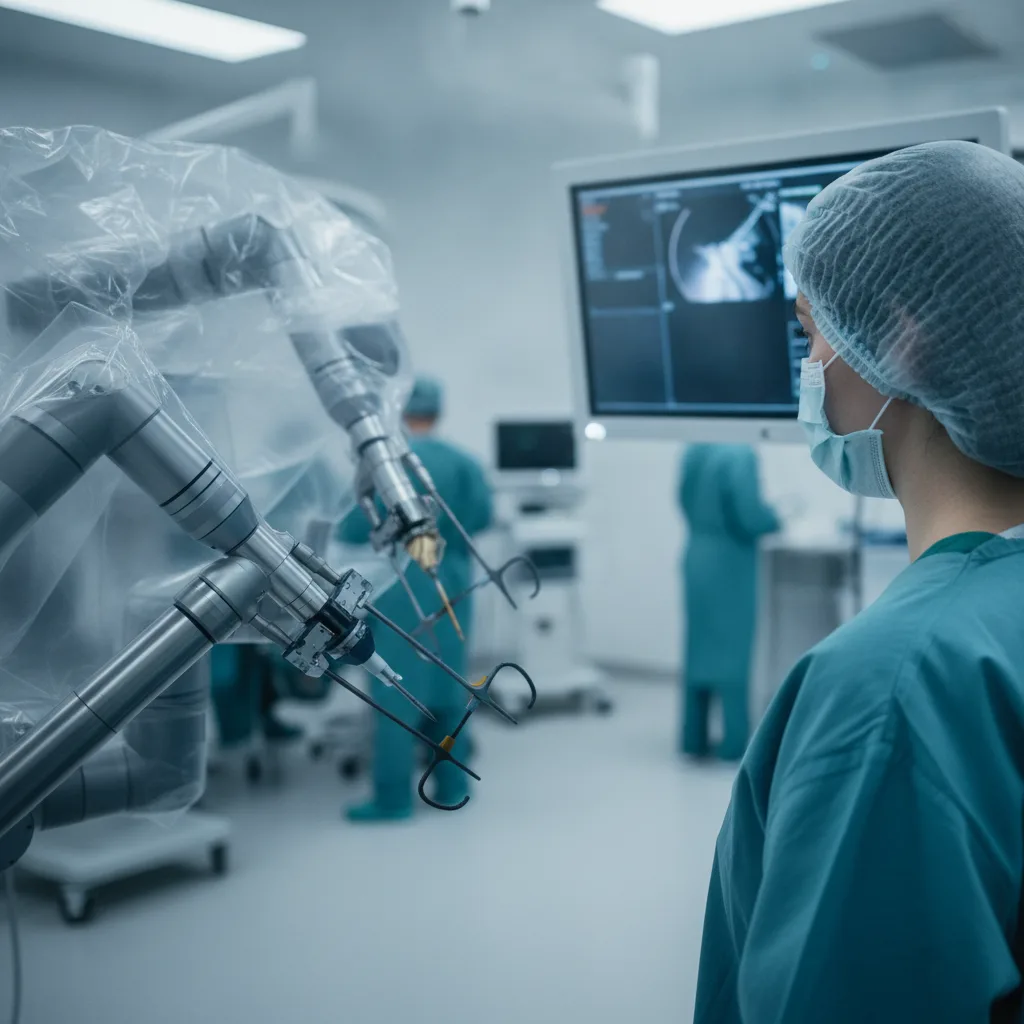

The integration of robotic systems into surgical practice has sparked considerable debate: are these sophisticated machines merely tools, or do they represent a step towards autonomous surgery? Current evidence, particularly from fields like cardiac and gynecologic surgery, firmly positions robots as enhancements to human capability, not replacements. These systems offer precision and stability, but the critical decision-making, adaptability, and informed judgment remain the exclusive domain of the human surgeon.1,2
The operating theatre has seen a steady march of technological advancement, with robotic systems now a fixture in many surgical disciplines. These platforms promise enhanced dexterity, magnified visualization, and tremor filtration, theoretically translating into improved patient outcomes. But the question of how deeply these machines integrate into the surgical workflow, and whether they fundamentally alter the role of the surgeon, remains a point of ongoing discussion. Current research, however, consistently reinforces the idea that robots are sophisticated instruments, extending the surgeon's reach and precision, rather than acting as independent operators.1,2
A significant aspect of any surgical procedure, robotic or otherwise, is the management of anesthesia. Patients undergoing robotic gynecologic surgery, for instance, often require the Trendelenburg position, which can complicate hemodynamic stability. Lee JM and colleagues designed a randomized controlled trial protocol to compare intraoperative hemodynamic parameters between propofol- and remimazolam-based total intravenous anesthesia (TIVA) in this specific patient population.1 Propofol-based TIVA with remifentanil is a common choice for general anesthesia, but it frequently leads to hypotension and bradycardia. Remimazolam, an ultra-short-acting benzodiazepine, offers rapid onset and offset, with the added benefit of reversal by flumazenil, potentially resulting in less hemodynamic depression. The study aims to prospectively compare continuous intraoperative hemodynamic changes, moving beyond previous randomized studies that largely focused on the induction phase or the incidence of hypotension.1
The Anesthetic Edge in Robotic Gynecologic Surgery
The Lee JM study protocol specifically addresses a gap in the literature regarding continuous intraoperative hemodynamic changes during robotic gynecologic surgery.1 Previous research often focused on discrete events like the incidence of hypotension, rather than the sustained hemodynamic profile throughout the procedure. This distinction is important for patient safety and recovery, particularly in prolonged robotic cases where maintaining stable hemodynamics can mitigate complications. The Trendelenburg position, commonly used in gynecologic robotic surgery, further stresses the cardiovascular system, making optimal anesthetic choice important for patient outcomes.1
Remimazolam's pharmacokinetic profile, characterized by rapid metabolism by tissue esterases, allows for precise titration and quick recovery, which could be particularly advantageous in robotic surgery where surgical time can vary. Its benzodiazepine class also provides anxiolytic and amnestic properties, which are beneficial for patient comfort and reducing intraoperative awareness. The ability to reverse remimazolam with flumazenil offers an additional layer of safety, a feature not available with propofol. This could be important in situations requiring rapid emergence or in patients with compromised respiratory function.1
The trial's focus on continuous intraoperative hemodynamic changes, rather than just isolated events, provides a more comprehensive picture of anesthetic performance. This granular data will help clinicians understand how each TIVA regimen impacts blood pressure, heart rate, and other vital signs throughout the entire surgical duration. Such detailed information is essential for refining anesthetic protocols and improving patient care in the context of robotic procedures.1
Robotic Platforms Across Specialties
Beyond gynecologic surgery, robotic platforms are making significant inroads into other complex fields, notably cardiac surgery. Ramzy D and Waterford S provided an overview of all robotic platforms currently in clinical use for cardiac procedures in Innovations (Phila).2 This review highlights the diversity of robotic systems available and their specific applications within the demanding environment of cardiac surgery. The precision offered by these robots allows for minimally invasive approaches to complex cardiac repairs, potentially reducing patient morbidity and recovery times.2
The adoption of robotic technology in cardiac surgery highlights the principle that these tools augment, rather than replace, the surgeon's skill. Cardiac procedures demand extreme precision and an intricate understanding of anatomy and physiology. Robots provide the means to execute delicate maneuvers with enhanced stability and visualization, but the strategic planning, real-time assessment of tissue viability, and management of unexpected intraoperative events remain firmly with the human surgeon. The 3M Littmann CORE Digital Stethoscope, for instance, helps clinicians monitor patient status post-operatively, a significant step regardless of the surgical approach.
Different robotic platforms offer varying functionalities, tailored to specific surgical needs. Some excel in multi-quadrant access, while others provide highly articulated instruments for fine dissection. Understanding the specific features of each system is important for surgeons to select the appropriate tool for a given procedure. This selection process, based on patient factors, surgical complexity, and surgeon expertise, demonstrates the continued centrality of human judgment in robotic surgery.2
Esophageal Cancer and the Robotic Future
The application of robotic surgery also extends to highly challenging oncological procedures, such as those for esophageal cancer. Oya S and colleagues discussed surgical strategy for esophageal cancer in Annals of Gastroenterological Surgery, emphasizing a new paradigm in the era of immunotherapy and personalization.3 While their abstract primarily focused on anesthesia, the broader context of their work implies that robotic assistance is a key component of modern, less invasive approaches to these complex resections. Esophageal cancer surgery, often involving extensive dissection in confined spaces, benefits significantly from the enhanced visualization and articulation that robotic systems provide.3
The integration of immunotherapy into esophageal cancer treatment further complicates surgical planning. Surgeons must consider the impact of neoadjuvant or adjuvant immunotherapy on tissue integrity and healing, making precise, minimally traumatic surgical techniques even more important for patient recovery. Robotic platforms facilitate these delicate procedures, potentially reducing surgical stress and improving recovery, which is vital for patients who may also be undergoing systemic treatments.3
The concept of personalization in cancer surgery, as highlighted by Oya and colleagues, means tailoring treatment to individual patient characteristics and tumor biology. Robotic surgery supports this by enabling highly precise resections that can be adapted to complex anatomical variations and tumor extent. This level of customization, combined with advanced imaging and intraoperative guidance, allows surgeons to optimize oncological outcomes while minimizing morbidity.3
The Human Element Remains Indispensable
Despite the technological sophistication, the human surgeon remains the indispensable core of robotic surgery. The robot is a masterfully engineered extension of the surgeon's hands, not a replacement for their intellect or experience. Surgeons control every movement, interpret every visual cue, and make every critical decision. The ability to adapt to unforeseen anatomical variations, manage complications, and exercise clinical judgment in real-time cannot be programmed into a machine.1-3
Training in robotic surgery emphasizes the development of advanced psychomotor skills alongside a deep understanding of the robotic system's mechanics and limitations. Surgeons must learn to operate through a console, translating their intentions into precise robotic movements. This requires a different set of skills than traditional open or laparoscopic surgery, but it does not diminish the need for fundamental surgical principles and anatomical knowledge. The learning curve for robotic surgery is well-documented, highlighting the extensive human training required to master these tools.2
The future of surgery will undoubtedly see further advancements in robotic technology, potentially incorporating artificial intelligence for enhanced image guidance or predictive analytics. But these innovations will likely serve to further empower the surgeon, providing more data and more precise tools, rather than diminishing their role. The complex relationship between human skill, judgment, and advanced technology will continue to define the cutting edge of surgical care. The dry wit of a seasoned surgeon, much like the precision of a robot, is a tool in the operating room, but only one is capable of independent thought.1-3
The ongoing evolution of robotic surgical platforms demands that clinicians stay abreast of the specific advantages and limitations each system offers. Selecting the appropriate robotic platform for a given procedure, whether cardiac, gynecologic, or oncologic, requires a detailed understanding of its capabilities and the patient's unique clinical profile. This is not a one-size-fits-all scenario.
Anesthetic management in robotic surgery, particularly in challenging positions like Trendelenburg, warrants careful consideration. The potential for remimazolam to offer superior hemodynamic stability compared to propofol in robotic gynecologic surgery, if confirmed by ongoing trials, could significantly impact perioperative care protocols. Minimizing hemodynamic fluctuations can lead to better patient outcomes and faster recovery.
For general practitioners and specialists referring patients for surgery, understanding the role of robotic assistance is important for patient counseling. Patients often have questions about the technology, and clear communication about how robots enhance surgical precision without replacing human expertise can alleviate anxieties. The human surgeon remains the ultimate decision-maker, leveraging technology to achieve better results.
The integration of robotic surgery with other advanced therapies, such as immunotherapy in oncology, highlights the need for multidisciplinary collaboration. Surgical oncologists, medical oncologists, and anesthesiologists must work in concert to optimize treatment strategies, ensuring that the benefits of robotic precision are fully realized within a comprehensive care plan.
- The Pivot Robotic surgical platforms are evolving rapidly, expanding their reach into increasingly complex procedures like cardiac and gynecologic surgery.
- The Data Remimazolam-based total intravenous anesthesia may offer improved hemodynamic stability during robotic gynecologic surgery compared to propofol.
- The Action Clinicians should understand the specific advantages and limitations of various robotic platforms and anesthesia protocols to optimize patient outcomes in robot-assisted procedures.
ART-2026-1068
·09/26
Drafted with AI assistance, reviewed and approved by the editorial team. This publication is intended for healthcare professionals, researchers, and life science industry professionals. Content is provided for informational and educational purposes only and does not constitute medical advice.

I write about AI in healthcare: the validation studies, the deployment failures, and the regulatory questions without answers yet. Based in San Francisco, close to where the technology is built.
Cite This Article
Chen L, Voss M. Robotic surgery isn't replacing surgeons. but it is changing anesthesia. The Life Science Feed. Published August 11, 2026. Updated September 15, 2026. Accessed September 25, 2026. https://thelifesciencefeed.com/healthcare-sys-and-biz/ai-in-healthcare/innovation/robotic-surgery-isnt-replacing-surgeons-but-it-is-changing-anesthesia.
Editorial & AI Standards
All content is researched from peer-reviewed, open-access sources: published trial data, clinical guidelines, and regulatory filings. AI tools are used solely to structure and summarise that evidence; no AI-generated conclusions appear without editor verification against the primary source.
Every article is reviewed by a named editor before publication. Source citations are listed in the References section. This content does not represent the views of any pharmaceutical company, medical device manufacturer, or healthcare provider.
Licence & Rights
© 2026 The Life Science Feed. All rights reserved. Unless otherwise indicated, all content is the property of The Life Science Feed and may not be reproduced, distributed, or transmitted in any form or by any means without prior written permission.
Medical Disclaimer
The information provided on The Life Science Feed is for educational and informational purposes only. It is not intended as a substitute for professional medical advice, diagnosis, or treatment. Always seek the advice of your physician or other qualified healthcare provider regarding any medical condition or treatment decision. Never disregard professional medical advice or delay in seeking it because of something you have read on this website.
References
1. Lee JM, Lee J, Kang SH. Comparison of intraoperative hemodynamic parameters between propofol- and remimazolam-based total intravenous anesthesia in patients undergoing robotic gynecologic surgery: a randomized controlled trial protocol. Front Pharmacol 2026.
2. Ramzy D, Waterford S. Robotic Cardiac Surgery: Overview of All Robotic Platforms in Clinical Use. Innovations (Phila) 2026.
3. Oya S, Yagi K, Baba Y. Essential Updates 2024-2025: Surgical Strategy for Esophageal Cancer Toward a New Paradigm in the Era of Immunotherapy and Personalization. Ann Gastroenterol Surg 2026.