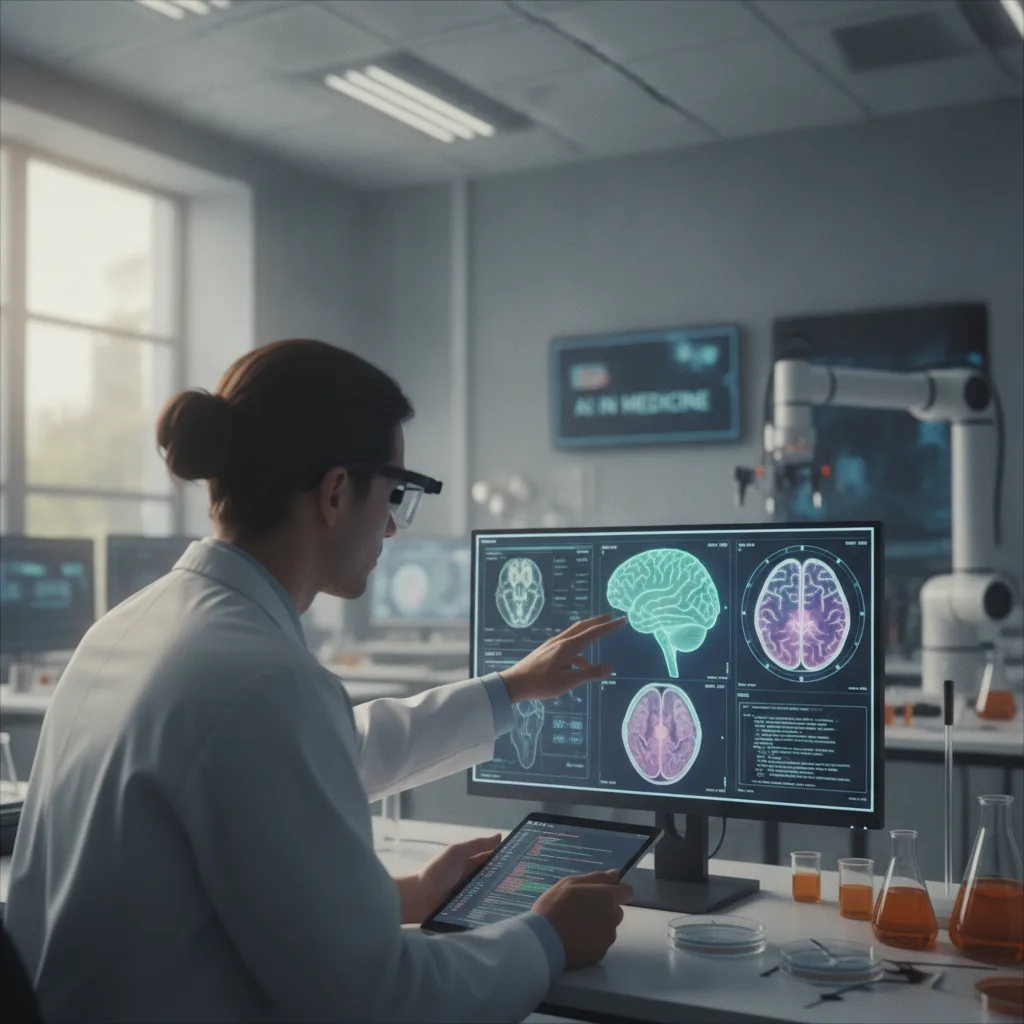

The demands on medical trainees are relentless, requiring not just encyclopedic knowledge but also the nuanced judgment that comes from years of clinical exposure. Artificial intelligence (AI) is now entering this demanding environment, promising to streamline learning and enhance diagnostic skills. The question for educators and clinicians is whether these tools genuinely augment human capability or risk creating a generation of doctors overly reliant on algorithms.
Medical education has long relied on a combination of didactic instruction, simulation, and direct patient contact. This traditional model, while effective, faces increasing pressures from expanding medical knowledge, evolving healthcare systems, and the sheer volume of information clinicians must master. AI offers a potential solution to some of these challenges, providing personalized learning experiences and immediate access to vast databases of medical information.
Students and residents are already encountering AI in various forms, from sophisticated diagnostic support systems to AI-powered virtual patients for case-based learning. These tools aim to supplement existing curricula, offering opportunities for repetitive practice in a low-stakes environment. The goal is to accelerate the acquisition of foundational knowledge and pattern recognition, freeing up valuable faculty time for more complex teaching scenarios.
AI's Role in Knowledge Acquisition and Diagnostic Support
AI algorithms excel at processing and synthesizing large datasets, a capability directly applicable to medical knowledge acquisition. For instance, AI-powered platforms can curate relevant articles, guidelines, and case studies tailored to a trainee's specific learning needs or a particular clinical scenario. This reduces the time spent sifting through irrelevant information, allowing for more focused study. But the sheer volume of information can also overwhelm, making the Oxford Handbook of Clinical Medicine (11th ed) a perennial favorite for its concise, curated approach.
In diagnostic support, AI tools can analyze patient data, including imaging, lab results, and electronic health records, to generate differential diagnoses or highlight potential red flags. This function can be particularly useful for trainees, providing a structured approach to complex cases and helping them avoid common diagnostic pitfalls. For example, AI models trained on millions of radiological images can identify subtle abnormalities that a less experienced eye might miss, offering a second opinion before a final interpretation. This does not replace the radiologist, but it can guide the trainee's attention.
These systems can also provide immediate feedback on diagnostic reasoning. A trainee might input a patient's symptoms and signs, and the AI could then prompt them with questions, suggest further investigations, or point out logical inconsistencies in their diagnostic pathway. This interactive learning mimics the Socratic method often employed by experienced supervisors, but with the advantage of being available on demand, outside of scheduled ward rounds or clinic sessions.
Simulating Clinical Encounters and Procedural Skills
Virtual reality (VR) and augmented reality (AR) platforms, often powered by AI, are transforming medical simulation. Trainees can practice complex procedures, from intubation to surgical techniques, in highly realistic virtual environments. AI can track their movements, provide real-time feedback on technique, and even simulate patient responses to interventions. This allows for repeated practice until proficiency is achieved, without risk to actual patients.
AI-driven virtual patients offer another avenue for clinical skill development. These digital avatars can present with a wide range of conditions, respond to questions, and even display emotional cues. Trainees can conduct virtual histories, perform virtual examinations, and formulate management plans. The AI assesses their performance, identifying gaps in communication skills, diagnostic acumen, or therapeutic knowledge. This is particularly valuable for developing communication skills, which are notoriously difficult to teach and assess in traditional settings.
Still, the fidelity of these simulations, while improving, cannot fully replicate the unpredictability and emotional weight of real patient interactions. A virtual patient may provide a consistent response, but a human patient will not. The subtle non-verbal cues, the unexpected questions, and the ethical dilemmas that arise in real clinical practice remain challenging to simulate fully, even with advanced AI.
The Challenge of Clinical Reasoning and Bias
While AI excels at pattern recognition and information retrieval, its impact on the development of higher-order clinical reasoning remains a subject of debate. Clinical reasoning involves more than just applying algorithms; it requires critical thinking, an understanding of context, empathy, and the ability to synthesize disparate pieces of information into a coherent narrative. Relying too heavily on AI for diagnostic suggestions could potentially stifle the development of these crucial cognitive skills in trainees.
Another significant concern is the potential for AI to perpetuate or even amplify existing biases. AI models are only as good as the data they are trained on. If the training data reflects historical biases in healthcare, such as underrepresentation of certain ethnic groups or socioeconomic classes, the AI's recommendations may inadvertently lead to inequitable care. Trainees must learn to critically evaluate AI outputs, understanding their limitations and potential biases, rather than accepting them uncritically.
The open-label nature of many AI applications in education is an obvious caveat. Trainees know they are interacting with an AI, which can alter their engagement and critical appraisal. The long-term effects on independent decision-making and the ability to function without AI support are not yet fully understood. This is not a simple matter of replacing a textbook with a search engine; it is about fundamentally altering the cognitive processes involved in becoming a doctor.
Integrating AI Thoughtfully into the Curriculum
Effective integration of AI into medical training requires a thoughtful, deliberate approach. It means teaching trainees not just how to use AI tools, but how to critically evaluate their outputs, understand their underlying mechanisms, and recognize their limitations. This includes understanding concepts like algorithmic bias, data provenance, and the ethical implications of AI in healthcare. Medical curricula must evolve to include AI literacy as a core competency.
Educators must design learning experiences that leverage AI's strengths while simultaneously fostering the uniquely human aspects of medicine. This could involve using AI to generate initial differential diagnoses, but then requiring trainees to justify or refute those diagnoses based on their own reasoning and additional patient information. The AI becomes a sparring partner, not a definitive answer provider.
Ultimately, the goal is to produce clinicians who are not only proficient in using AI but also capable of independent, compassionate, and ethically sound practice. The next generation of doctors will need to navigate a healthcare system increasingly augmented by AI, and their training must prepare them for this reality. The question is not whether AI will reshape medical education, but how we ensure it does so in a way that truly benefits both trainees and the patients they will serve.
The influx of AI into medical training presents a genuine dilemma for educators. We risk producing clinicians who are adept at data retrieval but less skilled in the art of clinical judgment, the kind that requires intuition, empathy, and the ability to manage uncertainty. The immediate access to answers, while efficient, may short-circuit the arduous but essential process of developing independent critical thinking.
For practicing GPs and specialists, this means future colleagues may arrive with different strengths and weaknesses. They might be quicker at recalling obscure facts or identifying subtle radiological findings, but potentially less comfortable with ambiguous presentations or the nuanced communication required for shared decision-making. Mentorship will need to adapt, focusing more on the 'why' behind AI's suggestions and less on rote memorization.
The industry, particularly developers of AI in healthcare, must recognize their responsibility in this educational shift. Tools designed for clinical support must be transparent about their limitations and potential biases, and not merely presented as infallible oracles. The ethical frameworks for AI development and deployment in education are still nascent, but they need to mature rapidly to prevent unintended consequences for patient care.
We must ensure that AI serves as a powerful assistant, not a replacement for the human intellect and compassion that define good medical practice. The ultimate goal remains the well-rounded, critically thinking clinician, capable of integrating technology without being defined by it.
- The Pivot AI is moving beyond administrative tasks to directly influence how medical students and residents acquire clinical knowledge and skills.
- The Data Early applications show AI can assist in diagnostic accuracy and information retrieval, but its impact on complex clinical reasoning is still being evaluated.
- The Action Educators must integrate AI tools thoughtfully, focusing on how they complement, rather than replace, traditional methods of developing critical thinking and patient interaction.
ART-2026-995
·07/26
Drafted with AI assistance, reviewed and approved by the editorial team. This publication is intended for healthcare professionals, researchers, and life science industry professionals. Content is provided for informational and educational purposes only and does not constitute medical advice.

Science writer covering the frontier between basic research and clinical practice. I am interested in the moment a mechanism becomes a therapy, and everything that can go wrong in between.
Cite This Article
Aldrich M, Lopes W. The real reason AI is reshaping clinical skill acquisition. The Life Science Feed. Published July 29, 2026. Updated July 29, 2026. Accessed July 29, 2026. https://thelifesciencefeed.com/healthcare-sys-and-biz/ai-in-healthcare/innovation/the-real-reason-ai-is-reshaping-clinical-skill-acquisition.
Editorial & AI Standards
All content is researched from peer-reviewed, open-access sources: published trial data, clinical guidelines, and regulatory filings. AI tools are used solely to structure and summarise that evidence; no AI-generated conclusions appear without editor verification against the primary source.
Every article is reviewed by a named editor before publication. Source citations are listed in the References section. This content does not represent the views of any pharmaceutical company, medical device manufacturer, or healthcare provider.
Licence & Rights
© 2026 The Life Science Feed. All rights reserved. Unless otherwise indicated, all content is the property of The Life Science Feed and may not be reproduced, distributed, or transmitted in any form or by any means without prior written permission.
Medical Disclaimer
The information provided on The Life Science Feed is for educational and informational purposes only. It is not intended as a substitute for professional medical advice, diagnosis, or treatment. Always seek the advice of your physician or other qualified healthcare provider regarding any medical condition or treatment decision. Never disregard professional medical advice or delay in seeking it because of something you have read on this website.