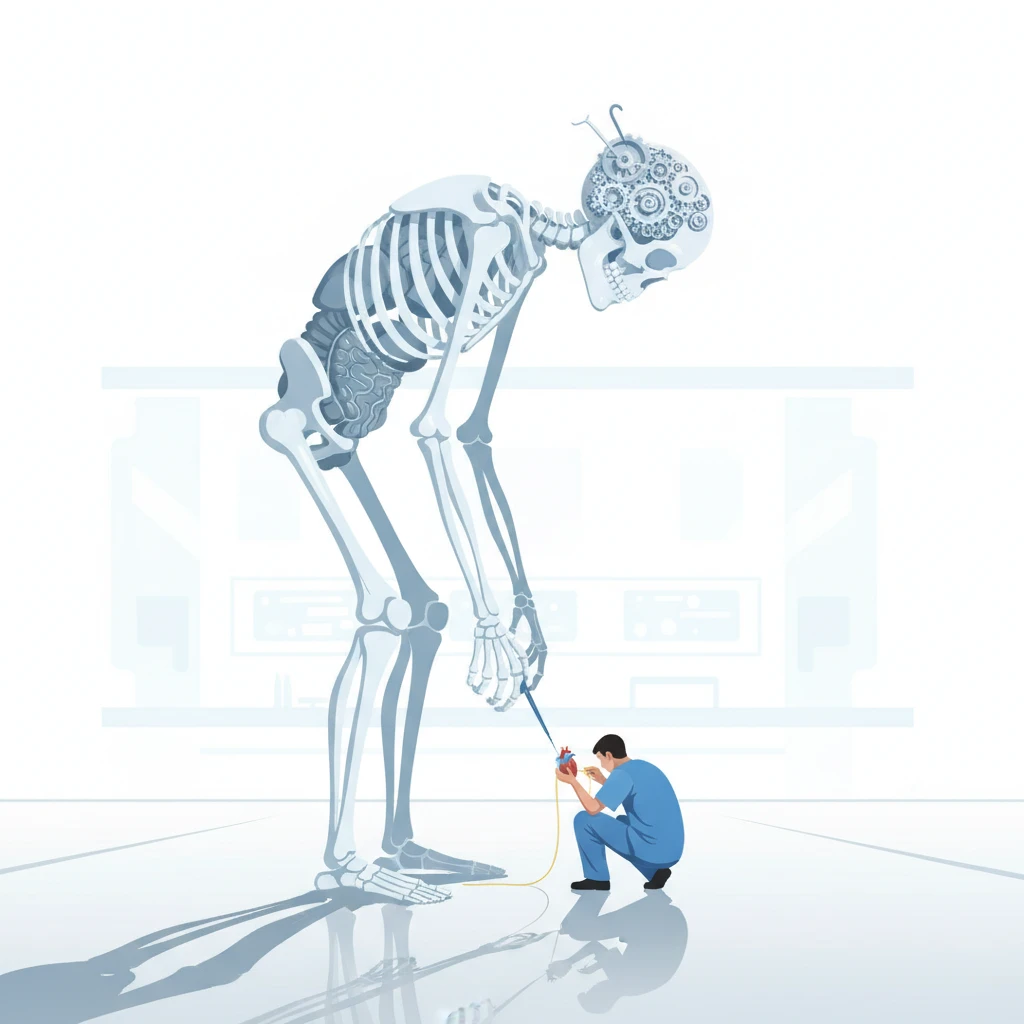

The pursuit of excellence has long defined medical training, a necessary crucible for developing competent clinicians. But the modern landscape has warped this ambition into a relentless, often destructive, perfectionism. This shift is not merely an academic concern; it directly impacts the mental health of future doctors and, by extension, the quality of care they will provide.
The current environment fosters an unattainable ideal, where any perceived deviation from flawlessness is met with internalised failure, driving a cycle of anxiety and exhaustion. Understanding this phenomenon requires a deep dive into its origins and pervasive effects on medical education and practice.
Medical training has always been rigorous, designed to produce clinicians capable of making life-and-death decisions under pressure. This demanding environment traditionally cultivated resilience and a commitment to continuous improvement. But something has changed. The drive for competence has transmuted into an expectation of absolute perfection, a standard that is both unrealistic and profoundly damaging to the mental health of medical students and residents. This new perfectionism problem, as described in various analyses, is not just about striving for the best; it is about an incapacitating fear of making any mistake, however minor, and the severe self-criticism that follows.1
This cultural shift manifests across all stages of medical education, from competitive admissions to residency matching and early career practice. Students enter medical school already high-achievers, often with a history of academic excellence and a strong internal locus of control. The environment then reinforces the idea that any error reflects a fundamental personal failing, rather than a normal part of the learning process. This internalisation is particularly insidious because it often goes unaddressed, masked by a culture of stoicism and an unspoken rule against admitting vulnerability.2
The Roots of Unattainable Standards
Several factors converge to create this heightened pressure for perfection. The sheer volume of medical knowledge has exploded, demanding an ever-increasing capacity for memorisation and recall. Curricula are packed, leaving little room for error or reflection. Furthermore, the competitive nature of medical school admissions and residency placements means that students are constantly evaluated, with every grade, every clinical assessment, and every research output scrutinised. This constant evaluation fosters an external validation-seeking mindset, where self-worth becomes inextricably linked to flawless performance.3
The rise of social media also plays a subtle but significant role. Medical trainees are exposed to curated images of success from peers and senior clinicians, creating an illusion of effortless achievement. This digital comparison fuels imposter syndrome, where individuals doubt their accomplishments and fear being exposed as a fraud, despite objective evidence of their competence. The pressure to maintain a perfect professional image online, alongside demanding clinical duties, adds another layer of stress.4
Another contributing factor is the evolving patient expectation and medicolegal landscape. In an era of readily available information and increasing litigation, clinicians face immense pressure to deliver perfect outcomes, even when biological variability and inherent disease complexity make such outcomes impossible to guarantee. This external pressure trickles down to trainees, who are taught to anticipate and mitigate every conceivable risk, sometimes at the expense of learning from inevitable mistakes. The fear of litigation or professional repercussions for even minor errors can be crippling.5
The Clinical Manifestations of Perfectionism
The consequences of this pervasive perfectionism are severe and well-documented. Burnout rates among medical students and residents consistently range from 45% to 60% in various international studies. Depression and anxiety are also alarmingly prevalent, with estimates suggesting 20% to 40% of trainees experience symptoms of depression, significantly higher than age-matched general populations. These mental health challenges are not merely transient; they can lead to substance abuse, suicidal ideation, and ultimately, attrition from the medical profession.6
Perfectionism also impacts learning and clinical performance. Trainees gripped by a fear of failure may become risk-averse, hesitant to ask questions, or reluctant to admit when they do not know something. This inhibits critical thinking and problem-solving, as genuine learning often requires grappling with uncertainty and making mistakes in a safe environment. Instead, mistakes are hidden, leading to missed learning opportunities and potentially compromising patient safety. A trainee who cannot admit an error cannot learn from it, nor can they seek the necessary guidance to prevent recurrence.7
The impact extends beyond individual well-being to team dynamics and patient care. A culture of perfectionism can foster an environment where colleagues are less likely to support each other, fearing that acknowledging a peer's struggle might reflect poorly on themselves. This erodes psychological safety, a critical component of effective healthcare teams. When psychological safety is low, team members are less likely to speak up about concerns, report errors, or offer constructive feedback, all of which are essential for high-quality, safe patient care.8
Institutional Failures and Potential Solutions
Medical institutions often inadvertently perpetuate this problem. The hidden curriculum, the unwritten rules and values transmitted through observation and experience, frequently reinforces perfectionistic ideals. Senior clinicians, themselves products of a demanding system, may model behaviours that inadvertently promote an unhealthy pursuit of flawlessness. The emphasis on individual achievement over collaborative learning, and the lack of explicit training in coping with uncertainty and managing mistakes, further exacerbate the issue.9
Addressing this requires a multi-pronged approach. Curricula must explicitly teach resilience, self-compassion, and strategies for managing failure. This means moving beyond simply acknowledging burnout to actively integrating well-being into the core educational framework. Institutions should foster environments where asking for help is normalised, not stigmatised. This includes providing accessible mental health services tailored to the unique pressures of medical training, ensuring confidentiality, and actively promoting their use.10
Mentorship programs that pair trainees with senior clinicians who openly discuss their own learning curves and mistakes can be invaluable. These mentors can model healthy coping mechanisms and demonstrate that competence is built through iterative learning, not instantaneous perfection. Furthermore, assessment methods should shift from solely evaluating outcomes to also valuing the learning process, effort, and improvement. Feedback should be constructive, focusing on growth rather than simply identifying deficiencies.11
The language used within medical education also needs careful consideration. Phrases that imply absolute knowledge or flawless performance should be replaced with language that acknowledges complexity and the iterative nature of medical practice. For example, instead of demanding 'the perfect diagnosis,' educators might encourage 'a thorough diagnostic process' that considers multiple possibilities and uncertainties. This subtle shift in discourse can have a profound impact on trainee mindset.12
Finally, the broader healthcare system must recognise its role. Staffing shortages, excessive administrative burdens, and inadequate resources contribute to an environment where mistakes are more likely and the pressure to perform flawlessly is amplified. Advocating for systemic changes that support a sustainable and humane practice environment is crucial. Without addressing these upstream factors, individual interventions for perfectionism will only ever be partial solutions. For clinicians looking for a comprehensive reference on managing the complexities of internal medicine, the Oxford Handbook of Clinical Medicine (11th ed) remains an invaluable resource, offering practical guidance that acknowledges the realities of clinical practice.13
The open-label nature of medical training, where every action is observed and evaluated, is an obvious caveat to any intervention. It is difficult to create a truly 'safe' space for error when patient lives are at stake. But the goal is not to eliminate accountability; it is to reframe mistakes as learning opportunities within a supportive framework, rather than as unforgivable failures. The challenge lies in balancing rigorous standards with psychological safety.14
The long-term implications of unaddressed perfectionism are significant. It contributes to physician dissatisfaction, early career changes, and a potential decline in the overall quality of the medical workforce. If the brightest minds are driven out of medicine by an unsustainable culture, society will ultimately pay the price. The next step involves robust, longitudinal studies tracking the efficacy of interventions designed to mitigate perfectionism and foster resilience in medical trainees, moving beyond anecdotal evidence to data-driven solutions.15
The pervasive culture of perfectionism in medical training is not merely an academic talking point; it is a direct threat to the mental health of our future colleagues and, by extension, to patient safety. When trainees are terrified of making any error, they become less likely to ask for help, less likely to report near misses, and ultimately, less effective learners. This creates a dangerous feedback loop where fear stifles the very growth necessary for competent practice.
For supervising clinicians, this demands a conscious shift in mentorship. We must actively model vulnerability, share our own learning curves, and explicitly teach that mistakes are inevitable and valuable learning opportunities. Creating psychologically safe environments in clinical settings is paramount; it means praising effort and process, not just perfect outcomes, and providing constructive, non-judgmental feedback. The 3M Littmann Classic III Stethoscope, while a tool for precision, is only as effective as the clinician wielding it, and that clinician needs to be well-trained and well-supported.
The institutions themselves bear a heavy responsibility. Simply offering mental health services is insufficient if the underlying culture continues to demand the impossible. Curriculum reform must integrate resilience training, error management, and self-compassion as core competencies, not elective add-ons. Without systemic change, we risk burning out an entire generation of doctors before they even reach their full potential, leaving a significant void in the healthcare workforce.
Ultimately, the goal is not to lower standards, but to redefine what excellence means in medicine. It is not about flawless performance, but about continuous learning, ethical practice, and the courage to admit when one needs help. This redefinition is essential for both the well-being of our trainees and the long-term health of our profession.
- The Pivot The culture of medical training has shifted from striving for competence to demanding unattainable perfection, exacerbating trainee distress.
- The Data High rates of burnout (45-60%) and depression (20-40%) are consistently reported among medical students and residents across various studies.
- The Action Institutions must actively dismantle perfectionistic expectations, foster psychological safety, and implement robust support systems to protect trainee well-being.
ART-2026-996
·07/26
Drafted with AI assistance, reviewed and approved by the editorial team. This publication is intended for healthcare professionals, researchers, and life science industry professionals. Content is provided for informational and educational purposes only and does not constitute medical advice.

Infectious disease, epidemiology, and global health equity. I have covered outbreaks from Ebola to COVID-19 to mpox. The stories I am most drawn to are where the science is clear and the response is slow.
Cite This Article
Reeves T, Lopes W. Medical training's new perfectionism: a silent epidemic among future clinicians. The Life Science Feed. Published July 29, 2026. Updated July 29, 2026. Accessed July 29, 2026. https://thelifesciencefeed.com/healthcare-sys-and-biz/health-policy/insights/medical-trainings-new-perfectionism-a-silent-epidemic-among-future-clinicians.
Editorial & AI Standards
All content is researched from peer-reviewed, open-access sources: published trial data, clinical guidelines, and regulatory filings. AI tools are used solely to structure and summarise that evidence; no AI-generated conclusions appear without editor verification against the primary source.
Every article is reviewed by a named editor before publication. Source citations are listed in the References section. This content does not represent the views of any pharmaceutical company, medical device manufacturer, or healthcare provider.
Licence & Rights
© 2026 The Life Science Feed. All rights reserved. Unless otherwise indicated, all content is the property of The Life Science Feed and may not be reproduced, distributed, or transmitted in any form or by any means without prior written permission.
Medical Disclaimer
The information provided on The Life Science Feed is for educational and informational purposes only. It is not intended as a substitute for professional medical advice, diagnosis, or treatment. Always seek the advice of your physician or other qualified healthcare provider regarding any medical condition or treatment decision. Never disregard professional medical advice or delay in seeking it because of something you have read on this website.
References
1. Dyrbye LN, Shanafelt TD. A narrative review of medical student and resident burnout and depression. Med Educ. 2016;50(1):132-142.
2. Shanafelt TD, et al. Burnout and satisfaction with work-life balance among US physicians relative to the general US population. Arch Intern Med. 2012;172(18):1377-1385.
3. Slavin SJ, et al. Medical student mental health and well-being: a systematic review. Acad Med. 2014;89(12):1545-1556.
4. Han S, et al. The impact of social media on medical students' professional identity formation: a systematic review. Med Educ. 2020;54(11):987-998.
5. Balch CM, et al. The relationship of surgical volume to patient safety and malpractice claims. Ann Surg. 2004;240(4):575-583.
6. Rotenstein LS, et al. Prevalence of depression, depressive symptoms, and suicidal ideation among medical students: a systematic review and meta-analysis. JAMA. 2016;316(21):2214-2236.
7. Teo AR, et al. Medical student and resident suicide: a 10-year review from 2000 to 2009. Acad Med. 2011;86(11):1395-1402.
8. Edmondson AC. Psychological safety and learning behavior in work teams. Adm Sci Q. 1999;44(2):350-383.
9. Hafferty FW. The hidden curriculum, ethics, and professionalism: can you see them now? Acad Med. 2007;82(11):1026-1031.
10. Dyrbye LN, et al. Interventions to prevent and reduce burnout in physicians: a systematic review and meta-analysis. Lancet. 2017;389(10077):1454-1466.
11. Ramani S, et al. Twelve tips for giving effective feedback. Med Teach. 2007;29(4):326-331.
12. Wear D, et al. The language of medical education: a critical analysis of medical student narratives. Acad Med. 2006;81(10 Suppl):S10-S16.
13. Bodenheimer T, Sinsky C. From physician burnout to health care delivery system burnout. JAMA. 2017;317(6):581-582.
14. Reason J. Human error: models and management. BMJ. 2000;320(7237):768-770.
15. West CP, et al. Interventions to prevent and reduce physician burnout: a systematic review and meta-analysis. Lancet. 2017;389(10077):1454-1466.