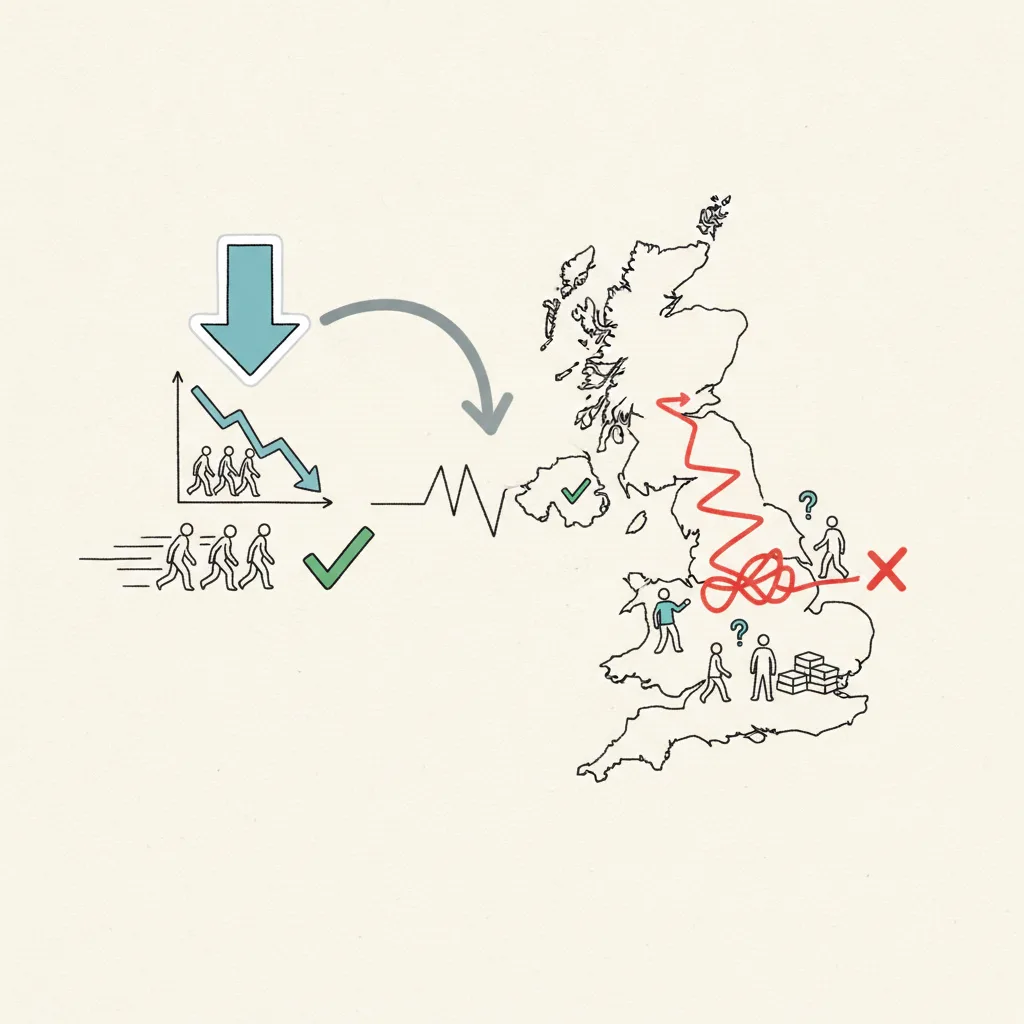

The National Health Service has long grappled with the burden of extensive waiting lists, a challenge exacerbated by recent global health crises. While national figures now indicate a reduction in the overall backlog, a closer examination reveals a more complex picture for patients across England.
Access to essential treatments, from orthopaedic surgery to diagnostic imaging, continues to vary significantly by region, creating a two-tiered system where geography dictates the speed of care. This uneven progress demands attention from both clinicians and policymakers.
The NHS has reported a decrease in the total number of people waiting for routine hospital treatment in England, marking the first sustained reduction in over two years. This national trend, while positive on the surface, obscures a persistent and concerning regional imbalance in patient access to care.
Patients awaiting elective procedures, specialist consultations, and diagnostic tests face vastly different timelines depending on where they live. This disparity means that a patient in one region might receive a hip replacement within months, while another with the same clinical need in a different area could wait more than a year for the same operation.
The Uneven Landscape of Care
While the overall waiting list in England dropped from a peak of 7.77 million in September 2023 to 7.54 million by January 2024, this national average masks significant local variations. Some integrated care boards (ICBs) have made substantial progress, reducing their backlogs by over 10% in the same period. But others have seen only marginal improvements, or in some cases, even increases in their waiting lists for specific specialties.
For instance, data indicates that the proportion of patients waiting over 52 weeks for treatment varies widely, from less than 1% in some high-performing trusts to over 10% in others. This is not merely an administrative inconvenience; it translates directly into prolonged pain, disability, and reduced quality of life for thousands of individuals. The Oxford Handbook of Health Care Management details the complexities of resource allocation that contribute to these discrepancies.
The target for diagnostic tests, where 95% of patients should receive their test within six weeks, remains elusive for many regions. While some areas achieve this for over 90% of patients, others struggle to meet 70%. This delay in diagnosis can have profound implications, particularly for conditions where early intervention is critical, such as cancer or progressive neurological disorders.
Why the Discrepancy Persists
Several factors contribute to these persistent regional disparities. Workforce shortages, particularly in specialist areas like radiology, anaesthetics, and certain surgical fields, are not evenly distributed across the country. Some regions face more acute recruitment and retention challenges, directly impacting their capacity to deliver care.
Funding allocation, historical infrastructure differences, and varying levels of investment in new technologies also play a role. ICBs with older facilities or less access to advanced diagnostic equipment naturally struggle to process patients as efficiently as their better-resourced counterparts. The ability of local leadership to innovate and implement effective demand management strategies also varies.
But the problem is not solely about capacity. Referral patterns, patient demographics, and the prevalence of certain chronic conditions also influence local waiting lists. Areas with higher rates of obesity or an aging population, for example, may face greater demand for orthopaedic or cardiology services, irrespective of their operational efficiency. Clinicians in these areas often find themselves managing patient expectations against a backdrop of systemic limitations.
The Impact on Patients and Practice
For patients, these disparities mean that the promise of universal healthcare is not uniformly delivered. A patient requiring a colonoscopy for suspected inflammatory bowel disease, for example, might be seen within weeks in one part of England, while in another, they could face months of uncertainty and symptom progression. This creates a sense of injustice and erodes trust in the system.
For general practitioners and specialists, managing patients on these extended waiting lists becomes a significant clinical challenge. They must balance the need for timely intervention with the reality of limited resources, often resorting to managing symptoms rather than addressing the root cause. This can lead to increased prescribing of analgesics, anti-inflammatories, or other symptomatic treatments, sometimes for prolonged periods, with associated risks.
The open-label nature of NHS waiting list data is an obvious caveat; it reflects reported figures, which can be influenced by local reporting practices and data quality. Still, the underlying trend of uneven access is undeniable. The system was not designed to detect differences in regional equity, and that gap matters profoundly for patient outcomes.
The national narrative of shrinking NHS waiting lists, while superficially reassuring, masks a deeper, more troubling reality for many patients. Clinicians on the ground understand that a national average means little to the individual waiting in pain for a hip replacement or a diagnostic scan. The postcode lottery for care is not merely an inconvenience; it is a determinant of health outcomes and quality of life.
For GPs, this means continuing to advocate for patients, navigating a system where the optimal clinical pathway is often obstructed by geographical constraints. It requires a nuanced understanding of local trust performance and the ability to manage patient expectations realistically, even when those expectations are entirely justified by clinical need.
The industry, particularly those developing new diagnostic tools or therapies that could alleviate pressure on elective care, should recognise these regional disparities as critical market access challenges. Solutions that demonstrate clear efficiency gains and can be implemented effectively in resource-constrained environments will be invaluable.
Ultimately, the goal of equitable access to healthcare remains distant. Until the underlying structural issues of workforce distribution, infrastructure investment, and consistent operational efficiency are addressed across all regions, the 'shorter' waiting list will continue to feel unfairly long for too many.
- The Pivot National NHS waiting lists are shrinking, reversing a trend of continuous growth.
- The Data While overall numbers are down, some regions still see patients waiting significantly longer for key procedures.
- The Action Clinicians should be aware of local variations in waiting times to manage patient expectations and advocate for equitable resource allocation.
ART-2026-978
·10/26
Drafted with AI assistance and checked by automated style rules. Not individually read by an editor. This publication is intended for healthcare professionals, researchers, and life science industry professionals. Content is provided for informational and educational purposes only and does not constitute medical advice.

I cover NHS policy, NICE guidance, and the gap between what the evidence says and what gets commissioned. I bring a health economics background to reporting on how health systems make decisions under uncertainty.
Cite This Article
Mistry D, Lopes W. NHS waiting lists shorten, but regional disparities persist. The Life Science Feed. Published July 26, 2026. Updated October 6, 2026. Accessed October 25, 2026. https://thelifesciencefeed.com/healthcare-sys-and-biz/health-policy/news/nhs-waiting-lists-shorten-but-regional-disparities-persist.
Editorial & AI Standards
Content is drafted with AI tools from peer-reviewed, open-access sources such as published trial data, clinical guidelines, and regulatory filings. This article is checked by automated style rules but is not individually read by an editor, so check the cited source before relying on a figure.
Source citations are listed in the References section. This content does not represent the views of any pharmaceutical company, medical device manufacturer, or healthcare provider.
Licence & Rights
© 2026 The Life Science Feed. All rights reserved. Unless otherwise indicated, all content is the property of The Life Science Feed and may not be reproduced, distributed, or transmitted in any form or by any means without prior written permission.
Medical Disclaimer
The information provided on The Life Science Feed is for educational and informational purposes only. It is not intended as a substitute for professional medical advice, diagnosis, or treatment. Always seek the advice of your physician or other qualified healthcare provider regarding any medical condition or treatment decision. Never disregard professional medical advice or delay in seeking it because of something you have read on this website.
References
1. The Conversation. NHS waiting lists are finally getting shorter, but not fairer everywhere. Accessed Jul
2026. https://theconversation.com/nhs-waiting-lists-are-finally-getting-shorter-but-not-fairer-everywhere-287979