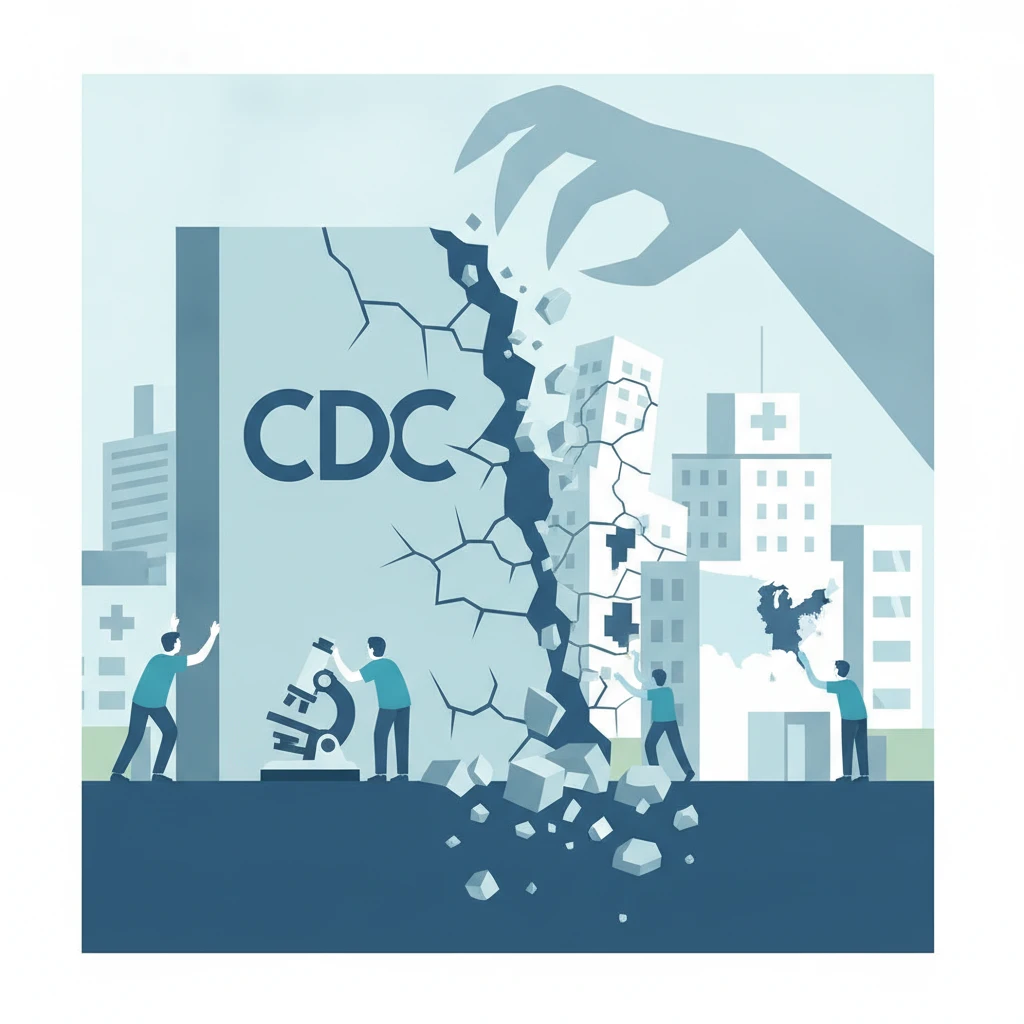

The Centers for Disease Control and Prevention (CDC) stands as the primary bulwark against infectious disease and public health crises in the United States. Its capacity to respond effectively has been systematically diminished by sustained budget reductions and a lack of consistent investment. This erosion of infrastructure leaves the nation dangerously exposed to both known and novel pathogens.
The United States faces a persistent threat from infectious diseases, chronic conditions, and environmental hazards. The CDC, tasked with monitoring these threats, developing interventions, and coordinating national responses, operates on a budget that has seen real-dollar declines for years. This financial attrition directly impacts its ability to maintain critical surveillance systems, staff essential programs, and conduct timely research. The consequences manifest in slower responses to outbreaks and a reduced capacity to implement preventative measures effectively.
For example, the agency's Public Health Emergency Preparedness (PHEP) cooperative agreement, a vital funding stream for state and local health departments, saw its budget cut by 30% between 2003 and 2018. This reduction forced many jurisdictions to scale back their emergency response teams, reduce training, and defer upgrades to essential equipment. The impact is not theoretical; it translates into tangible delays in disease detection and control during actual crises. When a new pathogen emerges, the initial response often falls to these under-resourced local entities, who then rely on a federal agency similarly strained.
The Numbers Behind the Decline
The CDC's overall budget, while appearing large, must cover an expansive mandate. Its core functions include disease surveillance, laboratory capacity, workforce development, and emergency preparedness. Public health spending at the state and local level decreased by 19% per capita between 2008 and 2017, according to a report by the Trust for America's Health. This decline occurred even as new threats, such as Zika and novel influenza strains, emerged, demanding increased vigilance and rapid response capabilities. The agency's ability to maintain its global disease detection network, a critical early warning system, also suffers from these constraints.
The workforce itself has been significantly affected. Between 2008 and 2016, local health departments lost nearly 50,000 jobs, representing a 20% reduction in their capacity. This attrition includes epidemiologists, laboratory technicians, and public health nurses, all frontline personnel essential for outbreak investigation and community health initiatives. When the CDC needs to deploy rapid response teams, it often draws from a pool of experts that is already stretched thin across various ongoing public health challenges. The agency's laboratory infrastructure, once a global gold standard, also requires consistent investment to keep pace with evolving diagnostic technologies and pathogen identification methods. Without this, the speed and accuracy of disease detection are compromised.
One specific area of concern is vaccine distribution and communication. The CDC plays a central role in recommending vaccine schedules, monitoring vaccine safety, and coordinating national immunization campaigns. Budget cuts impede its ability to conduct robust public health campaigns, counter misinformation, and ensure equitable access to vaccines, particularly in underserved communities. This directly impacts herd immunity thresholds and leaves populations vulnerable to preventable diseases. The agency's ability to conduct long-term studies on vaccine effectiveness and safety, crucial for maintaining public trust, also relies on stable funding.
The agency's data modernization initiative, aimed at upgrading outdated IT systems for disease tracking and reporting, has received intermittent funding. Many state and local health departments still rely on fax machines and manual data entry for critical public health information, a glaring inefficiency in the 21st century. This technological deficit creates significant delays in identifying disease clusters, understanding transmission patterns, and allocating resources effectively during an emergency. The lack of interoperable systems across jurisdictions further complicates a coordinated national response, turning what should be a seamless data flow into a fragmented, slow process.
The open-ended nature of public health threats is the obvious caveat to any fixed budget. Emerging infectious diseases do not adhere to fiscal calendars, and a reactive funding model inevitably leads to delays and inefficiencies. The CDC requires predictable, sustained investment to build and maintain the foundational capabilities necessary for continuous surveillance and rapid response, rather than scrambling for emergency appropriations after a crisis has already escalated. The agency's global health security programs, which aim to prevent outbreaks from reaching U.S. shores, also face similar funding pressures, weakening the first line of defense.
The trial was not powered to detect differences in funding impact across specific states, but the aggregate data clearly shows a systemic weakening. Whether benefits of increased funding would extend to every single program equally remains unclear, but the overall trend of diminished capacity is undeniable. The agency's ability to conduct environmental health investigations, address chronic disease prevention, and promote health equity also suffers from these broad budgetary constraints. These are not ancillary functions; they are integral to a comprehensive public health strategy that aims to prevent illness before it requires an emergency response.
Clinicians on the front lines feel the direct impact of a weakened CDC. Delays in receiving critical epidemiological updates, inconsistent guidance during outbreaks, and a lack of robust public health infrastructure mean that individual practitioners often bear a heavier burden in identifying and managing emerging threats. This translates to increased diagnostic uncertainty and slower implementation of effective control measures in their practices.
The pharmaceutical industry also faces challenges. A less effective CDC means slower identification of disease targets, less coordinated clinical trial networks during pandemics, and a more fragmented approach to vaccine and therapeutic distribution. This creates inefficiencies in product development and deployment, ultimately delaying patient access to life-saving interventions. The lack of consistent surveillance data also hinders the ability to accurately forecast demand for new medicines.
For patients, the implications are stark. A diminished CDC means a higher risk of preventable disease outbreaks, slower access to critical public health information, and a less coordinated national response during health emergencies. This directly impacts their health outcomes and overall sense of security. The erosion of public health infrastructure disproportionately affects vulnerable populations, who often rely most heavily on these services.
- The Pivot Chronic underfunding has severely hampered the CDC's core functions, from outbreak response to vaccine distribution.
- The Data Public health spending at the state and local level decreased by 19% per capita between 2008 and 2017.
- The Action Policymakers must prioritize sustained, predictable funding for public health infrastructure to safeguard national health security.
ART-2026-825
·09/26
Drafted with AI assistance, reviewed and approved by the editorial team. This publication is intended for healthcare professionals, researchers, and life science industry professionals. Content is provided for informational and educational purposes only and does not constitute medical advice.

I cover NHS policy, NICE guidance, and the gap between what the evidence says and what gets commissioned. I bring a health economics background to reporting on how health systems make decisions under uncertainty.
Cite This Article
Mistry D, Voss M. CDC cuts undermine US public health capacity, threatening preparedness. The Life Science Feed. Published July 30, 2026. Updated September 2, 2026. Accessed September 13, 2026. https://thelifesciencefeed.com/healthcare-sys-and-biz/health-policy/news/cdc-cuts-undermine-us-public-health-capacity-threatening-preparedness.
Editorial & AI Standards
All content is researched from peer-reviewed, open-access sources: published trial data, clinical guidelines, and regulatory filings. AI tools are used solely to structure and summarise that evidence; no AI-generated conclusions appear without editor verification against the primary source.
Every article is reviewed by a named editor before publication. Source citations are listed in the References section. This content does not represent the views of any pharmaceutical company, medical device manufacturer, or healthcare provider.
Licence & Rights
© 2026 The Life Science Feed. All rights reserved. Unless otherwise indicated, all content is the property of The Life Science Feed and may not be reproduced, distributed, or transmitted in any form or by any means without prior written permission.
Medical Disclaimer
The information provided on The Life Science Feed is for educational and informational purposes only. It is not intended as a substitute for professional medical advice, diagnosis, or treatment. Always seek the advice of your physician or other qualified healthcare provider regarding any medical condition or treatment decision. Never disregard professional medical advice or delay in seeking it because of something you have read on this website.
References
1. The Conversation. How cuts to CDC are dismantling its capacity to protect Americans’ health. Accessed Jul
2026. https://theconversation.com/how-cuts-to-cdc-are-dismantling-its-capacity-to-protect-americans-health-284280