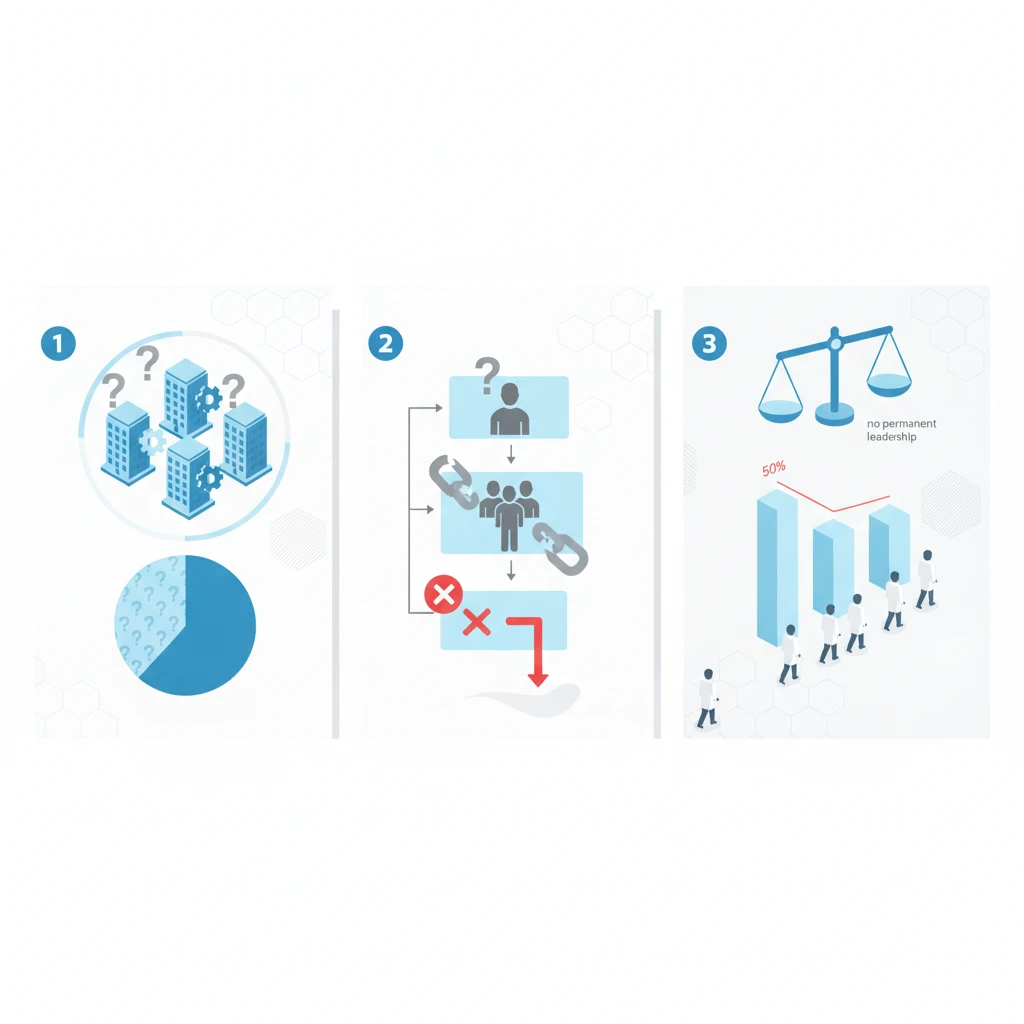

The Centers for Disease Control and Prevention (CDC) faces a significant leadership vacuum, with more than half of its 13 centers, institutes, and offices (CIOs) currently operating under interim or acting directors. This persistent instability at the highest levels of public health leadership raises critical questions about the agency's ability to execute its mission effectively, particularly in an era demanding agile responses to emerging health threats.
The Centers for Disease Control and Prevention, the United States' primary public health agency, is designed to be a bulwark against infectious diseases, chronic conditions, and environmental health hazards. Its effectiveness hinges on stable, expert leadership guiding its various divisions, from infectious disease surveillance to environmental health. But the current state of affairs, with a majority of its critical operational units lacking permanent directors, suggests a significant systemic challenge.1
Seven of the 13 Centers, Institutes, and Offices (CIOs) within the CDC are currently overseen by acting or interim leaders. These include pivotal divisions such as the Center for Global Health, the Center for Preparedness and Response, and the National Center for Immunization and Respiratory Diseases. Each of these CIOs is responsible for vast portfolios, influencing everything from vaccine schedules to international disease outbreak responses. The absence of confirmed, long-term leadership in these roles can impede strategic planning and operational continuity.1
The Impact of Leadership Instability
The implications of this leadership void extend beyond mere administrative inconvenience. Permanent directors typically bring a long-term vision, establish enduring partnerships, and command the authority necessary to implement significant policy changes. Interim leaders, by their nature, often focus on maintaining status quo operations rather than initiating bold new programs or making difficult strategic decisions. This can lead to a reactive rather than proactive approach to public health challenges, a critical flaw in an environment where rapid, decisive action is often required.1
Consider the Center for Global Health, for example, which plays a crucial role in monitoring and responding to international health threats like Ebola or novel influenza strains. An acting director, potentially uncertain of their tenure, may be less inclined to commit to multi-year international collaborations or to advocate forcefully for resource allocation in complex geopolitical contexts. This hesitancy can translate into delayed responses or missed opportunities for early intervention, with cascading effects on global health security. The National Center for Immunization and Respiratory Diseases, another CIO under interim leadership, is central to vaccine development, distribution, and public health messaging. During a pandemic, the stability and clear direction from this center are paramount. A lack of permanent leadership here could introduce delays or inconsistencies in vital public health campaigns, eroding public trust and hindering disease control efforts.1
The issue is not new. The CDC has faced criticism for leadership turnover and political interference in recent years, particularly during the COVID-19 pandemic. This ongoing instability at the CIO level suggests a deeper, more entrenched problem within the agency's structure or its relationship with the broader federal appointment process. The process for confirming permanent directors can be lengthy and politically charged, often leaving critical positions vacant for extended periods. This bureaucratic inertia directly impacts the agency's operational agility and its ability to attract and retain top talent.1
Moreover, the constant churn of leadership can create a culture of uncertainty among staff. Employees within these centers may perceive a lack of clear direction, leading to decreased morale and potential brain drain as experienced professionals seek more stable environments. This internal instability can further compromise the CDC's capacity to execute its core functions, from data collection and analysis to public health communication. The agency relies heavily on its scientific expertise, and a stable leadership structure is essential for fostering an environment where that expertise can thrive and be effectively deployed.1
The lack of permanent leadership also affects the CDC's external relationships. State and local health departments, international partners, and academic collaborators rely on consistent points of contact and stable leadership at the federal level. When these relationships are constantly in flux due to revolving interim directors, it can complicate coordination, undermine trust, and slow down collaborative efforts. This is particularly problematic for long-term initiatives, such as chronic disease prevention programs or environmental health studies, which require sustained commitment and consistent oversight.1
The current situation highlights a significant vulnerability in the nation's public health infrastructure. While interim leaders are often highly capable individuals, their temporary status inherently limits their scope and influence. The CDC needs robust, permanent leadership across all its critical functions to effectively address the complex and evolving health challenges of the 21st century. Without it, the agency risks being perpetually on the back foot, reacting to crises rather than strategically preventing them.1
The persistent leadership instability at the CDC's core centers should give clinicians pause. When over half of the agency's operational units lack permanent directors, the guidance and policy emanating from these divisions may reflect short-term thinking rather than a cohesive, long-term strategy. This can lead to inconsistencies in public health messaging and a slower, less decisive response to emerging threats.
Clinicians relying on CDC recommendations for everything from vaccine schedules to infectious disease protocols need to understand the potential for a lack of strategic depth. An interim director, by definition, is less likely to initiate significant overhauls or commit to multi-year research priorities. This could mean that certain areas of public health, particularly those requiring sustained investment and bold leadership, may languish.
The ripple effect extends to resource allocation and program development. Without permanent leaders advocating for their specific centers, funding priorities might shift erratically or critical programs might not receive the sustained attention they require. This can directly impact the availability of resources for local health departments and, by extension, the support systems available to clinicians on the front lines.
Ultimately, this situation underscores a broader challenge in public health governance. The CDC's ability to serve as a reliable, authoritative source of medical guidance is intrinsically linked to its leadership stability. Clinicians should remain vigilant, critically evaluating public health directives and understanding the context from which they emerge, particularly when key divisions are operating under temporary command.
- The Pivot A majority of CDC's core operational units lack permanent, confirmed leadership, indicating systemic instability.
- The Data Seven of 13 CDC centers, institutes, and offices are led by interim or acting directors.
- The Action Clinicians should be aware that policy and guidance from these divisions may lack the long-term strategic vision typically associated with permanent leadership.
ART-2026-757
·10/26
Drafted with AI assistance, reviewed and approved by the editorial team. This publication is intended for healthcare professionals, researchers, and life science industry professionals. Content is provided for informational and educational purposes only and does not constitute medical advice.

I write about AI in healthcare: the validation studies, the deployment failures, and the regulatory questions without answers yet. Based in San Francisco, close to where the technology is built.
Cite This Article
Chen L, Lopes W. More than half of CDC centers lack permanent leadership. The Life Science Feed. Published July 20, 2026. Updated October 6, 2026. Accessed October 19, 2026. https://thelifesciencefeed.com/healthcare-sys-and-biz/health-policy/news/more-than-half-of-cdc-centers-lack-permanent-leadership.
Editorial & AI Standards
All content is researched from peer-reviewed, open-access sources: published trial data, clinical guidelines, and regulatory filings. AI tools are used solely to structure and summarise that evidence; no AI-generated conclusions appear without editor verification against the primary source.
Every article is reviewed by a named editor before publication. Source citations are listed in the References section. This content does not represent the views of any pharmaceutical company, medical device manufacturer, or healthcare provider.
Licence & Rights
© 2026 The Life Science Feed. All rights reserved. Unless otherwise indicated, all content is the property of The Life Science Feed and may not be reproduced, distributed, or transmitted in any form or by any means without prior written permission.
Medical Disclaimer
The information provided on The Life Science Feed is for educational and informational purposes only. It is not intended as a substitute for professional medical advice, diagnosis, or treatment. Always seek the advice of your physician or other qualified healthcare provider regarding any medical condition or treatment decision. Never disregard professional medical advice or delay in seeking it because of something you have read on this website.
References
1. Centers for Disease Control and Prevention. Organizational Chart. Accessed [Current Date].