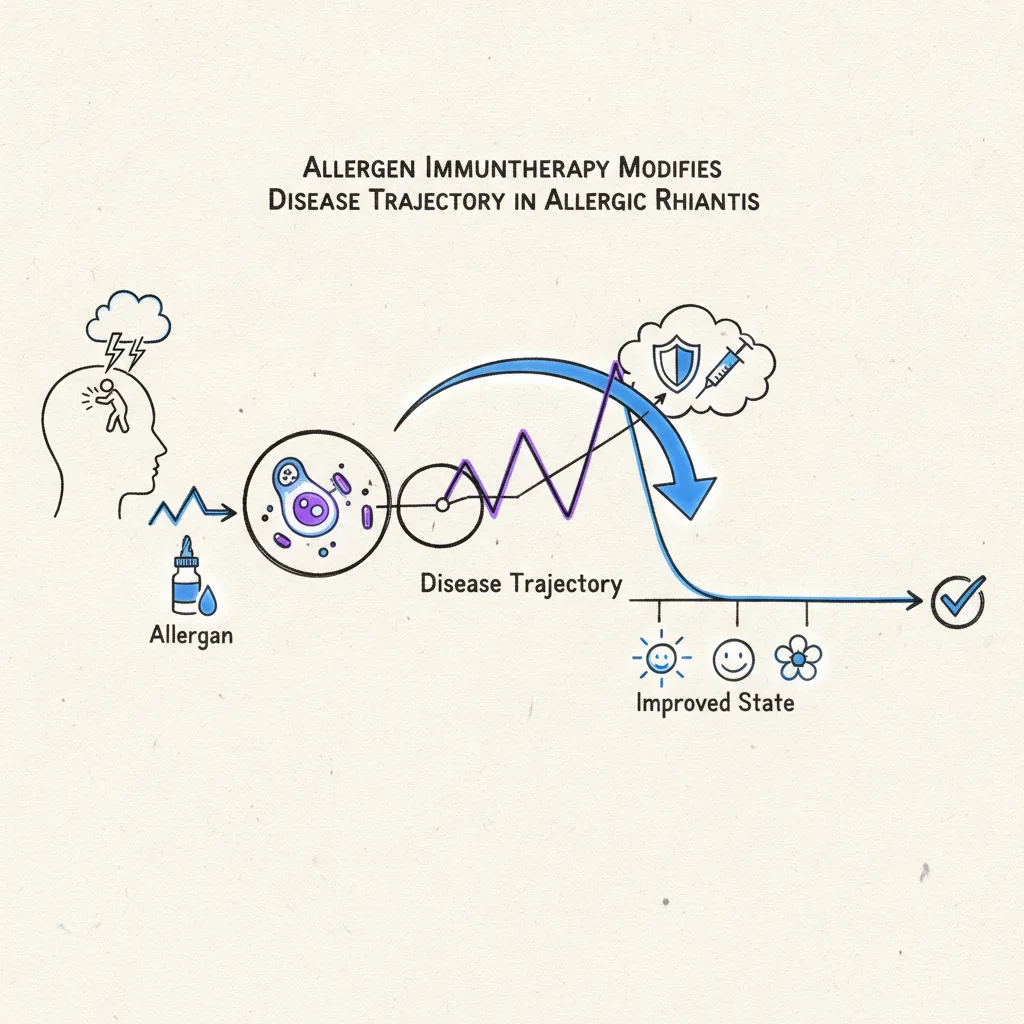

General practitioners frequently encounter patients presenting with allergic rhinitis, a condition impacting approximately 10-30% of the global population. The clinical dilemma often involves managing symptomatic relief versus addressing the underlying immunological dysregulation. While pharmacotherapy, such as antihistamines and corticosteroids, provides symptomatic control, allergen immunotherapy (AIT) offers a disease-modifying approach by inducing immune tolerance to specific allergens.
Allergic rhinitis, a Type I hypersensitivity reaction, is characterised by inflammation of the nasal mucosa following exposure to specific allergens. Common allergens include pollens, house dust mites, animal dander, and moulds. The pathophysiology involves sensitisation, where initial exposure leads to the production of allergen-specific IgE antibodies. These IgE antibodies bind to mast cells and basophils. Subsequent re-exposure to the allergen triggers cross-linking of IgE on these cells, leading to degranulation and the release of inflammatory mediators such as histamine, leukotrienes, and prostaglandins. This cascade results in symptoms including sneezing, rhinorrhoea, nasal congestion, and pruritus.1
The clinical presentation of allergic rhinitis can range from mild, intermittent symptoms to severe, persistent manifestations that significantly impair quality of life. Diagnosis typically relies on a detailed patient history, physical examination, and objective testing such as skin prick tests or specific IgE blood tests to identify the causative allergens.1
Current management strategies for allergic rhinitis primarily focus on allergen avoidance and pharmacotherapy. Allergen avoidance, while fundamental, is often challenging to implement effectively in daily life. Pharmacological interventions include oral and intranasal antihistamines, intranasal corticosteroids, leukotriene receptor antagonists, and decongestants. Intranasal corticosteroids are considered the most effective monotherapy for moderate to severe allergic rhinitis due to their broad anti-inflammatory effects. However, these treatments primarily provide symptomatic relief and do not alter the underlying immune response or prevent disease progression.2
A significant concern in allergic rhinitis management is the 'allergic march,' a natural progression where allergic rhinitis often precedes or coexists with asthma. Approximately 20-38% of patients with allergic rhinitis develop asthma, highlighting the need for interventions that can modify this disease trajectory.3
Allergen Immunotherapy: A Disease-Modifying Approach
Allergen immunotherapy (AIT), also known as desensitisation, is a treatment strategy that aims to induce long-term immunological tolerance to specific allergens. It involves the administration of gradually increasing doses of the offending allergen extract, either subcutaneously (SCIT) or sublingually (SLIT). The goal is to shift the immune response from a Th2-mediated allergic reaction towards a Th1-mediated response, thereby reducing allergic symptoms and medication requirements.4
The mechanisms of action of AIT are complex and involve multiple immunological changes. Initially, AIT leads to a transient increase in allergen-specific IgE, followed by a sustained increase in allergen-specific IgG4. IgG4 acts as a 'blocking antibody,' competing with IgE for allergen binding and preventing IgE-mediated mast cell degranulation. AIT also induces a shift in T-cell responses, promoting the generation of regulatory T cells (Tregs). These Tregs produce immunosuppressive cytokines such as IL-10 and TGF-β, which suppress Th2 cell responses and inhibit IgE production. Furthermore, AIT has been shown to reduce the number and activity of mast cells, eosinophils, and basophils in target organs, contributing to reduced inflammation.5
Clinical trials have consistently demonstrated the efficacy of AIT in reducing symptoms of allergic rhinitis and conjunctivitis, as well as decreasing the need for symptomatic medication. A meta-analysis of 51 randomised controlled trials involving 5,131 patients with allergic rhinitis reported that AIT significantly reduced symptom scores (standardised mean difference [SMD] -0.63; 95% CI -0.76 to -0.50) and medication scores (SMD -0.58; 95% CI -0.70 to -0.46) compared to placebo.6 The benefits of AIT are often sustained for several years after the completion of a typical 3-5 year treatment course.7
Beyond symptom control, a critical aspect of AIT is its potential to prevent the development of asthma in patients with allergic rhinitis. A landmark study, the Preventive Allergy Treatment (PAT) study, followed children with allergic rhinitis for 10 years after 3 years of SCIT. The study demonstrated that SCIT significantly reduced the risk of developing asthma (HR 0.36; 95% CI 0.17-0.74; p=0.006) compared to the control group.8 Similar findings have been reported for SLIT, with a meta-analysis showing a significant reduction in new asthma diagnoses in children treated with SLIT for allergic rhinitis (odds ratio 0.66; 95% CI 0.49-0.89).9 This asthma-preventive effect underscores the disease-modifying potential of AIT, offering a long-term benefit beyond immediate symptom management.9
The choice between SCIT and SLIT depends on various factors, including patient preference, allergen type, and safety profile. SCIT is administered by a healthcare professional in a clinical setting, typically weekly during the build-up phase and monthly during the maintenance phase. While highly effective, SCIT carries a risk of systemic allergic reactions, including anaphylaxis, necessitating a post-injection observation period. SLIT involves daily self-administration of allergen extract under the tongue, offering convenience and a generally favourable safety profile with fewer systemic reactions. Local reactions, such as oral pruritus or swelling, are common but usually mild and transient.10
Patient selection is crucial for optimising AIT outcomes. AIT is generally recommended for patients with moderate to severe allergic rhinitis who have a clear IgE-mediated sensitisation to specific allergens, and whose symptoms are not adequately controlled by conventional pharmacotherapy or who experience unacceptable side effects from these treatments. It is particularly indicated for patients with a high risk of developing asthma or those with coexisting allergic asthma. Contraindications include uncontrolled asthma, severe immunodeficiency, active malignancy, and certain cardiovascular conditions.11
The duration of AIT is typically 3 to 5 years to achieve sustained immunological tolerance and long-term clinical benefits. Adherence to the treatment regimen is paramount for success, and patient education regarding the treatment process, potential side effects, and expected outcomes is essential.12
While AIT represents a significant advancement in the management of allergic rhinitis and the prevention of asthma, it is not without limitations. The long treatment duration and the potential for adverse reactions, particularly with SCIT, can impact patient adherence. The cost of AIT can also be a barrier for some patients. Furthermore, AIT is allergen-specific, meaning it is effective only against the allergens included in the treatment. Patients with polysensitisation may require treatment with multiple allergen extracts, which can increase complexity and cost.13
Ongoing research is focused on developing novel AIT approaches, including modified allergen extracts (allergoids), recombinant allergens, and adjuvant therapies, to improve efficacy, reduce treatment duration, and enhance safety. The development of diagnostic tools to better predict AIT responders and non-responders is also an active area of investigation. These advancements aim to broaden the applicability and improve the patient experience with AIT, solidifying its role as a cornerstone in the management of allergic diseases.14
The evidence supporting allergen immunotherapy (AIT) as a disease-modifying treatment for allergic rhinitis, particularly its role in preventing asthma development, warrants a re-evaluation of its position in clinical practice. For too long, allergic rhinitis has been managed primarily with symptomatic relief, relegating AIT to a niche for refractory cases. General practitioners should consider AIT earlier in the treatment algorithm for patients with moderate to severe allergic rhinitis, especially those with a clear allergic sensitisation and risk factors for asthma progression. This proactive approach could significantly alter the long-term health trajectory for patients, reducing the burden of chronic respiratory disease.
From an industry perspective, the sustained efficacy and disease-modifying potential of AIT present a compelling case for increased investment in research and development. While current AIT formulations are effective, innovations that reduce treatment duration, enhance safety, and improve patient adherence would broaden market access and acceptance. The development of more precise diagnostic tools to identify optimal AIT candidates would also streamline patient pathways and improve cost-effectiveness, potentially influencing reimbursement policies and guideline recommendations from bodies like NICE or the European Academy of Allergy and Clinical Immunology (EAACI).
For patients, the prospect of a treatment that not only alleviates current symptoms but also prevents the onset of a more severe condition like asthma is profoundly impactful. It shifts the narrative from lifelong symptom management to a potential long-term resolution or significant amelioration of their allergic disease. While the commitment to a multi-year treatment regimen can be daunting, the long-term benefits, including reduced medication dependence and improved quality of life, often outweigh the initial inconvenience. Clinicians must ensure comprehensive patient education on the benefits, risks, and commitment required for AIT, empowering patients to make informed decisions about their care.
- The Pivot Allergen immunotherapy (AIT) moves beyond symptomatic relief, offering disease modification by inducing immune tolerance.
- The Data AIT has been shown to reduce allergic rhinitis symptom scores and prevent the development of asthma in susceptible individuals.
- The Action Clinicians should consider AIT for patients with moderate to severe allergic rhinitis unresponsive to conventional pharmacotherapy, particularly those at risk of asthma progression.
ART-2026-571
06/26
Cite This Article
Team TLSFE. Allergen immunotherapy modifies disease trajectory in allergic rhinitis. The Life Science Feed. Updated June 28, 2026. Accessed June 28, 2026. https://thelifesciencefeed.com/immunology/hypersensitivity/insights/allergen-immunotherapy-modifies-disease-trajectory-in-allergic-rhinitis.
Editorial & AI Standards
All content is researched from peer-reviewed, open-access sources — published trial data, clinical guidelines, and regulatory filings. AI tools are used solely to structure and summarise that evidence; no AI-generated conclusions appear without editor verification against the primary source.
Every article is reviewed by a named editor before publication. Source citations are listed in the References section. This content does not represent the views of any pharmaceutical company, medical device manufacturer, or healthcare provider.
Licence & Rights
© 2026 The Life Science Feed. All rights reserved. Unless otherwise indicated, all content is the property of The Life Science Feed and may not be reproduced, distributed, or transmitted in any form or by any means without prior written permission.
Medical Disclaimer
The information provided on The Life Science Feed is for educational and informational purposes only. It is not intended as a substitute for professional medical advice, diagnosis, or treatment. Always seek the advice of your physician or other qualified healthcare provider regarding any medical condition or treatment decision. Never disregard professional medical advice or delay in seeking it because of something you have read on this website.
References
1. Bousquet J, Khaltaev N, Cruz AA, et al. Allergic Rhinitis and its Impact on Asthma (ARIA) 2008 update (in collaboration with the World Health Organization, GA(2)LEN and AllerGen). Allergy. 2008;63 Suppl 86:8-160.
2. Seidman MD, Gurgel RK, Lin SY, et al. Clinical Practice Guideline: Allergic Rhinitis. Otolaryngol Head Neck Surg. 2015;152(1 Suppl):S1-S42.
3. Settipane RA, Hagy GW, Settipane GA. Long-term risk factors for developing asthma and allergic rhinitis: a 23-year follow-up study of college students. Allergy Proc. 1994;15(1):21-25.
4. Pfaar O, Agache I, de Blay F, et al. Perspectives in allergen immunotherapy: 2019 and beyond. Allergy. 2019;74 Suppl 108:5-25.
5. Akdis M, Akdis CA. Mechanisms of allergen-specific immunotherapy. J Allergy Clin Immunol. 2007;119(4):780-789.
6. Calderon MA, Alves B, Jacobson M, et al. Allergen immunotherapy for allergic rhinitis: a systematic review and meta-analysis. J Allergy Clin Immunol. 2011;127(1):30-38.e1-3.
7. Durham SR, Emminger W, Kapp A, et al. Long-term efficacy and safety of specific immunotherapy with an SQ grass allergen tablet for seasonal allergic rhinitis. J Allergy Clin Immunol. 2008;121(3):763-769.e1.
8. Jacobsen L, Niggemann B, Dreborg S, et al. Specific immunotherapy has long-term preventive effect of seasonal and perennial asthma: 10-year follow-up on the PAT study. Allergy. 2007;62(8):943-948.
9. Kristiansen M, Østergaard C, Bødtger U, et al. Sublingual immunotherapy for allergic rhinitis and asthma prevention: a systematic review and meta-analysis. Allergy. 2017;72(10):1495-1506.
10. Canonica GW, Bousquet J, Durham SR, et al. Allergen immunotherapy: a European Academy of Allergy and Clinical Immunology (EAACI) position paper. Allergy. 2014;69(10):1289-1301.
11. Jutel M, Agache I, Bonini S, et al. International Consensus on Allergen Immunotherapy. Allergy. 2015;70(8):888-902.
12. Pfaar O, Bachmann L, Bousquet J, et al. Perspectives on allergen immunotherapy: an expert consensus document. Allergy. 2016;71(1):22-38.
13. Cox L, Nelson H, Lockey R. Allergen immunotherapy: a practice parameter third update. J Allergy Clin Immunol. 2011;127(1 Suppl):S1-S55.
14. Shamji MH, Durham SR. Mechanisms of allergen immunotherapy: from early to late phase responses. Curr Opin Allergy Clin Immunol. 2017;17(5):309-315.