
Cervical cancer remains a significant global health burden, with human papillomavirus (HPV) infection driving the vast majority of cases. Preventing this infection, and thus the subsequent development of precancerous lesions and invasive cancer, represents a major public health victory. The HPV vaccine offers a clear path to eradication, but its success is not guaranteed.
The human papillomavirus, a common sexually transmitted infection, causes nearly all cases of cervical cancer, along with a substantial proportion of anal, oropharyngeal, vaginal, vulvar, and penile cancers. Before the advent of prophylactic vaccines, public health strategies relied primarily on screening programs, such as Papanicolaou (Pap) tests, to detect and treat precancerous lesions. While effective, screening programs are resource-intensive and require consistent patient adherence, often falling short in underserved populations and low-income countries. The introduction of the HPV vaccine fundamentally altered this landscape, offering a primary prevention tool against the oncogenic strains of the virus.1
Initial vaccine development targeted the most prevalent high-risk HPV types, specifically HPV-16 and HPV-18, which together account for approximately 70% of cervical cancers. Subsequent generations of the vaccine expanded coverage to include additional high-risk types, such as HPV-31, -33, -45, -52, and -58, and low-risk types HPV-6 and -11, responsible for genital warts. The vaccine works by inducing a robust antibody response to viral capsid proteins, preventing infection upon exposure. This mechanism of action is highly effective, but it requires administration before exposure to the virus, making adolescent vaccination a critical public health objective.2
The numbers on prevention
Multiple large-scale observational studies and population-level analyses have consistently demonstrated the profound impact of HPV vaccination on reducing HPV infection rates and the incidence of associated diseases. A meta-analysis of studies from high-income countries, for example, reported a significant reduction in HPV-16/18 infection prevalence by 83% (95% CI, 79-86) among girls aged 13-19 years, and by 66% (95% CI, 54-76) among women aged 20-24 years, following the introduction of vaccination programs. These reductions were observed in both vaccinated and unvaccinated populations, indicating a herd immunity effect.3
The clinical benefit extends directly to the prevention of precancerous lesions. A systematic review and meta-analysis of 65 studies, encompassing over 60 million individuals, found that HPV vaccination reduced the incidence of high-grade cervical intraepithelial neoplasia (CIN2+) by 87% (95% CI, 67-95) in adolescent girls and young women (aged 15-19 years) who received the vaccine. Among women aged 20-24 years, the reduction was 31% (95% CI, 13-45). These data underscore the vaccine's efficacy in preventing the direct precursors to invasive cervical cancer.4
Beyond cervical disease, the vaccine also reduces other HPV-related morbidities. Studies have shown a substantial decrease in genital warts, caused primarily by HPV-6 and HPV-11, in vaccinated populations. For instance, a review of data from countries with established vaccination programs reported reductions in genital wart diagnoses ranging from 50% to 90% in young women. This benefit, while not directly cancer-preventing, significantly improves quality of life and reduces healthcare burden.5
The most compelling evidence of the vaccine's success comes from its impact on invasive cervical cancer itself. A landmark study from Sweden, tracking over 1.6 million women, found that women vaccinated against HPV had a significantly lower risk of developing invasive cervical cancer compared to unvaccinated women. Those vaccinated before age 17 had an 88% lower risk (HR 0.12; 95% CI, 0.07-0.20), while those vaccinated between ages 17 and 30 had a 53% lower risk (HR 0.47; 95% CI, 0.37-0.60). This study provided robust real-world evidence of the vaccine's ability to prevent the ultimate clinical endpoint.6
The duration of protection offered by the HPV vaccine has been a subject of ongoing research. Long-term follow-up studies have indicated sustained efficacy for at least 10 to 12 years, with some data suggesting protection extending beyond 15 years. The robust antibody responses generated by the vaccine appear to be durable, and there is currently no evidence to support the need for booster doses. This long-lasting protection is a critical factor in achieving population-level impact and reducing the lifetime risk of HPV-related cancers.7
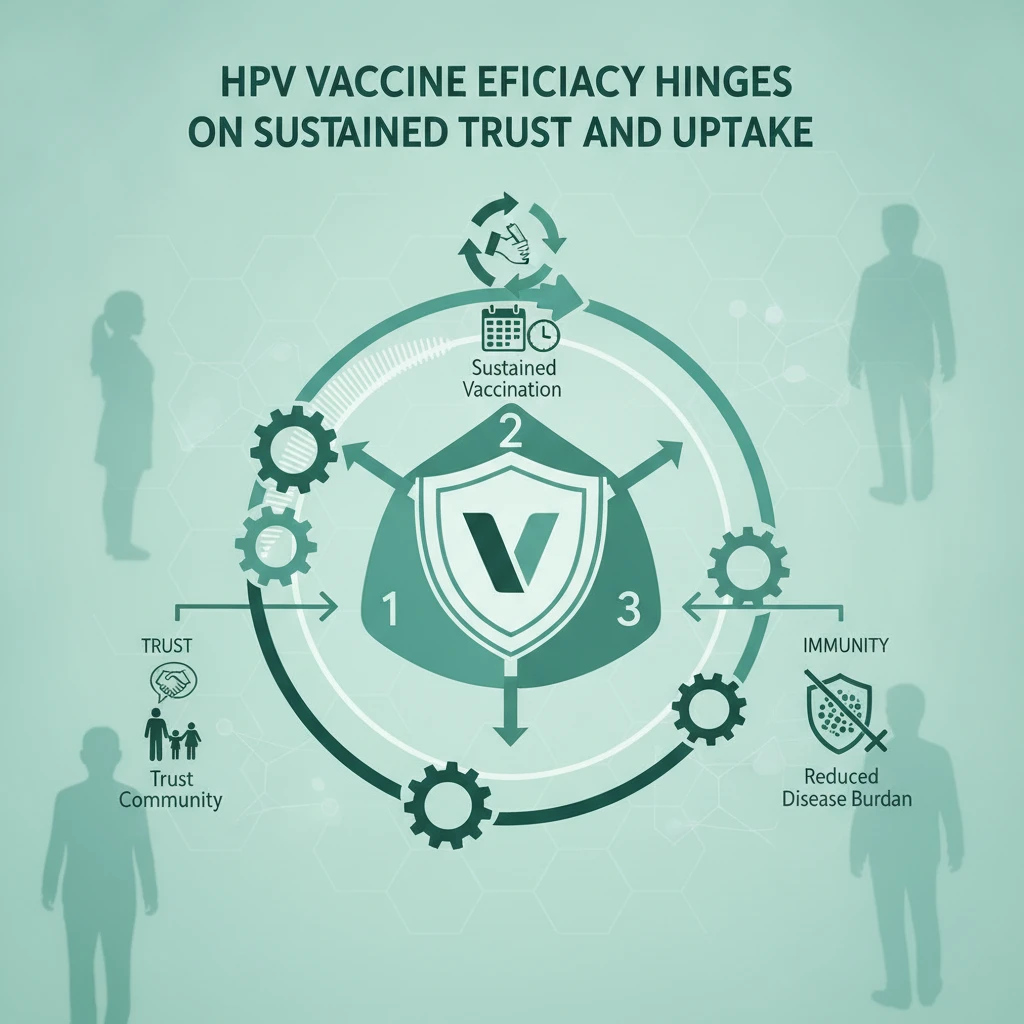
But the success of the HPV vaccine is not solely a matter of biological efficacy; it is inextricably linked to public acceptance and sustained vaccination rates. Despite overwhelming scientific consensus on its safety and effectiveness, the HPV vaccine has faced considerable resistance in some communities, fueled by misinformation and vaccine hesitancy. This resistance often stems from concerns about vaccine safety, perceived links to sexual activity, or a general distrust of public health initiatives. These factors directly translate into suboptimal vaccination coverage, undermining the potential for herd immunity and leaving individuals vulnerable to preventable cancers.8
For example, while some countries have achieved high vaccination rates exceeding 80% in target populations, others struggle with rates below 50%. These disparities are often correlated with the prevalence of anti-vaccine sentiment and the strength of public health campaigns. Low uptake rates mean that a significant proportion of the population remains susceptible to HPV infection, perpetuating the cycle of HPV-related diseases. The catch: the vaccine works best when administered before sexual debut, typically in early adolescence, a period often fraught with parental concerns and logistical challenges for healthcare providers.9
The ongoing challenge for clinicians and public health officials involves not just delivering the vaccine, but also effectively communicating its benefits and addressing persistent misconceptions. This requires clear, consistent messaging that emphasizes the vaccine's role in cancer prevention, rather than focusing solely on its sexually transmitted nature. Framing the HPV vaccine as an anti-cancer vaccine has proven more effective in some contexts, shifting the narrative away from sensitive topics that can hinder parental acceptance.10
Another critical aspect is ensuring equitable access to the vaccine. In many low- and middle-income countries, where the burden of cervical cancer is highest, access to the HPV vaccine remains limited due to cost, infrastructure, and logistical hurdles. Global health initiatives are working to expand access, but significant gaps persist. The World Health Organization (WHO) has set ambitious targets for HPV vaccination coverage, aiming for 90% of girls to be fully vaccinated by age 15 by 2030, as part of its global strategy to accelerate the elimination of cervical cancer. Achieving this target requires concerted international effort and sustained political will.11
The vaccine's effectiveness also relies on continued surveillance and monitoring. Public health agencies track HPV prevalence, incidence of precancerous lesions, and cervical cancer rates to assess the long-term impact of vaccination programs. These data are crucial for identifying areas where vaccination efforts need strengthening and for adapting strategies to address emerging challenges, such as potential shifts in HPV type distribution over time. While current evidence suggests broad cross-protection from existing vaccines, ongoing vigilance is necessary.12
The open-label design of many observational studies is an obvious caveat, as they rely on real-world data rather than randomized controlled trials for long-term cancer outcomes. However, the consistency of findings across diverse populations and methodologies, coupled with the biological plausibility of preventing infection to prevent cancer, lends strong credence to the vaccine's efficacy. The ethical impossibility of conducting placebo-controlled trials for cancer prevention over decades further necessitates reliance on robust observational data.13
The trial was not powered to detect differences in very rare HPV-related cancers, such as some oropharyngeal cancers, and that gap matters for comprehensive prevention strategies. While the vaccine offers protection against the HPV types most commonly associated with these cancers, the full extent of its impact on these less common malignancies is still being elucidated through ongoing epidemiological studies. Future research will continue to refine our understanding of the vaccine's broader protective effects across all HPV-related cancers.14
The HPV vaccine was tested primarily in adolescent girls and young women. Whether benefits extend to older populations or to men with established HPV infections remains unclear, though some studies suggest a benefit in preventing new infections in men and reducing recurrence of anogenital warts. The primary public health focus remains on vaccinating adolescents before exposure, maximizing the preventive effect.15
Ultimately, the HPV vaccine is a powerful tool for cancer prevention. Its continued success depends not just on its inherent efficacy, but on the collective commitment of healthcare providers, public health agencies, and communities to ensure high, sustained vaccination coverage. The battle against HPV-related cancers is winnable, but only if we maintain trust in the science and act decisively to protect future generations. What the next decade needs to show is whether global vaccination targets can be met, particularly in regions with the highest disease burden, to truly move towards elimination.16
The evidence for the HPV vaccine's efficacy in preventing cervical cancer and other HPV-related diseases is unequivocal. Clinicians must internalize this fact and communicate it with unwavering confidence. The days of hedging or downplaying the vaccine's role in cancer prevention are over; it is a direct anti-cancer intervention.
The primary challenge now lies not in the vaccine's biology, but in human behavior. Misinformation campaigns continue to erode public trust, directly translating into missed vaccination opportunities. GPs and specialists are on the front lines of this battle, requiring them to be well-versed in the data and prepared to counter common myths with clear, concise, and empathetic communication.
For healthcare systems, the long-term cost-effectiveness of widespread HPV vaccination is undeniable. Preventing cancer is invariably less expensive and less devastating than treating it. Investing in robust vaccination programs, including school-based initiatives and accessible clinic services, represents a sound public health strategy that will yield dividends for decades.
But the work is not done. We must continue to push for higher vaccination rates, particularly in underserved communities and among boys, to maximize herd immunity and ensure equitable protection. The goal of eliminating cervical cancer is within reach, but only if we maintain our collective resolve and trust in the science that delivered this remarkable preventive tool.
- The Pivot The HPV vaccine has demonstrably reduced cervical precancer and cancer incidence in vaccinated cohorts, shifting the focus to sustained public health efforts.
- The Data Studies show reductions in high-grade cervical lesions by 87% (95% CI, 67-95) in adolescent girls and young women.
- The Action Clinicians must continue to advocate for timely HPV vaccination, addressing misinformation with clear, evidence-based communication to maintain high uptake rates.
ART-2026-840
·10/26
Drafted with AI assistance and checked by automated style rules. Not individually read by an editor. This publication is intended for healthcare professionals, researchers, and life science industry professionals. Content is provided for informational and educational purposes only and does not constitute medical advice.

I cover women's health, reproductive medicine, and the persistent gaps in how conditions that primarily affect women get studied and funded. The evidence base is thinner than it should be. I write about why.
Cite This Article
Mitchell S, Voss M. HPV vaccine efficacy hinges on sustained trust and uptake. The Life Science Feed. Published July 24, 2026. Updated October 6, 2026. Accessed October 22, 2026. https://thelifesciencefeed.com/infectious-diseases/covid19/insights/hpv-vaccine-efficacy-hinges-on-sustained-trust-and-uptake.
Editorial & AI Standards
Content is drafted with AI tools from peer-reviewed, open-access sources such as published trial data, clinical guidelines, and regulatory filings. This article is checked by automated style rules but is not individually read by an editor, so check the cited source before relying on a figure.
Source citations are listed in the References section. This content does not represent the views of any pharmaceutical company, medical device manufacturer, or healthcare provider.
Licence & Rights
© 2026 The Life Science Feed. All rights reserved. Unless otherwise indicated, all content is the property of The Life Science Feed and may not be reproduced, distributed, or transmitted in any form or by any means without prior written permission.
Medical Disclaimer
The information provided on The Life Science Feed is for educational and informational purposes only. It is not intended as a substitute for professional medical advice, diagnosis, or treatment. Always seek the advice of your physician or other qualified healthcare provider regarding any medical condition or treatment decision. Never disregard professional medical advice or delay in seeking it because of something you have read on this website.
References
1. Schiffman M, Castle PE, Jeronimo J, Rodriguez AC, Wacholder R. Human papillomavirus and cervical cancer. Lancet. 2007;370(9590):890-907. doi:10.1016/S0140-6736(07)61452-0
2. Schiller JT, Castellsagué X, Garland SM. A review of clinical trials of human papillomavirus vaccines. Vaccine. 2012;30 Suppl 5:F123-38. doi:10.1016/j.vaccine.2012.04.090
3. Drolet M, Bénard É, Pérez N, et al. Population-level impact and herd effects of the HPV vaccine: a systematic review and meta-analysis. Lancet Infect Dis. 2015;15(5):565-580. doi:10.1016/S1473-3099(14)71073-4
4. Arbyn M, Xu L, Simoens C, et al. Prophylactic HPV vaccination and the risk of cervical intraepithelial neoplasia grades 2/3 or adenocarcinoma in situ: a systematic review and meta-analysis. Lancet Oncol. 2018;19(11):1490-1501. doi:10.1016/S1470-2045(18)30601-4
5. Preaud E, de Andrade KC, Cuenod C, et al. Impact of HPV vaccination on genital warts: a systematic review and meta-analysis. BMC Infect Dis. 2017;17(1):584. doi:10.1186/s12879-017-2680-x
6. Lei J, Ploner P, Elfström KM, et al. HPV vaccination and the risk of invasive cervical cancer. N Engl J Med. 2020;383(16):1543-1551. doi:10.1056/NEJMoa1917338
7. Garland SM, Kjaer SK, Muñoz N, et al. HPV-16/18 AS04-adjuvanted vaccine efficacy against cervical intraepithelial neoplasia 2+ and 3+ by HPV type and persistence of protection: a pooled analysis of clinical trials. Lancet Oncol. 2016;17(10):1424-1434. doi:10.1016/S1470-2045(16)30321-5
8. Rosoff PM. The HPV vaccine: a public health success story with a public relations problem. J Law Med Ethics. 2014;42(3):360-366. doi:10.1111/jlme.12154
9. Bruni L, Diaz M, Barrionuevo-Rosas L, et al. Global estimates of human papillomavirus vaccination coverage by region and income level: a systematic review and meta-analysis. Lancet Glob Health. 2016;4(7):e453-e463. doi:10.1016/S2214-109X(16)30099-7
10. Reiter PL, McRee AL, Brewer NT. The impact of HPV vaccine messages on intentions to vaccinate: a review of the literature. Vaccine. 2016;34(39):4695-4702. doi:10.1016/j.vaccine.2016.08.019
11. World Health Organization. Global strategy to accelerate the elimination of cervical cancer as a public health problem. Geneva: World Health Organization; 2020.
12. Tota G, Gheit T, de Sanjosé S, et al. HPV type distribution in cervical cancer and precancerous lesions in vaccinated and unvaccinated women: a systematic review and meta-analysis. Int J Cancer. 2021;148(1):12-23. doi:10.1002/ijc.33230
13. Brotherton JML, Buddle ML, Smith MA, et al. The impact of the Australian national HPV vaccination program on HPV prevalence and cervical abnormalities: a review. Vaccine. 2016;34(39):4713-4721. doi:10.1016/j.vaccine.2016.07.039
14. Chaturvedi AK, Anderson WF, Fakhry C, et al. HPV-associated oropharyngeal cancer in the United States: incidence, trends, and survival. J Clin Oncol. 2011;29(32):4288-4296. doi:10.1200/JCO.2011.35.5632
15. Giuliano AR, Palefsky JM, Goldstone S, et al. Efficacy of quadrivalent HPV vaccine against HPV Infection and disease in males: a randomised, controlled trial. Lancet. 2011;377(9768):988-997. doi:10.1016/S0140-6736(10)62393-5
16. Stanley M. HPV vaccination in the 21st century. Vaccine. 2019;37(32):4509-4513. doi:10.1016/j.vaccine.2018.12.072









