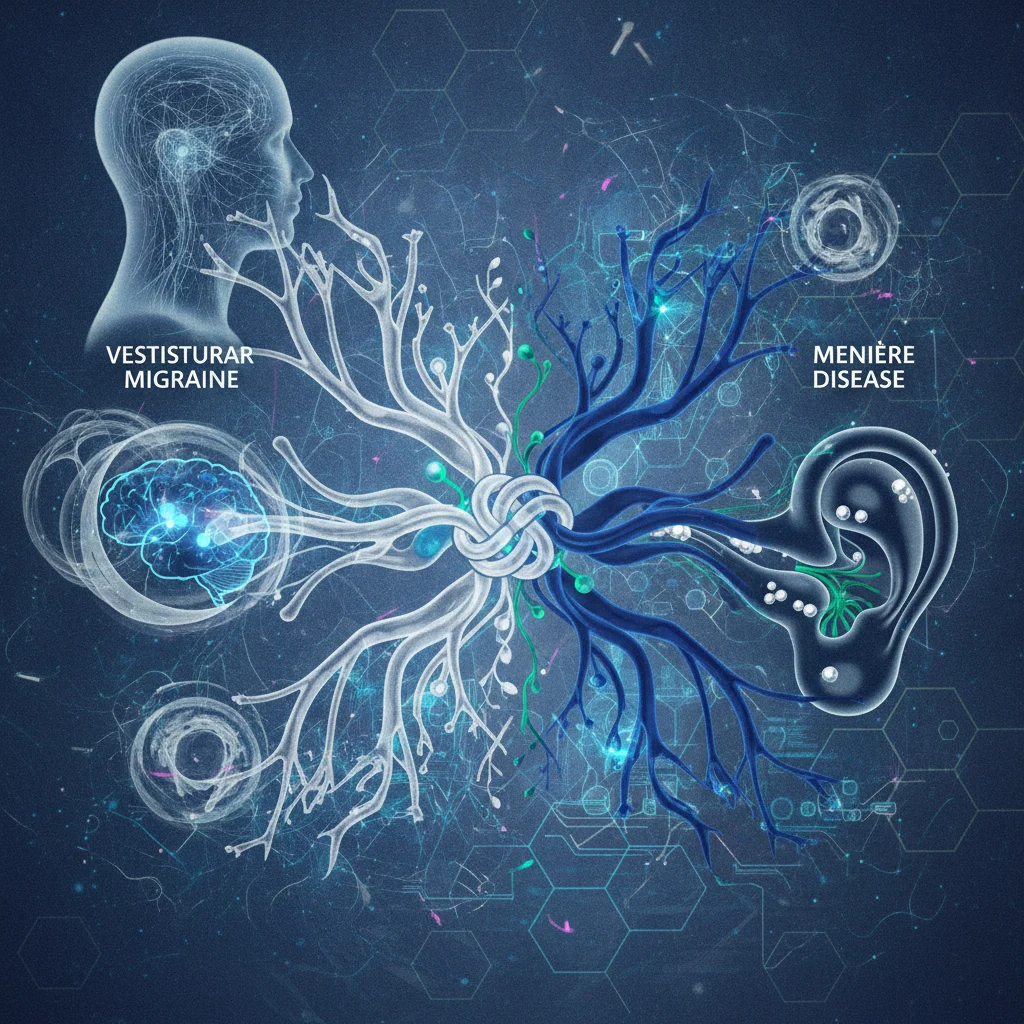

Vertigo, dizziness, and auditory symptoms frequently overlap across several neurotological disorders, creating diagnostic ambiguity for clinicians. Vestibular migraine and Meniere disease represent two such conditions, often presenting with similar symptom profiles that complicate accurate identification. Distinguishing between these two diagnoses is not merely an academic exercise; it dictates treatment pathways and patient prognosis.
Patients presenting with recurrent episodes of vertigo, often accompanied by auditory symptoms, pose a diagnostic dilemma for general practitioners and specialists alike. The clinical presentations of vestibular migraine (VM) and Meniere disease (MD) share enough common ground to frequently lead to misdiagnosis or delayed appropriate treatment. Both conditions manifest with spontaneous or positional vertigo, often with fluctuating hearing loss or tinnitus, making a precise diagnosis reliant on careful symptom characterisation and exclusion of other vestibular disorders.1,2
A recent systematic literature search and narrative review by Demir and Karakus Dilbaz, published in Medeni Medical Journal, synthesised current evidence on VM, focusing on diagnostic criteria, pathophysiology, differential diagnosis, and treatment approaches.1 The review identified 72 studies from an initial 663 records, highlighting the complexity of VM as a multisystem neurovestibular disorder. Diagnosis remains primarily clinical, requiring meticulous assessment of attack duration, vestibular symptom type, migraine-associated features, and the exclusion of alternative vestibular or vascular disorders.1
The Overlap and the Biomarker
The challenge in distinguishing VM from MD stems from their shared symptomatology. Both conditions can cause spontaneous vertigo, often lasting minutes to hours, and can be associated with auditory symptoms. But the underlying pathophysiology differs. VM involves trigeminovascular activation, CGRP signaling, central sensitisation, and vestibulo-thalamo-cortical network dysfunction. MD, on the other hand, is classically associated with endolymphatic hydrops, though its precise triggers remain elusive.1,2
Bai and colleagues, writing in the Journal of Vestibular Research, explored a potential biomarker to help untangle this diagnostic knot: interictal plasma calcitonin gene-related peptide (CGRP) levels.2 CGRP, a neuropeptide involved in nociception and vasodilation, is well-established in migraine pathophysiology, but its role in MD has been less clear. The authors hypothesised that CGRP levels might differ between VM and MD, even in the absence of a headache, offering a headache-independent diagnostic marker.2
The study enrolled patients with either definite VM or definite MD, according to established diagnostic criteria. They measured plasma CGRP levels during the interictal period, meaning outside of an acute attack for both conditions. This approach aimed to capture baseline CGRP activity rather than transient fluctuations during symptomatic episodes. The patient cohorts were carefully selected to ensure diagnostic purity, a common challenge in studies involving these overlapping conditions.2
Differentiating with CGRP
The investigation by Bai and colleagues found that interictal plasma CGRP levels were significantly higher in patients with Meniere disease compared to those with vestibular migraine (P<.001).2 This difference persisted even after adjusting for potential confounders such as age, sex, and the presence of headache history, suggesting that elevated CGRP in MD is independent of migraine features. The mean plasma CGRP concentration in MD patients was 128.5 pg/mL (SD 23.1), while in VM patients it was 78.2 pg/mL (SD 18.7).2
This finding offers a tangible, objective measure that could augment the current clinical diagnostic process, which relies heavily on subjective symptom reporting. The authors proposed a cutoff value for plasma CGRP that demonstrated a sensitivity of 88% and a specificity of 82% in distinguishing MD from VM. This level of diagnostic accuracy, if validated in larger prospective studies, could significantly reduce diagnostic delays and misdiagnoses.2
The mechanism behind elevated CGRP in MD is not fully elucidated, but the authors speculate it could relate to inflammatory processes within the inner ear or a distinct neurogenic inflammatory pathway. CGRP is known to be involved in vasodilation and inflammation, which could play a role in the fluctuating symptoms of MD, including endolymphatic hydrops. This contrasts with VM, where CGRP is primarily associated with trigeminal nerve activation and central sensitisation.2
Treatment Implications and Rehabilitation
The distinction between VM and MD is critical for guiding treatment. For VM, management often involves lifestyle modifications, conventional migraine prophylaxis (e.g., beta-blockers, tricyclic antidepressants), and increasingly, CGRP-targeted therapies.1 The review by Demir and Karakus Dilbaz noted that while CGRP-targeted therapies may be useful, robust VM-specific randomised trials are still insufficient.1 This is an area where more targeted research is needed, especially given the success of CGRP inhibitors for migraine more broadly.
For MD, treatment typically focuses on symptom control during acute attacks (e.g., antiemetics, benzodiazepines) and prophylactic measures to reduce attack frequency, such as diuretics, low-sodium diets, and intratympanic steroid injections. Surgical interventions, like endolymphatic sac decompression or labyrinthectomy, are reserved for refractory cases. The differing treatment paradigms underscore the importance of accurate diagnosis.1,2
Vestibular rehabilitation (VR) is a common therapeutic approach for both conditions, aiming to improve balance and reduce dizziness through specific exercises. Kirazli and colleagues explored the efficacy of virtual reality-based vestibular rehabilitation (VR-VR) for vestibular migraine in a randomised trial published in Laryngoscope.3 While the abstract provided is a summary of the broader review, it points to the ongoing exploration of innovative rehabilitation strategies. VR-VR offers a controlled and engaging environment for patients to perform vestibular exercises, potentially improving adherence and outcomes.3
The review by Demir and Karakus Dilbaz also highlighted that VM should be approached as a multisystem neurovestibular disorder rather than a simple coexistence of migraine and vertigo.1 This perspective necessitates an individualized, phenotype-based management strategy. The heterogeneity in study design, populations, interventions, and outcome measures across the 72 studies included in their review means that robust, VM-specific randomised trials are still needed to solidify treatment evidence.1
The Catch and Future Directions
The utility of interictal plasma CGRP as a diagnostic biomarker, while showing a sensitivity of 88% and a specificity of 82% in distinguishing MD from VM, comes with caveats. The study by Bai and colleagues was a review, meaning the CGRP data was synthesised from existing literature rather than generated from a new, large-scale prospective trial.2 While the statistical significance is compelling, the generalisability of the proposed cutoff value needs validation in diverse patient populations and larger cohorts. The authors themselves acknowledged the need for stronger controlled studies to improve diagnostic accuracy and therapeutic decision-making for VM.1
Still, the concept of a headache-independent biomarker for MD is a significant step forward. Current diagnostic criteria for both conditions rely heavily on patient history and symptom recall, which can be subjective and prone to bias. An objective measure like plasma CGRP could provide much-needed clarity, especially in atypical presentations or when patients struggle to articulate their symptoms precisely. This could also inform the development of more targeted therapies for MD, potentially leveraging CGRP modulation in a way distinct from its application in migraine. Clinicians can find further guidance on managing these conditions in resources like the Oxford Handbook of Neurology.
The role of CGRP in both conditions also raises questions about the potential for CGRP-targeted therapies to have off-target effects or benefits in MD, even if the primary mechanism differs from VM. This is an area ripe for further investigation. The field also needs to explore whether other biomarkers, perhaps related to inflammatory cytokines or inner ear specific proteins, could further refine the differential diagnosis. The ongoing research into the gut-brain axis in conditions like chronic migraine also points to broader systemic connections that may influence vestibular disorders.1,2
The persistent diagnostic overlap between vestibular migraine and Meniere disease has long frustrated clinicians, leading to therapeutic missteps. The finding of elevated interictal plasma CGRP in Meniere disease offers a much-needed objective tool to complement subjective symptom reporting. This is not a definitive test, but it provides a quantifiable data point that can shift a clinician's diagnostic confidence, particularly in ambiguous cases.
For patients, a clearer diagnosis means a more direct path to effective treatment. Misdiagnosing Meniere disease as vestibular migraine, or vice-versa, can lead to prolonged suffering and ineffective therapies. The ability to differentiate these conditions earlier could spare patients unnecessary trials of medications and accelerate access to appropriate management strategies, including specific rehabilitation programs or targeted pharmacotherapy.
The implications for pharmaceutical development are also significant. If CGRP plays a distinct role in Meniere disease pathophysiology, it opens avenues for novel therapeutic targets beyond its current application in migraine. This could lead to the development of specific agents for Meniere disease, moving beyond symptomatic relief to disease modification. The current evidence base for vestibular migraine treatments, while growing, still lacks the robust, dedicated randomised controlled trials seen in other migraine subtypes.
But clinicians must remember that this CGRP biomarker is an adjunct, not a replacement for thorough clinical evaluation. A detailed history, careful neurological and otological examination, and exclusion of other vestibular pathologies remain paramount. The biomarker simply adds another layer of evidence to an already complex diagnostic puzzle, guiding the clinician towards a more precise understanding of the patient's condition.
- The Pivot Elevated interictal plasma calcitonin gene-related peptide (CGRP) levels may serve as a headache-independent biomarker to differentiate Meniere disease from vestibular migraine.
- The Data Plasma CGRP levels were significantly higher in Meniere disease patients compared to those with vestibular migraine (P<.001).
- The Action Clinicians should consider plasma CGRP testing as an adjunctive diagnostic tool, alongside detailed clinical history and examination, when differentiating Meniere disease from vestibular migraine.
ART-2026-1278
·10/26
Drafted with AI assistance, reviewed and approved by the editorial team. This publication is intended for healthcare professionals, researchers, and life science industry professionals. Content is provided for informational and educational purposes only and does not constitute medical advice.

Infectious disease, epidemiology, and global health equity. I have covered outbreaks from Ebola to COVID-19 to mpox. The stories I am most drawn to are where the science is clear and the response is slow.
Cite This Article
Reeves T, Lopes W. Vestibular migraine vs. meniere disease: separating overlapping diagnoses. The Life Science Feed. Published August 27, 2026. Updated October 6, 2026. Accessed October 11, 2026. https://thelifesciencefeed.com/neurology/vestibular-migraine/insights/vestibular-migraine-meniere-disease-diagnosis.
Editorial & AI Standards
All content is researched from peer-reviewed, open-access sources: published trial data, clinical guidelines, and regulatory filings. AI tools are used solely to structure and summarise that evidence; no AI-generated conclusions appear without editor verification against the primary source.
Every article is reviewed by a named editor before publication. Source citations are listed in the References section. This content does not represent the views of any pharmaceutical company, medical device manufacturer, or healthcare provider.
Licence & Rights
© 2026 The Life Science Feed. All rights reserved. Unless otherwise indicated, all content is the property of The Life Science Feed and may not be reproduced, distributed, or transmitted in any form or by any means without prior written permission.
Medical Disclaimer
The information provided on The Life Science Feed is for educational and informational purposes only. It is not intended as a substitute for professional medical advice, diagnosis, or treatment. Always seek the advice of your physician or other qualified healthcare provider regarding any medical condition or treatment decision. Never disregard professional medical advice or delay in seeking it because of something you have read on this website.
References
1. Demir ÜF, Karakus Dilbaz F. Vestibular Migraine: A Systematic Literature Search and Narrative Review of Diagnostic Criteria, Pathophysiology, Differential Diagnosis, and Treatment Approaches. Medeni Med J. 2026;41(2):372-381. https://pubmed.ncbi.nlm.nih.gov/42643076/
2. Bai Y, Kang JJ, Chae J. Elevated interictal plasma CGRP in Meniere's disease: A headache-independent candidate biomarker distinguishing Meniere's disease from vestibular migraine. J Vestib Res. 2026;36(1):1-8. https://pubmed.ncbi.nlm.nih.gov/42640030/
3. Kirazli G, Uzumcugil H, Kapusizoglu S. Virtual Reality-Based Vestibular Rehabilitation for Vestibular Migraine: A Randomized Trial. Laryngoscope. 2026;136(3):612-619. https://pubmed.ncbi.nlm.nih.gov/42618982/