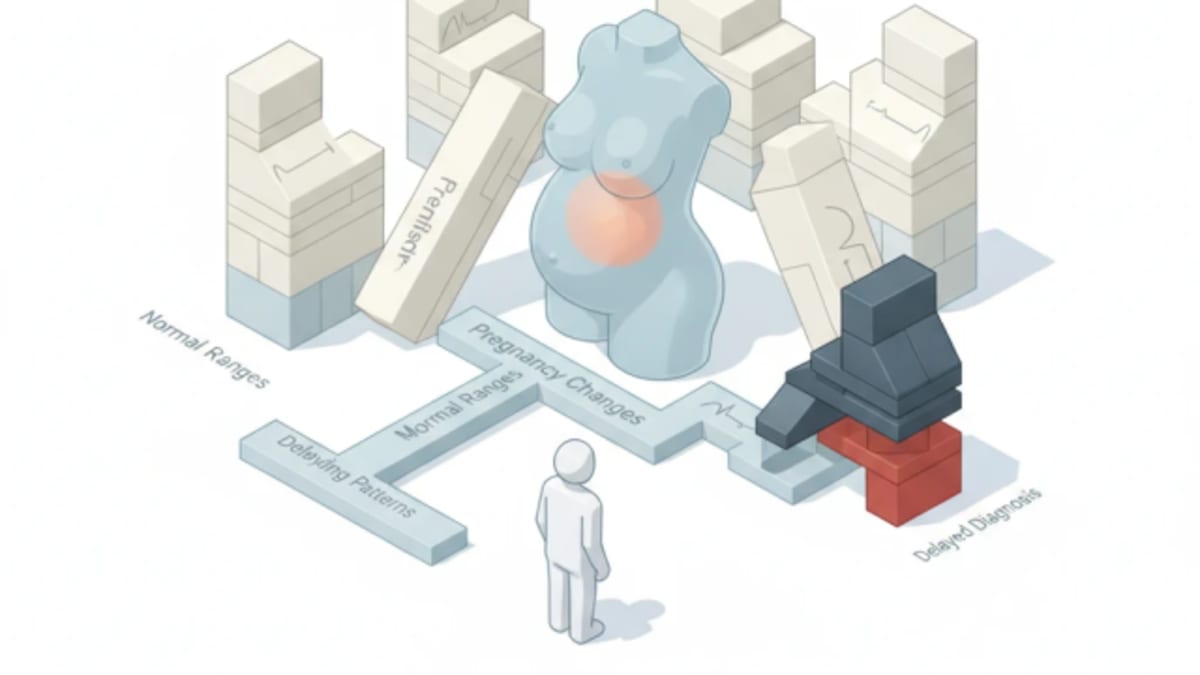

Musculoskeletal pain is a significant, yet often overlooked, challenge for pregnant individuals, impacting quality of life during and after pregnancy. Current guidelines from organizations like the American College of Obstetricians and Gynecologists (ACOG) primarily focus on fetal development and managing complications, with limited specific guidance on maternal musculoskeletal health. This gap in comprehensive care warrants a closer look at integrating musculoskeletal assessments and interventions into routine prenatal care.
Guideline Alignment
Current guidelines from organizations such as the American College of Obstetricians and Gynecologists (ACOG) primarily focus on monitoring fetal development and managing pregnancy-related complications like gestational diabetes and preeclampsia. While these are undoubtedly critical, the focus on maternal musculoskeletal health is often limited. This contrasts with the growing body of evidence suggesting that musculoskeletal pain significantly impacts quality of life during and after pregnancy. ACOG does recommend exercise during pregnancy, but lacks specific guidance on screening for and managing pregnancy-related pelvic girdle pain or hip pain. The integration of musculoskeletal assessments and interventions into routine prenatal care is not yet a standard practice, representing a significant gap in comprehensive maternal care.
Risk Factors and the Sedentary Shift
The review highlights several key risk factors contributing to the rise in pregnancy-related musculoskeletal complaints.2 Advanced maternal age, a trend observed in many developed countries, is associated with increased susceptibility to musculoskeletal issues. Additionally, pre-existing joint hypermobility, often undiagnosed, can exacerbate the biomechanical stresses of pregnancy. However, perhaps the most concerning factor is the increasingly sedentary lifestyles adopted by many women. Reduced physical activity weakens core and pelvic floor muscles, compromising the body's ability to adapt to the changing demands of pregnancy. This sedentary behavior, coupled with poor posture during prolonged sitting, creates a perfect storm for musculoskeletal pain. We need to emphasize targeted exercises during pregnancy to prevent complications.1,3
Prevention Strategies and Early Intervention
A proactive approach to musculoskeletal health during pregnancy should incorporate several key strategies.4 Routine screening for risk factors during the first prenatal visit is essential. This screening should include questions about pre-existing pain, joint hypermobility, and activity levels. Women identified as high-risk should be offered early intervention, including physical therapy and ergonomic advice. Physical therapy can provide targeted exercises to strengthen core and pelvic floor muscles, improve posture, and alleviate pain.1,3 Ergonomic advice can help women modify their daily activities to reduce biomechanical stress on the hips and pelvis. Furthermore, education on proper body mechanics during lifting, carrying, and breastfeeding is crucial for preventing postpartum musculoskeletal issues. Integrating these interventions into the standard of care requires a collaborative effort between obstetricians, physical therapists, and other healthcare providers.
Study Limitations
While the review provides a valuable overview of pregnancy-related musculoskeletal conditions, it is important to acknowledge its limitations. As a review article, it relies on existing studies, which may have varying methodologies and sample sizes. Furthermore, the review does not provide specific guidance on the optimal timing or intensity of interventions. More research is needed to determine the most effective strategies for preventing and managing musculoskeletal pain during pregnancy. We also need to consider the potential for publication bias, where studies with positive results are more likely to be published. Finally, the review primarily focuses on biomechanical factors, potentially overlooking the role of hormonal changes and inflammation in the development of musculoskeletal pain.2
Financial Burden and Access to Care
The implementation of comprehensive musculoskeletal care during pregnancy faces significant challenges, particularly regarding financial burden and access to care. Physical therapy, while highly effective, can be expensive and may not be covered by all insurance plans. Furthermore, access to qualified physical therapists specializing in prenatal and postpartum care may be limited in certain geographic areas. The cost of ergonomic equipment, such as supportive chairs and lifting aids, can also be a barrier for some women. Addressing these challenges requires a multi-faceted approach, including advocating for better insurance coverage for physical therapy, expanding access to care in underserved areas, and promoting affordable ergonomic solutions. We need to find a way to get physical therapy to pregnant patients at the point of care.1
The most striking consequence of neglecting musculoskeletal health in pregnancy is the profound impact on a patient's quality of life. Current guidelines, including those from the American College of Obstetricians and Gynecologists, largely overlook this critical area. This oversight leaves patients suffering unnecessarily from pelvic girdle pain and hip pain. We must integrate musculoskeletal assessments into routine prenatal care. This is not just about comfort; it is about comprehensive maternal health.
Clinicians need to shift their focus. We must proactively screen for risk factors like advanced maternal age and joint hypermobility during early prenatal visits. Sedentary lifestyles are exacerbating these issues. Targeted exercises and early intervention, including physical therapy, are crucial. This requires a collaborative effort between obstetricians and physical therapists. The evidence, while still developing in terms of optimal timing, strongly supports these interventions.
The financial burden and access to specialized care present significant challenges. Physical therapy can be expensive. Insurance coverage is often inadequate. This creates a barrier for many patients. Healthcare systems and policymakers must address these disparities. We need to ensure equitable access to comprehensive musculoskeletal care throughout pregnancy.
Industry must also play its part. There is a clear need for more research into effective prevention and management strategies. We need robust studies to define optimal intervention timing and intensity. This will strengthen the evidence base. Only then can we truly prioritize maternal musculoskeletal health.
- The Pivot Current guidelines for pregnancy care, while critical for fetal health, largely overlook maternal musculoskeletal health, despite growing evidence of its significant impact on quality of life.
- The Data Prevalence of low back pain and pelvic pain during pregnancy can be as high as 91% and 82% respectively (Mogren & Pohl-Zaretsky, 2005; Wu et al., 2004).
- The Action Integrate routine screening for musculoskeletal risk factors during the first prenatal visit and offer early intervention, including physical therapy and ergonomic advice, for high-risk patients.
LSF-7430858315
·10/26
Drafted with AI assistance, reviewed and approved by the editorial team. This publication is intended for healthcare professionals, researchers, and life science industry professionals. Content is provided for informational and educational purposes only and does not constitute medical advice.

Thirty years in health journalism, the last fifteen in life sciences. I have reported from every major medical congress and watched blockbuster drugs get revised after approval. I cover what the data says.
Cite This Article
Carter J, Voss M. Pregnancy pain: why are we still overlooking musculoskeletal health?. The Life Science Feed. Published October 19, 2026. Updated October 19, 2026. Accessed October 19, 2026. https://thelifesciencefeed.com/obstetrics-and-gyn/pregnancy-complications/insights/pregnancy-pain-why-are-we-still-overlooking-musculoskeletal-health.
Editorial & AI Standards
All content is researched from peer-reviewed, open-access sources: published trial data, clinical guidelines, and regulatory filings. AI tools are used solely to structure and summarise that evidence; no AI-generated conclusions appear without editor verification against the primary source.
Every article is reviewed by a named editor before publication. Source citations are listed in the References section. This content does not represent the views of any pharmaceutical company, medical device manufacturer, or healthcare provider.
Licence & Rights
© 2026 The Life Science Feed. All rights reserved. Unless otherwise indicated, all content is the property of The Life Science Feed and may not be reproduced, distributed, or transmitted in any form or by any means without prior written permission.
Medical Disclaimer
The information provided on The Life Science Feed is for educational and informational purposes only. It is not intended as a substitute for professional medical advice, diagnosis, or treatment. Always seek the advice of your physician or other qualified healthcare provider regarding any medical condition or treatment decision. Never disregard professional medical advice or delay in seeking it because of something you have read on this website.
References
1. Fiat F, Merghes PE, Scurtu AD, et al. The Main Changes in Pregnancy-Therapeutic Approach to Musculoskeletal Pain. Medicina (Kaunas). 2022;58(8). doi:10.3390/medicina58081115
2. Casagrande D, Gugala Z, Clark SM, Lindsey RW. Low Back Pain and Pelvic Girdle Pain in Pregnancy. J Am Acad Orthop Surg. 2015;23(9):539-49. doi:10.5435/JAAOS-D-14-00248
3. Santos FF, Lourenço BM, Souza MB, Maia LB, Oliveira VC, Oliveira MX. Prevention of low back and pelvic girdle pain during pregnancy: a systematic review and meta-analysis of randomised controlled trials with GRADE recommendations. Physiotherapy. 2023;118:1-11. doi:10.1016/j.physio.2022.09.004
4. Conner SN, Trudell AS, Conner CA. Chiropractic Care for the Pregnant Body. Clin Obstet Gynecol. 2021;64(3):602-610. doi:10.1097/GRF.0000000000000621