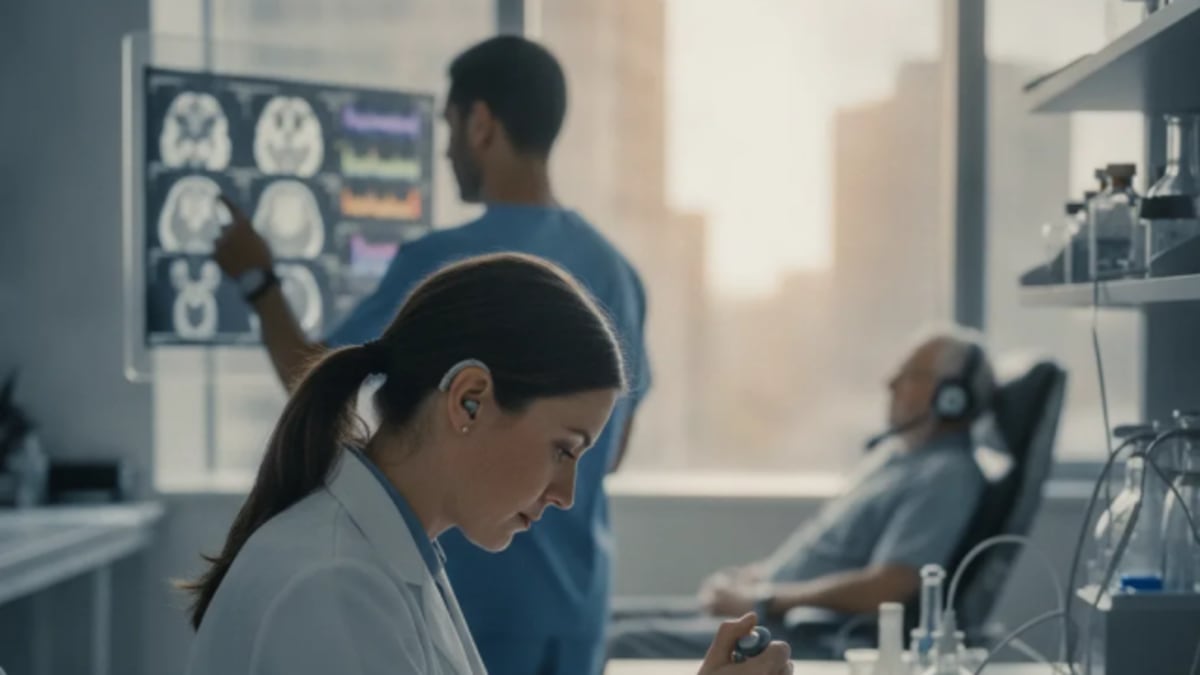

Hearing loss affects millions across Europe, often leading to social isolation and reduced quality of life. While traditional hearing aids and cochlear implants offer established solutions, adherence and stigma remain significant challenges for many patients. A new approach, Legato Frames, seeks to address these issues by integrating audio technology directly into eyewear.
The unmet need in hearing loss management extends beyond mere amplification. Many patients, particularly those with mild to moderate hearing impairment, resist traditional hearing aids due to their visibility, discomfort, or the perceived stigma associated with wearing them. This reluctance can delay intervention, allowing hearing loss to progress and impacting cognitive function and social engagement. The development of devices like Legato Frames represents an effort to integrate hearing assistance more seamlessly into daily life, potentially improving uptake and consistent use.
Legato Frames are designed as standard eyeglasses that incorporate miniature speakers and sound processing technology within their frames. The concept is to provide amplified sound directly to the user's ears without the need for separate, often conspicuous, hearing aid units. This design aims to offer a more discreet and comfortable experience, potentially appealing to individuals who have previously rejected conventional devices. The device targets a broad range of patients with hearing deficits, from those experiencing early-stage presbycusis to individuals with more significant, but not profound, hearing impairment. For some patients, the convenience of OTC hearing aids has not been enough to overcome these barriers.
The Technology Behind the Frames
The core technology in Legato Frames involves micro-speakers positioned near the ear, delivering sound through the temples of the eyeglasses. These speakers are coupled with advanced digital signal processing (DSP) chips, which are programmed to filter background noise and enhance speech clarity. The DSP algorithms are crucial for the user's ability to distinguish relevant sounds from environmental distractions, a common challenge in noisy social settings. The frames also include a small, rechargeable battery, designed to provide a full day of use on a single charge. This integration of components into a familiar form factor is intended to make the technology less intrusive than traditional devices.
The sound processing capabilities are designed to adapt to various acoustic environments. Users can expect features such as directional microphones, which focus on sounds coming from the front, and feedback cancellation, which prevents the whistling often associated with hearing aids. The goal is to provide a natural listening experience, allowing users to participate more fully in conversations and daily activities. The device also includes Bluetooth connectivity, enabling users to stream audio directly from their smartphones or other compatible devices, effectively turning the eyeglasses into wireless headphones for calls and media.
Addressing Patient Acceptance
One of the primary drivers behind the Legato Frames concept is to improve patient acceptance and adherence. The discreet nature of the device, combined with the dual functionality of vision correction and hearing assistance, may reduce the psychological barriers associated with wearing hearing aids. Many individuals, particularly younger patients or those in professional settings, express concerns about the visible presence of traditional hearing aids. By embedding the technology within eyeglasses, Legato Frames aim to normalize the use of hearing assistance, making it a less stigmatizing choice.
The design also considers comfort and ease of use. Traditional hearing aids can sometimes cause discomfort in the ear canal or behind the ear, leading to inconsistent wear. Legato Frames, worn like regular eyeglasses, avoid direct contact with the inner ear, potentially reducing irritation. The controls for volume and program settings are integrated subtly into the frame, allowing for discreet adjustments. This focus on user experience is critical, as even the most technologically advanced hearing solutions are ineffective if patients do not wear them consistently. Clinicians often face challenges with patients who are reluctant to consider options like cochlear implants, even when indicated.
Clinical Considerations and Future Availability
While the concept of Legato Frames is compelling, clinicians will need to consider several factors upon their availability. The efficacy of the integrated speakers in providing sufficient amplification and clarity for various degrees of hearing loss will be paramount. The sound quality, particularly in complex listening environments, will need to meet or exceed patient expectations. Battery life and the durability of the integrated electronics within the eyeglasses frame are also practical considerations for long-term use. The cost of these integrated devices compared to traditional hearing aids will also influence patient access and adoption.
The availability of Legato Frames is anticipated soon, offering a new option in the evolving market of hearing loss management. As with any new medical device, real-world performance and patient outcomes will determine its place in clinical practice. Clinicians should remain informed about such innovations, as they may provide valuable alternatives for patients who have not found success or comfort with existing solutions. The Oxford Handbook of Clinical Medicine provides a concise reference for general practice, including initial assessments for hearing impairment.
The introduction of Legato Frames could genuinely shift how some patients approach hearing loss. For years, the stigma of traditional hearing aids has been a significant barrier to early intervention, often leading to delayed care and worsening outcomes. Integrating hearing assistance into eyeglasses offers a discreet alternative that might appeal to those who have resisted conventional devices.
But clinicians must remain pragmatic. While the concept is elegant, the real-world performance of these integrated speakers will dictate their utility. We need to see how well they manage complex sound environments and whether the sound quality truly satisfies patients accustomed to dedicated hearing aids. The convenience factor is high, but efficacy cannot be compromised.
This innovation also highlights a broader trend: the convergence of medical devices with consumer electronics. As technology becomes more miniaturized and integrated, we will likely see more solutions that blend seamlessly into daily life. This could improve adherence and reduce the psychological burden of chronic conditions, but it also demands careful evaluation of clinical benefit versus lifestyle appeal.
Legato Frames will find their niche if they deliver genuine auditory improvement without the compromises of earlier discreet devices. They are not a panacea, but they represent a thoughtful step towards making hearing assistance less of a medical necessity and more of an everyday enhancement.
- The Pivot Legato Frames offer an alternative to conventional hearing aids by embedding speakers into eyeglasses.
- The Data No specific clinical trial data is available yet, but the device aims to improve sound perception and user comfort.
- The Action Clinicians should be aware of this emerging technology as a potential option for patients seeking discreet hearing assistance.
ART-2026-1721
·09/26
Drafted with AI assistance and checked by automated style rules. Not individually read by an editor. This publication is intended for healthcare professionals, researchers, and life science industry professionals. Content is provided for informational and educational purposes only and does not constitute medical advice.

I write about AI in healthcare: the validation studies, the deployment failures, and the regulatory questions without answers yet. Based in San Francisco, close to where the technology is built.
Cite This Article
Chen L, Voss M. Hearing aids: why are patients still saying no?. The Life Science Feed. Published September 9, 2026. Updated September 26, 2026. Accessed October 24, 2026. https://thelifesciencefeed.com/otolaryngology/hearing-loss/news/hearing-aids-why-are-patients-still-saying-no.
Editorial & AI Standards
Content is drafted with AI tools from peer-reviewed, open-access sources such as published trial data, clinical guidelines, and regulatory filings. This article is checked by automated style rules but is not individually read by an editor, so check the cited source before relying on a figure.
Source citations are listed in the References section. This content does not represent the views of any pharmaceutical company, medical device manufacturer, or healthcare provider.
Licence & Rights
© 2026 The Life Science Feed. All rights reserved. Unless otherwise indicated, all content is the property of The Life Science Feed and may not be reproduced, distributed, or transmitted in any form or by any means without prior written permission.
Medical Disclaimer
The information provided on The Life Science Feed is for educational and informational purposes only. It is not intended as a substitute for professional medical advice, diagnosis, or treatment. Always seek the advice of your physician or other qualified healthcare provider regarding any medical condition or treatment decision. Never disregard professional medical advice or delay in seeking it because of something you have read on this website.
References
1. Lieu JEC, Kenna M, Anne S, Davidson L. Hearing Loss in Children: A Review. JAMA. 2020;324(21):2195-2205. doi:10.1001/jama.2020.17647
2. Samocha-Bonet D, Wu B, Ryugo DK. Diabetes mellitus and hearing loss: A review. Ageing Res Rev. 2021;71:101423. doi:10.1016/j.arr.2021.101423
3. Campello CP, Lemos CAA, Andrade WTL, Melo LPF, Nunes GRS, Cavalcanti HG. Migraine associated with tinnitus and hearing loss in adults: a systematic review. Int J Audiol. 2024;63(1):1-7. doi:10.1080/14992027.2022.2151943
4. Kuhn M, Heman-Ackah SE, Shaikh JA, Roehm PC. Sudden sensorineural hearing loss: a review of diagnosis, treatment, and prognosis. Trends Amplif. 2011;15(3):91-105. doi:10.1177/1084713811408349
5. Hartland JC, Tejada G, Riedel EJ, Chen AH, Mascarenhas O, Kroon J. Systematic review of hearing loss in dental professionals. Occup Med (Lond). 2023;73(7):391-397. doi:10.1093/occmed/kqad084
6. Blazer DG, Tucci DL. Hearing loss and psychiatric disorders: a review. Psychol Med. 2019;49(6):891-897. doi:10.1017/S0033291718003409