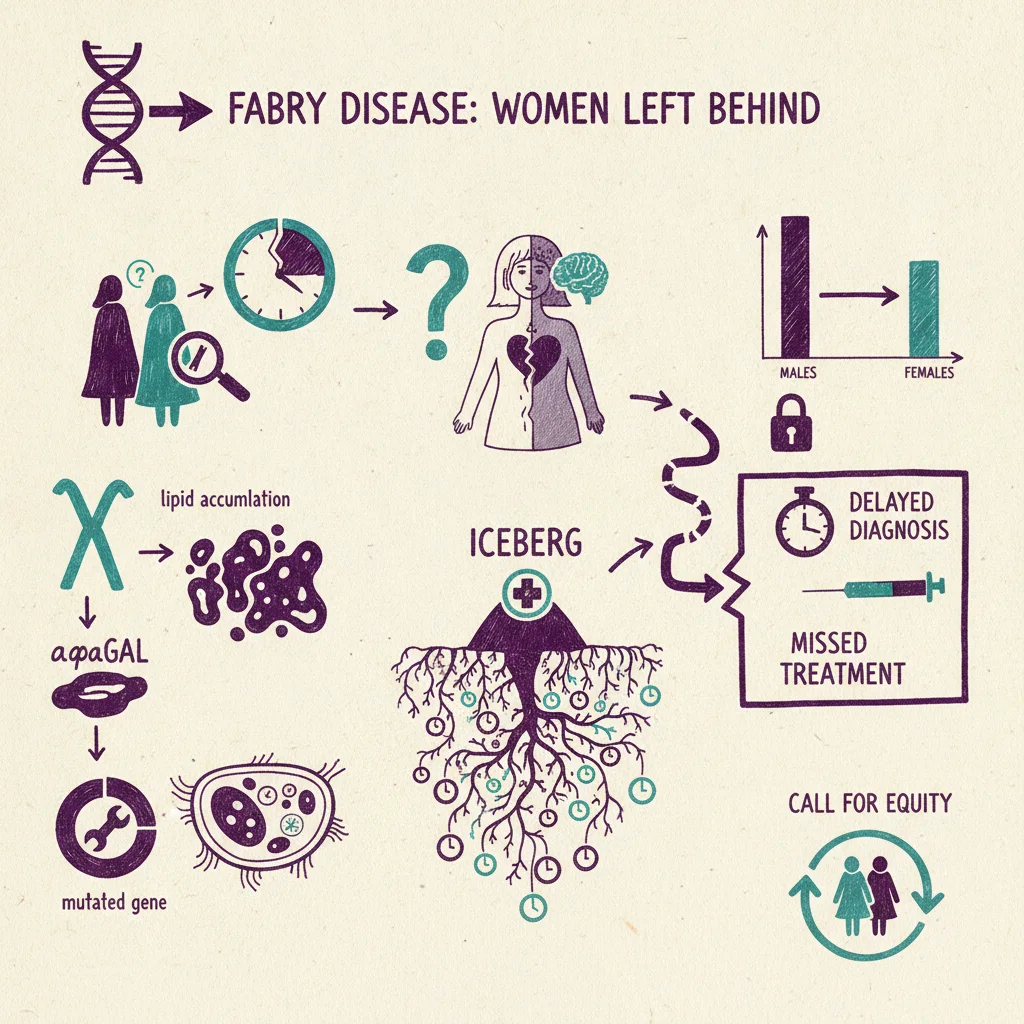

Fabry disease, a rare X-linked lysosomal storage disorder, presents a complex clinical picture that has long challenged accurate diagnosis and effective management. For decades, the understanding of this condition was heavily skewed towards its manifestation in men, leading to a significant disparity in care for women. This historical oversight has meant that many women with Fabry disease experienced prolonged diagnostic odysseys and missed opportunities for timely intervention.
The prevailing misconception that X-linked disorders primarily affect males, with females merely being asymptomatic carriers, profoundly shaped clinical practice. This view obscured the variable and often severe disease burden in women, delaying recognition of their symptoms and access to enzyme replacement therapy (ERT) or chaperone therapy.
Fabry disease results from a deficiency of the lysosomal enzyme alpha-galactosidase A (alpha-Gal A), which is encoded by the GLA gene on the X chromosome. This enzymatic defect leads to the progressive accumulation of globotriaosylceramide (Gb3) and related glycosphingolipids within lysosomes in various cell types throughout the body. The systemic deposition of these substrates causes a wide range of clinical manifestations affecting multiple organ systems, including the kidneys, heart, brain, and peripheral nervous system. While the genetic basis is X-linked, the clinical expression in women is far from straightforward, a fact that was overlooked for too long.
The initial characterization of Fabry disease focused predominantly on its severe, classic phenotype in hemizygous males, who typically exhibit little to no alpha-Gal A activity. These men often present with acroparesthesias, angiokeratomas, hypohidrosis, corneal verticillata, and progressive renal, cardiac, and cerebrovascular disease. The assumption was that heterozygous females, possessing one functional X chromosome, would be protected from severe disease due to X-chromosome inactivation (lyonization). This biological process, where one of the two X chromosomes in each somatic cell is randomly inactivated, was thought to ensure sufficient enzyme activity to prevent significant Gb3 accumulation. This theoretical protection proved to be a clinical fallacy for many women.
The Misguided 'Carrier' Label
For decades, women with Fabry disease were often labeled as 'carriers' rather than 'affected individuals.' This terminology itself contributed to the undertreatment. The term 'carrier' implied a benign state, suggesting that women were merely vectors for transmitting the disease to their sons, with minimal personal health consequences. This perception led to a lack of proactive screening, delayed diagnostic workups, and a reluctance to initiate specific therapies, even when symptoms were present. The clinical reality, however, is that X-chromosome inactivation is a random process, meaning the proportion of cells expressing the functional GLA allele can vary significantly among women. Some women may have a highly skewed inactivation pattern, leading to a predominance of cells expressing the mutated allele and consequently, very low alpha-Gal A activity. These women can experience disease severity comparable to, or even exceeding, that seen in affected males.
The clinical presentation in women is highly heterogeneous, ranging from asymptomatic individuals to those with severe, life-threatening organ involvement. Common symptoms in women include chronic pain, fatigue, gastrointestinal issues, hearing loss, and significant cardiac and renal manifestations. Cardiac involvement, such as left ventricular hypertrophy, arrhythmias, and valvular disease, is particularly prevalent and can be a major cause of morbidity and mortality. Renal disease, characterized by proteinuria and progressive decline in glomerular filtration rate, also occurs in women, though often with a later onset and slower progression than in men. Cerebrovascular events, including transient ischemic attacks and strokes, are also recognized complications. The variability in presentation made it easy for clinicians to dismiss symptoms as unrelated or attribute them to other, more common conditions, further delaying diagnosis.
Diagnostic Challenges and Delays
The diagnostic pathway for women with Fabry disease has historically been fraught with obstacles. Standard diagnostic tests, such as measuring alpha-Gal A enzyme activity in plasma or leukocytes, are often unreliable in heterozygous females. Due to the presence of one functional X chromosome, many women may have enzyme activity levels that fall within the normal or borderline range, even if they have significant Gb3 accumulation and clinical symptoms. This biochemical ambiguity meant that many symptomatic women were incorrectly told they did not have Fabry disease, or that their symptoms were not related to their 'carrier' status. Genetic testing for GLA gene mutations is therefore the definitive diagnostic method for women, but this was not routinely performed in the past, especially in the absence of a clear family history or classic male phenotype. The choice of treatment for Fabry disease often hinges on precise genetic and phenotypic characterization.
The average diagnostic delay for women with Fabry disease has been reported to be significantly longer than for men, often spanning more than a decade. This delay has profound consequences, as it means that irreversible organ damage can accumulate before specific therapy is initiated. Early diagnosis and intervention are critical for slowing disease progression and preventing end-organ damage. For example, early initiation of enzyme replacement therapy (ERT) can stabilize or improve renal function, reduce left ventricular mass, and alleviate neuropathic pain. But if diagnosis is delayed until advanced organ damage is present, the efficacy of these therapies is diminished. This is a common theme in rare diseases, where patients face hurdles beyond diagnosis and treatment.
Therapeutic Disparities
Even after diagnosis, women with Fabry disease faced therapeutic disparities. The misconception that women were 'asymptomatic carriers' often led to a reluctance among clinicians to prescribe specific therapies like ERT. Some guidelines historically suggested that ERT might only be necessary for symptomatic women or those with evidence of significant organ involvement, whereas men with classic Fabry disease were typically started on therapy regardless of symptom severity. This cautious approach for women was based on the flawed assumption that their disease progression would inherently be milder or slower. But for women with severe or rapidly progressing disease, this delay in treatment initiation meant missing a critical window for intervention. The lack of robust, sex-specific clinical trial data for women also contributed to this therapeutic hesitancy. Most early clinical trials for ERT predominantly enrolled men, leaving clinicians with limited evidence to guide treatment decisions for women. This created a self-perpetuating cycle: women were under-represented in trials because they were considered 'carriers,' and then lacked evidence for treatment because they were under-represented.
The recognition of late-onset variants of Fabry disease, which can present with isolated cardiac or renal involvement without the classic systemic symptoms, further complicated the diagnostic trial pipeline for women. These variants are often associated with residual alpha-Gal A enzyme activity, making biochemical screening even less reliable. Women with these variants might present with unexplained left ventricular hypertrophy or proteinuria, symptoms that are common in the general population and often attributed to hypertension or diabetes. Without a high index of suspicion and genetic testing, these cases are easily missed. The Oxford Handbook of Cardiology provides a concise guide to modern cardiological practice, which can aid in differentiating such presentations.
Evolving Understanding and Future Directions
The scientific and medical community has made significant strides in recent years to rectify these historical biases. There is now a much greater appreciation for the full spectrum of Fabry disease in women. Consensus guidelines increasingly recommend that women with Fabry disease be evaluated and treated based on their individual clinical presentation and disease severity, rather than their sex or 'carrier' status. Genetic testing is now widely recognized as the gold standard for diagnosis in women, especially those with a family history or suggestive symptoms, even if enzyme activity is normal. Newborn screening programs, where implemented, also offer the potential to identify affected females much earlier, allowing for proactive monitoring and timely intervention before irreversible damage occurs.
But challenges remain. Awareness among general practitioners and specialists, particularly cardiologists and nephrologists, still needs to improve. The heterogeneous nature of Fabry disease in women means that it can mimic many other common conditions, requiring clinicians to maintain a high index of suspicion. Education campaigns targeting healthcare providers are essential to ensure that women with unexplained symptoms, particularly those with a family history of Fabry disease, are appropriately screened and referred to specialized centers. The goal is to move beyond the outdated 'carrier' paradigm and ensure that all individuals with Fabry disease, regardless of sex, receive equitable and timely care.
The historical undertreatment of women with Fabry disease is a stark reminder of how deeply ingrained assumptions can impede clinical progress. Clinicians must abandon the outdated 'carrier' label and recognize that women with Fabry disease are affected individuals with a variable but often significant disease burden. This means actively seeking out the diagnosis in women with suggestive symptoms, even if their enzyme activity levels appear normal.
The diagnostic delay for women is unacceptable. GPs and specialists, particularly in cardiology and nephrology, need to be more vigilant. Unexplained left ventricular hypertrophy, proteinuria, or neuropathic pain in women, especially with a family history, should trigger consideration of Fabry disease and prompt genetic testing. Early diagnosis is not merely academic; it directly impacts the potential for effective intervention with enzyme replacement or chaperone therapies.
The pharmaceutical industry also bears responsibility. Future clinical trials for Fabry disease therapies must ensure adequate representation of women across the spectrum of disease severity. Without robust, sex-specific data, clinicians will continue to navigate treatment decisions for women with an incomplete evidence base. This is not just about equity; it is about optimizing patient outcomes for a population that has been historically underserved.
- The Pivot The understanding of Fabry disease in women has evolved, recognizing them as affected individuals with variable but often significant symptomology, rather than just asymptomatic carriers.
- The Data Diagnostic delays for women with Fabry disease are often years longer than for men, contributing to advanced organ damage at the time of diagnosis.
- The Action Clinicians must actively screen women with suggestive symptoms or family history for Fabry disease, irrespective of perceived symptom severity, and consider early therapeutic intervention.
ART-2026-1470
·10/26
Drafted with AI assistance, reviewed and approved by the editorial team. This publication is intended for healthcare professionals, researchers, and life science industry professionals. Content is provided for informational and educational purposes only and does not constitute medical advice.

I write about AI in healthcare: the validation studies, the deployment failures, and the regulatory questions without answers yet. Based in San Francisco, close to where the technology is built.
Cite This Article
Chen L, Voss M. Fabry disease: why women were left behind in diagnosis and treatment. The Life Science Feed. Published August 27, 2026. Updated October 5, 2026. Accessed October 11, 2026. https://thelifesciencefeed.com/rare-diseases/fabry-disease/insights/fabry-disease-women-undertreatment-diagnosis.
Editorial & AI Standards
All content is researched from peer-reviewed, open-access sources: published trial data, clinical guidelines, and regulatory filings. AI tools are used solely to structure and summarise that evidence; no AI-generated conclusions appear without editor verification against the primary source.
Every article is reviewed by a named editor before publication. Source citations are listed in the References section. This content does not represent the views of any pharmaceutical company, medical device manufacturer, or healthcare provider.
Licence & Rights
© 2026 The Life Science Feed. All rights reserved. Unless otherwise indicated, all content is the property of The Life Science Feed and may not be reproduced, distributed, or transmitted in any form or by any means without prior written permission.
Medical Disclaimer
The information provided on The Life Science Feed is for educational and informational purposes only. It is not intended as a substitute for professional medical advice, diagnosis, or treatment. Always seek the advice of your physician or other qualified healthcare provider regarding any medical condition or treatment decision. Never disregard professional medical advice or delay in seeking it because of something you have read on this website.
References
1. Michaud M, Mauhin W, Belmatoug N, et al. [Fabry disease: A review]. Rev Med Interne. 2021;42(2):110-119. doi:10.1016/j.revmed.2020.08.019
2. Pande S, Varzideh F, Gambardella J, et al. Fabry disease cardiomyopathy: A state-of-the-art review. Prog Cardiovasc Dis. 2025;92:43-65. doi:10.1016/j.pcad.2025.08.003
3. Chan B, Adam DN. A Review of Fabry Disease. Skin Therapy Lett. 2018;23(2):4-6. PMID:29562089
4. Palaiodimou L, Kokotis P, Zompola C, et al. Fabry Disease: Current and Novel Therapeutic Strategies. A Narrative Review. Curr Neuropharmacol. 2023;21(3):440-456. doi:10.2174/1570159X20666220601124117
5. Azevedo O, Cordeiro F, Gago MF, et al. Fabry Disease and the Heart: A Comprehensive Review. Int J Mol Sci. 2021;22(9). doi:10.3390/ijms22094434
6. McCafferty EH, Scott LJ. Migalastat: A Review in Fabry Disease. Drugs. 2019;79(5):543-554. doi:10.1007/s40265-019-01090-4