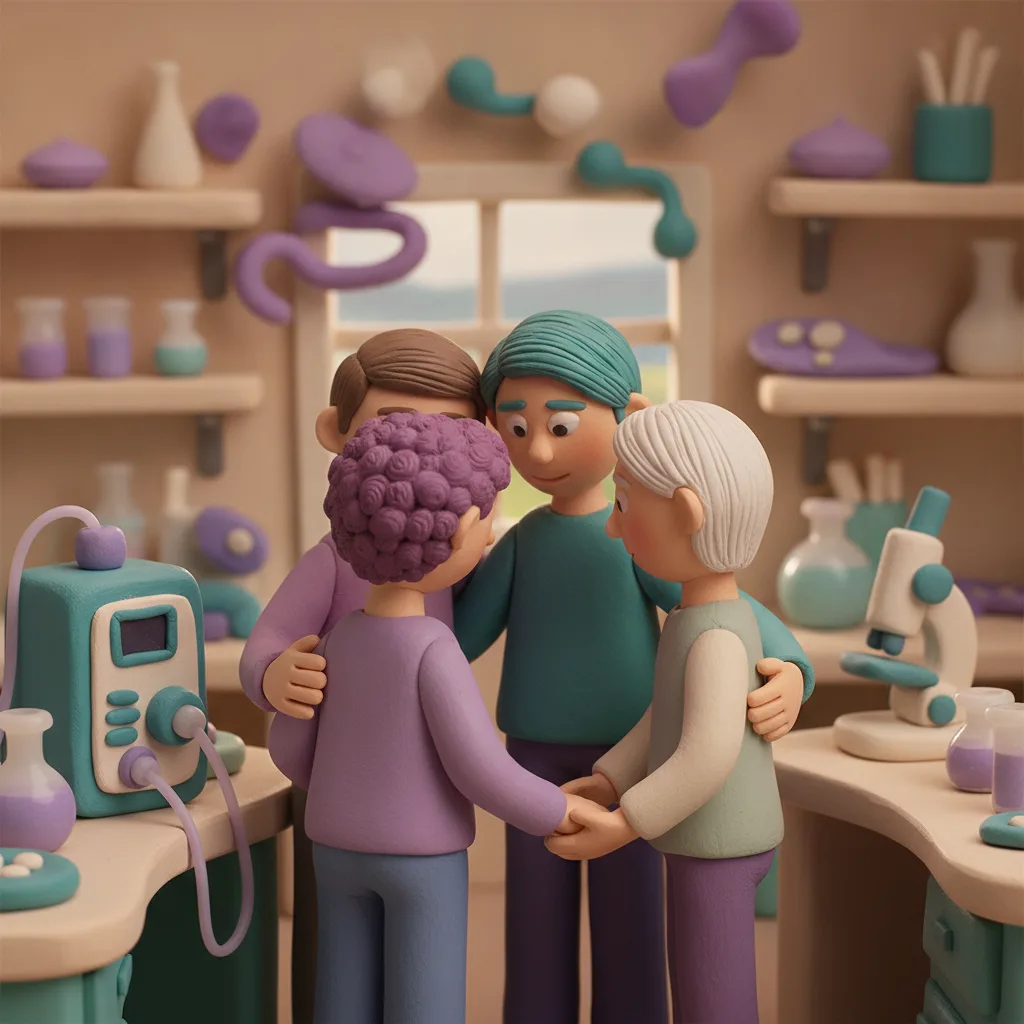

Gastric or gastroesophageal junction (GEJ) adenocarcinomas are aggressive cancers, often spreading quickly to nearby lymph nodes. Patients with these cancers face not only severe physical symptoms like pain, fatigue, and difficulty eating, but also profound emotional strain, challenges with daily activities, and significant financial burdens from treatment and travel. These impacts extend to changes in their sense of identity and relationships, highlighting a critical need for comprehensive supportive care beyond traditional medical interventions.1,2
Gastric cancer remains a significant public health challenge, with approximately 4,000 Canadians diagnosed and 2,000 dying from the disease in 2024 alone.1,2 The disease's rapid progression and metastatic potential highlight the intensity of treatment required, which often leaves patients with a complex array of physical and emotional sequelae. These long-term impacts, particularly for adolescents and young adults (AYA), extend far beyond the immediate post-treatment period, affecting their quality of life, social reintegration, and overall well-being. The medical community has historically focused on oncological outcomes, but the patient experience clearly demands more holistic support.1,2
Patients with gastric or GEJ adenocarcinoma consistently identify a range of negative impacts. These include persistent physical symptoms such as pain, chronic fatigue, and eating difficulties. But they also report substantial emotional strain, significant challenges with daily activities, and considerable financial burdens stemming from treatment costs and travel. Patients also highlight changes in their sense of identity and relationships, indicating a profound psychosocial toll that conventional oncology care often overlooks. Addressing these varied needs requires targeted interventions that acknowledge the unique developmental stage and life circumstances of AYA patients.1,2
Developing Targeted Support for Young Cancer Patients
The AYA-NAV intervention, detailed in a 2026 Cancer Control paper, aimed to address these identified gaps by developing educational guidance sessions specifically for adolescents and young adults with cancer and their caregivers.1 This initiative recognized that AYA patients face distinct challenges compared to younger children or older adults, including navigating identity formation, educational pursuits, career development, and establishing independent relationships, all while contending with a life-threatening illness and its arduous treatment. The intervention's design was informed by direct patient input, ensuring that the content and delivery methods were relevant and resonant with the target population's lived experiences.1
The development process for these educational guidance sessions involved a systematic approach, incorporating feedback from AYA patients themselves, their caregivers, and healthcare professionals. This iterative process ensured that the sessions covered topics deemed most important by those directly affected by cancer. Key areas of focus included coping strategies for physical symptoms, managing emotional distress, navigating social reintegration, addressing body image changes, and planning for future educational or vocational goals. The goal was to empower AYA patients and their caregivers with practical tools and knowledge to better manage the long-term consequences of cancer and its treatment.1
The AYA-NAV intervention's educational sessions were structured to be interactive and adaptable, delivered in formats that resonated with young people. This included a blend of didactic content, group discussions, and practical exercises designed to foster a sense of community and shared experience among participants. The involvement of caregivers was also a deliberate choice, acknowledging their essential role in supporting AYA patients and recognizing their own needs for information and emotional support. The sessions provided a safe space for families to discuss sensitive topics, share experiences, and learn from both facilitators and peers.1
The Role of Creative Therapies in Cancer Care
Beyond structured educational guidance, creative therapies are also emerging as valuable components of supportive cancer care. A mixed-methods study published in Support Care Cancer in 2026 explored the implementation of video-based group music therapy during cancer treatment.2 This approach aimed to leverage the therapeutic power of music to mitigate some of the emotional and psychological burdens identified by patients, particularly the emotional strain and difficulty with daily activities. Music therapy offers a non-pharmacological intervention that can be tailored to individual preferences and group dynamics, providing a creative outlet for expression and connection.2
The video-based format of the music therapy sessions addressed practical barriers, such as patient fatigue, mobility issues, and infection control concerns, which often limit participation in in-person group activities during active cancer treatment. This remote delivery allowed patients to engage from the comfort and safety of their homes, making the therapy more accessible to a broader population, including those undergoing intensive chemotherapy or radiation. The study's mixed-methods design allowed for both quantitative assessment of symptom reduction and qualitative insights into patients' experiences and perceptions of the therapy.2
Participants in the music therapy groups reported benefits ranging from reduced anxiety and improved mood to enhanced social connection with other patients. The shared experience of creating and listening to music fostered a sense of community, helping to combat the isolation often felt by cancer patients. The therapy provided a distraction from pain and treatment side effects, offering moments of respite and joy amidst a challenging medical journey. For many, it also served as a means of emotional expression, allowing them to process difficult feelings in a supportive environment.2
Addressing the Broader Impact of Cancer
The insights from both the AYA-NAV intervention and the music therapy study reinforce the comprehensive nature of cancer's impact. Patients consistently highlight financial burdens as a major stressor, often exacerbated by treatment-related travel and time off work. These economic pressures can significantly affect a patient's ability to access care, adhere to treatment, and maintain a reasonable quality of life. Any holistic support program must, therefore, consider these practical realities and integrate resources or guidance on financial planning and support services.1,2
The profound changes in sense of identity and relationships are particularly salient for AYA patients. Cancer diagnosis and treatment during formative years can disrupt normal developmental trajectories, leading to feelings of alienation, body image issues, and challenges in forming or maintaining peer relationships. The educational guidance sessions directly addressed these identity shifts, providing a platform for self-reflection and strategies for navigating social interactions post-treatment. Similarly, the group setting of music therapy offered a space for patients to connect with others who understood their experiences, validating their feelings and fostering a sense of belonging.1,2
While these interventions show promise, the open-label design of such supportive care studies is an obvious caveat. Patients and facilitators are aware of the intervention, which can introduce bias. But, for psychosocial interventions, blinding is often impractical or unethical. The primary goal is to assess feasibility, acceptability, and initial signals of benefit, which these studies successfully achieved. Future research will need to incorporate more rigorous control groups and objective measures of well-being to quantify the long-term impact of these programs. The Oxford Handbook of Oncology (4th ed) provides a concise reference for current oncology practice, but the psychosocial aspects of care often require a broader, more integrated approach.
The trials were not powered to detect differences in specific subgroups, such as those with different cancer stages or treatment regimens, and that gap matters for tailoring interventions. The generalizability of these findings, particularly for the AYA-NAV intervention, may also be limited by the specific cultural and healthcare context of the study population. But the consistent identification of similar psychosocial needs across different studies and patient populations suggests that these types of interventions hold broad relevance.1,2
The Next Steps for Integrated Cancer Care
The development of structured educational guidance and the implementation of creative therapies like music therapy represent important steps toward a more patient-centered approach to cancer care. These interventions move beyond simply treating the disease to actively supporting the whole person, addressing the complex relationship of physical, emotional, social, and financial challenges that accompany a cancer diagnosis. The integration of such programs into standard oncology care pathways could significantly improve the long-term quality of life for cancer survivors, particularly for vulnerable AYA populations.1,2
The next phase of research should focus on larger, multi-center trials to validate the efficacy of these interventions across diverse patient populations and healthcare settings. It will also be critical to develop standardized assessment tools to measure the impact of these programs on patient-reported outcomes, such as quality of life, psychological distress, and social functioning. Exploring the cost-effectiveness of these interventions will be essential for advocating for their widespread implementation within resource-constrained healthcare systems. The ultimate goal is to ensure that every cancer patient receives not only the best possible medical treatment but also the comprehensive psychosocial support needed to thrive beyond their diagnosis.1,2
The persistent focus on purely oncological endpoints often overshadows the profound, long-term psychosocial burdens patients endure. These studies highlight that emotional strain, identity shifts, and financial toxicity are not mere side effects; they are central to the cancer experience, especially for adolescents and young adults. Ignoring these aspects means failing to treat the whole patient, leaving them to navigate complex emotional challenges alone.
For clinicians, this means moving beyond a checklist approach to symptom management. Integrating structured educational guidance and accessible creative therapies, even video-based options, should become standard practice. The evidence is clear: patients need tools and support to manage the non-physical consequences of cancer, and these interventions offer a tangible starting point.
The industry must recognize that supportive care is not an optional add-on but an integral part of comprehensive cancer management. Investment in developing and scaling these programs, ensuring they are reimbursable and accessible, will ultimately improve patient outcomes and reduce the long-term societal costs associated with untreated psychosocial distress. The current model often leaves patients and their families to shoulder these burdens, which is unsustainable.
- The Pivot Interventions focused on emotional and psychosocial support are being formally developed and evaluated for young cancer patients, moving beyond purely physical symptom management.
- The Data Educational guidance sessions for adolescents and young adults (AYA) with cancer and their caregivers were developed as a component of the AYA-NAV intervention, directly addressing patient-identified needs.1
- The Action Clinicians should consider integrating structured emotional support programs, such as educational guidance and group music therapy, into post-treatment care plans for AYA cancer patients and their families.
ART-2026-1064
·09/26
Drafted with AI assistance, reviewed and approved by the editorial team. This publication is intended for healthcare professionals, researchers, and life science industry professionals. Content is provided for informational and educational purposes only and does not constitute medical advice.

I cover NHS policy, NICE guidance, and the gap between what the evidence says and what gets commissioned. I bring a health economics background to reporting on how health systems make decisions under uncertainty.
Cite This Article
Mistry D, Lopes W. Emotional support after cancer: what works for young adults?. The Life Science Feed. Published August 10, 2026. Updated September 15, 2026. Accessed September 24, 2026. https://thelifesciencefeed.com/oncology/solid-tumors/insights/emotional-support-after-cancer-what-works-for-young-adults.
Editorial & AI Standards
All content is researched from peer-reviewed, open-access sources: published trial data, clinical guidelines, and regulatory filings. AI tools are used solely to structure and summarise that evidence; no AI-generated conclusions appear without editor verification against the primary source.
Every article is reviewed by a named editor before publication. Source citations are listed in the References section. This content does not represent the views of any pharmaceutical company, medical device manufacturer, or healthcare provider.
Licence & Rights
© 2026 The Life Science Feed. All rights reserved. Unless otherwise indicated, all content is the property of The Life Science Feed and may not be reproduced, distributed, or transmitted in any form or by any means without prior written permission.
Medical Disclaimer
The information provided on The Life Science Feed is for educational and informational purposes only. It is not intended as a substitute for professional medical advice, diagnosis, or treatment. Always seek the advice of your physician or other qualified healthcare provider regarding any medical condition or treatment decision. Never disregard professional medical advice or delay in seeking it because of something you have read on this website.
References
1. DiCola K, Khurana RK, Alvarado S. Development of Educational Guidance Sessions for Adolescents and Young Adults With Cancer and Their Caregivers: A Component of the AYA-NAV Intervention. Cancer Control. 2026.
2. Grapp M, Flock C, Friederich HC. Implementing video-based group music therapy during cancer treatment: insights from a mixed-methods study. Support Care Cancer. 2026.