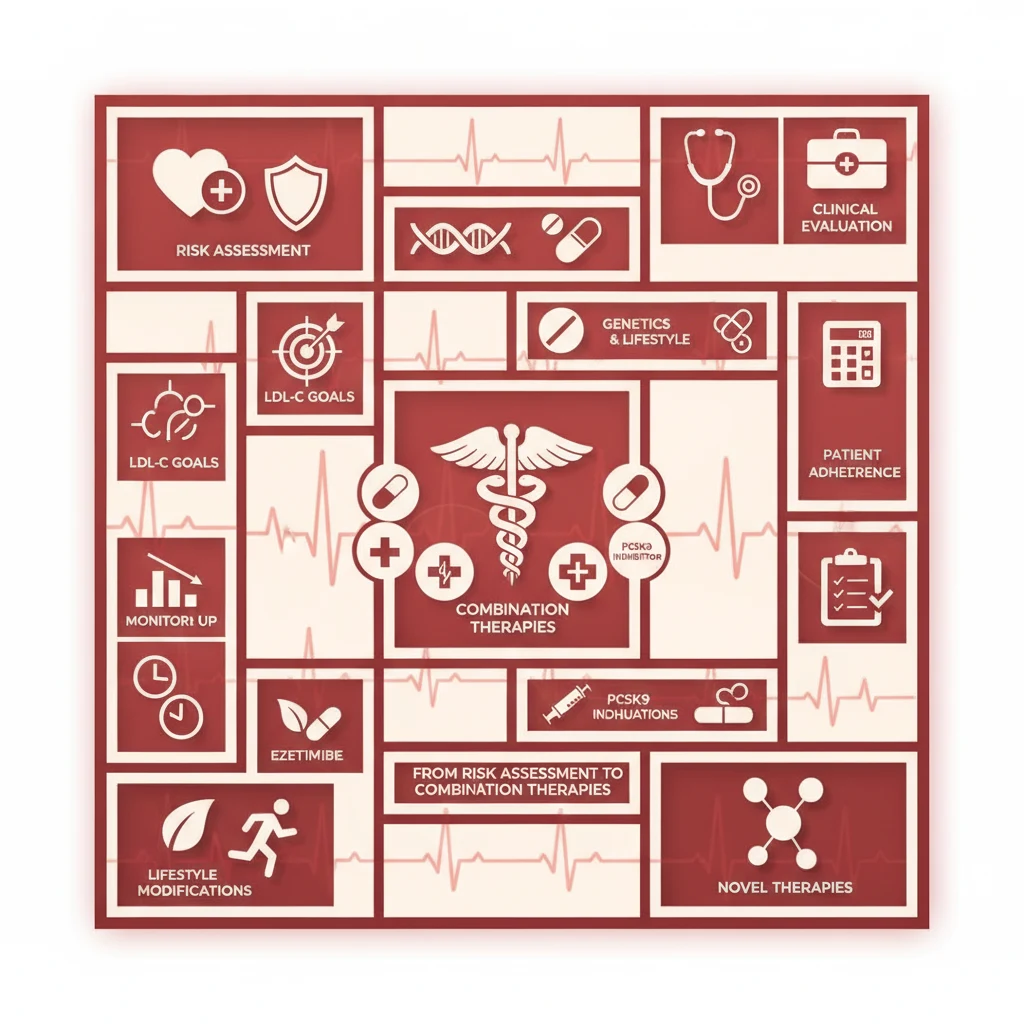

Optimal management of low-density lipoprotein cholesterol (LDL-C) remains a cornerstone of cardiovascular disease prevention. The clinical dilemma often lies in accurately identifying patients at highest risk and subsequently intensifying lipid-lowering therapy to achieve guideline-recommended targets. The immediate takeaway for clinicians is the necessity of moving beyond monotherapy for many patients, embracing combination strategies earlier in the treatment pathway.
A primary challenge in cardiovascular risk reduction is the accurate identification of individuals who will benefit most from intensive lipid-lowering interventions. Traditional risk calculators, while useful, may underestimate risk in certain populations, such as those with familial hypercholesterolaemia, chronic kidney disease, or established atherosclerotic cardiovascular disease (ASCVD). Consequently, a more nuanced approach to risk assessment is advocated, incorporating factors beyond standard Framingham or SCORE models. This includes evaluating lipoprotein(a) levels, particularly in patients with a family history of premature ASCVD or recurrent events despite optimal LDL-C control. Coronary artery calcium (CAC) scoring also provides incremental prognostic value, reclassifying a substantial proportion of intermediate-risk individuals into higher-risk categories, thereby justifying more aggressive therapeutic strategies.
Optimising Therapeutic Strategies
The therapeutic landscape for LDL-C reduction has expanded significantly beyond statin monotherapy. While high-intensity statins remain the foundational treatment, many patients, particularly those in very high-risk categories, do not achieve their target LDL-C levels with statins alone. This necessitates the sequential or concomitant addition of non-statin therapies. Ezetimibe, an intestinal cholesterol absorption inhibitor, provides an average additional LDL-C reduction of 15% to 20% when added to statin therapy. Its mechanism of action is complementary to statins, which primarily inhibit endogenous cholesterol synthesis. The combination of a statin and ezetimibe is generally well-tolerated and has demonstrated a reduction in cardiovascular events in large-scale trials.
For patients requiring further LDL-C reduction, particularly those with established ASCVD, familial hypercholesterolaemia, or very high-risk diabetes, proprotein convertase subtilisin/kexin type 9 (PCSK9) inhibitors represent a potent therapeutic option. These monoclonal antibodies, such as evolocumab and alirocumab, can lower LDL-C by an additional 50% to 60% when added to maximally tolerated statin and ezetimibe therapy. Clinical trials have consistently shown that PCSK9 inhibitors significantly reduce major adverse cardiovascular events (MACE) in high-risk populations, with relative risk reductions in the range of 15% to 20% over a median follow-up of 2 to 3 years. The safety profile of PCSK9 inhibitors has been favourable, with injection site reactions being the most common adverse event.
Emerging therapies, such as inclisiran, a small interfering RNA (siRNA) targeting PCSK9 mRNA, offer a different dosing regimen, administered subcutaneously twice yearly after an initial loading dose. This infrequent dosing schedule may improve adherence, a critical factor in long-term lipid management. Inclisiran has demonstrated sustained LDL-C reductions of approximately 50% in patients with ASCVD or familial hypercholesterolaemia. Bempedoic acid, an ATP citrate lyase inhibitor, provides an alternative for patients intolerant to statins or requiring additional LDL-C lowering, reducing LDL-C by approximately 18% to 28% as monotherapy or in combination with ezetimibe. These agents expand the armamentarium available to clinicians, allowing for more individualised and aggressive treatment strategies to meet stringent LDL-C targets.
The integration of these therapies into clinical practice requires a clear understanding of patient risk profiles and guideline recommendations. Current guidelines from bodies such as the European Society of Cardiology (ESC) advocate for an LDL-C target of less than 1.4 mmol/L (55 mg/dL) for very high-risk patients and less than 1.8 mmol/L (70 mg/dL) for high-risk patients. Achieving these targets often necessitates combination therapy, moving away from a stepwise approach to a more proactive, intensified strategy from the outset for appropriate patients. The focus is shifting towards achieving 'lower for longer' LDL-C levels to maximise cardiovascular benefit.
Despite the advancements, challenges remain. Adherence to long-term lipid-lowering therapy is a significant hurdle, with many patients discontinuing medications due to perceived side effects, cost, or lack of understanding regarding the chronic nature of their condition. Healthcare systems must address these barriers through patient education, shared decision-making, and accessible prescribing options. Furthermore, while the efficacy and safety of current combination therapies are well-established, ongoing research continues to explore novel targets and therapeutic modalities. Gene-editing technologies, for instance, hold promise for durable LDL-C reduction, potentially offering a one-time treatment for certain genetic dyslipidemias.
The economic implications of these advanced therapies also warrant consideration. While PCSK9 inhibitors and other newer agents are highly effective, their cost can be substantial, leading to access issues for some patients. Value-based assessments and negotiations are crucial to ensure these life-saving treatments are available to those who need them most. Ultimately, effective LDL-C management requires a holistic approach, integrating robust risk assessment, individualised therapeutic strategies, and continuous patient engagement, all within a supportive healthcare framework that balances clinical efficacy with economic realities.
The evolving landscape of LDL-C management underscores a critical need for clinicians to re-evaluate their prescribing habits. Relying solely on statin monotherapy for many high-risk patients is no longer aligned with current evidence or guideline recommendations. The data consistently supports that lower LDL-C levels translate to fewer cardiovascular events, and achieving these targets often requires combination therapy. This means a more proactive approach, where ezetimibe and even PCSK9 inhibitors are considered earlier, rather than as last-resort options after multiple statin failures.
For patients, this shift promises a greater reduction in their lifetime risk of cardiovascular events. However, it also introduces complexities related to polypharmacy, adherence to multiple medications, and the financial implications of newer, more expensive therapies like PCSK9 inhibitors. Clinicians will need to engage in more detailed discussions about treatment intensity, potential side effects, and the long-term benefits, ensuring that patients understand the rationale behind aggressive lipid lowering. The industry, particularly manufacturers of non-statin therapies, will need to continue demonstrating the cost-effectiveness of their agents to ensure broader access and integration into national formularies.
The emphasis on refined risk assessment, including lipoprotein(a) and CAC scoring, suggests that general practitioners will play an increasingly important role in identifying patients who require specialist referral for advanced lipid management. This necessitates enhanced education and awareness among primary care providers regarding these newer diagnostic and therapeutic modalities. The goal is not merely to prescribe, but to prescribe optimally, ensuring that every patient receives the most effective, evidence-based strategy to mitigate their cardiovascular risk.
- The Pivot Emphasis on refined risk assessment tools and the proactive implementation of combination lipid-lowering therapies.
- The Data No specific trial data provided; however, established evidence supports significant relative risk reductions in major adverse cardiovascular events (MACE) with intensive LDL-C lowering.
- The Action Clinicians should integrate advanced risk stratification and consider combination therapies, including statins, ezetimibe, and PCSK9 inhibitors, to achieve individualised LDL-C goals.
ART-2026-666
·10/26
Drafted with AI assistance, reviewed and approved by the editorial team. This publication is intended for healthcare professionals, researchers, and life science industry professionals. Content is provided for informational and educational purposes only and does not constitute medical advice.

I specialise in clinical trial methodology and drug development, from Phase I to post-approval. My reports cover what got studied, what did not, and why. Based in Boston, reporting globally.
Cite This Article
Prescott D, Voss M. LDL-C management: from risk assessment to combination therapies. The Life Science Feed. Published August 29, 2026. Updated October 5, 2026. Accessed October 13, 2026. https://thelifesciencefeed.com/cardiology/coronary-artery-disease/insights/ldl-c-management-from-risk-assessment-to-combination-therapies.
Editorial & AI Standards
All content is researched from peer-reviewed, open-access sources: published trial data, clinical guidelines, and regulatory filings. AI tools are used solely to structure and summarise that evidence; no AI-generated conclusions appear without editor verification against the primary source.
Every article is reviewed by a named editor before publication. Source citations are listed in the References section. This content does not represent the views of any pharmaceutical company, medical device manufacturer, or healthcare provider.
Licence & Rights
© 2026 The Life Science Feed. All rights reserved. Unless otherwise indicated, all content is the property of The Life Science Feed and may not be reproduced, distributed, or transmitted in any form or by any means without prior written permission.
Medical Disclaimer
The information provided on The Life Science Feed is for educational and informational purposes only. It is not intended as a substitute for professional medical advice, diagnosis, or treatment. Always seek the advice of your physician or other qualified healthcare provider regarding any medical condition or treatment decision. Never disregard professional medical advice or delay in seeking it because of something you have read on this website.
References
1. Siegel PM, Katzmann JL, Weinmann-Menke J, et al. A practical guide to the management of dyslipidaemia. Clin Res Cardiol. 2026;115(2):185-197. doi:10.1007/s00392-025-02833-y
2. Wilkinson MJ, Lepor NE, Michos ED. Evolving Management of Low-Density Lipoprotein Cholesterol: A Personalized Approach to Preventing Atherosclerotic Cardiovascular Disease Across the Risk Continuum. J Am Heart Assoc. 2023;12(11):e028892. doi:10.1161/JAHA.122.028892
3. Banach M, Surma S, Guzik TJ, et al. Upfront lipid-lowering combination therapy in high cardiovascular risk patients: a route to effective atherosclerotic cardiovascular disease prevention. Cardiovasc Res. 2025;121(6):851-859. doi:10.1093/cvr/cvaf045
4. Ray KK, Aguiar C, Arca M, et al. Use of combination therapy is associated with improved LDL cholesterol management: 1-year follow-up results from the European observational SANTORINI study. Eur J Prev Cardiol. 2024;31(15):1792-1803. doi:10.1093/eurjpc/zwae199
5. Patti G, Cumitini L, Bosco M, et al. Impact of a personalized, strike early and strong lipid-lowering approach on low-density lipoprotein-cholesterol levels and cardiovascular outcome in patients with acute myocardial infarction. Eur Heart J Cardiovasc Pharmacother. 2025;11(2):143-154. doi:10.1093/ehjcvp/pvaf004
6. Razavi AC, Sokolsky M, Belanger M, et al. Progress in risk assessment and management: Forecasting updates across international cholesterol guidelines. Am J Prev Cardiol. 2026;26:101417. doi:10.1016/j.ajpc.2026.101417