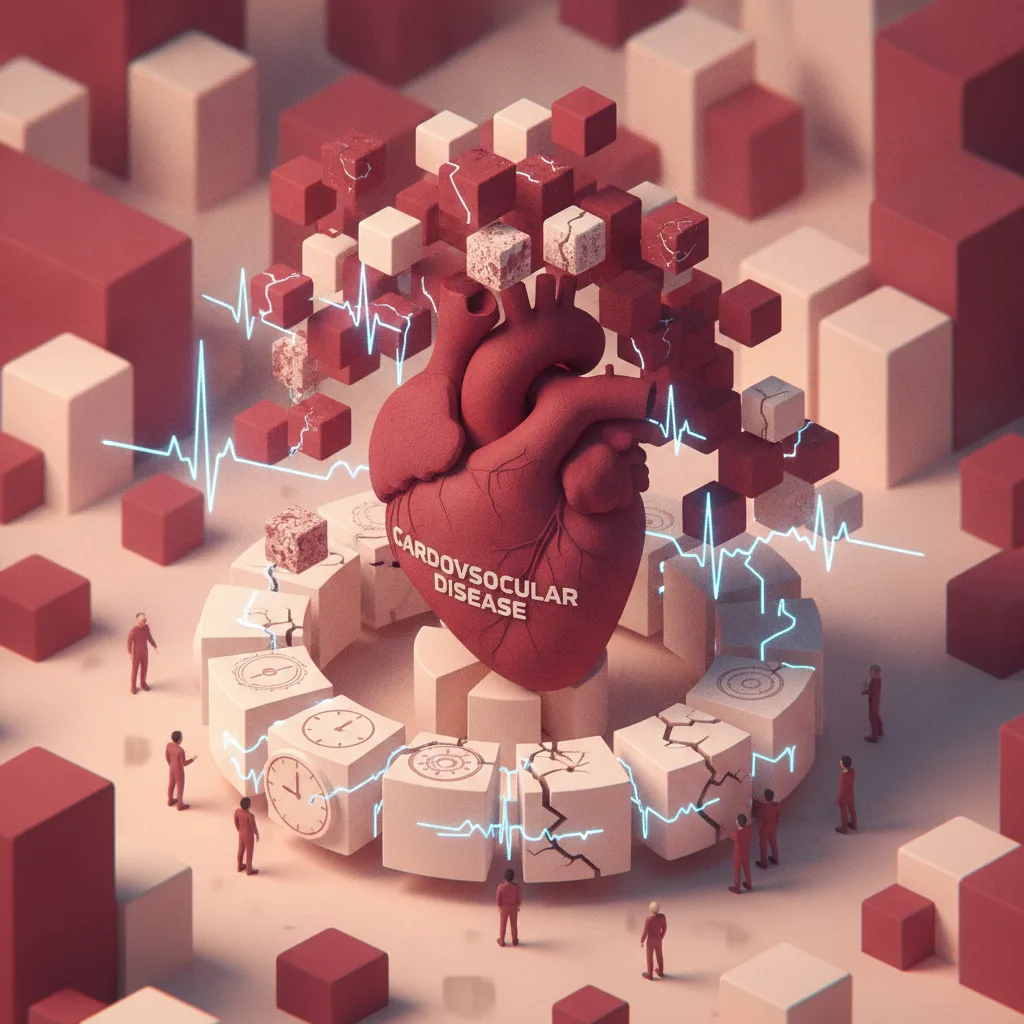

The heart, like many organs, operates on a precise daily schedule, governed by the body's internal circadian clock. When this intricate timing mechanism falters, the consequences extend beyond a mere missed beat, impacting the very foundation of cardiovascular health. Understanding how disease itself can break this clock offers new avenues for intervention.
The human cardiovascular system is not a static entity; it orchestrates a complex symphony of functions that ebb and flow with the 24-hour cycle, driven by circadian rhythms. These rhythms, fundamental to physiological mechanisms, allow the body to synchronize its internal workings with the external environment's demands. Blood pressure, heart rate, and vascular tone all exhibit distinct daily patterns, ensuring optimal function and adaptation. When these rhythms become dysfunctional, the system falters, paving the way for disease.1
The machinery underpinning these circadian rhythms, known as the 'molecular clock,' is a sophisticated network of genes and proteins present in nearly every cell. This clock can be influenced by both external factors, such as light exposure, and internal factors, including disease states. For instance, disrupting light exposure, a common modern lifestyle factor, can lead to elevated blood pressure, which is detrimental to cardiovascular health. But the relationship is not unidirectional. Cardiovascular disease itself possesses the capacity to disrupt this molecular clock, thereby further exacerbating its own pathology. This creates a vicious cycle, where the disease not only manifests but actively undermines the body's intrinsic regulatory systems.1
The Bidirectional Breakdown
Researchers have focused on this latter aspect: the direct impact of cardiovascular disease on circadian machinery. This area of investigation, primarily explored in preclinical and translational studies, aims to elucidate how a compromised cardiovascular system actively remodels its own temporal regulation. The goal is two-fold: to identify novel therapeutic targets through circadian interventions and to inform preclinical cardiovascular researchers about the time-of-day impacts on their experimental results.1
The importance of blood pressure regulation cannot be overstated. It is a tightly controlled physiological parameter, with its daily rhythms reflecting the body's adaptation to varying activity levels and metabolic demands. A healthy individual typically exhibits a 'dipping' pattern, where blood pressure decreases during sleep. A 'non-dipping' pattern, or even a 'reverse dipping' pattern, where blood pressure remains high or increases during sleep, is a known risk factor for adverse cardiovascular events. These abnormal patterns are often a direct consequence of a broken molecular clock.1
The molecular clock comprises a core set of clock genes, including Bmal1, Clock, Per, and Cry, which operate in a transcriptional-translational feedback loop. These genes regulate the expression of numerous clock-controlled genes, which in turn govern a vast array of physiological processes. When cardiovascular disease takes hold, it can directly interfere with the expression and activity of these core clock genes, not just in the heart, but across multiple critical organs.1
In preclinical models, investigators have meticulously mapped the impact of cardiovascular disease on circadian machinery in several key tissues. The brain, particularly regions involved in autonomic regulation and neuroendocrine function, shows significant alterations. For example, hypertension, a hallmark of cardiovascular disease, can disrupt clock gene expression in the suprachiasmatic nucleus (SCN), the body's master pacemaker, as well as in peripheral brain regions that control blood pressure. This disruption can lead to a desynchronization between the central clock and peripheral clocks, further impairing cardiovascular homeostasis.1
The heart itself is a primary target. Cardiac myocytes possess their own intrinsic molecular clocks, which regulate processes such as contractility, metabolism, and ion channel function. In models of heart failure or myocardial infarction, the expression of core clock genes like Bmal1 and Per2 is often dysregulated. This can lead to impaired cardiac function, altered energy metabolism within the heart, and increased susceptibility to arrhythmias. The heart's ability to adapt to daily demands is compromised, contributing to disease progression.1
The aorta, a major blood vessel, also exhibits circadian rhythms in its vascular tone and endothelial function. Cardiovascular disease, particularly hypertension and atherosclerosis, can profoundly impact the molecular clock within aortic smooth muscle cells and endothelial cells. This disruption can lead to increased vascular stiffness, impaired vasodilation, and heightened inflammatory responses, all of which contribute to the progression of vascular pathology. The vessel's ability to respond appropriately to daily fluctuations in blood flow and pressure is diminished.1
The kidneys play a crucial role in blood pressure regulation through the renin-angiotensin-aldosterone system and fluid balance. Renal cells also house molecular clocks that govern processes like glomerular filtration rate, electrolyte reabsorption, and hormone secretion. In models of chronic kidney disease or hypertension, the circadian machinery in the kidney becomes dysfunctional. This can lead to impaired sodium excretion, altered blood pressure control, and accelerated kidney damage, creating a feedback loop that further exacerbates cardiovascular disease.1
The implications of this bidirectional relationship are substantial. If cardiovascular disease actively breaks the molecular clock, then therapeutic strategies that aim to restore or reinforce circadian rhythms could offer a synergistic approach to treatment. These 'circadian interventions' might include timed drug administration, light therapy, or lifestyle modifications targeting sleep and activity patterns. Combining such interventions with existing cardiovascular therapies could potentially enhance efficacy and improve patient outcomes.1
But the precise mechanisms by which cardiovascular disease disrupts the molecular clock are still under active investigation. It is not always clear whether the clock disruption is a cause or a consequence, or both, in the disease process. The complexity of the molecular clock, with its multiple feedback loops and tissue-specific variations, makes untangling these relationships challenging. Furthermore, translating findings from preclinical models to human clinical practice requires careful consideration, as species differences in circadian regulation exist.1
The neurobiology of love and addiction, while seemingly disparate, also involves central nervous system signaling and energy metabolism, which are intrinsically linked to circadian rhythms. While the provided research abstracts do not directly connect these concepts to the specific mechanisms of cardiovascular disease disrupting the clock, they underscore the pervasive influence of biological timing on complex physiological and psychological states. This broader context suggests that systemic disruptions, such as those seen in cardiovascular disease, could have far-reaching effects on overall well-being and brain function, beyond the direct cardiac impact.2,3
The current body of evidence, derived largely from preclinical studies, provides a strong foundation for future research. The next steps involve moving these insights into translational studies and, eventually, clinical trials. Identifying specific clock genes or pathways that are most vulnerable to cardiovascular disease and most amenable to intervention will be critical. The trial was not powered to detect differences in human populations, and that gap matters. Whether benefits extend to broader groups of patients with varying cardiovascular conditions remains unclear.
The notion that cardiovascular disease actively sabotages the body's internal clock is not merely an academic curiosity; it presents a compelling argument for a more holistic approach to patient management. If hypertension or heart failure is not just a disease of pressure or pump function, but also a disease of timing, then our therapeutic strategies must evolve beyond traditional pharmacology. We must consider the chronobiology of our interventions.
Clinicians should recognize that a patient's sleep patterns, exposure to light, and even meal timing could be as relevant to their cardiovascular prognosis as their lipid profile. While direct circadian interventions are not yet standard practice, understanding this bidirectional pathology underscores the importance of lifestyle modifications. Advising patients on consistent sleep-wake cycles and regular physical activity gains new weight when framed as supporting the body's intrinsic regulatory systems.
The pharmaceutical industry, often focused on molecular targets, might find fertile ground in developing chronotherapies. Drugs designed to be administered at specific times of day, or agents that directly modulate clock gene expression, could offer enhanced efficacy or reduced side effects. The current evidence, while preclinical, points to a future where drug timing is not an afterthought but a core component of treatment strategy.
Still, the practical implementation of circadian interventions in a busy clinical setting presents challenges. Adherence to strict timing protocols can be difficult for patients, and the precise 'optimal' timing for various interventions in diverse patient populations is still largely undefined. This area demands rigorous clinical trials to move beyond preclinical observations and establish clear, actionable guidelines for integrating chronobiology into cardiovascular care.
- The Pivot Cardiovascular disease directly disrupts the molecular clock, creating a feedback loop that exacerbates existing pathology.
- The Data Preclinical models show cardiovascular disease alters circadian machinery in the brain, heart, aorta, and kidney.
- The Action Clinicians should consider the potential for harnessing the molecular clock through circadian interventions in combination with other treatments.
ART-2026-701
·10/26
Drafted with AI assistance and checked by automated style rules. Not individually read by an editor. This publication is intended for healthcare professionals, researchers, and life science industry professionals. Content is provided for informational and educational purposes only and does not constitute medical advice.

Science writer covering the frontier between basic research and clinical practice. I am interested in the moment a mechanism becomes a therapy, and everything that can go wrong in between.
Cite This Article
Aldrich M, Voss M. Cardiovascular disease disrupts circadian rhythms, exacerbating pathology. The Life Science Feed. Published July 27, 2026. Updated October 6, 2026. Accessed October 25, 2026. https://thelifesciencefeed.com/cardiology/heart-failure/research/cardiovascular-disease-disrupts-circadian-rhythms-exacerbating-pathology.
Editorial & AI Standards
Content is drafted with AI tools from peer-reviewed, open-access sources such as published trial data, clinical guidelines, and regulatory filings. This article is checked by automated style rules but is not individually read by an editor, so check the cited source before relying on a figure.
Source citations are listed in the References section. This content does not represent the views of any pharmaceutical company, medical device manufacturer, or healthcare provider.
Licence & Rights
© 2026 The Life Science Feed. All rights reserved. Unless otherwise indicated, all content is the property of The Life Science Feed and may not be reproduced, distributed, or transmitted in any form or by any means without prior written permission.
Medical Disclaimer
The information provided on The Life Science Feed is for educational and informational purposes only. It is not intended as a substitute for professional medical advice, diagnosis, or treatment. Always seek the advice of your physician or other qualified healthcare provider regarding any medical condition or treatment decision. Never disregard professional medical advice or delay in seeking it because of something you have read on this website.
References
1. Eikenberry SA, Gumz ML. Watching the clock: Blood pressure and cardiovascular disease influence circadian machinery in pre-clinical models. J Mol Cell Cardiol 2026. doi:10.1016/j.yjmcc.2025.12.010
2. Esch T, Stefano GB. The neurobiology of love and addiction: Central nervous system signaling and energy metabolism. Cogn Affect Behav Neurosci 2025. doi:10.3758/s13415-025-01333-w
3. Carroll D, Edwards DJ, Riley R. Knowledge Connects Our Hearts and Lands: A Qualitative Research Study on Stewarding Indigenous Traditional Ecological Knowledges for Community Well-Being. Int J Environ Res Public Health 2025. doi:10.3390/ijerph22101573









