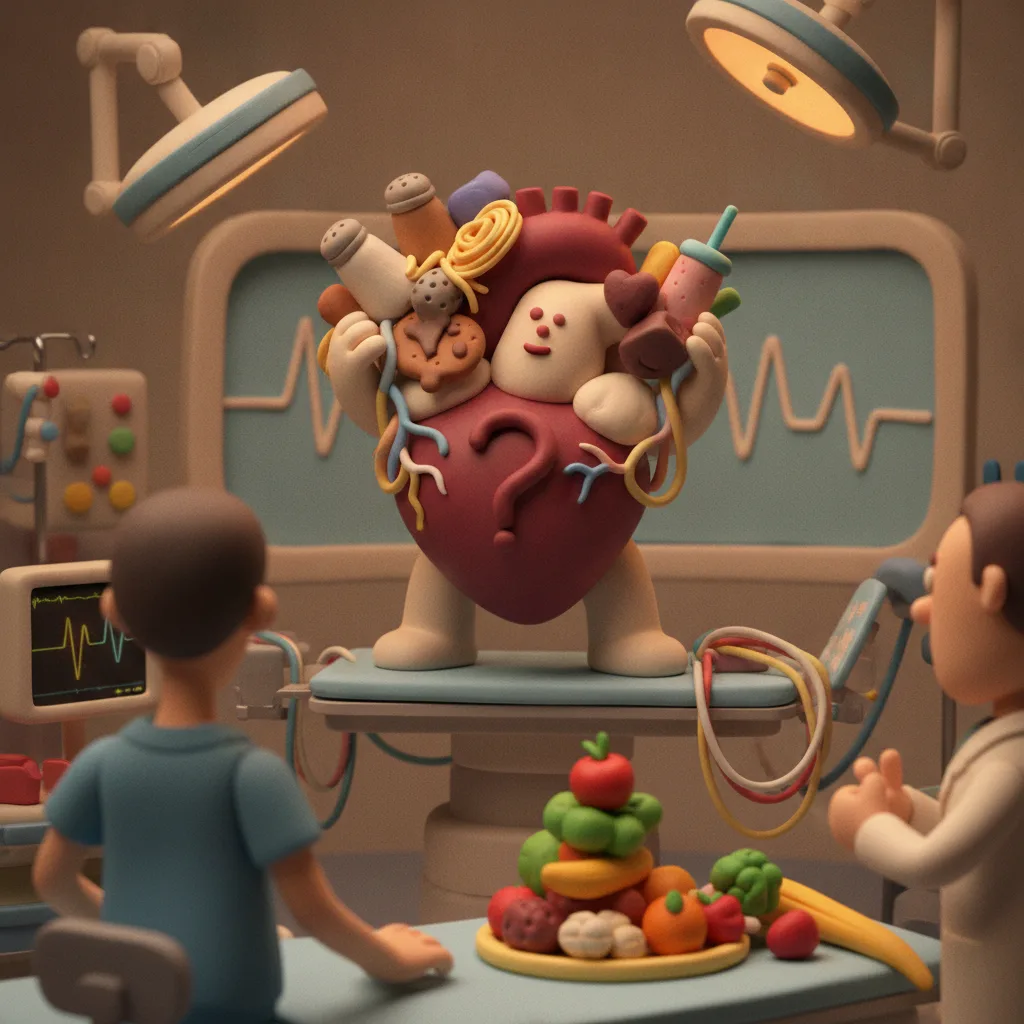

Managing hypertension often hinges on lifestyle modifications, with dietary interventions playing a key role in blood pressure control. Clinicians frequently advise patients on sodium restriction, increased fruit and vegetable intake, and moderation of saturated fats. But the sheer volume of information and the need for personalized plans present a significant challenge for both patients and busy practitioners.
The advent of large language models (LLMs) promised a new frontier in patient education and support, offering the potential for instant, tailored advice. But a closer look at their output reveals a concerning gap between their capabilities and the complex demands of evidence-based dietary planning for chronic conditions like hypertension.
Hypertension, a pervasive global health concern, remains a leading modifiable risk factor for cardiovascular disease, stroke, and kidney failure. Lifestyle interventions, particularly dietary changes, form the cornerstone of its management, often preceding or complementing pharmacological therapy. Guidelines from bodies like the European Society of Cardiology (ESC) and the American Heart Association (AHA) consistently emphasize the importance of reducing sodium intake, increasing potassium consumption, adopting a diet rich in fruits, vegetables, and whole grains, and limiting saturated and trans fats. The Dietary Approaches to Stop Hypertension (DASH) diet is a prime example of an evidence-based eating pattern specifically designed to lower blood pressure.
The challenge for clinicians lies in translating these broad guidelines into practical, patient-specific meal plans that account for individual preferences, cultural contexts, socioeconomic factors, and comorbid conditions. This requires a deep understanding of nutritional science, patient psychology, and effective communication strategies. The promise of artificial intelligence, specifically large language models, was to democratize this expertise, offering personalized dietary guidance at scale. These models, trained on vast datasets of text, can generate human-like responses to complex queries, making them seem ideal candidates for crafting health advice.
The LLM approach to dietary advice
Large language models operate by predicting the most probable sequence of words based on their training data. When prompted to create a diet plan for hypertension, they draw upon patterns and information gleaned from countless articles, scientific papers, and general health advice available on the internet. This process, while impressive for general knowledge tasks, presents inherent limitations when applied to highly specific, clinically sensitive domains like medical nutrition. The models lack true understanding or clinical reasoning; they merely synthesize information. They do not possess the ability to critically evaluate the hierarchy of evidence, differentiate between anecdotal advice and peer-reviewed research, or adapt recommendations based on a dynamic patient profile.
When tasked with generating a diet plan for a patient with hypertension, LLMs typically produce a list of general recommendations. These often include advice to reduce salt, eat more vegetables, and choose lean proteins. While these statements are not inherently incorrect, they frequently lack the specificity and actionable detail required for effective implementation. For instance, a model might advise 'reduce sodium' without specifying target daily intake in milligrams, or 'eat more fruits' without suggesting portion sizes or types of fruit that might be particularly beneficial for potassium intake. This level of generality renders the advice largely unhelpful for a patient seeking concrete steps.
Missing the mark on clinical precision
A critical failing of current LLMs in this context is their inability to consistently adhere to established clinical guidelines with the necessary precision. For example, the DASH diet, a cornerstone of hypertension management, provides specific daily and weekly serving recommendations for various food groups. LLM-generated plans rarely replicate this level of detail. They might mention 'whole grains' but fail to specify 6-8 servings per day, or 'nuts and seeds' without the recommended 4-5 servings per week. This omission of quantitative targets means patients receive vague suggestions rather than a structured plan that aligns with proven efficacy.
Another significant issue is the potential for conflicting or outdated information. Because LLMs draw from a broad and often unfiltered internet corpus, they can inadvertently incorporate advice that is not evidence-based, or even contradictory. A plan might simultaneously recommend high-protein intake for satiety while failing to adequately address the potential for increased saturated fat if protein sources are not carefully selected. They also struggle with the dynamic nature of nutritional science, sometimes presenting older recommendations that have since been refined or superseded by newer evidence. This 'hallucination' of facts, where models generate plausible but incorrect information, is a known limitation that becomes particularly dangerous in a medical context.
The absence of personalization and safety checks
Effective dietary counseling for hypertension is inherently personalized. It considers not only the patient's blood pressure but also their age, sex, weight, activity level, existing comorbidities (e.g., diabetes, renal impairment), medication regimen, allergies, and cultural food preferences. Current LLMs, even with detailed prompts, struggle to integrate these varied factors into a truly tailored plan. They might generate a generic plan that, while broadly healthy, could be inappropriate or even harmful for a specific individual. For instance, a patient with chronic kidney disease requires careful monitoring of potassium and phosphorus intake, which a general LLM-generated 'healthy' diet might inadvertently exceed.
The models also lack the capacity for essential safety checks. A human dietitian or physician would screen for potential drug-nutrient interactions (e.g., grapefruit with certain calcium channel blockers), assess for dysphagia, or identify cultural food practices that might make adherence difficult. LLMs do not perform these critical clinical assessments. They cannot engage in a dialogue to understand a patient's readiness for change, their perceived barriers, or their literacy level regarding nutritional information. This absence of a feedback loop and adaptive reasoning means the advice is static and potentially unsafe. For clinicians, a reliable tool for home blood pressure monitoring, such as an Omron M3 Comfort Blood Pressure Monitor, remains a far more practical and evidence-based recommendation for patient self-management than an LLM-generated diet plan.
The path forward for AI in nutrition
The current state of LLMs indicates they are not yet suitable for generating clinical-grade dietary advice for complex conditions like hypertension. Their utility is limited to providing very general information, which is readily available from numerous reputable sources. The problem is not simply a matter of more data; it is a fundamental limitation in their architecture that prevents true clinical reasoning, contextual understanding, and personalized risk assessment. They operate on statistical probabilities of word sequences, not on an understanding of human physiology or medical ethics.
For AI to become a valuable tool in dietary management, future iterations would need to incorporate several key features. These include integration with structured medical knowledge bases (e.g., SNOMED CT, ICD-10), explicit reasoning engines capable of applying clinical guidelines, and mechanisms for real-time patient data input and adaptive feedback. Any AI-generated dietary plan would require rigorous validation in clinical trials to demonstrate efficacy and safety, a standard that has not been met by current LLM applications. Until then, the role of the human clinician, with their capacity for empathy, critical thinking, and sound judgment, remains irreplaceable in guiding patients toward effective hypertension management through diet.
The enthusiasm surrounding large language models has, perhaps predictably, outpaced their actual utility in complex clinical scenarios. For hypertension management, where dietary adherence is paramount, relying on LLM-generated meal plans is a gamble. They simply do not provide the granular, evidence-based, and personalized guidance that patients require to make meaningful changes to their blood pressure.
Clinicians must be acutely aware of these limitations. Directing patients to an LLM for dietary advice risks exposing them to generic, potentially conflicting, or even harmful recommendations. It also bypasses the essential educational and motivational role of a healthcare professional or registered dietitian, whose expertise extends far beyond a simple list of foods.
The current state of AI in this domain highlights the enduring value of human clinical judgment and established resources. Instead of hoping an algorithm can replace a dietitian, we should continue to emphasize structured dietary education, validated tools like the DASH diet, and personalized counseling. The Oxford Handbook of Cardiology, for instance, offers far more reliable and clinically relevant guidance on lifestyle interventions for hypertension than any current LLM.
The promise of AI in healthcare is real, but its application must be judicious and evidence-based. For now, when it comes to crafting diet plans for hypertension, the human touch remains indispensable.
- The Pivot Large language models, despite their advanced conversational abilities, do not consistently produce medically sound and actionable diet plans for hypertensive patients.
- The Data LLM-generated diet plans frequently contain conflicting advice, lack specificity regarding portion sizes and nutrient targets, and often omit critical elements of established dietary guidelines.
- The Action Clinicians should exercise extreme caution when considering LLMs for patient dietary advice, recognizing their current limitations in synthesizing complex medical guidelines into safe, effective, and personalized recommendations.
ART-2026-1072
·09/26
Drafted with AI assistance, reviewed and approved by the editorial team. This publication is intended for healthcare professionals, researchers, and life science industry professionals. Content is provided for informational and educational purposes only and does not constitute medical advice.

Digital health and patient experience are my beat: the apps, the wearables, the real-world evidence claims, and whether any of it changes outcomes. Sceptical by training and optimistic by instinct.
Cite This Article
Ward S, Voss M. Your AI diet plans for hypertension may be doing more harm than good. The Life Science Feed. Published August 11, 2026. Updated September 15, 2026. Accessed September 25, 2026. https://thelifesciencefeed.com/cardiology/hypertension/research/your-ai-diet-plans-for-hypertension-may-be-doing-more-harm-than-good.
Editorial & AI Standards
All content is researched from peer-reviewed, open-access sources: published trial data, clinical guidelines, and regulatory filings. AI tools are used solely to structure and summarise that evidence; no AI-generated conclusions appear without editor verification against the primary source.
Every article is reviewed by a named editor before publication. Source citations are listed in the References section. This content does not represent the views of any pharmaceutical company, medical device manufacturer, or healthcare provider.
Licence & Rights
© 2026 The Life Science Feed. All rights reserved. Unless otherwise indicated, all content is the property of The Life Science Feed and may not be reproduced, distributed, or transmitted in any form or by any means without prior written permission.
Medical Disclaimer
The information provided on The Life Science Feed is for educational and informational purposes only. It is not intended as a substitute for professional medical advice, diagnosis, or treatment. Always seek the advice of your physician or other qualified healthcare provider regarding any medical condition or treatment decision. Never disregard professional medical advice or delay in seeking it because of something you have read on this website.
References
1. Abdulrahman H, van Dalen JW, den Brok M, Latimer CS, Larson EB, Richard E. Hypertension and Alzheimer's disease pathology at autopsy: A systematic review. Alzheimers Dement. 2022;18(11):2308-2326. doi:10.1002/alz.12707
2. Ives CW, Sinkey R, Rajapreyar I, Tita ATN, Oparil S. Preeclampsia-Pathophysiology and Clinical Presentations: JACC State-of-the-Art Review. J Am Coll Cardiol. 2020;76(14):1690-1702. doi:10.1016/j.jacc.2020.08.014
3. Ruivo JA, Alcântara P. [Hypertension and exercise]. Rev Port Cardiol. 2012;31(2):151-8. doi:10.1016/j.repc.2011.12.012
4. Simonneau G, Montani D, Celermajer DS, et al. Haemodynamic definitions and updated clinical classification of pulmonary hypertension. Eur Respir J. 2019;53(1). doi:10.1183/13993003.01913-2018
5. Falk JM, Froentjes L, Kirkwood JE, et al. Higher blood pressure targets for hypertension in older adults. Cochrane Database Syst Rev. 2024;12(12):CD011575. doi:10.1002/14651858.CD011575.pub3
6. de Bont J, Jaganathan S, Dahlquist M, Persson Å, Stafoggia M, Ljungman P. Ambient air pollution and cardiovascular diseases: An umbrella review of systematic reviews and meta-analyses. J Intern Med. 2022;291(6):779-800. doi:10.1111/joim.13467