
Thorough disinfection of the root canal system remains paramount in endodontic treatment, yet the cytotoxicity of sodium hypochlorite (NaOCl), the current gold standard irrigant, poses significant risks if extruded beyond the apex. This creates a clinical need for safer, equally effective alternatives, particularly for patients where NaOCl use is contraindicated. Novel strategies, such as berberine delivered via nanoparticles, are emerging as potential solutions to enhance root canal disinfection while minimizing adverse effects.
Current Guidelines on Root Canal Irrigation
Current guidelines from the American Association of Endodontists (AAE) emphasize thorough debridement and disinfection of the root canal system. Sodium hypochlorite (NaOCl) remains the gold standard irrigant due to its broad-spectrum antimicrobial activity and tissue-dissolving capabilities.2 However, NaOCl is cytotoxic and can cause severe complications if extruded beyond the apex. The AAE guidelines acknowledge the need for alternative irrigants and adjunctive therapies to minimize these risks while maintaining efficacy. This study, exploring berberine-loaded nanoparticles, aligns with the AAE's call for innovative approaches to enhance root canal disinfection, especially for cases where NaOCl use is contraindicated or undesirable.1,2 Whether this nanoparticle strategy surpasses the existing chlorhexidine or EDTA protocols, however, remains to be seen.2
The Nanoparticle Mechanism
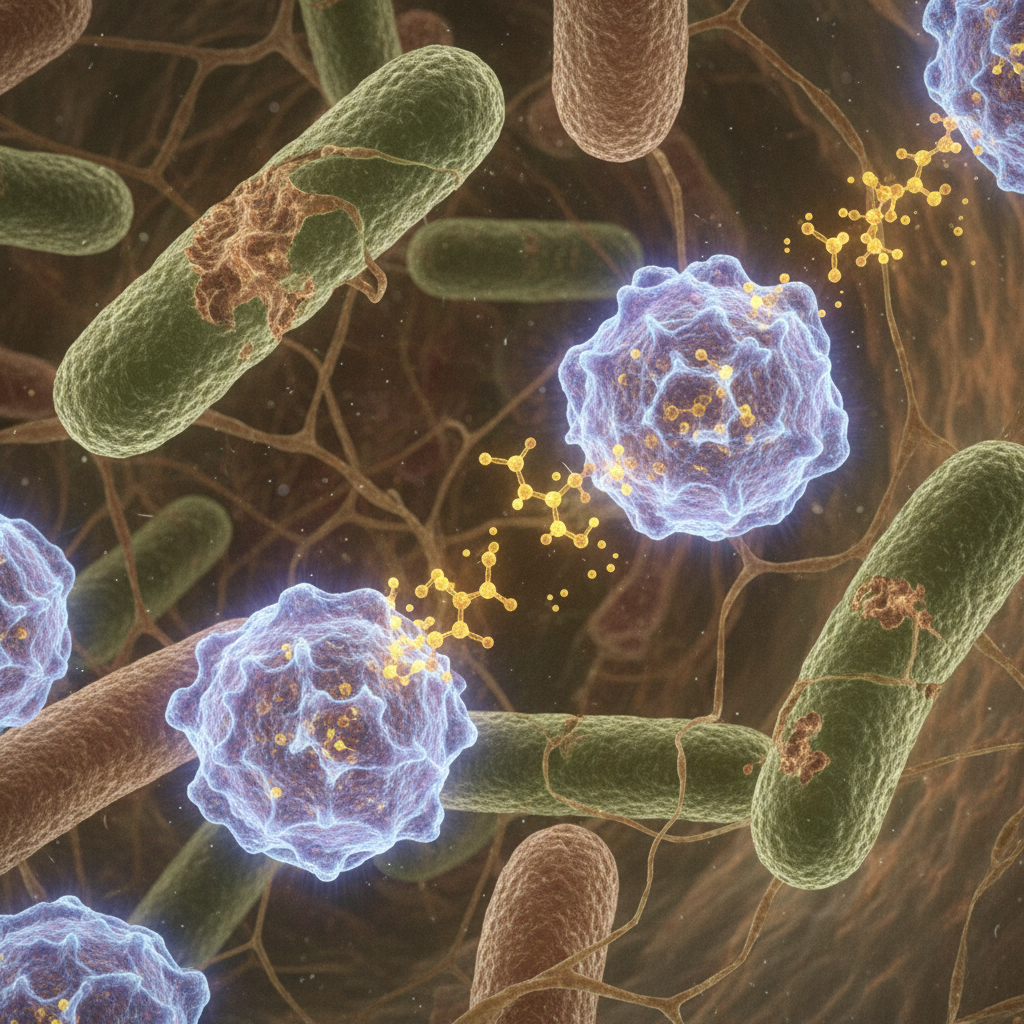
The key here isn't just the berberine itself, but the delivery system.1 Polymeric nanoparticles, typically composed of biocompatible and biodegradable polymers like chitosan or polylactic acid (PLA), act as microscopic vehicles for drug delivery.1,3 These nanoparticles offer several advantages. First, they protect the encapsulated drug from degradation in the oral environment. Second, they enhance drug solubility and bioavailability, allowing for higher concentrations to reach the target site. Third, nanoparticles can be engineered to release their cargo in a controlled manner, providing sustained antimicrobial activity over time. Finally, surface modification of nanoparticles can enable targeted delivery to specific bacterial species or infected tissues. In this context, the nanoparticles likely adhere to the bacterial cell walls within the root canal, releasing berberine directly where it's needed most. This targeted approach minimizes off-target effects and maximizes antimicrobial potency. It's a clever way to breathe new life into an old compound.
Study Limitations
Before we get too excited, let's address the elephant in the room: study design. Most of these in-vitro studies are performed in controlled laboratory settings, which do not fully replicate the complex environment of an infected root canal.1 Factors such as the presence of dentinal debris, biofilms, and host immune responses can significantly influence the antimicrobial activity of irrigants.3 Furthermore, the long-term stability and biocompatibility of these nanoparticles in vivo remain uncertain. Were there cytotoxicity assays performed? What about assessment of genotoxicity? Without these data, it's difficult to assess the safety profile for clinical translation. Finally, the cost-effectiveness of nanoparticle-based berberine irrigation needs careful consideration. Synthesizing and characterizing nanoparticles can be expensive, potentially limiting its accessibility in resource-constrained settings. Reproducibility is another concern; how easily can these nanoparticles be manufactured in different settings with consistent quality?
Cost-Benefit Analysis
While the potential benefits of enhanced antimicrobial activity are clear, the economic realities of adopting this technology in clinical practice are substantial. The cost of synthesizing and formulating polymeric nanoparticles is significantly higher than traditional irrigants like sodium hypochlorite. Additionally, specialized equipment and expertise may be required for nanoparticle preparation and characterization, adding to the overhead costs. Dentists would need to invest in training and infrastructure to effectively utilize this new technology. Reimbursement codes for nanoparticle-based endodontic treatments may not exist, potentially creating a barrier for patient access. A thorough cost-benefit analysis is essential to determine the long-term economic viability of this approach. Will insurance companies cover this? Or will this just become another expensive niche therapy? These are the questions that matter.
Furthermore, the scalability of nanoparticle production is a significant hurdle. Moving from laboratory-scale synthesis to industrial-scale manufacturing while maintaining consistent particle size, morphology, and drug loading efficiency presents considerable engineering challenges. Regulatory approval processes for novel drug delivery systems are also complex and time-consuming, requiring extensive preclinical and clinical data to demonstrate safety and efficacy. These factors collectively contribute to a higher barrier to entry for berberine-loaded nanoparticles compared to established endodontic irrigants.
The Future of Root Canal Irrigation: A Multifaceted Approach
While berberine-loaded nanoparticles show promise, the future of root canal irrigation likely lies in a multifaceted approach, integrating various strategies to overcome the limitations of current methods. This could involve combining novel irrigants with advanced instrumentation, such as laser activation or ultrasonic agitation, to enhance their penetration into dentinal tubules and disrupt biofilms more effectively. Additionally, personalized endodontics, where treatment protocols are tailored to the specific microbial profile of each infection, could optimize outcomes. This might involve rapid diagnostic tools to identify resistant strains and guide the selection of the most appropriate antimicrobial agents. Research into host-modulating agents that enhance the immune response within the root canal system also holds potential for improving long-term success rates. Ultimately, a holistic strategy that addresses both microbial eradication and host tissue response will be crucial for advancing endodontic care beyond the current gold standards.
The most striking consequence of this research, if it progresses, is a potential shift away from sodium hypochlorite (NaOCl) as the gold standard irrigant. While NaOCl is effective, its cytotoxicity and risk of extrusion complications are well-documented. Berberine-loaded nanoparticles offer a tantalizing prospect of targeted antimicrobial action without these severe drawbacks. This could be particularly beneficial for patients with compromised periapical tissues or where NaOCl is contraindicated, potentially improving safety and patient outcomes in endodontic procedures.
However, clinicians should temper their enthusiasm. The evidence for berberine nanoparticles is currently thin, primarily from in-vitro studies. These laboratory settings do not fully replicate the complex environment of an infected root canal, including the presence of dentinal debris, biofilms, and host immune responses. Until robust in-vivo data, including cytotoxicity and genotoxicity assays, are available, it is premature to consider this an immediate clinical alternative to established protocols like chlorhexidine or EDTA.
For industry, the challenge lies in translating this innovative nanoparticle delivery system into a cost-effective and reproducible product. Synthesizing and characterizing nanoparticles is expensive, and without clear reimbursement pathways, adoption by general practitioners and specialists will be limited. Companies like Dentsply Sirona or Kerr Endodontics would need to invest significantly in manufacturing scalability and clinical trials to demonstrate both efficacy and economic viability.
Ultimately, patients stand to gain from gentler, yet equally effective, root canal treatments. However, the current stage of research suggests that widespread clinical availability of berberine nanoparticles is still a distant prospect. Insurance companies will need compelling evidence of superior outcomes and cost-effectiveness before covering such an advanced therapy, preventing it from becoming an expensive niche rather than a widely accessible improvement.
- The Pivot Berberine-loaded polymeric nanoparticles are being explored as an innovative delivery system to enhance root canal disinfection, potentially offering a gentler alternative to sodium hypochlorite (NaOCl) in specific cases.
- The Data No specific numerical data (HR, RR, ARR, p-value, NNT) from a clinical trial was presented in the provided context, as the discussion primarily focused on in-vitro studies and conceptual mechanisms.
- The Action Clinicians should continue to adhere to current AAE guidelines for root canal irrigation, utilizing established protocols with NaOCl, chlorhexidine, or EDTA, as nanoparticle-based berberine remains an investigational therapy with unconfirmed clinical safety, efficacy, and cost-effectiveness.
LSF-1890887441
·10/26
Drafted with AI assistance and checked by automated style rules. Not individually read by an editor. This publication is intended for healthcare professionals, researchers, and life science industry professionals. Content is provided for informational and educational purposes only and does not constitute medical advice.

I cover NHS policy, NICE guidance, and the gap between what the evidence says and what gets commissioned. I bring a health economics background to reporting on how health systems make decisions under uncertainty.
Cite This Article
Mistry D, Voss M. Root canals: is berberine the gentler alternative to naocl?. The Life Science Feed. Published October 26, 2026. Updated October 26, 2026. Accessed October 26, 2026. https://thelifesciencefeed.com/dentistry/endodontic-infections/research/root-canals-is-berberine-the-gentler-alternative-to-naocl.
Editorial & AI Standards
Content is drafted with AI tools from peer-reviewed, open-access sources such as published trial data, clinical guidelines, and regulatory filings. This article is checked by automated style rules but is not individually read by an editor, so check the cited source before relying on a figure.
Source citations are listed in the References section. This content does not represent the views of any pharmaceutical company, medical device manufacturer, or healthcare provider.
Licence & Rights
© 2026 The Life Science Feed. All rights reserved. Unless otherwise indicated, all content is the property of The Life Science Feed and may not be reproduced, distributed, or transmitted in any form or by any means without prior written permission.
Medical Disclaimer
The information provided on The Life Science Feed is for educational and informational purposes only. It is not intended as a substitute for professional medical advice, diagnosis, or treatment. Always seek the advice of your physician or other qualified healthcare provider regarding any medical condition or treatment decision. Never disregard professional medical advice or delay in seeking it because of something you have read on this website.
References
1. Marques C, Grenho L, Fernandes MH, Costa Lima SA. Improving the Antimicrobial Potency of Berberine for Endodontic Canal Irrigation Using Polymeric Nanoparticles. Pharmaceutics. 2024;16(6). doi:10.3390/pharmaceutics16060786
2. Guruswamy Pandian AP, Bellani D, Jibu RM, Agnihotri V. Endodontic Intracanal Medicaments and Agents: The Old and the New, What Is the Evidence? Dent Clin North Am. 2026;70(1):45-62. doi:10.1016/j.cden.2025.07.005
3. Parolia A, Kumar H, Ramamurthy S, Davamani F, Pau A. Effectiveness of chitosan-propolis nanoparticle against Enterococcus faecalis biofilms in the root canal. BMC Oral Health. 2020;20(1):339. doi:10.1186/s12903-020-01330-0