
Erosive tooth wear, a growing concern in paediatric dentistry, presents a significant challenge for early intervention. Identifying children at high risk for progression before permanent dentition emerges could prevent substantial long-term damage, but reliable age-specific predictive tools have been lacking. A recent prospective study aimed to address this gap, developing distinct risk prediction models for preschool-aged children.1
Erosive tooth wear, characterised by the irreversible loss of tooth structure due to chemical dissolution not involving bacterial action, has seen a rising prevalence globally. This condition, often initiated in early childhood, can lead to significant aesthetic and functional problems if left unchecked, potentially affecting the permanent dentition. Early identification of at-risk groups allows for timely behavioural modifications or therapeutic interventions, which could halt progression and mitigate future complications. But the utility of existing broad assessment tools, such as the Basic Erosive Wear Examination (BEWE) index, in predicting progression in very young children has remained unclear. Clinicians need precise tools to guide their preventive strategies.
Gatt and Attard conducted a prospective study to identify age-specific risk factors for erosive wear in preschool-aged children and to develop distinct risk prediction models for 3-year-old and 5-year-old cohorts.1 The study enrolled 500 children from 12 preschools and childcare centres across Malta, a Mediterranean island nation. Investigators recruited children aged 3 and 5 years, ensuring a representative sample from both public and private institutions. The study excluded children with systemic diseases affecting tooth structure, those undergoing orthodontic treatment, or those with special needs that might complicate examination. This careful selection aimed to isolate factors specific to erosive wear progression rather than confounding systemic issues.
The Study Design and Baseline Assessment
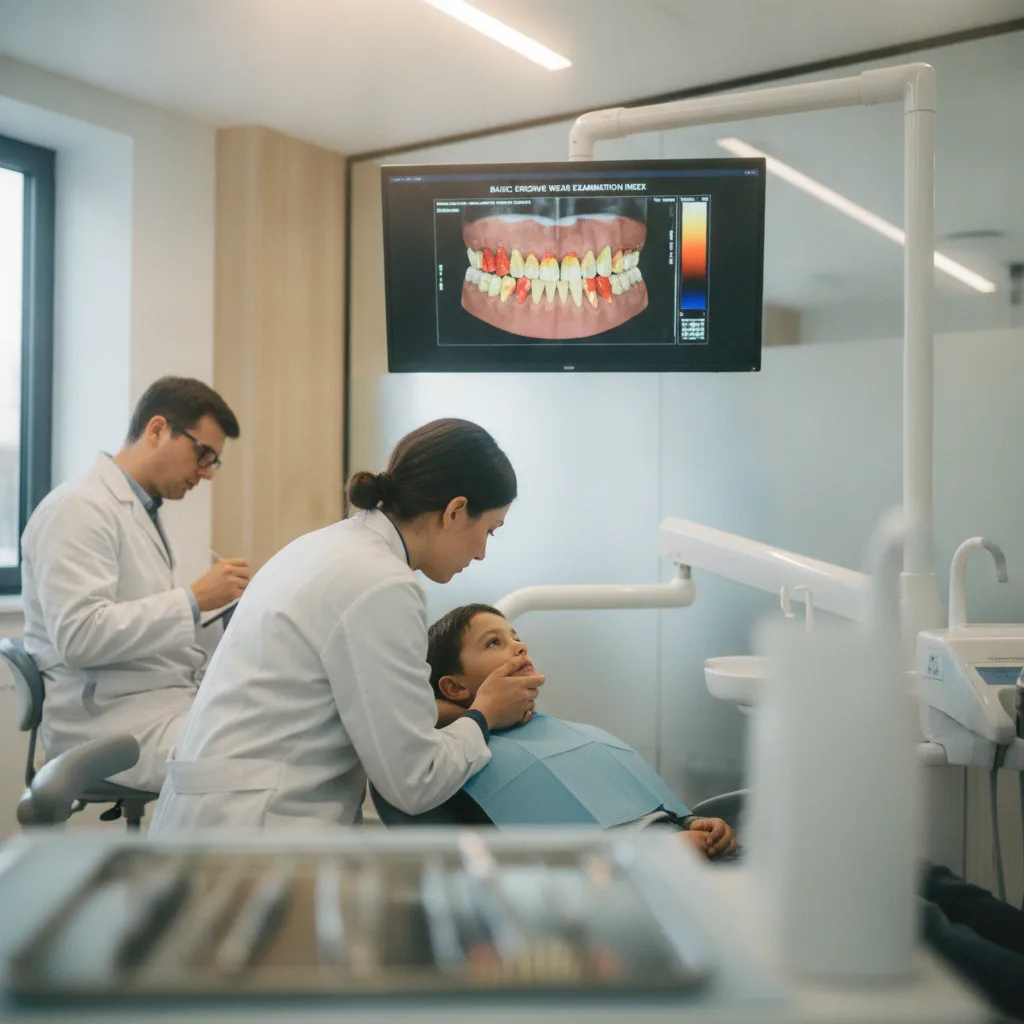
The research team employed a longitudinal design, following children over a 12-month period. At baseline, a comprehensive oral examination was performed by a single calibrated examiner to assess the presence and severity of erosive tooth wear, using the Basic Erosive Wear Examination (BEWE) index. The BEWE index scores each sextant of the dentition from 0 to 3, with higher scores indicating more severe wear. A score of 0 denotes no erosive wear, 1 indicates initial loss of enamel surface texture, 2 signifies distinct defect with dentine involvement (less than half of the surface), and 3 represents distinct defect with dentine involvement (more than half of the surface). This index is widely used in clinical practice and research, but its predictive power for progression in specific age groups needed validation. The examiner also collected detailed information on dietary habits, oral hygiene practices, and medical history through parental questionnaires. These questionnaires captured frequency of acidic food and drink consumption, nocturnal bottle feeding, medication use, and reflux symptoms, providing a rich dataset for risk factor analysis. Parents completed these questionnaires during the initial visit, with assistance from trained research assistants to ensure clarity and accuracy.
The study defined progression as an increase in the BEWE score for any sextant over the 12-month follow-up period. This endpoint provided a clear, quantifiable measure of disease advancement. The researchers also collected saliva samples at baseline to assess salivary flow rate and buffering capacity, factors known to influence erosive wear. These physiological markers offered an additional layer of data beyond behavioural and dietary factors. The sample size of 500 children (250 three-year-olds and 250 five-year-olds) provided sufficient power to detect meaningful associations, given the expected prevalence of erosive wear in this population. The study adhered to ethical guidelines, obtaining informed consent from all parents or guardians and approval from the University of Malta Research Ethics Committee.
Age-Specific Risk Factors Emerge
The analysis revealed distinct risk factors for erosive wear progression in the two age groups. For 3-year-old children, frequent consumption of acidic drinks (defined as more than three times per day) was a significant predictor, increasing the odds of progression by 3.03 times (OR 3.03; 95% CI, 1.34-6.84; P=.008). Nocturnal bottle feeding also emerged as a critical factor, raising the odds of progression by 2.90 times (OR 2.90; 95% CI, 1.13-7.46; P=.027). These findings underscore the importance of early dietary habits in the youngest cohort. Other factors, such as reflux symptoms or medication use, did not reach statistical significance in this group, suggesting that direct acid exposure from diet and feeding practices dominates the risk profile for toddlers.
But for 5-year-old children, the risk profile shifted. Frequent consumption of acidic drinks remained a significant predictor, increasing the odds of progression by 2.58 times (OR 2.58; 95% CI, 1.21-5.50; P=.014). But nocturnal bottle feeding was no longer a statistically significant factor, likely reflecting changes in feeding practices as children age. Instead, the presence of reflux symptoms became a significant predictor, increasing the odds of progression by 2.35 times (OR 2.35; 95% CI, 1.05-5.26; P=.038). This suggests that as children mature, intrinsic acid exposure from gastroesophageal reflux disease (GERD) plays a more prominent role in erosive wear progression. The study also found that lower salivary buffering capacity was associated with increased risk in 5-year-olds (OR 1.98; 95% CI, 1.01-3.89; P=.047), a physiological factor that becomes more relevant as children's diets diversify and exposure to various acids increases. This highlights the relationship between extrinsic and intrinsic factors in older preschool children.
The Predictive Models and Their Utility
The researchers developed separate risk prediction models for each age group based on these identified factors. For 3-year-olds, the model incorporating frequent acidic drink consumption and nocturnal bottle feeding demonstrated good predictive accuracy, with an area under the receiver operating characteristic curve (AUC) of 0.78. This indicates that the model can distinguish between children who will progress and those who will not with reasonable accuracy. For 5-year-olds, the model including frequent acidic drink consumption, reflux symptoms, and lower salivary buffering capacity achieved an AUC of 0.75, also indicating a useful level of predictive performance. These models offer a more refined approach than a general assessment, allowing clinicians to tailor preventive advice. The utility of predictive models in other paediatric contexts, such as osteoporosis risk, also relies on age-specific factors.
The study did not find the baseline BEWE score itself to be a strong independent predictor of progression over the 12-month period in either age group. This is a critical finding, as it challenges the assumption that a higher initial BEWE score automatically translates to a higher risk of progression in young children. While the BEWE index is valuable for assessing current severity, it appears insufficient as a standalone prognostic tool for this specific population. This suggests that the BEWE, while a good descriptive measure, does not capture the dynamic risk factors driving progression in the same way that the newly developed models do. The authors argue that the BEWE is a snapshot, but progression is a movie, driven by ongoing exposures and physiological vulnerabilities.
Caveats and Future Directions
The study's strengths include its prospective design and the development of age-specific models, which offer a more granular understanding of erosive wear risk in young children. The use of a single calibrated examiner minimised inter-examiner variability, enhancing the reliability of the clinical assessments. But the study was conducted in a single geographic location, Malta, which may limit the generalisability of the findings to other populations with different dietary habits, cultural practices, or genetic predispositions. Dietary patterns, in particular, can vary significantly across regions, influencing the types and frequencies of acidic exposures. The reliance on parental questionnaires for dietary and symptom information also introduces the potential for recall bias, although efforts were made to minimise this through trained research assistants. Parents may not accurately recall or report all consumption patterns, especially for less frequent items. Still, the detailed nature of the questionnaires and the structured interview process likely mitigated some of this bias.
Another limitation is the relatively short follow-up period of 12 months. While sufficient to detect early progression, a longer follow-up would provide insights into the long-term trajectory of erosive wear and the sustained impact of identified risk factors. Future research should aim for multi-centre studies across diverse populations to validate these models and explore additional genetic or environmental factors that may influence erosive wear progression. Investigating the cost-effectiveness of implementing these age-specific screening tools in routine paediatric dental care would also be a valuable next step. The study provides a solid foundation, but broader validation is essential before widespread clinical adoption. The predictive power of various metrics often needs extensive validation across diverse settings.
The investigators also did not explore the impact of specific types of acidic foods beyond general categories. A more granular analysis of fruit juice consumption versus carbonated drinks, for example, might yield further insights. The development of simpler scores for complex conditions often requires iterative refinement. The study did not account for potential confounding factors such as socioeconomic status or parental education levels, which can influence both dietary choices and access to dental care. These broader determinants of health could modulate the observed associations. The authors acknowledge these limitations, suggesting that while their models are a step forward, they are not exhaustive. The Oxford Handbook of Paediatrics offers a comprehensive guide for clinicians navigating the complexities of child health, including dental issues. The study's findings suggest that a one-size-fits-all approach to erosive wear risk assessment is inadequate for preschool children. Instead, clinicians should consider age-specific dietary and physiological factors to identify those most vulnerable to progression.
The notion that a single index like BEWE can universally predict erosive wear progression in young children is clearly challenged by this study. Clinicians in general practice and paediatric dentistry must recognise that risk factors evolve with age. A 3-year-old's risk profile, dominated by frequent acidic drinks and nocturnal bottle feeding, demands different screening questions and preventive advice than a 5-year-old's, where reflux symptoms and salivary buffering capacity become more salient.
This means moving beyond a simple visual score and engaging parents in detailed discussions about specific habits relevant to their child's age. For the youngest patients, the focus should be on eliminating nighttime bottle use and moderating acidic beverage intake. For older preschoolers, inquiring about reflux and potentially assessing salivary parameters could be more informative, guiding interventions that address intrinsic acid exposure.
The industry should take note: the development of targeted educational materials for parents, segmented by age, would be far more effective than generic advice. Products designed to support healthy oral habits in specific developmental stages, such as non-acidic nighttime drinks or tools to monitor reflux, could also find a relevant market. The current one-size-fits-all approach misses critical windows for intervention.
Patients and their families benefit from precision. Providing tailored, age-appropriate guidance based on validated risk factors empowers parents to make informed choices that genuinely reduce their child's risk of progressive erosive wear, rather than relying on broad recommendations that may not apply to their specific situation.
- The Pivot Universal indices for erosive wear may be insufficient; age-specific risk factors and models are necessary for preschool children.
- The Data For 3-year-olds, frequent consumption of acidic drinks (OR 3.03; 95% CI, 1.34-6.84; P=.008) and nocturnal bottle feeding (OR 2.90; 95% CI, 1.13-7.46; P=.027) were key predictors.
- The Action Clinicians should implement targeted screening and behavioural interventions based on age-specific risk profiles rather than relying on broad assessments.
ART-2026-1385
·10/26
Drafted with AI assistance, reviewed and approved by the editorial team. This publication is intended for healthcare professionals, researchers, and life science industry professionals. Content is provided for informational and educational purposes only and does not constitute medical advice.

I write about AI in healthcare: the validation studies, the deployment failures, and the regulatory questions without answers yet. Based in San Francisco, close to where the technology is built.
Cite This Article
Chen L, Voss M. Can the basic erosive wear examination index predict progression in children?. The Life Science Feed. Published August 27, 2026. Updated October 3, 2026. Accessed October 11, 2026. https://thelifesciencefeed.com/dentistry/tooth-wear/research/basic-erosive-wear-examination-index-progression.
Editorial & AI Standards
All content is researched from peer-reviewed, open-access sources: published trial data, clinical guidelines, and regulatory filings. AI tools are used solely to structure and summarise that evidence; no AI-generated conclusions appear without editor verification against the primary source.
Every article is reviewed by a named editor before publication. Source citations are listed in the References section. This content does not represent the views of any pharmaceutical company, medical device manufacturer, or healthcare provider.
Licence & Rights
© 2026 The Life Science Feed. All rights reserved. Unless otherwise indicated, all content is the property of The Life Science Feed and may not be reproduced, distributed, or transmitted in any form or by any means without prior written permission.
Medical Disclaimer
The information provided on The Life Science Feed is for educational and informational purposes only. It is not intended as a substitute for professional medical advice, diagnosis, or treatment. Always seek the advice of your physician or other qualified healthcare provider regarding any medical condition or treatment decision. Never disregard professional medical advice or delay in seeking it because of something you have read on this website.
References
1. Gatt G, Attard N. Risk prediction models for erosive wear in preschool-aged children: a prospective study. BMC Oral Health. 2022;22(1):308. doi:10.1186/s12903-022-02347-x