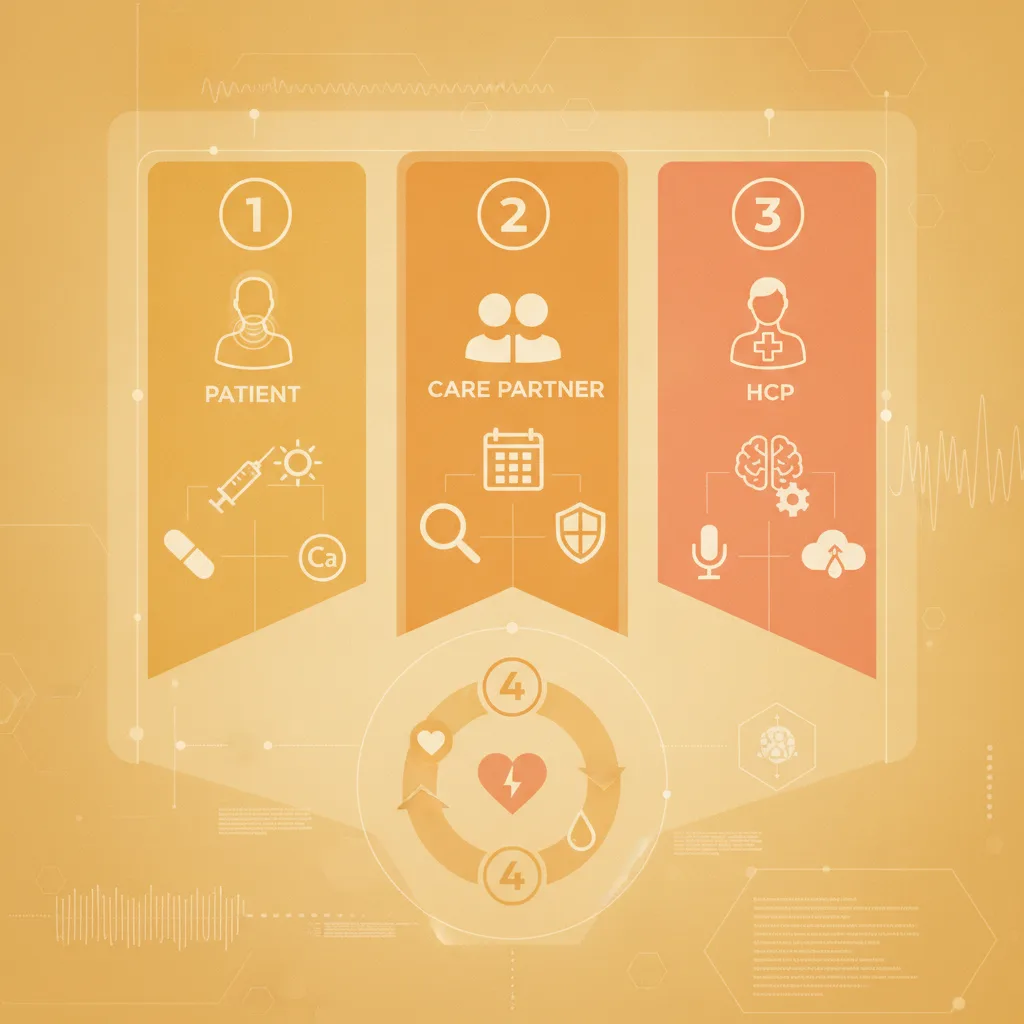

Hypoparathyroidism, a rare endocrine disorder characterised by insufficient parathyroid hormone production, leads to hypocalcaemia and hyperphosphatemia. Current management often involves high-dose calcium and active vitamin D supplementation, which can be associated with complications such as nephrocalcinosis and renal impairment.1 Understanding the lived experience of patients, their care partners, and the perspectives of healthcare professionals (HCPs) is essential for developing therapies that address the multifaceted burden of this condition.
Hypoparathyroidism results from inadequate parathyroid hormone (PTH) secretion, leading to hypocalcaemia and hyperphosphatemia. The primary goal of conventional treatment is to normalise serum calcium and phosphate levels, typically achieved through oral calcium and active vitamin D analogues. However, this approach often fails to address the full spectrum of symptoms and complications associated with the condition, including chronic fatigue, cognitive dysfunction, and renal complications from long-term high-dose supplementation. The chronic nature of hypoparathyroidism and the daily management burden significantly impact patients' quality of life and place considerable strain on care partners. Healthcare professionals also face challenges in optimising treatment while mitigating long-term adverse effects and managing patient expectations.
The prevalence of hypoparathyroidism is estimated to be approximately 37 per 100,000 person-years, with postsurgical hypoparathyroidism being the most common etiology, accounting for about 75% of cases. Other causes include autoimmune destruction of the parathyroid glands, genetic disorders, and idiopathic forms. The pathophysiology involves the absence or deficiency of PTH, which normally regulates calcium and phosphate homeostasis by acting on bone, kidney, and indirectly on the intestine. Without sufficient PTH, renal calcium reabsorption decreases, phosphate reabsorption increases, and the conversion of 25-hydroxyvitamin D to its active form, 1,25-dihydroxyvitamin D, is impaired, further exacerbating hypocalcemia.
Understanding the Lived Experience
A qualitative study explored the perspectives of patients with hypoparathyroidism, their care partners, and HCPs involved in their care. The study aimed to identify key challenges, unmet needs, and desired treatment outcomes. Participants included adult patients diagnosed with hypoparathyroidism for at least one year, their primary care partners, and endocrinologists or internal medicine specialists with experience managing the condition. Data collection involved semi-structured interviews and focus groups, transcribed verbatim and analysed using thematic analysis. The recruitment process involved collaborating with patient advocacy groups and specialized endocrine clinics to ensure a diverse representation of patients with varying durations and etiologies of hypoparathyroidism. All participants provided informed consent prior to their involvement in the study.
Patients consistently reported persistent symptoms despite biochemical normalisation with conventional therapy. Fatigue was a prominent complaint, described as profound and debilitating, affecting daily activities and employment. Cognitive symptoms, including 'brain fog' and difficulty concentrating, were also frequently reported, impacting professional and personal functioning. Many patients expressed frustration with the need for frequent blood tests and the strict adherence required for calcium and vitamin D regimens. The fear of hypocalcaemic crises and the impact on social activities due to symptom unpredictability were also significant concerns. Patients desired treatments that would not only normalise calcium levels but also alleviate chronic symptoms and improve overall quality of life.
Care partners highlighted the emotional and practical burden of supporting individuals with hypoparathyroidism. They often assisted with medication management, monitored symptoms, and provided emotional support during symptomatic episodes. Care partners reported significant stress and anxiety related to the unpredictable nature of the condition and the potential for acute complications. They emphasised the need for treatments that reduce the daily management burden and improve the patient's functional status.
Healthcare professionals acknowledged the limitations of conventional therapy. While they focused on achieving biochemical targets, they recognised that many patients continued to experience symptoms that affected their quality of life. HCPs expressed concerns about the long-term renal and vascular complications associated with high-dose calcium and active vitamin D. They also noted the challenges of patient education and adherence, particularly regarding the complex medication regimens. HCPs indicated a need for therapies that offer more physiological PTH replacement, reduce the pill burden, and minimise the risk of long-term complications, thereby improving patient outcomes beyond just biochemical control.
The study's limitations include its qualitative nature, which provides in-depth insights but may not be generalisable to all patients with hypoparathyroidism. The sample size was relatively small, and participants were recruited from specific clinical settings, potentially introducing selection bias. For instance, patients with more severe or complex disease might be overrepresented in specialized clinics. The study also did not differentiate between various etiologies of hypoparathyroidism, which could influence symptom presentation and treatment responses. Future research could involve larger, quantitative studies to validate these qualitative findings and assess the prevalence of reported symptoms and unmet needs across broader patient populations. Further investigation into the impact of novel therapies on patient-reported outcomes and care partner burden is also warranted, potentially incorporating mixed-methods approaches to combine the richness of qualitative data with the generalisability of quantitative measures.
To delve deeper into the complexities of endocrine conditions like hypoparathyroidism and their evolving treatment paradigms, consult the authoritative Oxford Handbook of Endocrinology and Diabetes.
The persistent symptomatic burden reported by patients with hypoparathyroidism, even with biochemically controlled calcium levels, underscores a critical gap in current clinical practice. It is insufficient for clinicians to rely solely on serum calcium and phosphate measurements as indicators of treatment success. The consistent reporting of debilitating fatigue and cognitive impairment demands a more holistic assessment of treatment efficacy, incorporating patient-reported outcome measures (PROMs) into routine clinical evaluations. This necessitates a shift in how we define 'well-controlled' hypoparathyroidism, moving beyond laboratory values to include functional status and quality of life.
For the pharmaceutical industry, these findings highlight a clear market need for therapies that offer more than just biochemical normalisation. Therapies that can alleviate chronic symptoms, reduce the pill burden, and mitigate long-term complications like nephrocalcinosis will be highly valued by both patients and clinicians. The development of more physiological PTH replacement therapies, or other innovative approaches that address the systemic effects of PTH deficiency, should be prioritised. Companies developing such treatments should ensure their clinical trial endpoints include robust PROMs and measures of care partner burden, as these are clearly significant factors in the lived experience of the disease.
Ultimately, the insights from patients, care partners, and HCPs reinforce that managing hypoparathyroidism is not merely about correcting a calcium imbalance; it is about managing a chronic, complex condition that profoundly affects daily life. Clinicians should engage in shared decision-making, setting treatment goals that reflect both biochemical targets and patient-specific quality of life priorities. This will require more nuanced conversations in the clinic and potentially a re-evaluation of existing treatment algorithms to better integrate patient perspectives and address the often-overlooked symptomatic burden of hypoparathyroidism.
- The Pivot A comprehensive understanding of patient, care partner, and HCP perspectives reveals persistent unmet needs in hypoparathyroidism management beyond biochemical control.
- The Data Patients reported significant impact on quality of life, with fatigue and cognitive impairment frequently cited as debilitating symptoms, despite conventional therapy.
- The Action Clinicians should consider a holistic assessment of treatment efficacy, incorporating patient-reported outcomes and quality of life measures, in addition to biochemical parameters.
ART-2026-403
·10/26
Drafted with AI assistance and checked by automated style rules. Not individually read by an editor. This publication is intended for healthcare professionals, researchers, and life science industry professionals. Content is provided for informational and educational purposes only and does not constitute medical advice.

Science writer covering the frontier between basic research and clinical practice. I am interested in the moment a mechanism becomes a therapy, and everything that can go wrong in between.
Cite This Article
Aldrich M, Voss M. Hypoparathyroidism treatment: patient, care partner, HCP perspectives. The Life Science Feed. Published June 14, 2026. Updated October 6, 2026. Accessed October 27, 2026. https://thelifesciencefeed.com/endocrinology/adrenal-gland-diseases/news/hypoparathyroidism-treatment-patient-care-partner-hcp-perspectives.
Editorial & AI Standards
Content is drafted with AI tools from peer-reviewed, open-access sources such as published trial data, clinical guidelines, and regulatory filings. This article is checked by automated style rules but is not individually read by an editor, so check the cited source before relying on a figure.
Source citations are listed in the References section. This content does not represent the views of any pharmaceutical company, medical device manufacturer, or healthcare provider.
Licence & Rights
© 2026 The Life Science Feed. All rights reserved. Unless otherwise indicated, all content is the property of The Life Science Feed and may not be reproduced, distributed, or transmitted in any form or by any means without prior written permission.
Medical Disclaimer
The information provided on The Life Science Feed is for educational and informational purposes only. It is not intended as a substitute for professional medical advice, diagnosis, or treatment. Always seek the advice of your physician or other qualified healthcare provider regarding any medical condition or treatment decision. Never disregard professional medical advice or delay in seeking it because of something you have read on this website.
References
1. Khan AA, et al. Evaluation and Management of Hypoparathyroidism Summary Statement and Guidelines from the Second International Workshop. J Bone Miner Res. 2022;37(12):2568-2585. doi:10.1002/jbmr.4691
2. Bollerslev J, et al. Revised European Society of Endocrinology Clinical Practice Guideline: Treatment of Chronic Hypoparathyroidism in Adults. Eur J Endocrinol. 2025;193(5):G49-G78. doi:10.1093/ejendo/lvaf222
3. Khan S, et al. Hypoparathyroidism: diagnosis, management and emerging therapies. Nat Rev Endocrinol. 2025;21(6):360-374. doi:10.1038/s41574-024-01075-8
4. Gosmanova EO, et al. Renal complications in patients with chronic hypoparathyroidism on conventional therapy: a systematic literature review : Renal disease in chronic hypoparathyroidism. Rev Endocr Metab Disord. 2021;22(2):297-316. doi:10.1007/s11154-020-09613-1
5. Saha S, et al. Nephrocalcinosis, Renal Dysfunction, and Calculi in Patients With Primary Hypoparathyroidism on Long-Term Conventional Therapy. J Clin Endocrinol Metab. 2020;105(4). doi:10.1210/clinem/dgz319
6. Brod M, et al. Assessing the Patient Experience of Hypoparathyroidism Symptoms: Development of the Hypoparathyroidism Patient Experience Scale-Symptom (HPES-Symptom). Patient. 2020;13(2):151-162. doi:10.1007/s40271-019-00388-5






