
The persistent challenge of vaccine hesitancy continues to complicate public health initiatives, often framed as a simple battle against misinformation. But the reality on the ground for many patients and their clinicians is far more intricate.
Declining a recommended vaccine frequently stems from a confluence of deeply personal and systemic issues, extending well beyond a mere lack of accurate data.
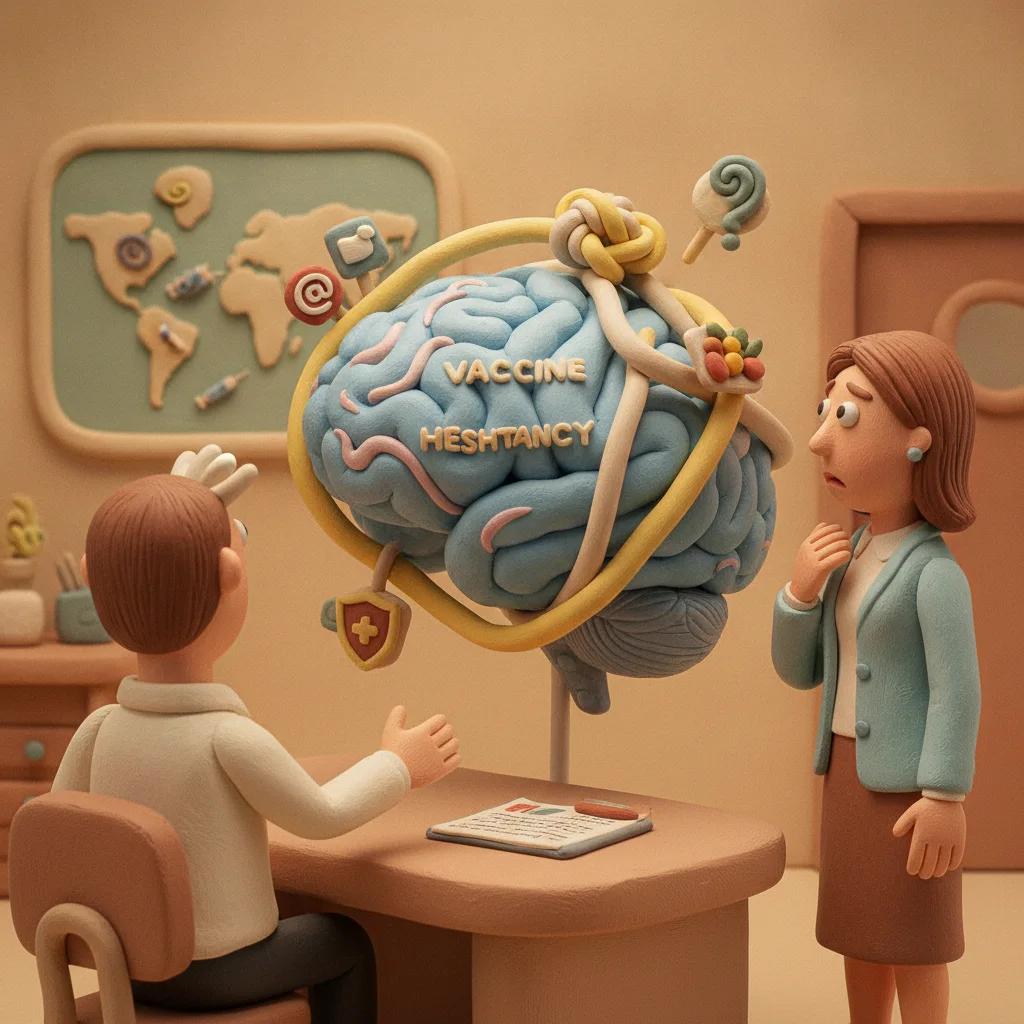
The widespread assumption that vaccine hesitancy primarily arises from a lack of scientific literacy or exposure to false information oversimplifies a deeply entrenched public health issue. While misinformation certainly plays a role, it often acts as a catalyst for pre-existing doubts rather than the sole origin of vaccine refusal. Clinicians encounter patients who articulate concerns rooted in personal experiences, cultural beliefs, and a profound distrust in healthcare institutions, government bodies, or pharmaceutical companies. These factors are not easily dismissed with a simple fact sheet; they require a nuanced understanding of individual and community dynamics.
For many, the decision to decline a vaccine is a rational response to their lived reality. Consider individuals from historically marginalised communities who have experienced medical exploitation or neglect. Their reluctance to trust new medical interventions, even those with clear public health benefits, is not irrational; it is a learned caution. This historical context, often overlooked in broad public health campaigns, shapes perceptions of risk and benefit in ways that data alone cannot overcome. The perceived necessity of a vaccine also varies significantly among individuals, influenced by their personal health status, their social networks, and their exposure to the disease itself.
Understanding the Drivers of Vaccine Hesitancy
The World Health Organization identifies vaccine hesitancy as a delay in acceptance or refusal of vaccination despite the availability of vaccination services. This definition highlights that access alone does not equate to uptake. The '3 Cs' model (confidence, complacency, and convenience) offers a framework for dissecting these complex drivers. Confidence refers to the trust in the effectiveness and safety of vaccines, the system that delivers them, and the motivations of policymakers. Complacency exists when perceived risks of vaccine-preventable diseases are low, leading individuals to believe vaccination is unnecessary. Convenience encompasses the physical availability, affordability, and ease of accessing vaccination services.
Each of these 'Cs' can be influenced by a multitude of factors. Confidence, for instance, erodes when individuals perceive a lack of transparency from health authorities regarding vaccine development or adverse events. This is particularly true when official communications appear to contradict personal observations or anecdotal evidence shared within close-knit communities. A single negative experience, whether real or perceived, can disproportionately impact an individual's trust, leading to a broader scepticism of all vaccines. This is not a failure to understand science; it is a failure to trust the messenger or the system behind the message.
Complacency often arises in environments where vaccine-preventable diseases are rare due to high vaccination rates. When measles or polio outbreaks are not a present threat in daily life, the immediate incentive to vaccinate diminishes. Parents, in particular, may weigh the perceived, albeit often exaggerated, risks of vaccination against the seemingly absent risks of the disease itself. This perception is reinforced by the success of vaccination programs; the very absence of disease makes the need for vaccination less obvious. Public health messaging struggles to convey the importance of preventing a threat that is not visibly imminent.
Convenience, while seemingly straightforward, encompasses significant practical barriers. Geographic distance to vaccination centres, inconvenient operating hours, lack of transportation, and the financial burden of time off work can all deter individuals, even those who are otherwise willing to vaccinate. For parents of multiple children, coordinating appointments and managing logistics can be overwhelming. These systemic hurdles disproportionately affect lower-income populations and those in rural areas, creating disparities in vaccination rates that are entirely unrelated to belief systems or misinformation. A patient who genuinely wants a vaccine but cannot access it due to these barriers is not 'hesitant' in the traditional sense; they are simply underserved.
Beyond the '3 Cs,' social norms and peer influence play a substantial role. Individuals are deeply influenced by the opinions and behaviours of their social circles, including family, friends, and community leaders. If vaccination is not the norm within a particular group, or if influential figures express scepticism, individuals may conform to these social pressures, even if they personally hold different views. This social conformity can be a powerful barrier, as the desire for social acceptance often outweighs individual health considerations. Clinicians must recognise that addressing an individual's concerns in isolation may not be sufficient if their broader social environment remains unsupportive of vaccination.
The role of personal autonomy and individual liberty also cannot be overstated. For some, vaccine mandates or strong recommendations are perceived as an infringement on their right to make personal health decisions. This perspective often transcends specific concerns about vaccine safety or efficacy, becoming a matter of principle. Public health campaigns that are perceived as coercive can inadvertently strengthen this resistance, fostering resentment and further eroding trust. Understanding this dimension requires acknowledging that health decisions are not always purely scientific; they are deeply intertwined with personal values and political ideologies.
The digital age has amplified the complexity of vaccine hesitancy by providing readily accessible platforms for both accurate and inaccurate information. While this allows for rapid dissemination of public health messages, it also enables the swift spread of misinformation and disinformation, often tailored to specific anxieties or pre-existing biases. Algorithmic amplification can create echo chambers where individuals are primarily exposed to content that reinforces their existing views, making it challenging for accurate information to penetrate. This environment demands a more sophisticated approach than simply debunking myths; it requires building digital literacy and fostering critical thinking skills among the public.
Addressing vaccine hesitancy effectively requires a multi-pronged strategy that moves beyond a deficit model of communication. It means engaging with communities to understand their specific concerns, rather than imposing top-down solutions. It involves building trust through consistent, transparent, and empathetic communication from trusted local sources, including primary care physicians, community leaders, and faith-based organisations. It also necessitates addressing the systemic barriers to access, ensuring that vaccination services are convenient, affordable, and culturally appropriate for all populations. Without tackling these underlying issues, efforts to combat misinformation alone will continue to fall short, leaving significant portions of the population vulnerable to preventable diseases.
The persistent framing of vaccine hesitancy as a simple information deficit is a clinical disservice. Clinicians who approach every hesitant patient as misinformed will find themselves repeatedly frustrated, missing the deeper, often legitimate, concerns that drive refusal.
We must shift from a 'correct and convince' model to one of 'listen and understand.' This means acknowledging that a patient's distrust might stem from historical medical injustices or current systemic barriers, not just a Facebook post. Dismissing these concerns alienates patients further.
For public health bodies, this implies a need for more granular, community-specific interventions. Blanket campaigns, however well-intentioned, often fail to resonate with diverse populations whose hesitancy is rooted in unique cultural, socio-economic, or historical contexts. Convenience and access remain critical, but so does genuine, sustained engagement.
Ultimately, the goal is not merely to increase vaccination rates, but to foster genuine health equity. That requires addressing the root causes of distrust and systemic barriers, rather than simply blaming individuals for their choices.
- The Pivot Vaccine hesitancy is not solely a knowledge deficit; it is a complex interplay of trust, access, and individual beliefs.
- The Data Public health interventions that focus exclusively on correcting misinformation often fail to address the underlying drivers of vaccine refusal.
- The Action Clinicians should adopt a patient-centered approach, addressing specific concerns about safety, efficacy, and necessity, while acknowledging systemic barriers.
ART-2026-841
·10/26
Drafted with AI assistance and checked by automated style rules. Not individually read by an editor. This publication is intended for healthcare professionals, researchers, and life science industry professionals. Content is provided for informational and educational purposes only and does not constitute medical advice.

I cover life sciences: drug approvals, trial readouts, regulatory decisions, and the AI reshaping clinical practice. Based in Greater London, contributing to The Life Science Feed since 2026.
Cite This Article
Voss M, Lopes W. Vaccine hesitancy: more than just misinformation. The Life Science Feed. Published July 24, 2026. Updated October 5, 2026. Accessed October 22, 2026. https://thelifesciencefeed.com/general-practice/chronic-disease/insights/vaccine-hesitancy-more-than-just-misinformation.
Editorial & AI Standards
Content is drafted with AI tools from peer-reviewed, open-access sources such as published trial data, clinical guidelines, and regulatory filings. This article is checked by automated style rules but is not individually read by an editor, so check the cited source before relying on a figure.
Source citations are listed in the References section. This content does not represent the views of any pharmaceutical company, medical device manufacturer, or healthcare provider.
Licence & Rights
© 2026 The Life Science Feed. All rights reserved. Unless otherwise indicated, all content is the property of The Life Science Feed and may not be reproduced, distributed, or transmitted in any form or by any means without prior written permission.
Medical Disclaimer
The information provided on The Life Science Feed is for educational and informational purposes only. It is not intended as a substitute for professional medical advice, diagnosis, or treatment. Always seek the advice of your physician or other qualified healthcare provider regarding any medical condition or treatment decision. Never disregard professional medical advice or delay in seeking it because of something you have read on this website.
References
1. The Conversation. Why don’t some people get vaccinated? It’s more complicated than you think. Accessed Jul
2026. https://theconversation.com/why-dont-some-people-get-vaccinated-its-more-complicated-than-you-think-284807