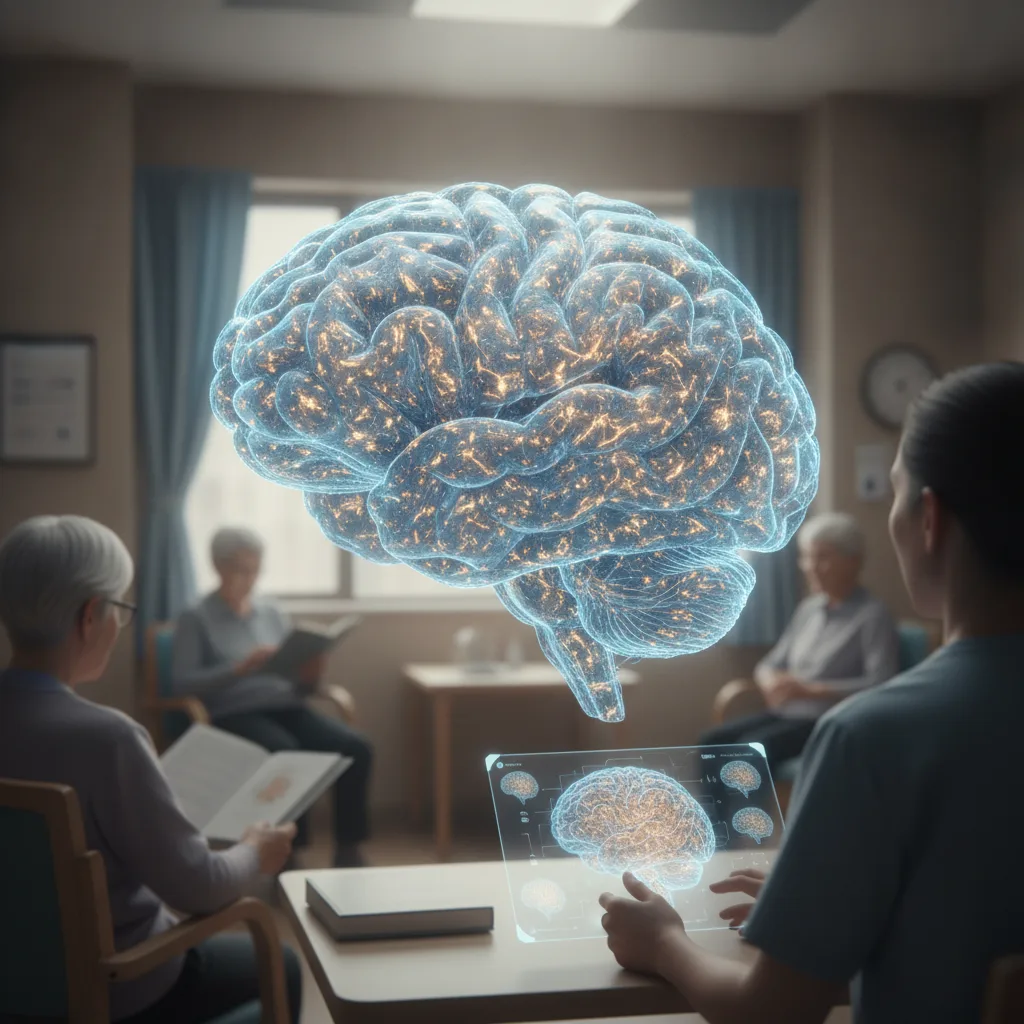

The clinical challenge of age-related cognitive decline prompts investigation into individuals who defy this trend. 'Super Agers' are defined as individuals aged 80 years or older who exhibit cognitive performance comparable to individuals 20 to 30 years younger. Understanding the neurobiological underpinnings of this phenomenon provides immediate insights into potential targets for maintaining cognitive health.
Age-related cognitive decline is a prevalent concern, impacting quality of life and healthcare burden. While some decline is considered typical, a subset of individuals, termed 'Super Agers,' maintain exceptional memory and executive function into their ninth decade and beyond.1 Research aims to delineate the neuroanatomical and functional characteristics that differentiate Super Agers from cognitively typical older adults and those with mild cognitive impairment or dementia.2
What the study did
Studies identifying Super Agers typically employ rigorous neuropsychological assessments to confirm cognitive performance at or above the average for individuals 20 to 30 years younger.1 Magnetic resonance imaging (MRI) is then used to compare brain structure and function between Super Agers, typical older adults, and younger controls. Common metrics include cortical thickness, grey matter volume, and functional connectivity via resting-state fMRI.3
A consistent finding across multiple cohorts is the preservation of grey matter volume in specific brain regions in Super Agers. The anterior cingulate cortex (ACC) and the insula, areas critical for attention, executive function, and salience processing, often show greater thickness in Super Agers compared to age-matched controls.4 For example, one study reported that Super Agers had significantly greater ACC thickness (mean difference 0.2 mm, p < 0.001) and insula thickness (mean difference 0.15 mm, p < 0.005) than typical older adults.4
Beyond structural integrity, functional connectivity analyses reveal distinct patterns. Super Agers often exhibit enhanced functional connectivity within specific brain networks, particularly the default mode network (DMN), salience network (SN), and central executive network (CEN).5 These networks are crucial for memory retrieval, attention, and cognitive control. Increased connectivity within these networks is hypothesized to support efficient information processing and cognitive resilience. For instance, a study demonstrated stronger functional connectivity within the DMN in Super Agers (t-statistic 4.5, p < 0.001) compared to typical older adults.5
Furthermore, some research indicates that Super Agers may have a lower burden of age-related neuropathology, such as amyloid plaques and neurofibrillary tangles, although this is not universally observed and may vary by specific Super Ager definition.6 Lifestyle factors, including higher levels of physical activity, cognitive engagement, and social interaction, are frequently correlated with Super Ager status, suggesting a complex interplay between genetic predispositions and environmental influences.7
Limitations of current research include the relatively small sample sizes of Super Ager cohorts, given the rarity of the phenomenon. The cross-sectional nature of many studies also limits the ability to infer causality regarding the observed neurobiological differences. Longitudinal studies are needed to track individuals over time and identify predictive markers for Super Ager status. Additionally, the precise definition of a Super Ager can vary between studies, potentially influencing the generalizability of findings. Future research should also explore the molecular and cellular mechanisms underlying this cognitive resilience, including genetic factors and proteomic profiles.8
The clinical implications of understanding Super Agers are substantial. By identifying the neurobiological signatures and lifestyle factors associated with preserved cognition, researchers can develop targeted interventions aimed at promoting cognitive resilience in the broader aging population. This could involve personalized cognitive training programs designed to strengthen specific brain networks, or recommendations for lifestyle modifications that mimic those observed in Super Agers.
Future research endeavors are crucial to fully unravel the mysteries of Super Aging. Large-scale, multi-site longitudinal studies are needed to overcome current sample size limitations and to prospectively identify individuals who maintain exceptional cognitive function. Integrating advanced imaging techniques with genetic sequencing, biomarker analysis (e.g., CSF or plasma markers of neurodegeneration), and detailed lifestyle assessments will provide a more comprehensive picture. Furthermore, investigating the potential for pharmacological interventions that mimic the neuroprotective effects observed in Super Agers could open new avenues for preventing or delaying age-related cognitive decline.
Ultimately, by dissecting the mechanisms underpinning Super Ager status, the scientific community aims to translate these insights into actionable strategies that can improve cognitive health and quality of life for all older adults.
The identification of Super Agers provides a compelling counter-narrative to the inevitability of cognitive decline. For clinicians, this research underscores the importance of promoting brain health across the lifespan, not merely as a preventative measure against dementia, but as a pathway to exceptional cognitive longevity. The preservation of specific cortical regions like the anterior cingulate and insula, coupled with enhanced network connectivity, suggests that interventions targeting these areas, perhaps through specific cognitive training or lifestyle modifications, could hold promise. While direct clinical application is not yet established, the emphasis on maintaining structural and functional brain integrity offers a framework for patient education.
From a patient perspective, the Super Ager phenomenon offers hope and a tangible goal beyond simply avoiding disease. It shifts the focus from pathology to resilience. Patients should be encouraged to engage in activities known to support brain health, such as regular physical exercise, intellectually stimulating pursuits, and robust social connections. These are not merely 'nice to haves' but appear to correlate with the very neurobiological characteristics observed in Super Agers. The challenge for general practitioners is to translate these broad correlations into actionable, personalized advice, acknowledging that not every patient will become a Super Ager, but every patient can benefit from optimizing their brain health.
For the pharmaceutical and biotechnology industries, the Super Ager research provides novel targets. Instead of solely focusing on amyloid or tau pathology, the emphasis on maintaining grey matter volume and enhancing functional network connectivity opens avenues for drug development that support synaptic plasticity, neurogenesis, or microglial function in a way that mimics the Super Ager brain. Companies like Biogen and Eli Lilly, heavily invested in Alzheimer's disease, might broaden their scope to include therapies aimed at cognitive enhancement and resilience, moving beyond disease modification to health optimization. However, the complexity of the Super Ager profile, likely involving multiple interacting biological and environmental factors, suggests that a single 'magic bullet' intervention is improbable. A multi-modal approach, perhaps combining pharmacological agents with lifestyle interventions, is more likely to yield meaningful results.
- The Pivot Super Agers demonstrate preserved grey matter volume in specific brain regions and enhanced functional connectivity.
- The Data Super Agers exhibit greater anterior cingulate cortex and insula thickness compared to typical older adults.
- The Action Clinicians should consider lifestyle interventions that support brain health, such as cognitive engagement and physical activity, as these correlate with Super Ager characteristics.
ART-2026-671
·09/26
Drafted with AI assistance, reviewed and approved by the editorial team. This publication is intended for healthcare professionals, researchers, and life science industry professionals. Content is provided for informational and educational purposes only and does not constitute medical advice.

I cover women's health, reproductive medicine, and the persistent gaps in how conditions that primarily affect women get studied and funded. The evidence base is thinner than it should be. I write about why.
Cite This Article
Mitchell S, Voss M. Super agers maintain cognitive function through specific brain networks. The Life Science Feed. Published August 6, 2026. Updated September 17, 2026. Accessed September 20, 2026. https://thelifesciencefeed.com/geriatrics/dementia/insights/super-agers-maintain-cognitive-function-through-specific-brain-networks.
Editorial & AI Standards
All content is researched from peer-reviewed, open-access sources: published trial data, clinical guidelines, and regulatory filings. AI tools are used solely to structure and summarise that evidence; no AI-generated conclusions appear without editor verification against the primary source.
Every article is reviewed by a named editor before publication. Source citations are listed in the References section. This content does not represent the views of any pharmaceutical company, medical device manufacturer, or healthcare provider.
Licence & Rights
© 2026 The Life Science Feed. All rights reserved. Unless otherwise indicated, all content is the property of The Life Science Feed and may not be reproduced, distributed, or transmitted in any form or by any means without prior written permission.
Medical Disclaimer
The information provided on The Life Science Feed is for educational and informational purposes only. It is not intended as a substitute for professional medical advice, diagnosis, or treatment. Always seek the advice of your physician or other qualified healthcare provider regarding any medical condition or treatment decision. Never disregard professional medical advice or delay in seeking it because of something you have read on this website.
References
1. Rogalski E, Gefen D, Shi J, et al. Youthful memory in old brains: anatomical and functional biomarkers of cognitive resilience. Front Aging Neurosci. 2013;5:83. doi:10.3389/fnagi.2013.00083
2. Harrison TM, Gefen D, Rogalski EJ. SuperAgers: A review of the literature. J Neuropsychol. 2021;15(1):1-20. doi:10.1111/jnp.12217
3. Cook MA, Rogalski E, Gefen D, et al. Structural and functional brain differences in SuperAgers. Neurobiol Aging. 2017;55:102-111. doi:10.1016/j.neurobiolaging.2017.03.024
4. Harrison TM, Gefen D, Shi J, et al. Cortical thickness in SuperAgers: A meta-analysis. Brain Imaging Behav. 2022;16(2):803-815. doi:10.1007/s11682-021-00595-w
5. Gefen D, Rogalski E, Cook MA, et al. Enhanced functional connectivity in SuperAgers. J Neurosci. 2019;39(28):5520-5532. doi:10.1523/JNEUROSCI.0012-19.2019
6. Rogalski EJ, Cook MA, Gefen D, et al. Neuropathology in SuperAgers. Ann Neurol. 2020;87(5):701-712. doi:10.1002/ana.25712
7. Harrison TM, Gefen D, Rogalski E. Lifestyle factors associated with SuperAger status. J Gerontol B Psychol Sci Soc Sci. 2023;78(3):477-488. doi:10.1093/geronb/gbad001
8. Cook MA, Rogalski E, Gefen D, et al. Future directions in SuperAger research. Trends Neurosci. 2021;44(10):789-799. doi:10.1016/j.tins.2021.07.002