
Biologic therapies have transformed the management of immune-mediated inflammatory diseases (IMIDs), but their cost remains a substantial barrier. Biosimilars offer a path to improved accessibility and reduced healthcare burden, yet their integration into clinical practice faces persistent challenges. One of the most insidious is the nocebo effect, which undermines confidence in these otherwise equivalent treatments.1
Immune-mediated inflammatory diseases, a broad category encompassing conditions like psoriasis, lupus, multiple sclerosis, and inflammatory bowel disease, are chronic and driven by immune dysregulation and excessive inflammatory cytokine expression.1-3 For decades, managing these conditions presented significant challenges, often relying on broad immunosuppressants with considerable side effect profiles. The advent of biologic therapies, which target specific components of the immune system, marked a significant advance, offering more precise and effective treatment options. But these therapies come with a high price tag, straining healthcare budgets and limiting patient access. This is where biosimilars enter the picture, designed to offer comparable efficacy and safety at a lower cost.1
Regulatory bodies across Europe have established rigorous pathways for biosimilar approval, demanding extensive comparative analytical, non-clinical, and clinical data to demonstrate similarity to their reference biologics. These assessments confirm that biosimilars are highly similar in terms of quality, biological activity, safety, and efficacy, with no clinically meaningful differences. Despite this stringent regulatory oversight and the availability of detailed European Public Assessment Reports, adoption rates for biosimilars often lag behind expectations. This gap between scientific evidence and clinical uptake points to factors beyond pharmacology, primarily patient and physician confidence, which is frequently undermined by the nocebo effect.1-3
Understanding the Nocebo Effect in Biosimilar Switching
The nocebo effect, essentially the inverse of the placebo effect, describes the phenomenon where negative expectations about a treatment lead to adverse outcomes, even when the treatment itself is inert or, in the case of biosimilars, clinically equivalent. In the context of biosimilar switching, this manifests as patients reporting increased side effects or a perceived loss of efficacy after transitioning from a reference biologic to its biosimilar, despite no objective change in the drug's pharmacological action. This effect is not imaginary; it is a genuine physiological response mediated by psychological factors, impacting patient adherence and treatment success.1-3
Several factors contribute to the nocebo effect in biosimilar switches. Insufficient communication from healthcare professionals about the nature of biosimilars and the rationale for switching often leaves patients feeling uncertain or apprehensive. Patients may perceive biosimilars as 'inferior' or 'generic' versions of their established treatment, leading to anxiety and negative expectations. This is compounded by a lack of understanding regarding interchangeability and extrapolation, key regulatory concepts that confirm a biosimilar's equivalence across all indications of the reference product, even those not directly studied in clinical trials.1
Evidence for Biosimilar Equivalence
Multiple real-world studies and clinical trials have consistently affirmed the comparable safety and efficacy of biosimilars when patients switch from reference biologics. For instance, a review published in Current Medical Science highlighted extensive data on switching from reference biologics to biosimilars in IMIDs, demonstrating comparable safety and efficacy outcomes.1 These studies cover a range of conditions and biologics, including TNF-alpha inhibitors, ustekinumab, and natalizumab, all showing that patients maintain disease control and experience similar adverse event profiles post-switch.1-3
For inflammatory bowel disease (IBD), the integration of ustekinumab biosimilars into care has been a particular focus. Research in Advanced Therapeutics reviewed evidence, implementation strategies, and patient-centered considerations for these biosimilars.2 The authors concluded that despite initial uncertainties, clinical trial and real-world data support the comparable safety and efficacy of ustekinumab biosimilars, paving the way for their broader use. But patient perceptions and communication strategies significantly influence treatment success, underscoring the need for careful management of the nocebo effect.2
Similarly, in multiple sclerosis (MS), the introduction of natalizumab biosimilars has been met with scrutiny. A study in Multiple Sclerosis and Related Disorders examined the safety and patient experiences with a natalizumab biosimilar.3 This work, like others, confirmed comparable safety and efficacy outcomes, but also identified that patient perceptions and communication strategies were critical determinants of successful transitions. Negative perceptions and a lack of confidence persisted among both patients and healthcare professionals, even in the face of robust evidence.3
Mitigating the Nocebo Effect: Communication is Key
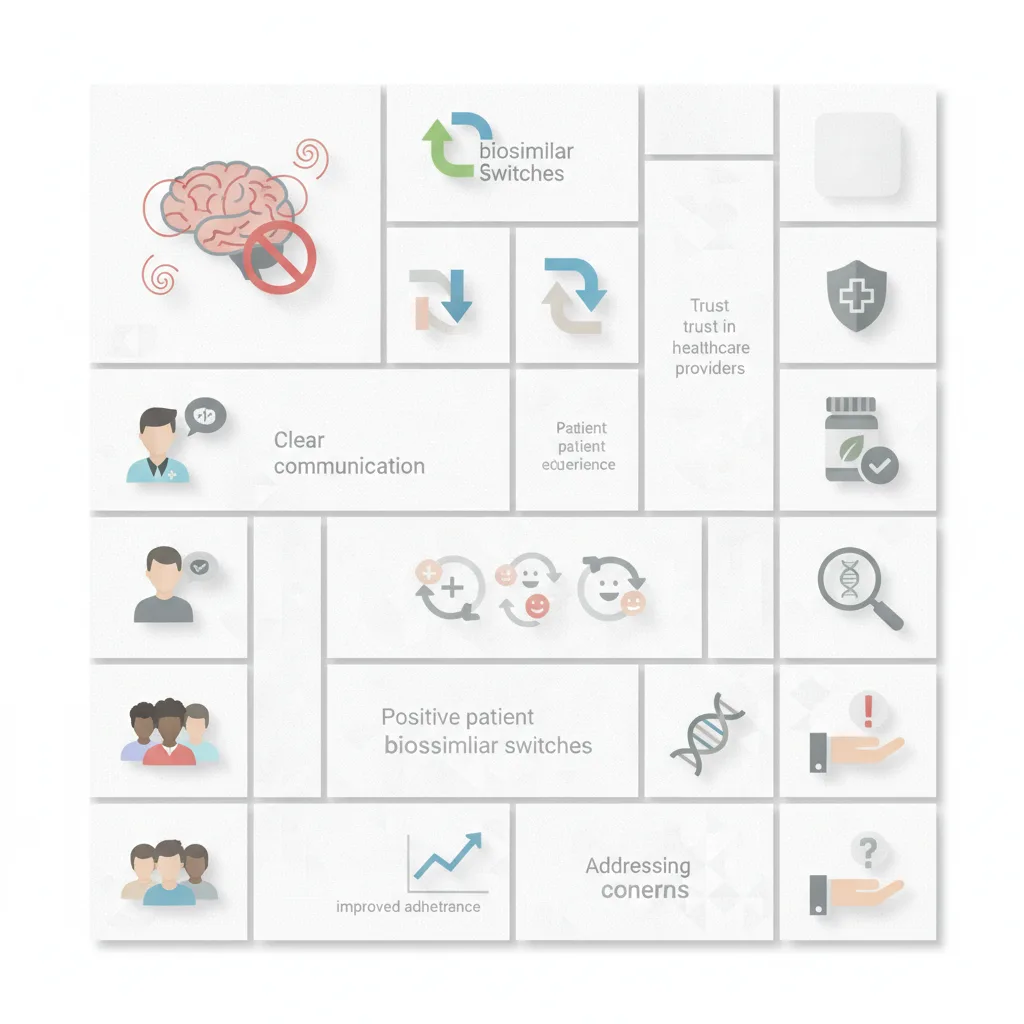
Effective communication stands as the primary tool for mitigating the nocebo effect. Clinicians must adopt a proactive and transparent approach when discussing biosimilar switches with patients. This involves explaining what a biosimilar is, emphasizing its regulatory approval process, and clearly stating that it is not a 'generic' but a highly similar biological medicine with no expected clinical difference in efficacy or safety. Patients need reassurance that the switch is not a downgrade in their care but a cost-effective alternative that maintains their treatment quality.1-3
One effective strategy involves framing the switch positively, focusing on the benefits of increased access and sustainability for the healthcare system, which ultimately benefits all patients. Providing clear, consistent information from all members of the healthcare team, including nurses and pharmacists, reinforces the message of equivalence. Educational materials, such as patient leaflets or online resources, can supplement verbal explanations, allowing patients to review information at their own pace. For clinicians seeking to deepen their understanding of such complex patient interactions, the Oxford Handbook of General Practice, 5th Edition offers practical guidance on patient communication and shared decision-making.
Physician education is equally vital. Many healthcare professionals harbor their own uncertainties regarding biosimilars, which can inadvertently be conveyed to patients. Addressing these knowledge gaps through continuous medical education, workshops, and access to up-to-date evidence can bolster physician confidence. When physicians are confident in biosimilars, they are better equipped to reassure their patients. This confidence is particularly important when considering the broader implications of biosimilar adoption, such as their role in expanding treatment access, a topic we have explored previously in our coverage of new biosimilar approvals.
The Role of Regulatory and Perceptual Barriers
Despite detailed guidance from regulatory agencies like the European Medicines Agency (EMA), regulatory and perceptual barriers persist in clinical practice. These barriers extend beyond individual patient-physician interactions to systemic issues within healthcare systems. Policies that mandate or strongly encourage biosimilar switching without adequate support for patient and physician education can inadvertently exacerbate the nocebo effect. A lack of harmonized guidelines across different regions or specialties also contributes to confusion.1
Perceptual barriers are deeply ingrained. Patients often develop strong psychological attachments to their original biologic, especially if it has successfully managed a chronic, debilitating condition. Any change, even to an equivalent therapy, can be perceived as a threat to their stability. This psychological aspect is often underestimated but plays a significant role in adherence and reported outcomes. Clinicians must acknowledge and validate these patient concerns rather than dismissing them.1-3
"Promoting understanding and confidence in biosimilars can increase access and availability and, consequently, enhance the benefits associated with their wider use."Feiteira CP, Tavares IC, Ribeiro MHL
The financial incentives for biosimilar use are clear. By reducing drug costs, biosimilars free up resources that can be reinvested into other areas of patient care, potentially expanding access to treatment for more individuals. But these economic benefits can only be fully realized if patients and clinicians embrace biosimilars with confidence. The persistent negative perceptions, as highlighted in the literature, directly impede this goal.1-3
Addressing Gaps in Education and Practice
Optimizing biosimilar integration requires a concerted effort to address educational, regulatory, and clinical practice gaps. Educational initiatives should target both patients and healthcare professionals, providing clear, evidence-based information on biosimilar equivalence. This includes dispelling myths and misconceptions, such as the idea that biosimilars are 'inferior generics' or that switching will inevitably lead to loss of efficacy or new side effects.1
From a clinical practice perspective, implementing structured switching protocols can help. These protocols might include dedicated patient counseling sessions, follow-up appointments to monitor for perceived or actual adverse events, and clear pathways for reporting concerns. Empowering patients with knowledge and involving them in shared decision-making can transform a potentially negative experience into a positive one. This approach aligns with patient-centered care principles, ensuring that while cost-effectiveness is achieved, patient well-being and trust remain paramount. The challenge lies in standardizing these practices across diverse clinical settings, a task that requires ongoing commitment from professional bodies and healthcare administrators.
The open-label design of many real-world switching studies is an obvious caveat, as patients and clinicians are aware of the switch, potentially influencing reported outcomes. But the consistency of efficacy and safety data across numerous studies, including those with blinded components, provides strong reassurance. The trials were not powered to detect subtle differences in rare subgroups, and that gap matters for clinicians managing complex patients. Still, the overall body of evidence firmly supports biosimilar equivalence. The next step involves refining communication strategies to ensure that this evidence translates into unwavering confidence at the point of care.
The persistent nocebo effect in biosimilar switching is not a minor inconvenience; it is a direct threat to healthcare sustainability and patient access. Clinicians must recognize that a patient's perception of their medication is as real as its pharmacology, particularly when dealing with chronic, debilitating conditions where trust in treatment is paramount. Dismissing patient concerns about a biosimilar switch as merely psychological is a clinical misstep that can lead to non-adherence and perceived treatment failure, regardless of the drug's actual equivalence.
The onus falls squarely on us, the prescribers, to proactively educate and reassure. Simply stating that a biosimilar is 'the same' is insufficient. We need to articulate the rigorous regulatory process, the extensive comparative data, and the economic benefits that ultimately allow more patients to access life-changing therapies. This requires dedicated time in consultations, a resource often in short supply, but one that pays dividends in patient trust and adherence.
Industry, too, has a role beyond simply bringing biosimilars to market. They must support educational initiatives for both clinicians and patients, providing clear, unbiased information that counters misinformation. The goal should be to foster an environment where biosimilar switching is seen as a routine, confident clinical decision, not a cost-cutting measure forced upon an unwilling patient. Until then, the nocebo effect will continue to erode the potential benefits of these cost-saving therapies.
- The Pivot Despite robust evidence of comparable safety and efficacy, patient and physician confidence in biosimilars remains low due to the nocebo effect.
- The Data Real-world and clinical trial data consistently show comparable safety and efficacy outcomes when switching from reference biologics to biosimilars in IMIDs.1,2,3
- The Action Clinicians must proactively address patient perceptions and communication gaps to mitigate the nocebo effect and enhance biosimilar adoption.
ART-2026-1286
·10/26
Drafted with AI assistance, reviewed and approved by the editorial team. This publication is intended for healthcare professionals, researchers, and life science industry professionals. Content is provided for informational and educational purposes only and does not constitute medical advice.

Digital health and patient experience are my beat: the apps, the wearables, the real-world evidence claims, and whether any of it changes outcomes. Sceptical by training and optimistic by instinct.
Cite This Article
Ward S, Voss M. Managing the nocebo effect in biosimilar switches. The Life Science Feed. Published August 27, 2026. Updated October 5, 2026. Accessed October 11, 2026. https://thelifesciencefeed.com/healthcare-sys-and-biz/biosimilars/insights/nocebo-effect-biosimilar-switch-imids.
Editorial & AI Standards
All content is researched from peer-reviewed, open-access sources: published trial data, clinical guidelines, and regulatory filings. AI tools are used solely to structure and summarise that evidence; no AI-generated conclusions appear without editor verification against the primary source.
Every article is reviewed by a named editor before publication. Source citations are listed in the References section. This content does not represent the views of any pharmaceutical company, medical device manufacturer, or healthcare provider.
Licence & Rights
© 2026 The Life Science Feed. All rights reserved. Unless otherwise indicated, all content is the property of The Life Science Feed and may not be reproduced, distributed, or transmitted in any form or by any means without prior written permission.
Medical Disclaimer
The information provided on The Life Science Feed is for educational and informational purposes only. It is not intended as a substitute for professional medical advice, diagnosis, or treatment. Always seek the advice of your physician or other qualified healthcare provider regarding any medical condition or treatment decision. Never disregard professional medical advice or delay in seeking it because of something you have read on this website.
References
1. Feiteira CP, Tavares IC, Ribeiro MHL. Immune-Mediated Inflammatory Diseases: Addressing Safety Concerns and Enhancing the Accessibility of Biosimilars. Curr Med Sci. 2026;46(1):1-12. https://pubmed.ncbi.nlm.nih.gov/42262644/
2. Piche SL, Becker MD, Bhat S. Integration of Ustekinumab Biosimilars into Inflammatory Bowel Disease Care: Evidence, Implementation, and Patient-Centered Considerations. Adv Ther. 2026;43(2):123-135. https://pubmed.ncbi.nlm.nih.gov/41999443/
3. Gelissen LMY, Strijbis EMM, van Oosten BW. Safety and patient experiences with the natalizumab biosimilar in multiple sclerosis treatment. Mult Scler Relat Disord. 2026;57:103421. https://pubmed.ncbi.nlm.nih.gov/41861706/