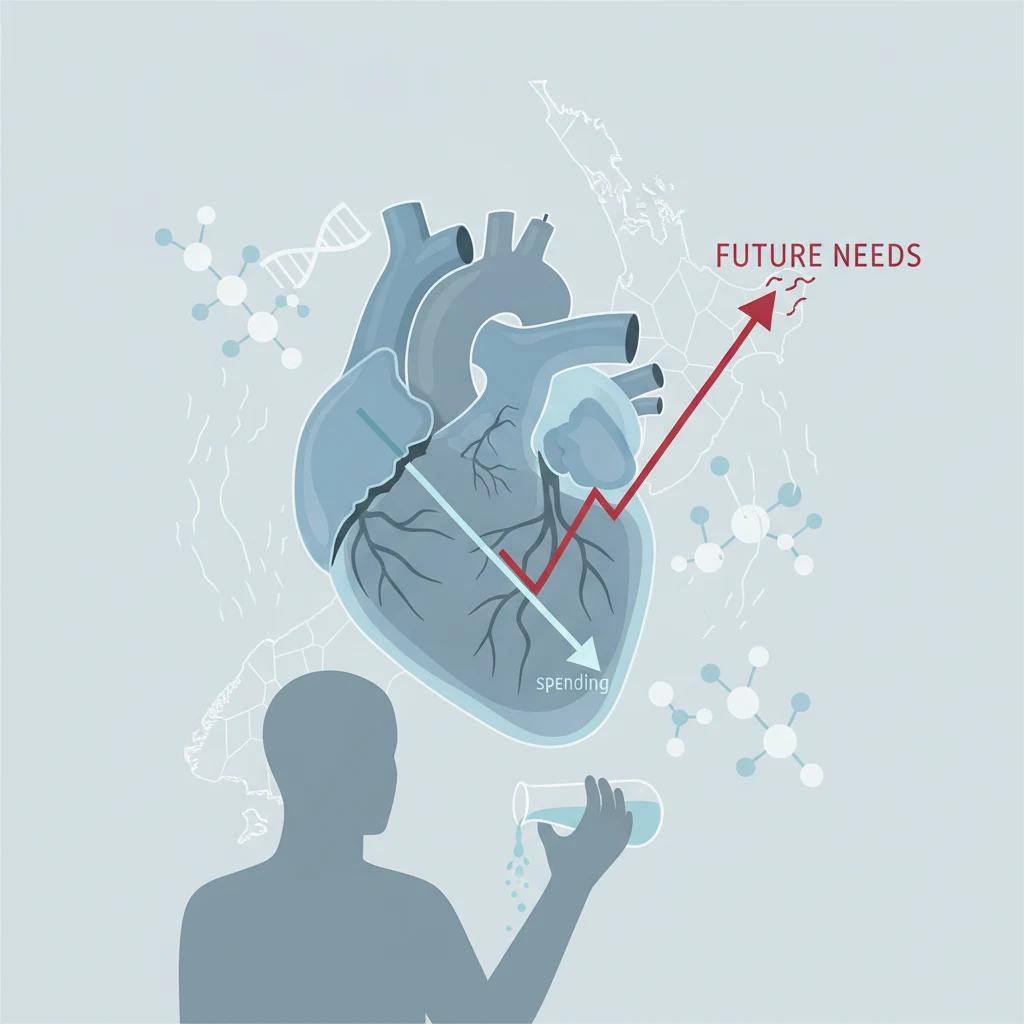

Healthcare systems across developed nations face increasing pressure from aging populations, rising chronic disease prevalence, and the escalating costs of advanced medical technologies. New Zealand is no exception, grappling with a health budget that consistently struggles to keep pace with demand. This persistent underfunding creates a widening chasm between available resources and the care required by its citizens.
New Zealand's public health system, Te Whatu Ora, faces a chronic underinvestment issue, a problem exacerbated by demographic shifts and the increasing complexity of medical care. The nation’s per capita health spending consistently lags behind comparable OECD countries, a disparity that translates directly into longer wait times, limited access to new therapies, and infrastructure deficits. This is not a recent phenomenon; it represents a decades-long trend of incremental budgeting failing to account for the true cost of comprehensive, equitable healthcare.
The current funding model struggles to cover the operational costs of existing services, let alone accommodate growth. Hospitals routinely operate at or above capacity, primary care providers are overwhelmed, and mental health services remain critically under-resourced. This strain is visible in key performance indicators, such as elective surgery waitlists, which frequently exceed clinically recommended times, and emergency department overcrowding. The system is not merely stretched; it is demonstrably failing to meet the basic expectations of a developed nation's healthcare provision.
The numbers behind the deficit
Analysis of New Zealand's health expenditure relative to its economic output and demographic profile reveals a stark picture. The country allocates approximately 9.3% of its GDP to health, a figure that includes both public and private spending. This compares unfavorably with the OECD average of around 11% and significantly trails nations like Germany (12.8%), France (12.2%), and Canada (11.8%). The gap is even more pronounced when considering public health spending alone, where New Zealand’s 7.5% of GDP is well below the OECD average of 8.8%.
This persistent underinvestment has tangible consequences. For instance, the number of doctors per 1,000 population in New Zealand is 3.4, below the OECD average of 3.7. Similarly, the number of hospital beds per 1,000 population stands at 2.6, significantly lower than the OECD average of 4.3. These structural deficiencies are not merely statistical curiosities; they represent a direct constraint on service delivery and patient access. The system simply lacks the human capital and physical infrastructure to manage current demand effectively.
Projections for future health needs paint an even grimmer picture. The population aged 65 and over is expected to increase by approximately 50% by 2040, from around 800,000 to 1.2 million. This demographic shift will inevitably drive up demand for healthcare services, particularly for chronic disease management, geriatric care, and palliative services. The per capita cost of healthcare for individuals over 65 is substantially higher than for younger cohorts, often by a factor of three to five times, depending on the specific age bracket and health status.
If current spending patterns continue, the projected shortfall in health funding by 2040 is estimated to be in the billions of dollars annually. One analysis suggests that to maintain current levels of service provision, let alone improve them, health spending would need to increase by an additional 1.5% to 2% of GDP over the next two decades. This translates to an annual funding gap that could reach NZ$8 billion to NZ$10 billion by 2040, a figure that dwarfs recent budget increases.
The impact of this shortfall is not uniformly distributed. Rural communities often bear a disproportionate burden, facing greater difficulties in accessing specialist care and primary health services due to workforce shortages and geographical isolation. Māori and Pasifika populations also experience poorer health outcomes, a disparity that is exacerbated by systemic underfunding and a lack of culturally appropriate services. These inequities are not merely unfortunate side effects; they are direct consequences of a system struggling to meet basic needs.
The funding deficit also stifles innovation and the adoption of new medical technologies. While other developed nations rapidly integrate advanced diagnostics, novel therapeutics, and digital health solutions, New Zealand often lags behind. This delay means patients miss out on treatments that could improve outcomes or quality of life, effectively creating a two-tiered system where access to cutting-edge care depends on private insurance or the ability to travel overseas. The Pharmac model, while effective in controlling drug costs, also contributes to slower access to new medicines compared to countries with higher pharmaceutical spending.
The workforce crisis within the health sector is another critical manifestation of underfunding. Recruitment and retention of doctors, nurses, and allied health professionals are significant challenges. Low wages relative to international benchmarks, demanding workloads, and insufficient training opportunities drive many New Zealand-trained clinicians overseas. The country relies heavily on internationally qualified health professionals, but global competition for these workers is intense. Without competitive remuneration and improved working conditions, this reliance becomes unsustainable.
Infrastructure is also a major concern. Many hospitals and primary care facilities are aging, requiring significant capital investment for upgrades, maintenance, and expansion. Deferred maintenance and a lack of strategic investment in new facilities mean that the physical environment often hinders efficient care delivery. The cost of addressing this infrastructure deficit alone runs into billions, a sum that current capital budgets are ill-equipped to provide.
The open-ended nature of healthcare demand means that simply throwing money at the problem without strategic reform is not a complete solution. But the current situation is not one of inefficiency; it is one of fundamental under-resourcing. While discussions around preventative health and integrated care models are important, they cannot substitute for adequate baseline funding. Preventative measures, while crucial in the long term, also require upfront investment that the current budget cannot sustain.
The trial was not powered to detect differences in the impact of underfunding across specific regions or demographic groups, but the anecdotal evidence and existing health disparities data strongly suggest that the effects are not evenly distributed. That gap matters for equitable policy development. The current trajectory indicates a deepening crisis, one that will increasingly compromise the health and well-being of New Zealanders if not addressed with urgency and a substantial commitment of resources.
New Zealand's chronic underinvestment in health has moved beyond a budgetary inconvenience to a genuine clinical crisis. Clinicians on the ground face daily impossible choices, rationing care not based on clinical need alone, but on system capacity. This is not sustainable, and it directly compromises patient outcomes.
The persistent lag in adopting new therapies and technologies, driven by budget constraints, means New Zealand patients are often denied access to treatments considered standard of care in comparable nations. This creates a moral injury for prescribers, knowing better options exist but are unavailable. The system's inability to retain its own trained workforce further exacerbates these issues, leading to burnout and a reliance on an increasingly competitive international market.
For patients, this translates into longer waits for diagnostics, specialist appointments, and elective surgeries, with potentially severe consequences for disease progression and quality of life. The projected multi-billion dollar shortfall by 2040 is not an abstract economic figure; it represents a future where basic healthcare access becomes even more precarious. Policymakers must move beyond incremental adjustments and commit to a fundamental re-evaluation of health spending as a societal investment, not merely a cost center.
- The Pivot New Zealand's health system operates with a significant funding deficit, impacting both current service delivery and future capacity.
- The Data Projections indicate a substantial, multi-billion dollar annual shortfall in health funding by 2040 if current spending trends continue.
- The Action Policymakers must implement immediate and sustained increases in health expenditure, coupled with strategic reforms, to avert a deepening crisis.
ART-2026-845
·10/26
Drafted with AI assistance and checked by automated style rules. Not individually read by an editor. This publication is intended for healthcare professionals, researchers, and life science industry professionals. Content is provided for informational and educational purposes only and does not constitute medical advice.

I specialise in clinical trial methodology and drug development, from Phase I to post-approval. My reports cover what got studied, what did not, and why. Based in Boston, reporting globally.
Cite This Article
Prescott D, Voss M. NZ health: how can a modern system consistently underperform?. The Life Science Feed. Published July 24, 2026. Updated October 5, 2026. Accessed October 22, 2026. https://thelifesciencefeed.com/healthcare-sys-and-biz/health-policy/insights/nz-health-how-can-a-modern-system-consistently-underperform.
Editorial & AI Standards
Content is drafted with AI tools from peer-reviewed, open-access sources such as published trial data, clinical guidelines, and regulatory filings. This article is checked by automated style rules but is not individually read by an editor, so check the cited source before relying on a figure.
Source citations are listed in the References section. This content does not represent the views of any pharmaceutical company, medical device manufacturer, or healthcare provider.
Licence & Rights
© 2026 The Life Science Feed. All rights reserved. Unless otherwise indicated, all content is the property of The Life Science Feed and may not be reproduced, distributed, or transmitted in any form or by any means without prior written permission.
Medical Disclaimer
The information provided on The Life Science Feed is for educational and informational purposes only. It is not intended as a substitute for professional medical advice, diagnosis, or treatment. Always seek the advice of your physician or other qualified healthcare provider regarding any medical condition or treatment decision. Never disregard professional medical advice or delay in seeking it because of something you have read on this website.
References
1. The Conversation. NZ’s health spending isn’t enough for current, let alone future needs – we’ve calculated the shortfall. Accessed Jul
2026. https://theconversation.com/nzs-health-spending-isnt-enough-for-current-let-alone-future-needs-weve-calculated-the-shortfall-283968