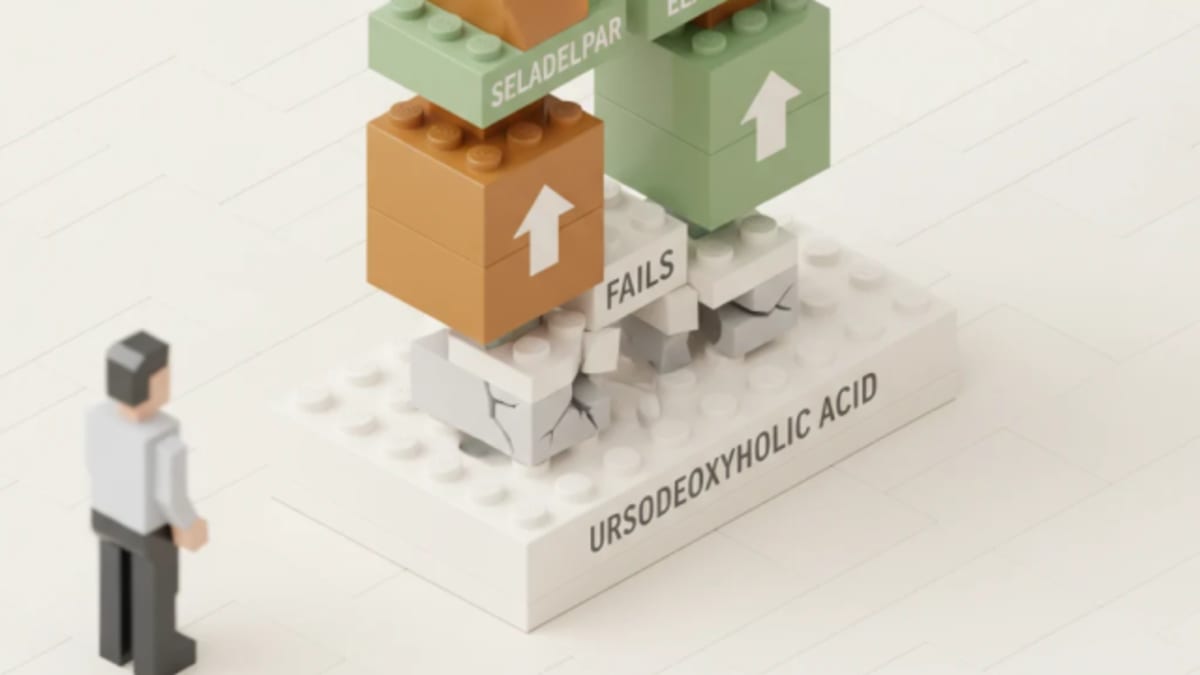

Primary biliary cholangitis (PBC) is a chronic, progressive autoimmune liver disease that, if left untreated, can lead to cirrhosis, liver failure, and the need for liver transplantation. Ursodeoxycholic acid (UDCA) remains the cornerstone of therapy, but a significant proportion of patients exhibit an inadequate biochemical response, leaving them at elevated risk of disease progression. This unmet need has driven the development of novel agents, with peroxisome proliferator-activated receptor (PPAR) agonists emerging as key contenders.
Primary biliary cholangitis is characterised by immune-mediated destruction of small intrahepatic bile ducts, leading to cholestasis and inflammation. The progressive damage to bile ducts impairs bile flow, causing bile acids to accumulate in the liver, which contributes to hepatocyte injury. Over time, this chronic inflammation and damage can result in fibrosis, cirrhosis, and ultimately liver failure. The disease predominantly affects women, typically presenting in middle age, and is often diagnosed incidentally through elevated liver enzymes, particularly alkaline phosphatase (ALP).
Diagnosis relies on a combination of clinical features, biochemical abnormalities (elevated ALP), and the presence of anti-mitochondrial antibodies (AMA). For a deeper dive into the symptom that most affects quality of life, see our article on pruritus in primary biliary cholangitis. UDCA has been the standard of care for decades, improving biochemical parameters and delaying disease progression in many patients. But UDCA is not universally effective. A substantial subset of patients, estimated to be between 30% and 40%, show an inadequate response, defined by persistently elevated ALP and/or bilirubin levels after 6 to 12 months of treatment. These patients face a higher risk of liver-related morbidity and mortality.
The Mechanism of PPAR Agonists
The peroxisome proliferator-activated receptors (PPARs) are a group of nuclear receptor proteins that play critical roles in regulating cellular differentiation, development, and metabolism. Three main isoforms exist: PPAR-alpha, PPAR-delta (also known as PPAR-beta), and PPAR-gamma. These receptors act as transcription factors, binding to specific DNA sequences and modulating the expression of genes involved in lipid metabolism, glucose homeostasis, and inflammation. In the context of liver disease, PPARs influence bile acid synthesis, transport, and detoxification pathways, making them attractive therapeutic targets for cholestatic conditions like PBC.
PPAR-alpha agonists, such as fenofibrate, have long been used in dyslipidaemia. Their mechanism in PBC involves reducing bile acid synthesis and promoting their detoxification. PPAR-delta agonists, like seladelpar, are thought to improve cholestasis by upregulating genes involved in bile acid transport and reducing inflammation. Elafibranor, a dual PPAR-alpha/delta agonist, combines these effects, aiming for a broader impact on the underlying pathophysiology of PBC. These agents work by activating their respective PPARs, leading to a cascade of gene expression changes that collectively aim to normalise liver function and reduce cholestatic injury.
Seladelpar: A Selective PPAR-delta Agonist
Seladelpar is a highly selective PPAR-delta agonist. Its mechanism of action in PBC involves several key pathways. It upregulates genes responsible for bile acid transport, such as the bile salt export pump (BSEP), which facilitates the efflux of bile acids from hepatocytes into the bile canaliculi. This action helps to reduce the accumulation of toxic bile acids within liver cells. Seladelpar also modulates inflammatory pathways, reducing the expression of pro-inflammatory cytokines and chemokines, thereby mitigating the immune-mediated damage to bile ducts. The drug has been evaluated in patients with PBC who have an inadequate response to UDCA or are intolerant to it.
Clinical development has focused on its ability to improve biochemical markers of cholestasis, particularly ALP and total bilirubin. The goal is to achieve a biochemical response, typically defined as an ALP level below 1.67 times the upper limit of normal (ULN) with a decrease of at least 15% from baseline, and normal total bilirubin. These biochemical endpoints serve as surrogate markers for long-term clinical outcomes, as sustained normalisation of these parameters correlates with improved transplant-free survival. The safety profile of seladelpar has been a focus, with particular attention to potential adverse events such as pruritus, gastrointestinal disturbances, and changes in lipid profiles.
Elafibranor: A Dual PPAR-alpha/delta Agonist
Elafibranor is a dual agonist targeting both PPAR-alpha and PPAR-delta. This dual action provides a comprehensive approach to managing PBC. The PPAR-alpha agonism contributes to the reduction of bile acid synthesis and promotes their detoxification, similar to fenofibrate. This is achieved by upregulating enzymes involved in bile acid catabolism and downregulating those involved in their synthesis. The PPAR-delta agonism mirrors the effects of seladelpar, enhancing bile acid transport and exerting anti-inflammatory effects within the liver.
The combined activation of both PPAR-alpha and PPAR-delta aims to provide a synergistic effect, addressing multiple facets of PBC pathophysiology. Elafibranor has also been studied in patients with an inadequate response to UDCA. The primary endpoints in its clinical trials similarly focus on biochemical response, specifically reductions in ALP and total bilirubin. The rationale for a dual agonist is that it may offer a more robust and comprehensive therapeutic effect compared to targeting a single PPAR isoform. Safety considerations for elafibranor include potential gastrointestinal side effects, skin reactions, and monitoring of lipid parameters, given its impact on lipid metabolism. For a comprehensive overview of liver and biliary system diseases, Sherlock's Diseases of the Liver and Biliary System remains the definitive reference.
Comparing the Second-Line Treatment Options
With both seladelpar and elafibranor emerging as potential second-line treatments, clinicians now have more options beyond obeticholic acid for patients who do not respond to UDCA. Obeticholic acid, a farnesoid X receptor (FXR) agonist, was the first non-UDCA therapy approved for PBC, but its use can be limited by dose-dependent pruritus and concerns regarding its safety profile in advanced liver disease. The availability of PPAR agonists offers an alternative mechanism of action, potentially providing better tolerability or efficacy for some patients.
The choice between these agents will likely depend on individual patient characteristics, tolerability profiles, and specific biochemical responses. While both seladelpar and elafibranor target improvements in ALP and bilirubin, subtle differences in their mechanisms and clinical trial outcomes may guide prescribing decisions. For example, the dual action of elafibranor might be preferred in patients with concomitant dyslipidaemia, given PPAR-alpha's role in lipid metabolism. Conversely, the selective PPAR-delta agonism of seladelpar might offer a more targeted approach with potentially fewer off-target effects. The ongoing evaluation of these therapies will continue to refine their place in the PBC treatment algorithm. Our previous coverage on seladelpar and elafibranor as second-line options provides additional context.
The development of these new therapies highlights the persistent unmet need in PBC. While UDCA remains foundational, the reality is that a significant proportion of patients require additional intervention to prevent disease progression. The introduction of PPAR agonists provides clinicians with more tools to manage this complex condition, moving towards a more personalised approach to treatment. Long-term data on hard clinical endpoints, such as transplant-free survival, will be important for solidifying the role of these agents in routine clinical practice by demonstrating their impact on patient outcomes. The open-label design of some early studies is an obvious caveat, and the long-term impact on patient-reported outcomes beyond biochemical markers still requires further elucidation.
The arrival of seladelpar and elafibranor offers a genuine expansion of therapeutic options for primary biliary cholangitis patients who fail to achieve an adequate response to ursodeoxycholic acid. For too long, clinicians have had limited recourse beyond obeticholic acid, which, while effective for some, carries its own baggage of pruritus and concerns in advanced disease. These new PPAR agonists provide distinct mechanisms of action, allowing for a more tailored approach to managing persistent cholestasis.
The focus on biochemical endpoints, specifically ALP and bilirubin, is a pragmatic one. These markers are well-established surrogates for long-term outcomes in PBC. But clinicians will need to carefully consider the individual patient profile, including comorbidities like dyslipidaemia, when choosing between a selective PPAR-delta agonist and a dual PPAR-alpha/delta agent. It is not a one-size-fits-all scenario, and the nuances of each drug's safety and efficacy profile will become clearer with broader clinical experience.
The industry's investment in this space reflects a recognition of the significant unmet need. While UDCA is effective for many, the progression to cirrhosis and liver failure in non-responders is a stark reminder that more is needed. The challenge now lies in integrating these new therapies effectively into existing treatment algorithms, ensuring that patients who stand to benefit most receive them promptly. This means moving beyond a reactive approach to UDCA failure and proactively identifying those at highest risk of progression.
The goal is to prevent the irreversible liver damage that defines advanced PBC. These new agents, by targeting fundamental pathways of cholestasis and inflammation, offer a tangible step forward. But the real test will be their impact on patient quality of life and long-term survival in the heterogeneous real-world population, not just in controlled trial settings.
- The Pivot Seladelpar and elafibranor represent a new class of PPAR agonists for PBC patients with inadequate UDCA response.
- The Data Both agents demonstrate improvements in biochemical markers of cholestasis, including alkaline phosphatase and bilirubin.
- The Action Clinicians should consider these second-line options for patients who do not achieve an adequate biochemical response to UDCA, aiming to mitigate disease progression.
ART-2026-1496
·10/26
Drafted with AI assistance, reviewed and approved by the editorial team. This publication is intended for healthcare professionals, researchers, and life science industry professionals. Content is provided for informational and educational purposes only and does not constitute medical advice.

Infectious disease, epidemiology, and global health equity. I have covered outbreaks from Ebola to COVID-19 to mpox. The stories I am most drawn to are where the science is clear and the response is slow.
Cite This Article
Reeves T, Lopes W. Seladelpar and elafibranor: second-line options for PBC. The Life Science Feed. Published August 27, 2026. Updated October 5, 2026. Accessed October 12, 2026. https://thelifesciencefeed.com/hepatology/primary-biliary-cholangitis/insights/seladelpar-elafibranor-pbc-second-line-options.
Editorial & AI Standards
All content is researched from peer-reviewed, open-access sources: published trial data, clinical guidelines, and regulatory filings. AI tools are used solely to structure and summarise that evidence; no AI-generated conclusions appear without editor verification against the primary source.
Every article is reviewed by a named editor before publication. Source citations are listed in the References section. This content does not represent the views of any pharmaceutical company, medical device manufacturer, or healthcare provider.
Licence & Rights
© 2026 The Life Science Feed. All rights reserved. Unless otherwise indicated, all content is the property of The Life Science Feed and may not be reproduced, distributed, or transmitted in any form or by any means without prior written permission.
Medical Disclaimer
The information provided on The Life Science Feed is for educational and informational purposes only. It is not intended as a substitute for professional medical advice, diagnosis, or treatment. Always seek the advice of your physician or other qualified healthcare provider regarding any medical condition or treatment decision. Never disregard professional medical advice or delay in seeking it because of something you have read on this website.
References
1. Hayes CM, Gallucci GM, Boyer JL, Assis DN, Ghonem NS. PPAR agonists for the treatment of cholestatic liver diseases: Over a decade of clinical progress. Hepatol Commun. 2025;9(1). doi:10.1097/HC9.0000000000000612
2. Cho EJ. Emerging Therapeutics for Primary Biliary Cholangitis. Korean J Gastroenterol. 2025;85(3):309-313. doi:10.4166/kjg.2025.045
3. Caines A, Trudeau S, Gordon SC. Evaluating the safety and efficacy of seladelpar for adults with primary biliary cholangitis. Expert Opin Pharmacother. 2024;25(11):1517-1523. doi:10.1080/14656566.2024.2390120
4. Sohal A, Alamgir M, Kowdley KV. New therapies for primary biliary cholangitis. Hepatol Int. 2026;20(3):587-595. doi:10.1007/s12072-026-11088-2
5. Das TS, Vuppalanchi R. Recent Advances in Primary Biliary Cholangitis Treatment. Clin Liver Dis. 2025;29(4):641-655. doi:10.1016/j.cld.2025.06.008
6. Alamgir M, Bhushan S, Sohal A, Kowdley KV. A Review of Therapies for Primary Biliary Cholangitis. Gastroenterol Hepatol (N Y). 2026;22(5):227-234. doi:10.1007/s12072-026-11088-2