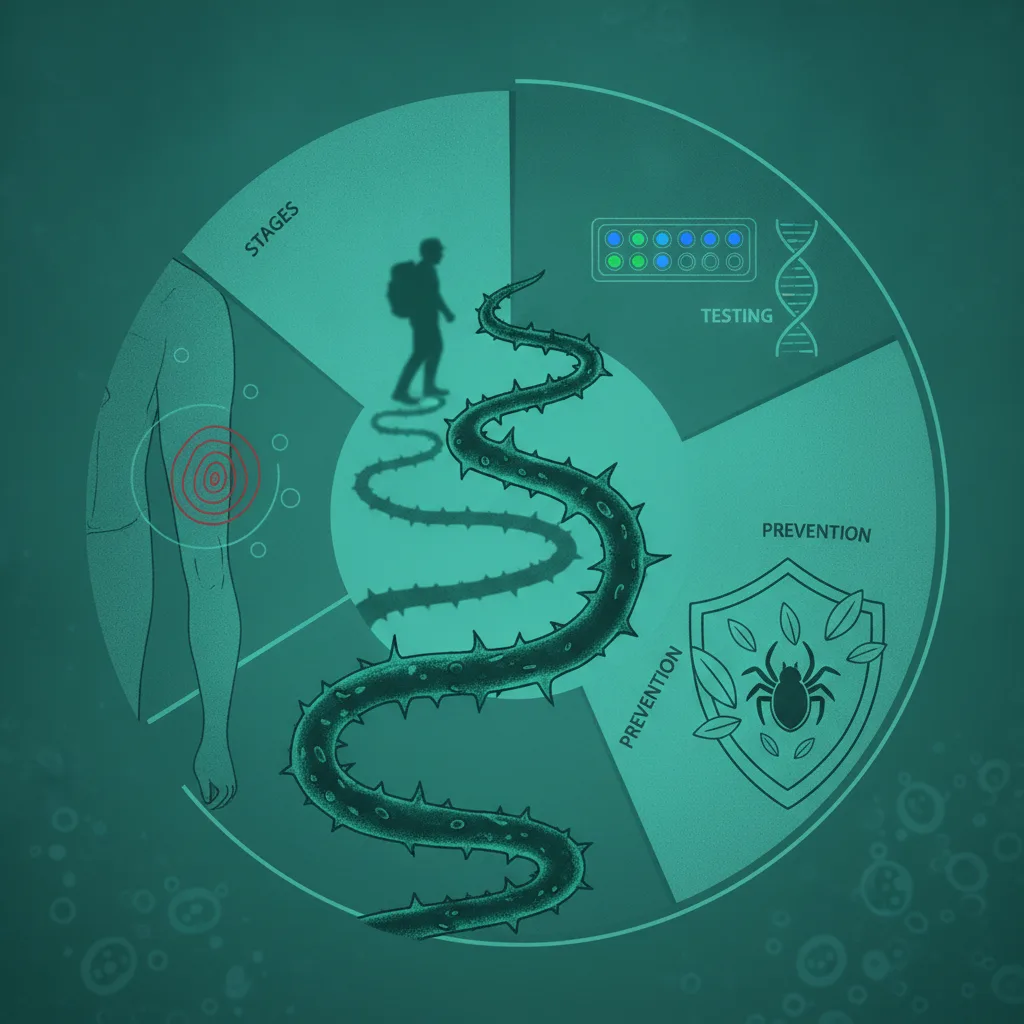

Lyme disease, caused by the spirochete Borrelia burgdorferi and transmitted by infected ticks, remains a significant public health challenge across Europe and North America. Its protean manifestations, often mimicking other conditions, complicate diagnosis and can lead to prolonged suffering if not addressed promptly. Understanding the disease's progression, the complexities of diagnostic testing, and effective prevention strategies is paramount for clinicians.
Lyme disease, or Lyme borreliosis, is the most common vector-borne illness in the Northern Hemisphere. The causative agent, Borrelia burgdorferi sensu lato, is a group of spirochetes transmitted to humans through the bite of infected Ixodes ticks. These ticks, often referred to as deer ticks or black-legged ticks, are prevalent in wooded and grassy areas, making outdoor activities a primary risk factor for exposure. The disease's clinical presentation is highly variable, evolving through distinct stages that can affect multiple organ systems, including the skin, joints, heart, and nervous system.
The disease typically progresses through three stages: early localized, early disseminated, and late disseminated. Each stage is characterized by a unique set of symptoms, though there can be overlap, and not all patients experience every stage or symptom. The incubation period from tick bite to the onset of symptoms can range from a few days to several weeks, influencing the initial clinical picture and diagnostic approach.
Understanding the Stages of Lyme Disease
The early localized stage is often marked by the pathognomonic erythema migrans (EM) rash, which appears in approximately 70-80% of infected individuals. This distinctive rash typically develops 3 to 30 days after the tick bite, expanding centrifugally from the bite site to form a characteristic 'bull's-eye' appearance, though it can also present as a more uniform red patch. The EM rash is usually asymptomatic, but some patients report warmth, itching, or a burning sensation. Accompanying symptoms can include fatigue, headache, myalgia, arthralgia, and low-grade fever, often non-specific and easily mistaken for a viral illness. The presence of EM, particularly in an endemic area, is sufficient for a clinical diagnosis and warrants immediate antibiotic treatment without waiting for serological confirmation.
If left untreated, the spirochetes can disseminate through the bloodstream and lymphatic system, leading to the early disseminated stage, which typically occurs weeks to months after the initial infection. This stage can manifest with a broader range of symptoms affecting various organ systems. Neurological manifestations, known as neuroborreliosis, can include lymphocytic meningitis, cranial neuropathies (most commonly facial palsy, which can be bilateral), and radiculoneuropathy. Cardiac involvement, or Lyme carditis, can present as atrioventricular block of varying degrees, myocarditis, or pericarditis. Musculoskeletal symptoms often include migratory arthralgias and intermittent arthritis, particularly affecting large joints like the knee. Multiple erythema migrans lesions can also appear at this stage, indicating widespread dissemination of the spirochetes. The severity and combination of these symptoms vary widely among patients, making diagnosis challenging without a clear history of tick exposure or prior EM.
The late disseminated stage can develop months to years after the initial infection if treatment is delayed or inadequate. The most common manifestation of late Lyme disease is Lyme arthritis, characterized by recurrent, brief attacks of objective joint swelling and pain, primarily in large joints, especially the knee. This arthritis can become chronic and destructive if not treated. Chronic neurological manifestations can include Lyme encephalopathy, presenting with subtle cognitive impairments such as memory loss, difficulty concentrating, and mood disturbances. Rarely, chronic radiculoneuropathy or polyneuropathy can occur. Acrodermatitis chronica atrophicans (ACA), a chronic skin manifestation, is more common in Europe and presents as reddish-blue discoloration and swelling, typically on the extremities, which later progresses to skin atrophy. The diagnosis of late Lyme disease often requires a combination of clinical suspicion, serological testing, and sometimes direct detection of spirochetes or their DNA in affected tissues or fluids.
Diagnostic Approaches and Challenges
Diagnosing Lyme disease relies on a combination of clinical evaluation and laboratory testing, but the interpretation of results can be complex, especially in early disease. The Centers for Disease Control and Prevention (CDC) and European guidelines recommend a two-tiered serological testing approach for suspected Lyme disease, particularly when EM is absent or atypical. The first step involves an enzyme immunoassay (EIA) or immunofluorescence assay (IFA) to detect antibodies against Borrelia burgdorferi. If this initial test is positive or equivocal, a Western blot (immunoblot) is performed to confirm the presence of specific antibodies. For IgG Western blot, at least five of ten specific bands must be present, while for IgM, two of three bands are required.
The utility of serological testing is highly dependent on the stage of infection. In the early localized stage, particularly within the first few weeks of infection, antibody production may not yet be detectable, leading to false-negative results. This is why a clinical diagnosis based on the presence of erythema migrans is essential for preventing disease progression, as delaying treatment to await seroconversion can allow the disease to progress. But a positive serology only indicates exposure to Borrelia burgdorferi and does not necessarily confirm active infection, as antibodies can persist for years after successful treatment. This can complicate the diagnosis of new infections or treatment failures.
Other diagnostic methods, such as PCR for direct detection of bacterial DNA, are generally not recommended for routine diagnosis of Lyme disease due to their low sensitivity in blood. PCR may be useful in specific circumstances, such as testing synovial fluid from patients with Lyme arthritis or cerebrospinal fluid in suspected neuroborreliosis, where the bacterial load might be higher. But even in these cases, a negative PCR does not rule out infection. Culture of Borrelia burgdorferi is technically challenging and time-consuming, making it impractical for routine clinical use. The Oxford Handbook of Infectious Diseases and Microbiology provides a comprehensive overview of these diagnostic complexities.
Prevention Strategies and Prophylaxis
Preventing Lyme disease primarily involves minimizing exposure to infected ticks. This includes avoiding wooded and bushy areas with high grass, especially during peak tick activity seasons (spring and summer). When outdoors, individuals should wear protective clothing, such as long-sleeved shirts and long trousers tucked into socks, and use insect repellents containing DEET or picaridin on exposed skin and clothing. Regular tick checks after spending time outdoors are essential. Ticks should be removed promptly and correctly using fine-tipped tweezers, grasping the tick as close to the skin surface as possible and pulling upward with steady, even pressure. Crushing or twisting the tick should be avoided, as this can increase the risk of pathogen transmission.
Post-exposure prophylaxis (PEP) with a single dose of doxycycline is recommended in specific situations. This typically applies to adults and children over 8 years of age who have sustained a high-risk tick bite, defined as an attached Ixodes scapularis tick that has been feeding for at least 36 hours, in an area where the incidence of Lyme disease is high. The doxycycline should be administered within 72 hours of tick removal. This prophylactic measure is not universally recommended for all tick bites, as the vast majority of bites do not result in Lyme disease, and widespread use of antibiotics could contribute to antimicrobial resistance. Careful patient selection based on risk factors is essential for effective prevention of infection.
Despite these measures, Lyme disease remains a challenge. The lack of a widely available human vaccine means that prevention relies heavily on individual vigilance and public health education. Continued research into more effective diagnostic tools, particularly for early infection, and novel prevention strategies is ongoing. For clinicians, maintaining a high index of suspicion, especially in endemic regions, and understanding the evolving clinical picture of Lyme disease are critical for timely diagnosis and appropriate management. The long-term consequences of untreated or inadequately treated Lyme disease, including chronic pain, fatigue, and neurological deficits, highlight the importance of early intervention.
The protean nature of Lyme disease demands a high index of suspicion from clinicians, particularly in endemic regions. Relying solely on serology in early disease is a fool's errand; erythema migrans, when present, should trigger immediate treatment. Waiting for antibody titers to rise only invites progression to more complex, and often debilitating, disseminated forms.
But the diagnostic challenge extends beyond early infection. Persistent symptoms after antibiotic treatment, often termed post-treatment Lyme disease syndrome, continue to vex both patients and practitioners. Distinguishing between ongoing infection, immune-mediated sequelae, or entirely unrelated conditions requires careful clinical judgment and a thorough understanding of the disease's natural history.
Prevention remains the most effective strategy. GPs are on the front lines of educating patients about tick bite avoidance and proper removal techniques. A single dose of doxycycline for high-risk exposures is a sensible approach, but indiscriminate use for every tick bite is not. We must balance the risk of infection against the broader public health concern of antibiotic resistance.
- The Pivot Early recognition of erythema migrans is critical for prompt treatment and preventing disease progression.
- The Data Diagnosis relies on a two-tiered serological approach, but false negatives are common in early disease.
- The Action Counsel patients on tick bite prevention and proper tick removal, and maintain a high index of suspicion for Lyme disease in endemic areas.
ART-2026-1133
·09/26
Drafted with AI assistance, reviewed and approved by the editorial team. This publication is intended for healthcare professionals, researchers, and life science industry professionals. Content is provided for informational and educational purposes only and does not constitute medical advice.

Infectious disease, epidemiology, and global health equity. I have covered outbreaks from Ebola to COVID-19 to mpox. The stories I am most drawn to are where the science is clear and the response is slow.
Cite This Article
Reeves T, Lopes W. Lyme disease: why early diagnosis is often missed. The Life Science Feed. Published August 14, 2026. Updated September 15, 2026. Accessed September 28, 2026. https://thelifesciencefeed.com/infectious-diseases/clostridioides-difficile/practice/lyme-disease-why-early-diagnosis-is-often-missed.
Editorial & AI Standards
All content is researched from peer-reviewed, open-access sources: published trial data, clinical guidelines, and regulatory filings. AI tools are used solely to structure and summarise that evidence; no AI-generated conclusions appear without editor verification against the primary source.
Every article is reviewed by a named editor before publication. Source citations are listed in the References section. This content does not represent the views of any pharmaceutical company, medical device manufacturer, or healthcare provider.
Licence & Rights
© 2026 The Life Science Feed. All rights reserved. Unless otherwise indicated, all content is the property of The Life Science Feed and may not be reproduced, distributed, or transmitted in any form or by any means without prior written permission.
Medical Disclaimer
The information provided on The Life Science Feed is for educational and informational purposes only. It is not intended as a substitute for professional medical advice, diagnosis, or treatment. Always seek the advice of your physician or other qualified healthcare provider regarding any medical condition or treatment decision. Never disregard professional medical advice or delay in seeking it because of something you have read on this website.
References
1. Wong KH, Shapiro ED, Soffer GK. A Review of Post-treatment Lyme Disease Syndrome and Chronic Lyme Disease for the Practicing Immunologist. Clin Rev Allergy Immunol. 2022;62(1):264-271. doi:10.1007/s12016-021-08906-w
2. Carriveau A, Poole H, Thomas A. Lyme Disease. Nurs Clin North Am. 2019;54(2):261-275. doi:10.1016/j.cnur.2019.02.003
3. Smith RP. Lyme Disease. Ann Intern Med. 2025;178(5):ITC65-ITC80. doi:10.7326/ANNALS-25-01111
4. Schoen RT. Lyme disease: diagnosis and treatment. Curr Opin Rheumatol. 2020;32(3):247-254. doi:10.1097/BOR.0000000000000698
5. Ross Russell AL, Dryden MS, Pinto AA, Lovett JK. Lyme disease: diagnosis and management. Pract Neurol. 2018;18(6):455-464. doi:10.1136/practneurol-2018-001998
6. Önal U, Aytaç Erdem H, Uyan Önal A, Reşat Sipahi O. Systematic review of Lyme disease in Turkey. Trop Doct. 2019;49(3):165-170. doi:10.1177/0049475519843387