
Mass gatherings, particularly international sporting events, present a unique challenge for public health. The confluence of diverse populations from various epidemiological settings creates fertile ground for the rapid transmission of infectious diseases. Preventing outbreaks at such events requires a robust, pre-existing public health framework, particularly in vaccine delivery.
The FIFA World Cup, a global spectacle drawing millions of spectators and participants, inherently carries a substantial risk of infectious disease transmission. Attendees travel from every corner of the globe, bringing with them varying immunity profiles and exposure histories. This convergence creates an environment where respiratory viruses, gastrointestinal pathogens, and vaccine-preventable diseases can spread rapidly, potentially overwhelming local healthcare systems and causing international dissemination.
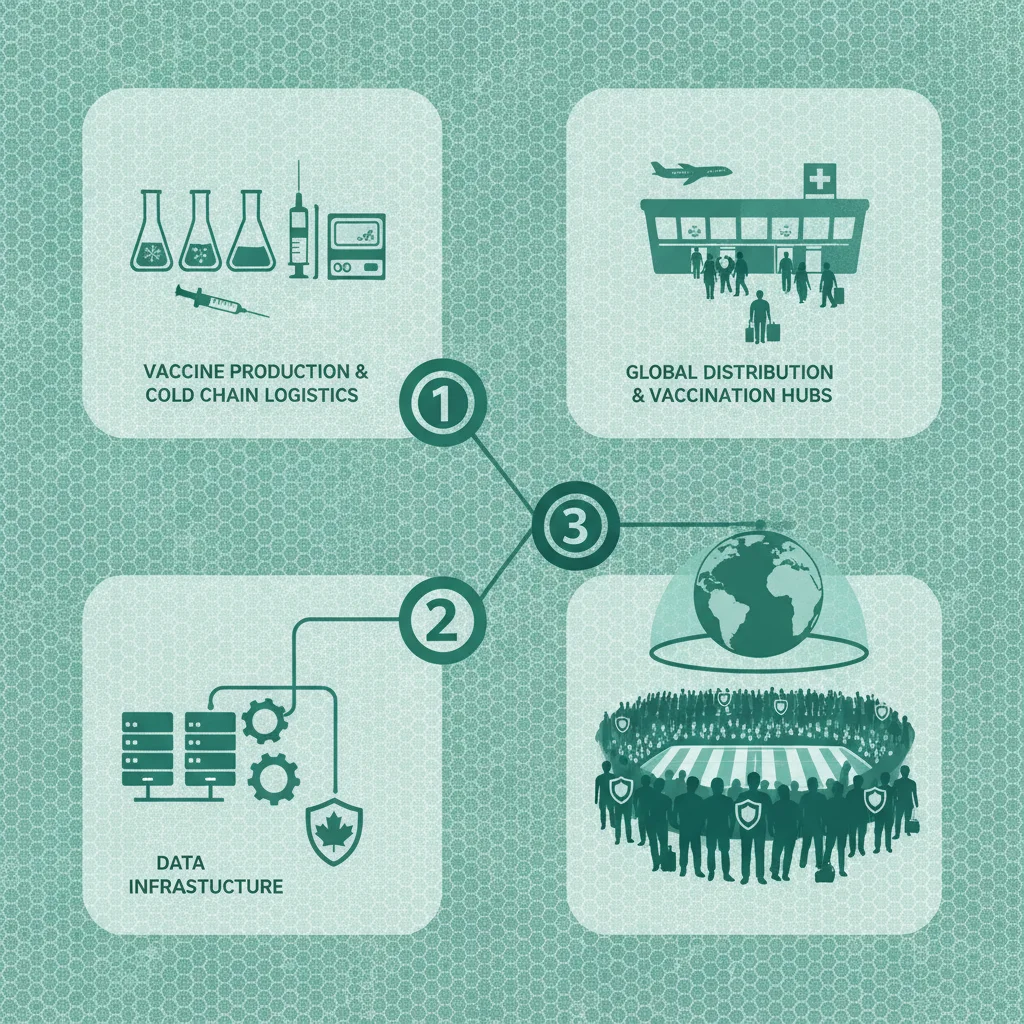
Canada's approach to mitigating these risks during its hosting duties relied not on novel interventions, but on the strategic deployment and adaptation of its existing, well-established vaccine infrastructure. This system, refined through decades of routine immunisation programs and more recently stress-tested by the COVID-19 pandemic, provided a ready-made framework for surveillance, rapid response, and targeted vaccination efforts. The public health units, already accustomed to large-scale vaccine distribution and administration, simply scaled up their operations.
How they ran it
The Canadian public health strategy for the World Cup focused on several key pillars: enhanced surveillance, pre-emptive communication, and agile vaccine deployment. Surveillance systems, already in place for seasonal influenza and other common communicable diseases, were augmented to specifically monitor for unusual clusters of respiratory or gastrointestinal illness among event attendees and local populations. This involved increased testing capacity and expedited reporting from healthcare facilities and designated event medical stations. The goal was early detection, allowing for immediate isolation and contact tracing before widespread transmission could occur.
Pre-emptive communication played a critical role in informing both international visitors and local residents about recommended vaccinations and hygiene practices. Public health advisories, disseminated through various channels including official event websites, airport signage, and local media, emphasised the importance of up-to-date routine immunisations, particularly for measles, mumps, rubella (MMR), and influenza. For travellers from regions with higher endemic rates of certain diseases, specific recommendations for vaccines like hepatitis A and typhoid were also provided. This proactive educational campaign aimed to increase vaccine uptake before arrival and reinforce preventive behaviours throughout the event.
The core of Canada's success, however, lay in its flexible vaccine deployment capabilities. Unlike scenarios where new infrastructure must be hastily assembled, Canadian public health authorities could leverage existing clinics, mobile vaccination units, and trained personnel. This allowed for rapid, targeted vaccination campaigns if an outbreak of a vaccine-preventable disease were detected. For instance, if a case of measles had been identified, public health teams could quickly establish pop-up clinics near event venues or accommodation sites, offering post-exposure prophylaxis or catch-up vaccinations to at-risk individuals. The logistical framework for cold chain management, vaccine inventory, and waste disposal was already robust, ensuring that any emergency vaccination effort would be both efficient and safe.
The established relationships between federal, provincial, and municipal public health agencies also proved invaluable. This multi-jurisdictional coordination, a hallmark of Canada's public health system, ensured a unified response across different host cities and provinces. Data sharing protocols, refined during previous national health emergencies, facilitated real-time epidemiological updates and coordinated decision-making. This meant that if a cluster of illness emerged in one host city, public health officials in other locations could be immediately alerted and prepare their own response, preventing a fragmented or delayed reaction.
The open-label nature of public health interventions, by definition, means direct comparative trials are not feasible. But the absence of major infectious disease outbreaks during the World Cup, despite the high-risk environment, serves as a testament to the effectiveness of this pre-existing infrastructure. The system did not need to prove its efficacy in a randomised controlled trial; it demonstrated its utility through its operational success. The ability to quickly scale up existing services, rather than building from scratch, saved critical time and resources, allowing public health officials to focus on monitoring and response rather than logistical setup.
A potential limitation of this approach is its reliance on public adherence to recommendations. While public health advisories were widespread, individual compliance with vaccination recommendations or hygiene practices cannot be guaranteed. Still, the sheer volume of attendees makes complete individual compliance an unrealistic expectation. The strength of the Canadian system was its capacity for rapid, population-level intervention when individual prevention failed. The infrastructure was designed to be resilient to human variability, offering a safety net through its ability to quickly immunise or provide prophylaxis to large groups if necessary. This proactive and reactive capability, built on years of investment in public health, ultimately safeguarded the event.
The Canadian experience at the FIFA World Cup underscores a fundamental truth for clinicians: robust, pre-existing public health infrastructure is not merely a cost center, but a critical asset. When a global event demands rapid infectious disease control, the ability to scale up established systems, rather than invent new ones, dictates success. This should inform how we view ongoing investment in routine immunisation programs and public health emergency preparedness.
For general practitioners and specialists, this means recognising the broader societal benefit of their everyday contributions to vaccine uptake. Every routine vaccination administered strengthens the collective immunity that can be leveraged during unforeseen mass gatherings or public health crises. The Canadian model demonstrates that a well-oiled machine, practiced in the mundane, becomes indispensable in the extraordinary.
Industry, too, should take note. The efficiency of vaccine deployment during such events relies heavily on predictable supply chains and readily available vaccine stockpiles. Pharmaceutical companies have a role in ensuring these systems are robust enough to meet surge demands, not just for novel threats, but for established vaccine-preventable diseases that can resurface under specific conditions.
Ultimately, the World Cup scenario was a real-world stress test. Canada passed, not because of a new drug or a novel intervention, but because it had already built the roads and bridges for vaccine delivery. Other nations hosting similar large-scale events would do well to examine their own foundational public health investments before the crowds arrive.
- The Pivot Canada leveraged its existing, well-practiced vaccine infrastructure to manage infectious disease risks during the FIFA World Cup, rather than building new systems.
- The Data The rapid deployment capabilities of Canada's public health units allowed for swift response to potential disease threats, preventing widespread transmission.
- The Action Clinicians should recognize the value of established, flexible vaccine delivery systems in mitigating public health risks during large-scale events.
ART-2026-830
·09/26
Drafted with AI assistance, reviewed and approved by the editorial team. This publication is intended for healthcare professionals, researchers, and life science industry professionals. Content is provided for informational and educational purposes only and does not constitute medical advice.

I write about AI in healthcare: the validation studies, the deployment failures, and the regulatory questions without answers yet. Based in San Francisco, close to where the technology is built.
Cite This Article
Chen L, Voss M. Canada's vaccine infrastructure protected FIFA world cup attendees. The Life Science Feed. Published July 30, 2026. Updated September 5, 2026. Accessed September 13, 2026. https://thelifesciencefeed.com/infectious-diseases/influenza/news/canadas-vaccine-infrastructure-protected-fifa-world-cup-attendees.
Editorial & AI Standards
All content is researched from peer-reviewed, open-access sources: published trial data, clinical guidelines, and regulatory filings. AI tools are used solely to structure and summarise that evidence; no AI-generated conclusions appear without editor verification against the primary source.
Every article is reviewed by a named editor before publication. Source citations are listed in the References section. This content does not represent the views of any pharmaceutical company, medical device manufacturer, or healthcare provider.
Licence & Rights
© 2026 The Life Science Feed. All rights reserved. Unless otherwise indicated, all content is the property of The Life Science Feed and may not be reproduced, distributed, or transmitted in any form or by any means without prior written permission.
Medical Disclaimer
The information provided on The Life Science Feed is for educational and informational purposes only. It is not intended as a substitute for professional medical advice, diagnosis, or treatment. Always seek the advice of your physician or other qualified healthcare provider regarding any medical condition or treatment decision. Never disregard professional medical advice or delay in seeking it because of something you have read on this website.
References
1. The Conversation. How Canada’s vaccine infrastructure helped guard against infectious disease during the FIFA World Cup. Accessed Jul
2026. https://theconversation.com/how-canadas-vaccine-infrastructure-helped-guard-against-infectious-disease-during-the-fifa-world-cup-287060