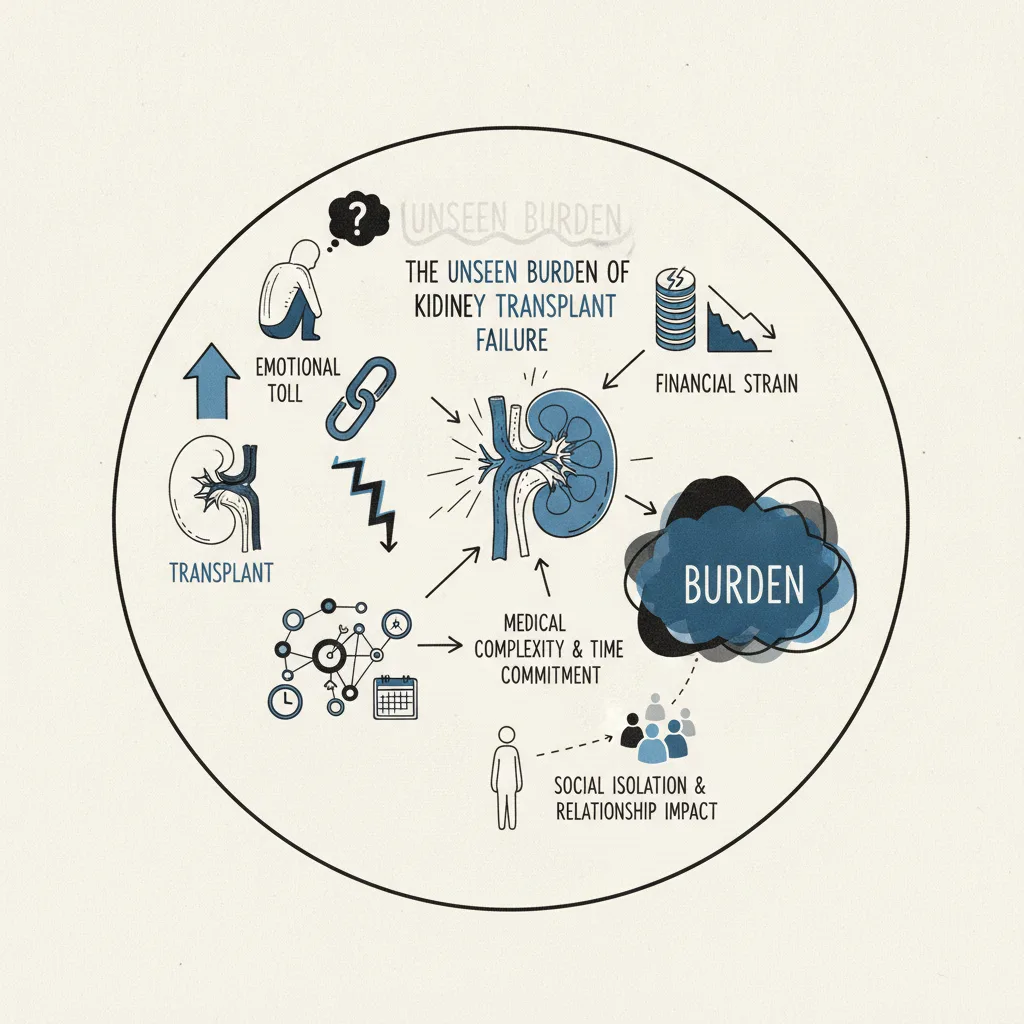

For patients with end-stage renal disease, a kidney transplant offers the promise of freedom from dialysis and a return to a more normal life. But when that transplant fails, the physical and emotional toll can be devastating, often underestimated by clinicians focused on the medical trajectory. The journey back to dialysis, or towards a second transplant, is fraught with complex challenges for both patients and their care partners.
Kidney transplantation represents a significant medical advancement, offering improved quality of life and survival compared to long-term dialysis for many patients with end-stage renal disease (ESRD). The procedure itself is complex, involving extensive pre-transplant evaluation, surgical implantation, and lifelong immunosuppression. Patients invest immense hope and effort into the transplant process, viewing it as a definitive solution to their chronic illness. This investment makes the experience of transplant failure particularly brutal, often described as a profound loss, akin to bereavement.
When a transplanted kidney ceases to function adequately, patients face the grim reality of returning to dialysis. This transition is not merely a medical one; it forces individuals to confront the loss of the freedom and improved health they had gained, often leading to feelings of failure, guilt, and despair. Care partners, who often play a critical role in supporting patients through the transplant journey, also experience significant distress, shouldering increased responsibilities and witnessing their loved one's decline.
The Weight of Recurrence
The return to dialysis after transplant failure is a stark reminder of the chronic nature of ESRD. Patients must re-engage with a treatment modality they had hoped to leave behind, often with a renewed sense of physical and emotional exhaustion. The physical demands of dialysis, whether hemodialysis or peritoneal dialysis, can be substantial, impacting energy levels, daily routines, and overall well-being. Many patients report feeling a loss of autonomy, as their lives once again become dictated by treatment schedules and medical appointments. This can be particularly challenging for those who had experienced a period of relative normalcy post-transplant.
The psychological impact extends beyond the immediate disappointment. Patients frequently grapple with feelings of anger, frustration, and sadness. There is often a sense of injustice, questioning why their transplant failed despite their adherence to medical regimens. This internal struggle can be isolating, as patients may feel misunderstood by those who have not experienced the unique challenges of transplant and its subsequent failure. The emotional burden can manifest as depression, anxiety, and a diminished sense of self-worth, requiring careful clinical attention.
The Care Partner's Parallel Journey
Care partners, often spouses, parents, or adult children, are integral to the transplant journey. They provide emotional support, assist with medication management, transport patients to appointments, and advocate on their behalf. When a transplant fails, their role intensifies, and they too experience a parallel emotional and practical burden. They witness the patient's physical decline and emotional distress, often feeling helpless and overwhelmed.
The practical demands on care partners increase significantly with the return to dialysis. Managing complex medication schedules, coordinating transportation to dialysis centers, and providing personal care can be physically and emotionally draining. This often leads to caregiver burnout, stress, and a neglect of their own health and well-being. Care partners may also experience feelings of guilt, wondering if there was something more they could have done to prevent the transplant from failing. Their social lives and professional commitments can suffer, further isolating them during an already challenging time.
Navigating the Path Forward
For many patients, transplant failure initiates a new phase of decision-making regarding future treatment options. This might involve re-evaluation for a second transplant, a process that can be emotionally taxing and physically demanding. The prospect of undergoing another major surgery, with its inherent risks and uncertainties, can be daunting. Patients must weigh the potential benefits against the psychological and physical toll of another transplant journey, often with the memory of the previous failure looming large.
But for others, a second transplant may not be an option due to medical contraindications or a lack of suitable donors. In these cases, long-term dialysis becomes the only viable treatment. This necessitates a profound adjustment, requiring patients to come to terms with a permanent return to a life defined by chronic treatment. The discussions surrounding these choices require sensitivity and clear communication from the clinical team, acknowledging the patient's emotional state and providing comprehensive information about all available options. The Oxford Handbook of Nephrology and Hypertension offers practical guidance on managing these complex patient discussions and treatment pathways.
The Unmet Need for Holistic Support
The current clinical focus often prioritizes the medical management of transplant failure, such as adjusting dialysis prescriptions or initiating workups for re-transplantation. While essential, this approach frequently overlooks the profound psychological and social needs of patients and their care partners. There is an unmet need for integrated support services that address the emotional distress, practical challenges, and quality of life concerns associated with transplant failure.
Such support should include access to mental health professionals specializing in chronic illness, peer support groups where patients and care partners can share experiences, and social workers who can assist with navigating financial and logistical hurdles. Proactive screening for depression and anxiety in both patients and care partners is critical, allowing for early intervention and tailored support. The healthcare system must recognize that transplant failure is not just a medical event, but a life-altering experience that demands a holistic, patient-centered approach.
The long-term implications of transplant failure extend beyond the immediate period of transition. Patients may experience chronic pain, fatigue, and other physical symptoms related to their underlying kidney disease and the return to dialysis. The psychological scars can persist for years, impacting their ability to engage in social activities, maintain employment, and experience a sense of well-being. Care partners may continue to experience elevated stress levels and health issues, highlighting the need for ongoing support for both parties.
The economic burden of transplant failure is also substantial. Patients may face increased medical costs, loss of income due to inability to work, and expenses related to transportation and caregiving. These financial stressors can exacerbate psychological distress and contribute to a cycle of hardship. Social support systems, including family and community networks, play a vital role in mitigating these burdens, but formal support mechanisms are often lacking or underutilized.
Ultimately, understanding the lived experience of kidney transplant failure requires moving beyond purely clinical metrics. It demands an appreciation for the complex interplay of physical, emotional, social, and financial factors that shape the patient and care partner journey. Only by acknowledging and addressing these multifaceted challenges can healthcare providers truly support individuals through this difficult transition.
The clinical community often measures success in transplantation by graft survival rates, but this metric fails to capture the devastating human cost when a transplant fails. For clinicians, recognizing that the return to dialysis is a profound loss, not merely a treatment adjustment, is paramount. We must move beyond the purely physiological and acknowledge the psychological trauma patients and their care partners endure.
Nephrologists and transplant teams should integrate mental health screening and support as a standard component of care for patients experiencing transplant failure. This includes proactive referrals to psychologists or social workers, not just reactive responses to crises. The emotional burden on care partners is equally significant and often overlooked, demanding similar attention and resources.
The industry, including pharmaceutical companies developing immunosuppressants and dialysis providers, has a role to play in funding and advocating for these holistic support services. Investing in patient and care partner well-being post-failure is not just an ethical imperative; it can improve adherence to subsequent treatments and potentially reduce healthcare utilization in the long run. We cannot simply treat the kidney; we must treat the person.
- The Pivot Transplant failure necessitates a return to dialysis, often with significant emotional and physical distress.
- The Data No specific numeric data is provided in the research papers.
- The Action Clinicians should proactively address the psychological and social support needs of patients and care partners facing transplant failure.
ART-2026-1018
·09/26
Drafted with AI assistance, reviewed and approved by the editorial team. This publication is intended for healthcare professionals, researchers, and life science industry professionals. Content is provided for informational and educational purposes only and does not constitute medical advice.

I specialise in clinical trial methodology and drug development, from Phase I to post-approval. My reports cover what got studied, what did not, and why. Based in Boston, reporting globally.
Cite This Article
Prescott D, Voss M. The unseen burden of kidney transplant failure. The Life Science Feed. Published August 4, 2026. Updated September 14, 2026. Accessed September 18, 2026. https://thelifesciencefeed.com/nephrology/transplant-nephrology/insights/the-unseen-burden-of-kidney-transplant-failure.
Editorial & AI Standards
All content is researched from peer-reviewed, open-access sources: published trial data, clinical guidelines, and regulatory filings. AI tools are used solely to structure and summarise that evidence; no AI-generated conclusions appear without editor verification against the primary source.
Every article is reviewed by a named editor before publication. Source citations are listed in the References section. This content does not represent the views of any pharmaceutical company, medical device manufacturer, or healthcare provider.
Licence & Rights
© 2026 The Life Science Feed. All rights reserved. Unless otherwise indicated, all content is the property of The Life Science Feed and may not be reproduced, distributed, or transmitted in any form or by any means without prior written permission.
Medical Disclaimer
The information provided on The Life Science Feed is for educational and informational purposes only. It is not intended as a substitute for professional medical advice, diagnosis, or treatment. Always seek the advice of your physician or other qualified healthcare provider regarding any medical condition or treatment decision. Never disregard professional medical advice or delay in seeking it because of something you have read on this website.
References
1. Scholes-Robertson N, Gutman T, Dominello A, et al. Australian Rural Caregivers' Experiences in Supporting Patients With Kidney Failure to Access Dialysis and Kidney Transplantation: A Qualitative Study. Am J Kidney Dis. 2022;80(6):773-782.e1. doi:10.1053/j.ajkd.2022.05.015